

Choose predictive maintenance software for manufacturing plants by the gap you need to close: Siemens Senseye for predictive analytics, IBM Maximo for maintenance management, SAP Asset Performance Management for SAP-centered asset strategy, and Augury for machine-health diagnostics. If your first problem is collecting equipment measurements and acting on condition alarms, the Kilo IoT Platform belongs on a different shortlist: connected monitoring rather than a proven failure-prediction system.
- Match predictive maintenance software for manufacturing plants to the missing workflow, not the longest feature list.
- Consider Siemens Senseye for predictive analytics and Augury for machine-health diagnostics.
- Consider IBM Maximo or SAP Asset Performance Management when maintenance processes and asset strategy drive the decision.
- Kilo fits connected condition monitoring; threshold alarms do not establish machine-learning failure prediction.
Separate failure prediction from maintenance management
Predictive maintenance uses equipment condition and analytical methods to anticipate maintenance needs. Condition monitoring supplies observations; maintenance management organizes the work. Your plant needs a connection between these functions, but buying one does not automatically deliver the others.
A rising vibration measurement, for example, establishes a condition change. It does not independently identify a bearing defect, predict a failure date, or create an approved repair job. Those are separate capabilities with separate evidence requirements.
Choose software around the decision your maintenance team must make. If technicians already know what needs attention but lose work requests, another analytics dashboard won't fix the bottleneck. If maintenance execution works but emerging defects remain invisible, scheduling software alone won't solve that problem either.
What makes predictive maintenance software useful in a plant?
Use these criteria before reviewing individual products:
- Failure-mode fit: The measurements and analysis must address the failures you actually need to detect.
- Data suitability: Evaluate sensor placement, sampling, timestamps, missing readings, and operating-state context.
- Diagnostic evidence: Ask what supports an alert, not merely whether the interface displays a health score.
- Maintenance handoff: Identify who reviews findings and how approved work reaches technicians.
- Implementation ownership: Establish who handles instrumentation, integration, model upkeep, and ongoing review.
- Outcome verification: Connect findings to inspections and repairs so the team can distinguish useful warnings from noise.
Predictive maintenance options at a glance
These are different product categories, not interchangeable substitutes. The order starts with predictive analysis, moves through maintenance execution and asset strategy, and finishes with machine diagnostics and the monitoring foundation.
| Option | Best for | Relevant strength | Key limitation to resolve |
|---|---|---|---|
| Siemens Senseye | Predictive analytics across industrial assets | Focus on predictive maintenance analysis | Validate usefulness against your asset types and available data |
| IBM Maximo | Connecting asset management with maintenance execution | Enterprise asset and maintenance management | Confirm the exact predictive components and implementation scope |
| SAP Asset Performance Management | Asset performance strategy in a SAP-centered environment | Asset risk and maintenance-strategy context | Establish system boundaries and integration responsibilities |
| Augury | Machine-health diagnostics for rotating equipment | Focus on equipment condition and diagnostics | Confirm coverage for each machine and failure mode |
| Kilo | Connected condition monitoring before predictive modeling | Device data, dashboards, rules, and alarms | Monitoring capabilities do not prove failure prediction or work-order integration |
1. Siemens Senseye: for industrial predictive analytics
Siemens Senseye is a predictive maintenance offering for industrial equipment. Consider it when your main requirement is finding developing equipment problems from condition data rather than replacing the system that schedules maintenance work.
Start the evaluation with the machines that matter to production. Ask the supplier to explain which signals support each finding, how operating changes affect interpretation, and what the maintenance team receives when the system identifies a concern.
Siemens Senseye pros:
- Its predictive-maintenance focus matches an analytics-led buying requirement.
- It provides a relevant evaluation candidate when equipment data already exists.
- It keeps the selection discussion centered on developing faults rather than dashboard appearance.
Siemens Senseye cons:
- A predictive-maintenance label does not establish diagnostic performance on your particular equipment.
- You still need a defined process for reviewing findings and authorizing maintenance.
Best for: Reliability teams seeking predictive analysis while retaining their maintenance execution process.
Ask for a demonstration using representative operating conditions, including shutdowns and load changes. A warning is useful only when the team understands what it means and has time to respond.
Verdict: Hold until a plant-specific evaluation demonstrates actionable findings.
2. IBM Maximo: for maintenance execution and asset management
IBM Maximo is an enterprise asset management product family with maintenance-management capabilities. It belongs on your shortlist when asset records, maintenance planning, and execution are central to the decision.
The buying question is not simply whether Maximo supports a predictive-maintenance story. Identify the precise components, data connections, and responsibilities required to move from a condition finding to completed maintenance.
IBM Maximo pros:
- Asset management and maintenance execution are central to its purpose.
- It is relevant when equipment history must inform maintenance decisions.
- It provides a useful evaluation starting point for plants already using Maximo.
IBM Maximo cons:
- The product-family name alone does not establish which predictive capabilities your proposed scope includes.
- A wider asset-management project introduces decisions beyond fault detection, including data ownership and maintenance processes.
Best for: Plants whose biggest gap is organizing and executing asset maintenance.
Bring a planner and a technician into the evaluation, not just the analytics team. Have them follow an example finding through review, work preparation, execution, and closure. That exercise exposes missing responsibilities before the software becomes part of daily production support.
Verdict: Buy for a defined asset-management requirement; hold if the predictive workflow remains unspecified.
3. SAP Asset Performance Management: for SAP-centered asset strategy
SAP Asset Performance Management addresses asset performance, risk, and maintenance strategy. Evaluate it when your plant needs to connect equipment condition with wider asset-management decisions in a SAP-centered environment.
Keep the system boundaries explicit. Asset strategy, analytical findings, maintenance planning, and technician execution are related activities, but they are not automatically the same application or implementation task.
SAP Asset Performance Management pros:
- Its asset-performance focus suits decisions about maintenance strategy and risk.
- It is relevant when SAP already shapes your asset-information environment.
- It encourages evaluation beyond isolated equipment alerts.
SAP Asset Performance Management cons:
- Existing SAP use does not prove that every required equipment connection is already implemented.
- Your team must establish where maintenance work is created, approved, and completed.
Best for: Asset managers and reliability leaders aligning equipment performance with SAP-centered maintenance processes.
Ask the implementation team to trace a specific equipment issue across the proposed systems. Identify the source of condition data, the place where the finding is reviewed, and the record that captures the eventual maintenance result.
Verdict: Hold until the asset-strategy requirement and integration responsibilities are explicit.
4. Augury: for rotating-equipment machine health
Augury focuses on machine health and diagnostics. Consider it when your central question concerns the condition of rotating equipment rather than general plant monitoring or maintenance scheduling.
Evaluate the complete diagnostic workflow, including instrumentation and interpretation. A machine-health assessment must connect to the component, operating conditions, and inspection the maintenance team can act on.
Augury pros:
- Machine-health diagnostics directly address a common reliability requirement.
- Its focus provides a relevant comparison for rotating-equipment programs.
- It supports a buying discussion centered on diagnosis rather than generic connected-device management.
Augury cons:
- Fit must be established for each machine type and relevant failure mode.
- Machine diagnostics do not remove the need for maintenance planning and repair verification.
Best for: Reliability teams prioritizing diagnostic support for rotating machinery.
Ask what happens when a finding is uncertain. Your team needs to know whether to inspect, gather more evidence, or continue observing—not simply receive another colored status indicator.
Verdict: Hold until representative machines demonstrate useful diagnostic guidance.
5. Kilo: for connected condition monitoring
Kilo fits manufacturing teams building a connected condition-monitoring foundation, not teams seeking a proven failure-prediction model. Its relevant platform capabilities include device data, dashboards, rules, alarms, and digital records for connected deployments.
An illustrative workflow starts with supported equipment measurements, associates them with the correct asset, and presents changes to the person responsible for inspection. A configured condition rule can raise an alarm, but that rule is not automatically machine learning.
Kilo pros:
- It brings connected-device observations and operational context into one platform.
- Dashboards, rules, and alarms support condition-based monitoring workflows.
- It remains useful when the immediate requirement is visibility rather than predictive modeling.
Kilo cons:
- The stated monitoring capabilities do not establish machine-learning failure prediction.
- CMMS integration and automatic work-order creation must not be assumed.
Best for: Integrators, developers, and plant teams connecting equipment measurements to monitoring and response.
A shared protocol name does not prove device compatibility. Verify the actual interface, payload mapping, and measurements before treating an equipment connection as complete.
Verdict: Buy for a verified monitoring requirement; skip as a substitute for demonstrated predictive diagnostics.
How to evaluate software with your equipment
Run a bounded evaluation before expanding across production. The following sequence applies whether you are assessing predictive analytics, machine diagnostics, or a monitoring foundation.
- Define the fault. Choose an equipment problem and identify the maintenance decision an earlier warning would change.
- Inspect the data. Confirm measurement meaning, sensor position, operating conditions, and missing-data behavior.
- Review the finding. Require an explanation that a reliability engineer can inspect and challenge.
- Assign the response. Name the person who reviews the finding and the route into maintenance planning.
- Verify the outcome. Record inspection evidence, the repair performed, and the equipment condition afterward.
For an illustrative evaluation, assume 12 assets and 30 days of observation, with findings reviewed within 24 hours. These are planning assumptions, not recommended detection thresholds or evidence that a month proves predictive performance.
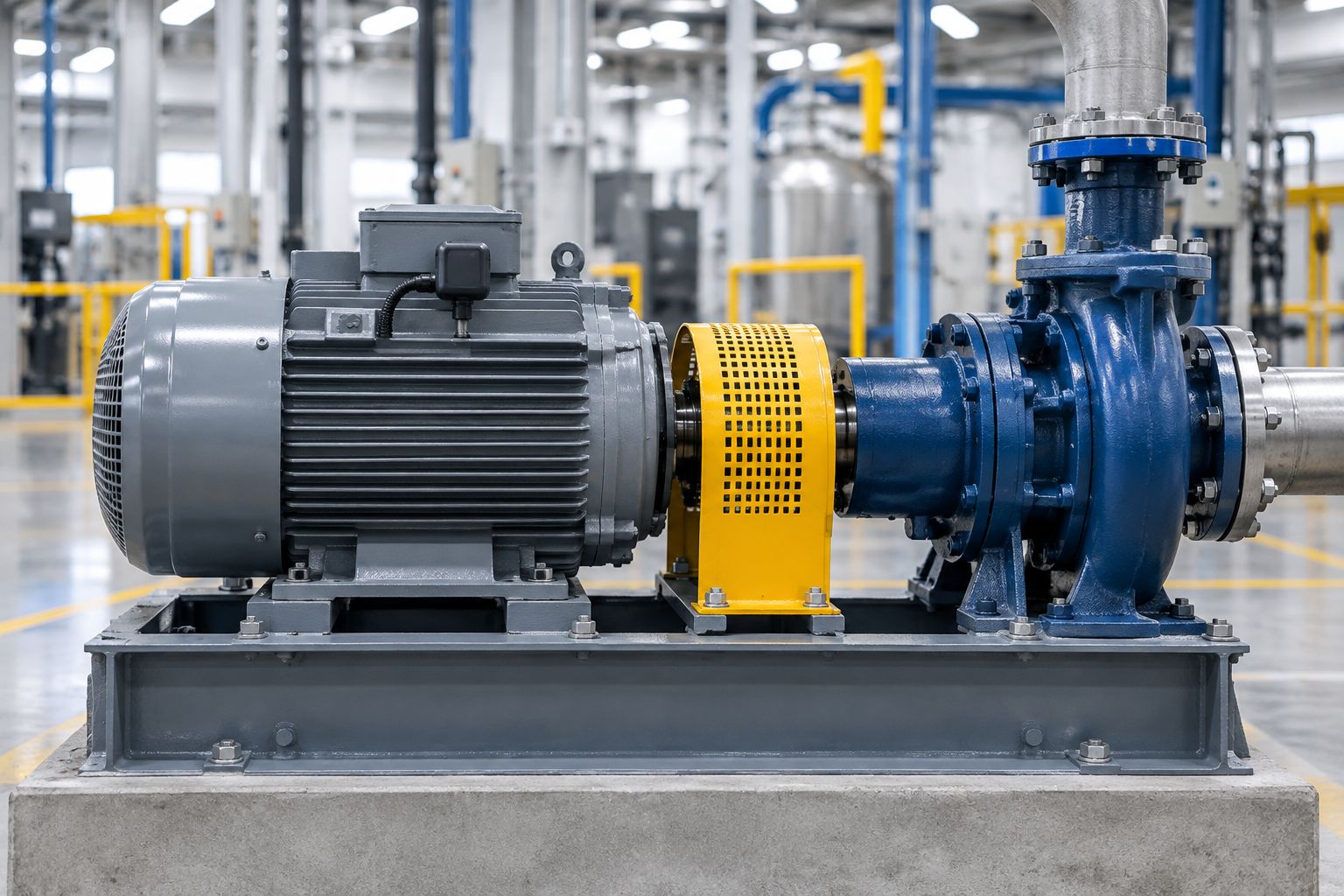
For a motor assessment, the measurement location and operating state belong in the record alongside the reading. Otherwise, a comparison risks treating different conditions as deterioration.
Hardware sourcing is a separate decision from platform selection. Kilo Electronics is a separate online authorised dealer for compatible hardware, serving individual and business buyers; purchasing hardware does not establish that a particular diagnostic workflow is supported.
How the shortlist is organized
The comparison uses failure-mode fit, data suitability, diagnostic evidence, maintenance handoff, implementation ownership, and outcome verification. It separates software roles instead of assigning unsupported performance scores.
The recommendations are conditional buying directions, not results from a head-to-head plant trial. Your equipment evidence should decide the purchase. A polished demonstration cannot establish performance on an untested failure mode.
Which option should your plant choose?
For an undecided reliability team, start with the missing capability. Evaluate Siemens Senseye for predictive analytics, Augury for rotating-equipment diagnostics, IBM Maximo for maintenance execution, or SAP Asset Performance Management for SAP-centered asset strategy.
If equipment data is incomplete or disconnected, solve that foundation first. Don't buy a failure-prediction promise when the immediate need is trustworthy measurements, clear alarms, and an accountable response.
FAQ
What's the best predictive maintenance software for a manufacturing plant?
The right choice depends on whether you need predictive analytics, machine diagnostics, maintenance execution, or connected monitoring. Evaluate Siemens Senseye, Augury, IBM Maximo, and SAP Asset Performance Management against those distinct requirements rather than treating them as interchangeable.
Is condition monitoring the same as predictive maintenance?
No. Condition monitoring observes equipment state; predictive maintenance uses condition and analytical methods to anticipate maintenance needs. A threshold alarm alone does not establish failure prediction.
Can predictive maintenance software work with older machinery?
Older machinery can participate when suitable measurements can be collected through compatible sensors or interfaces. Assess instrumentation and data quality before assuming the machine can support the intended analysis.
Do I need failure-history data before starting?
The data requirement depends on the analytical method and equipment problem. Ask the supplier to specify what history, operating context, and known-condition examples its proposed approach requires.
Will predictive maintenance software automatically create work orders?
Automatic work-order creation is a separate capability that must be verified. Establish the target maintenance system, approval process, and handling of duplicate or unresolved findings.
Can an AI assistant predict when a machine will fail?
An assistant interface does not by itself establish failure-prediction capability. A useful prediction still requires suitable equipment data, an appropriate analytical method, and evidence supporting the result.
How should a plant judge a predictive-maintenance evaluation?
Judge whether findings lead to justified maintenance decisions supported by inspection evidence. Track missed issues and unnecessary inspections alongside useful warnings, and distinguish diagnostic quality from interface convenience.
Test what happens when the data disappears
Before approving the purchase, ask the supplier to interrupt an equipment data feed during the evaluation. Your team should be able to distinguish a healthy machine from a machine whose condition is unknown.
That test addresses a basic maintenance risk: silence is not evidence of healthy equipment. Make missing-data handling part of acceptance, not an issue discovered after deployment.
Related guides
Written by Tim Kravchunovsky


