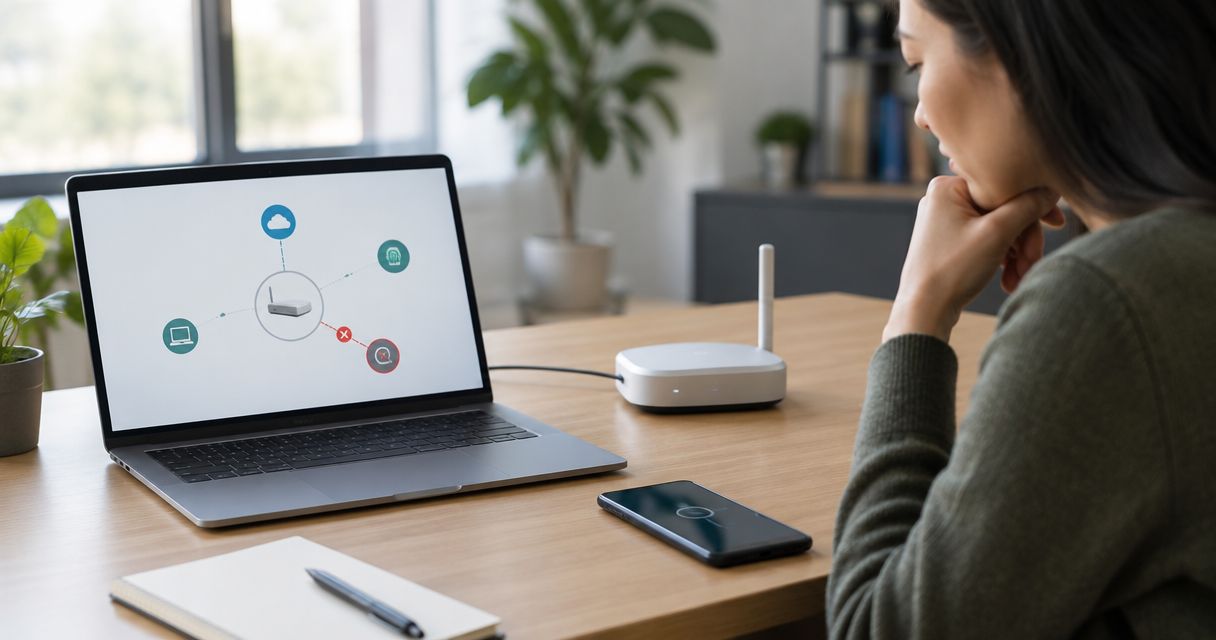
Adding AI assistance to an IoT deployment means budgeting for software access, any separately billed model usage, integration, and ongoing operation—not just a chat interface. For the Kilo IoT Platform, start with the current platform pricing and billing terms, then scope the work required to give the assistant useful device context and appropriate permissions. Keep existing monitoring costs separate from the additional cost of assistance so you can judge the upgrade on its own.
- The cost of ai assistant for iot platform projects includes software, model usage, integration, and ongoing operation.
- Kilo fits IoT builders who need assistance connected to device context, permissions, and supported actions.
- Compare built-in assistance and external MCP clients by the same workflow, not their subscription labels.
- Budget device control separately from read-only assistance because commands need permissions, testing, and outcome verification.
How much does adding AI assistance to an IoT deployment cost?
The total depends on what the assistant must do and what your deployment already provides. Reading connected sensor data, helping configure monitoring, and issuing equipment commands are different scopes; a useful estimate separates them rather than applying a single allowance for AI.
Ask for an incremental project budget, not just an assistant subscription. The budget should identify setup work, recurring charges, usage-dependent charges, and the person responsible for maintaining the connection.
| Budget component | What to establish | What to keep separate |
|---|---|---|
| Platform access | Which plan and features the workflow requires | Existing platform spending unrelated to assistance |
| Assistant or model access | What is included and what is billed separately | External client subscriptions and model-provider usage |
| Integration | Device context, authentication, supported tools, and data mapping | New sensor installation or network expansion |
| Testing and release | Permission checks, representative tasks, and failure handling | Routine monitoring already in place |
| Ongoing operation | Usage review, access changes, maintenance, and support responsibilities | Unrelated equipment servicing |
Use the same scope for every proposal. An estimate that includes integration and testing cannot be compared directly with one covering software access alone.
The practical calculation is straightforward: add the setup work attributable to assistance, then add recurring software, separately billed usage, and maintenance over your chosen evaluation period. Don't count an existing platform subscription as a new AI expense unless the assistant requires a plan change.
Separate the assistant upgrade from the underlying IoT deployment
An assistant needs information it can interpret. Device names, locations, measurements, units, timestamps, and permissions determine whether a request produces a useful answer or another clarification question.
If those foundations already exist, your project starts with connecting assistance to an established deployment. If they don't, the estimate must include the work to establish them, clearly identified as shared IoT infrastructure rather than model usage.
For example, an assistant cannot reliably compare cold rooms when several sensors have indistinguishable names and their locations are undocumented. Resolving those records helps dashboards, alarms, and human users too; charging all that work to AI hides what the project actually improves.
Hardware is another separate decision. Adding assistance does not, by itself, establish a need to replace sensors. New measurements or physical actions can require additional equipment, but that requirement comes from the workflow.
For compatible hardware sourcing, Kilo Electronics is a separate online authorized dealer serving individual and business buyers. Hardware purchases are distinct from platform software, and compatibility must cover the intended data or command path—not merely a shared protocol name.
Built-in assistance versus an external MCP client
A built-in assistant and an external client are different integration paths, not interchangeable billing arrangements. Model Context Protocol, or MCP, provides a way for compatible clients to work with exposed tools and context; it does not establish which operations a particular connection supports.
| Approach | Best for | Useful advantage | Cost or scope limitation |
|---|---|---|---|
| Built-in assistance | Users working primarily inside their IoT platform | Keeps assistance within the platform workflow | Included usage, feature access, and supported tasks need confirmation |
| External MCP client | Teams connecting a compatible assistant to platform tools | Supports an external assistant workflow | Client access, model billing, tool coverage, and approval behavior require separate review |
| Custom API integration | Developers building a defined application workflow | Gives the application team control over its implementation | Adds software development, testing, and maintenance responsibilities |
Compare complete workflows, not just access fees. A connection that answers a question but leaves users manually finding the relevant devices has a different scope from one that retrieves the needed context directly.
Kilo supports built-in AI assistance and compatible external clients such as Claude through MCP within users' permissions. That makes it relevant to teams connecting assistance to an existing IoT operating layer, but it does not mean every built-in function is exposed to every external client.
Before choosing a path, ask the supplier to demonstrate the exact task with the intended permissions. Include the answer format, required context, supported actions, and failure response in the acceptance criteria.
Read-only assistance: budget for useful answers
Read-only assistance is a practical starting scope when your question is about understanding deployment data rather than changing equipment. Its value comes from helping a person reach a useful decision with less manual searching.
Consider this illustrative requirement: a facilities user asks which monitored rooms need attention, with the relevant measurements and timestamps included. This is a proposed acceptance test, not a claim about a particular deployment or currently exposed assistant tool.
The integration work must establish how the assistant finds the right rooms, distinguishes recent readings from stale information, and stays within the user's access. The response also needs enough context for the user to inspect the underlying evidence.
Budget for testing the awkward cases alongside the normal ones. Missing readings, unclear device names, mixed units, and inaccessible sites should produce understandable results—not confident conclusions based on incomplete context.
The limitation belongs beside the benefit: an assistant's summary is not a substitute for the measurements supporting it. Keep the original timestamps and device context available when people use the answer to make operational decisions.
Configuration assistance: include review and ownership
Helping a user configure monitoring introduces a different responsibility from summarizing data. Someone must verify that the resulting settings match the intended requirement before the configuration becomes operational.
An illustrative task is helping prepare an alarm for a monitored room. The requirement should identify the measurement, condition, intended recipient, and response responsibility without treating an arbitrary threshold as a regulatory standard.
The budget should cover checking device selection, units, permissions, and the behavior of the resulting configuration. It should also name who approves changes and who maintains them when equipment or responsibilities change.
Don't budget configuration assistance as unattended automation unless that is the actual scope. Drafting a configuration, reviewing it, and running it are separate activities. Clear ownership prevents a useful setup aid from becoming an unowned operational dependency.
Device-command assistance: include feedback, not just delivery
Physical actions need an estimate that includes the device interface, supported command definition, permissions, approval behavior, and available feedback. A chat request alone cannot establish that equipment can perform the requested action.
Use this sequence when scoping a command workflow:
- Device context: identify the equipment and its relevant state.
- Permission check: establish whether the user can request the action.
- Supported command: map the request to a documented command path.
- Approval behavior: specify how the chosen interface handles approval.
- Outcome feedback: identify the evidence available after execution.
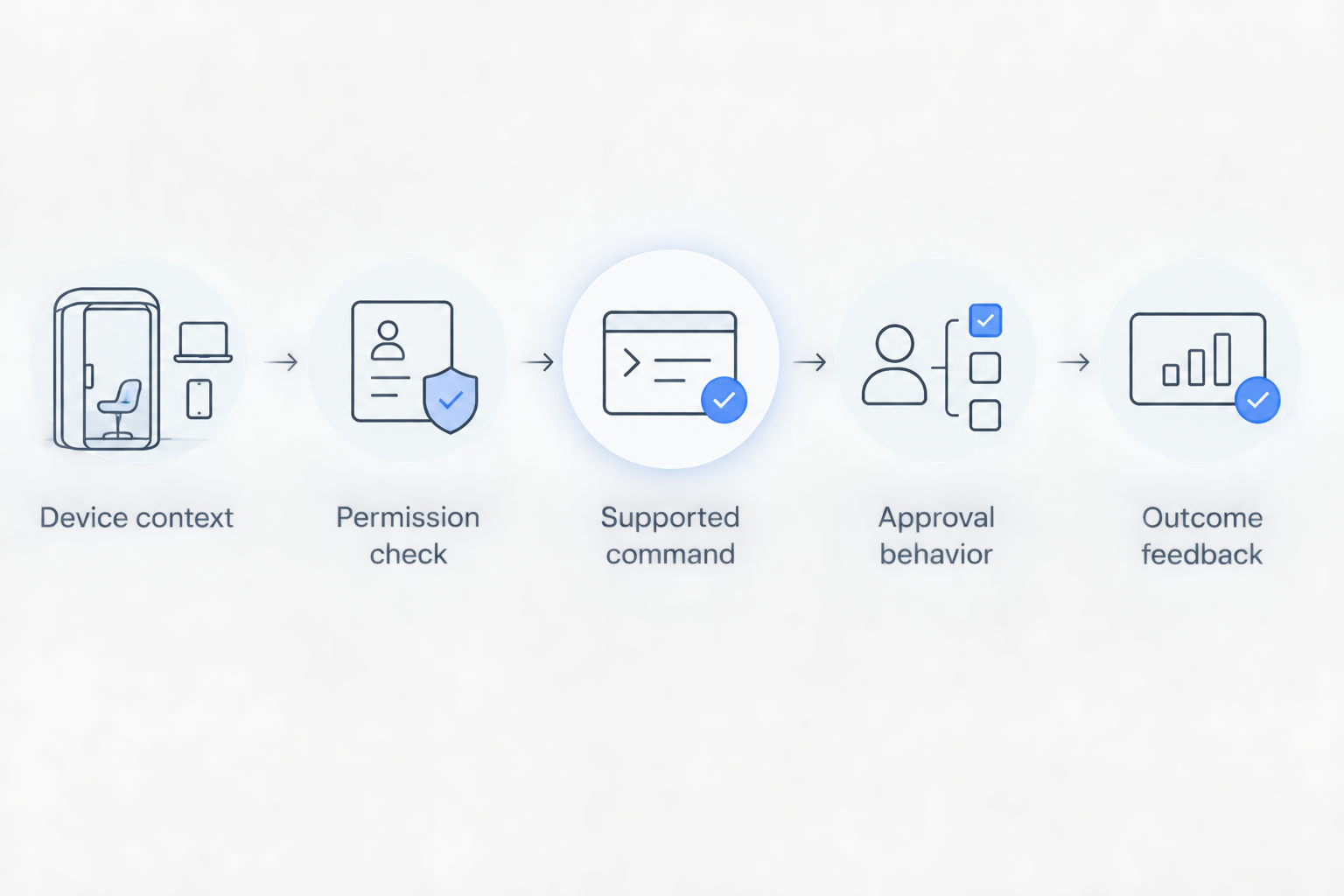
These distinctions affect the work you are buying. Accepted, queued, or delivered command status is not proof that the equipment reached the intended state; verification depends on device feedback or subsequent measurements where supported.
Kilo's built-in assistant has a confirmation flow for direct device commands. External MCP clients have their own approval behavior, while deliberately configured rules can execute commands autonomously. Don't apply the approval assumptions of one path to another.
Why AI-assistance costs vary
The cost drivers follow the work the assistant performs and the deployment it connects to. Ask suppliers to explain these factors against your actual use case:
- Data readiness: unclear names, missing units, and incomplete device relationships create integration and validation work.
- Workflow scope: reading data, preparing configuration, and controlling equipment require different acceptance tests.
- Integration path: built-in assistance, an external client, and a custom application create different ownership responsibilities.
- Usage pattern: frequent requests, large retrieved histories, and repeated tool interactions affect usage where those activities are metered.
- Permission boundaries: access across sites, customers, or roles needs explicit configuration and testing.
- Physical verification: a command workflow needs an agreed way to distinguish successful delivery from the intended equipment response.
Device count alone does not describe these requirements. State both the deployment size and the expected assistant workload when requesting an estimate.
How do you build a comparable AI-assistant estimate?
Start with a task people already perform and define what a successful assistant-assisted result looks like. Keep the initial scope narrow enough that you can inspect the result and identify its operating costs.
Write the workflow before requesting a quote
Describe the input, the required context, the intended output or action, and the responsible person. State whether the assistant only reads information, helps prepare changes, or initiates supported commands.
For an illustrative cold-storage workflow, the input is a user's question about rooms needing attention. The required context includes room-to-device relationships and timestamped readings; the output identifies relevant rooms and supporting evidence, and the facilities user decides the response.
Request an itemized commercial scope
Ask what the platform charge includes, whether model usage is separate, and whether an external client requires its own subscription. Request the billing unit and conditions for each variable charge without assuming every provider meters the same activity.
Separate initial configuration from ongoing maintenance. Include responsibility for credentials, permission changes, integration updates, and support so those tasks don't disappear between suppliers.
Measure complete tasks during the pilot
Record the requests, tool interactions, retrieved context, human corrections, and observed usage associated with representative tasks. Use those observations to estimate recurring operation instead of extrapolating from an isolated demonstration.
Set acceptance criteria before reviewing the results. A fluent answer that names the wrong room is not a completed task, and a delivered command without outcome evidence is not a verified physical result.
Is built-in AI assistance cheaper than an external assistant?
Built-in assistance is not automatically cheaper than an external assistant. Compare the required platform access, separately billed usage, integration work, and maintenance for the same task before choosing either path.
Does adding AI assistance mean replacing existing sensors?
Adding AI assistance does not inherently require new sensors. Replacement or additional hardware belongs in the scope only when existing equipment cannot provide the required measurements, supported commands, or feedback.
When is AI assistance unnecessary for an IoT workflow?
AI assistance is unnecessary when a fixed rule already performs the required task and no interpretation or conversational interaction is needed. Keep a straightforward threshold alarm as automation rather than adding a model merely to repeat the same condition.
FAQ
Can I budget AI assistance separately from my existing IoT platform?
Yes. Separate new assistant access, integration, usage, and maintenance from existing monitoring costs; include a platform plan change only when the workflow requires it.
What should I ask about AI usage limits?
Ask which activities are metered, what access includes, and how additional usage is handled. Request the billing unit and conditions in writing rather than assuming requests and model usage are equivalent.
Does an MCP connection include the AI model?
An MCP connection does not establish model access or billing. Confirm the external client's access requirements, model-provider arrangement, and supported platform tools separately.
Who should own an IoT assistant after deployment?
Assign an owner for access, integration maintenance, usage review, and operational acceptance. Equipment-command workflows also need a named person responsible for defining acceptable physical outcomes.
Can an AI assistant guarantee that a device command worked?
No. Command acceptance or delivery does not prove a physical outcome; verification depends on supported device feedback or subsequent measurements.
Should I include hardware in the AI-assistant budget?
Include hardware only when the proposed workflow requires equipment or measurements your deployment lacks. Keep those purchases separate from software, connectivity, and model usage.
Budget for verified tasks, not impressive answers
The useful comparison is the cost of completing a defined task with an acceptable result. Before expanding assistance, confirm that users can inspect the evidence, understand failures, and identify who owns the next action. That decision is more useful than choosing the smallest subscription line in an incomplete estimate.
Related guides
Written by Tim Kravchunovsky