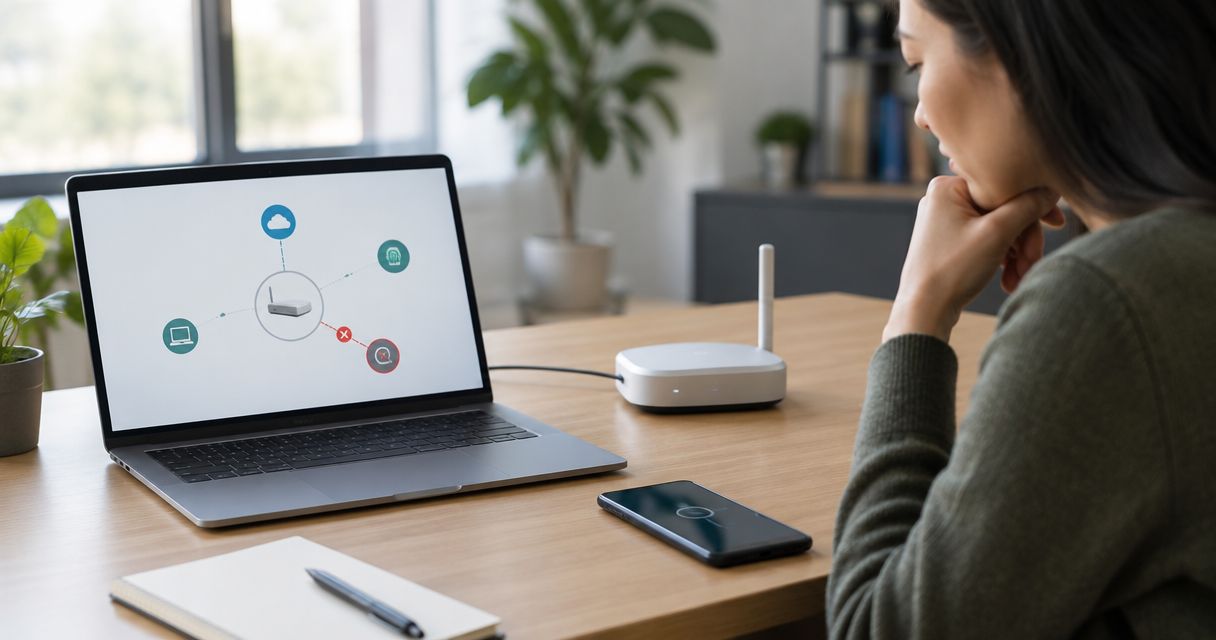
To check IoT alarm delivery, trace the same event from the triggering measurement to the notification attempt, its recorded destination and the intended responder’s acknowledgment. A successful send does not prove the right person saw the alarm or accepted responsibility. If you use the Kilo IoT Platform, apply this evidence-based check to your configured alarm workflow, using the records available from the platform and any connected notification service.
- To check IoT alarm delivery, match the event, destination, delivery evidence and named responder’s acknowledgment.
- Kilo supports IoT monitoring and alarms; verify notification-service behavior separately from the triggering condition.
- Delivery receipts describe transport progress, not necessarily human attention or responsibility.
- Test the backup response path as well as the primary recipient.
How to check if an IoT alarm reached the right person
Start with a specific alarm occurrence, not a general statement that notifications are enabled. Follow these steps in order, keeping the same device, site, event identifier and timestamps together wherever those details are available.
- Confirm the triggering event. Find the measurement or condition that should have raised the alarm. Check its timestamp, device identity and site against the alarm occurrence.
- Check the intended recipient. Establish who was responsible for that site and condition when the event happened. Compare that person with the configured destination, including shared addresses or groups.
- Find the notification attempt. Inspect the available alarm, integration or notification-service records. An alarm appearing in a dashboard does not, by itself, establish that an outbound notification was attempted.
- Read the delivery evidence. Record the destination, attempt time, status and any failure explanation. Interpret each status according to the service that produced it.
- Confirm human receipt and ownership. Ask the intended responder to identify the event and confirm responsibility through your agreed acknowledgment method. Use a named response rather than assuming that someone in a group handled it.
- Check the response and backup path. Confirm what happened after acknowledgment. If nobody accepted responsibility, establish whether the backup person was contacted through the configured process.
Your finding should describe the furthest verified stage. “Notification accepted by the delivery service; responder acknowledgment not confirmed” is more useful than “alarm worked.” It identifies the remaining uncertainty without overstating the evidence.
What each alarm status actually proves
Alarm generation, notification delivery and human response answer different questions. Keep them separate when investigating a missed alert or accepting a new installation.
The labels below describe common workflow stages, not a guaranteed set of status labels in any particular product. A notification provider’s documented definition determines what its actual status means.
| Evidence stage | What it supports | What it does not establish |
|---|---|---|
| Alarm generated | The configured condition produced an alarm occurrence | An outbound message was attempted |
| Notification attempted | The workflow tried to contact a destination | The service accepted or delivered the message |
| Service accepted | The receiving service accepted the request | The intended responder received or read it |
| Delivery reported | The service reports delivery within its documented scope | The correct person understood the alarm |
| Named acknowledgment | An identified person confirmed receipt or ownership | The underlying equipment condition was corrected |
| Outcome verified | Follow-up evidence supports the reported result | Every earlier notification reached every recipient |
Use named acknowledgment to verify responsibility, and follow-up evidence to verify the outcome. Neither a green delivery indicator nor a cleared sensor condition answers both questions.
For example, a measurement returning to normal can explain why an alarm cleared. It does not establish whether anybody received the earlier notification, investigated the cause or accepted responsibility for a recurrence.
How to verify that the recipient was actually responsible
“The right person” means the person assigned to respond to that condition at that time. A valid address belonging to a former site contact is still the wrong destination.
Compare the event against your current responsibility list. Include the site, equipment, condition, working schedule and backup arrangement. If the notification goes to a shared mailbox or group, establish who monitors it and how one person takes ownership.
Check these details together:
- Destination: Does the configured address or endpoint match the intended contact?
- Responsibility: Does that contact own this site and alarm type?
- Coverage: Was that person responsible when the event occurred?
- Access: Can the responder open the information needed to investigate?
- Backup: Who takes over when the primary responder is unavailable?
A recipient who receives a message but cannot access the relevant device context has not received a usable response workflow. Test the link or access path with the responder’s own account, not an administrator’s account.
Keep personal contact details out of broadly shared troubleshooting material. Record enough information to distinguish destinations, while restricting the full details to people who need them.
How to run an end-to-end alarm delivery test
A useful test follows the route that a real alarm is expected to take. Sending an unrelated message to a contact proves less than triggering an approved test event through the actual workflow.
Illustrative scenario: A cold-storage team wants to establish whether a designated responder receives and takes ownership of a temperature alarm. This is a test design, not a customer deployment or a recommended temperature threshold.
Prepare the test
Choose a test device, approved test input or other supported method that does not put stored goods or equipment at risk. Tell the participants what is being tested and identify any actions that must not run.
Review the whole rule before triggering it. If the workflow also operates equipment, do not assume a test or debugger isolates those side effects; select the documented non-operating test method deliberately.
Trace the event
Follow the event through Trigger, Routing, Delivery, Acknowledgment and Outcome. At each stage, save the available evidence and identify the person responsible for checking it.
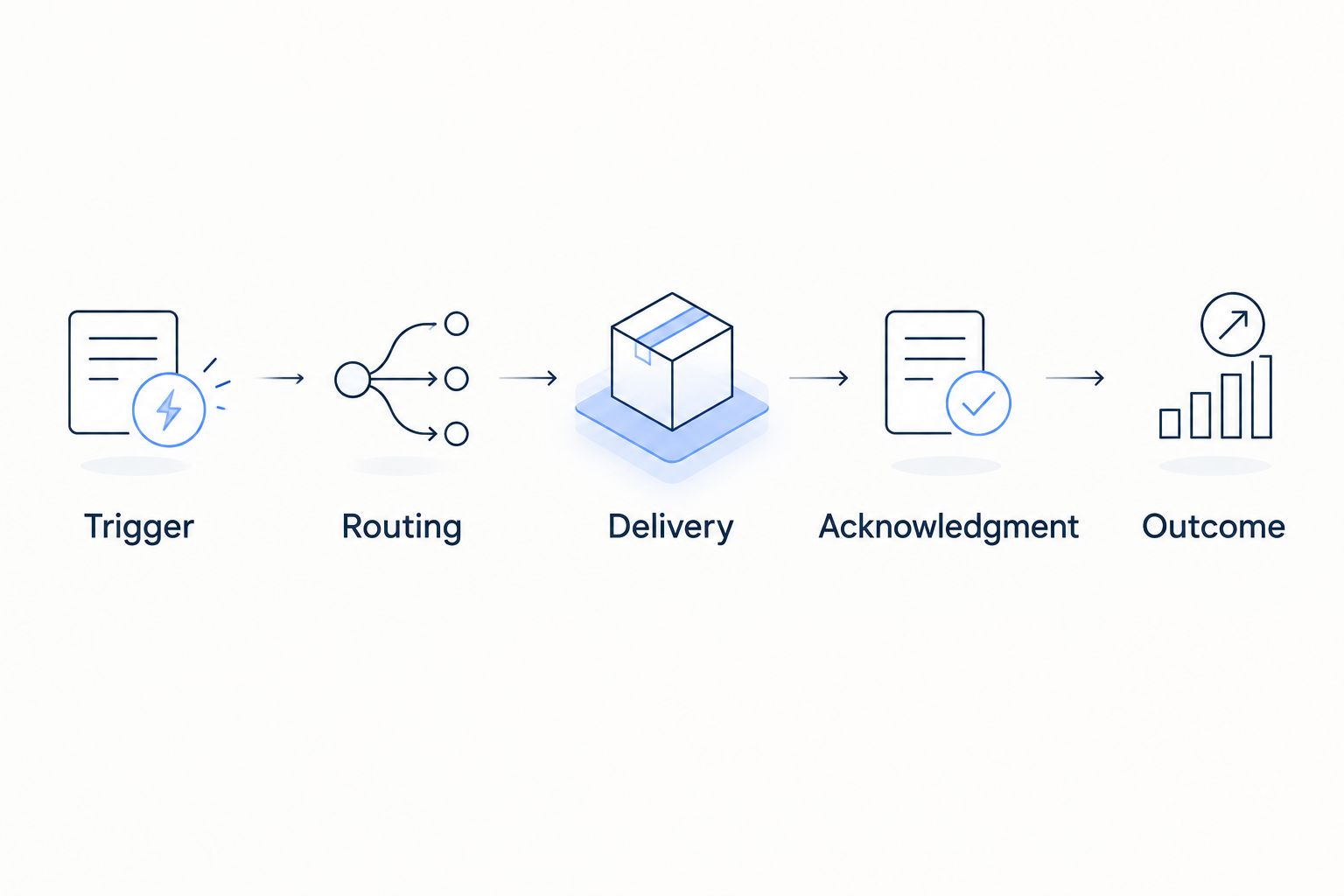
Ask the designated responder to confirm the site, device and condition shown in the message. Then have that person use the agreed acknowledgment process and describe the next action. This checks understanding rather than merely asking whether a notification appeared.
Test missing acknowledgment
Arrange a controlled test in which the primary responder deliberately does not acknowledge. Verify the backup process against your documented response procedure, using only escalation behavior that your configured tools actually support.
Record whether the backup person received the correct context and accepted responsibility. If escalation is manual, test the manual handoff rather than describing it as automatic.
Close the test
Restore any temporary configuration and confirm that normal monitoring remains active. Keep the test evidence separate from a real equipment incident so later reviewers can understand what happened.
A successful test establishes that the tested path worked under those conditions. Repeat the relevant checks after changing recipients, rules, integrations or responder permissions.
Why alarm delivery evidence varies
The evidence you can collect depends on the complete notification path, not just the sensor or IoT platform. These factors determine what you can verify:
- Notification service: Different services expose different acceptance, delivery and failure information. Read the definition behind each status.
- Recipient structure: A named recipient, shared inbox and group destination provide different levels of evidence about individual receipt.
- Routing configuration: Site assignments, conditions and notification destinations determine where an event is supposed to go.
- Acknowledgment process: A named response is stronger evidence of ownership than an unassigned message in a shared channel.
- Responder access: Receiving the notification and opening the relevant device context are separate checks.
- Record availability: An investigation can establish only what the retained records and responder evidence support.
Do not turn an unavailable delivery receipt into a presumed success or failure. State the narrower finding and use a controlled end-to-end test to investigate the remaining stage.
How to troubleshoot an alarm that nobody received
Start at the earliest unverified stage. Repeatedly editing contact details will not fix a workflow that never generated a notification attempt.
| Last verified stage | Next check | Useful evidence |
|---|---|---|
| Measurement received | Did the configured condition produce an alarm? | Measurement, timestamp and condition configuration |
| Alarm generated | Was outbound notification attempted? | Available workflow or integration record |
| Notification attempted | Did the receiving service accept it? | Service response or failure explanation |
| Delivery reported | Was the destination the responsible person’s? | Destination matched to the responsibility list |
| Recipient confirms receipt | Was ownership explicitly accepted? | Named acknowledgment tied to the event |
| Ownership accepted | Was the reported outcome verified? | Inspection note or subsequent measurement |
When a failure explanation is available, preserve it before changing the configuration. Then make a targeted correction and repeat the same test path.
If the first notification arrives but the backup process fails, investigate escalation separately. The guide to escalating an unresolved alarm addresses that adjacent workflow; delivery verification should establish what happened before the handoff.
What evidence should you keep for an alarm investigation?
Keep a compact event record that connects the technical path with the human response. You do not need a collection of unrelated screenshots; you need enough context to reconstruct the occurrence.
Record the event identity, device and site, triggering condition, relevant timestamps, intended recipient, actual destination and available notification status. Add the named acknowledgment, response action and outcome evidence when they exist.
Identify the source of each timestamp and retain its time-zone context. A device measurement time and a notification-service processing time describe different stages, even when they appear beside each other in a report.
Keep configuration evidence where it is available. Current settings alone do not prove which recipient or rule applied to an earlier event. Avoid describing ordinary execution records as an immutable audit trail unless the documented system behavior supports that claim.
Where does Kilo fit in alarm delivery verification?
Kilo is suited to integrators and teams that need IoT device context, monitoring, alarms and automation in one platform. That context helps you connect an abnormal reading to the equipment and people involved, but delivery verification still requires evidence from the configured notification path.
Separate your platform assessment from your response-process assessment. For the former, establish what alarm and integration information your deployment exposes; for the latter, establish who receives, acknowledges and acts on the event. Do not assume a specific delivery-history screen, receipt type or acknowledgment feature without confirming its documented scope.
Hardware selection is a separate decision. Kilo Electronics is a separate online authorised dealer serving individual and business hardware buyers; buying a sensor does not establish notification delivery or responder ownership.
FAQ
Can an email read receipt prove the right person handled an IoT alarm?
No. A read receipt does not by itself establish that the responsible person accepted ownership or took action. Use an event-specific acknowledgment and separate outcome evidence.
What should I do if an alarm goes to a shared mailbox?
Assign a named responder through an explicit acknowledgment process. A message reaching a shared mailbox does not identify who is responsible for handling it.
Should acknowledging an alarm clear the equipment fault?
No. Acknowledgment records human receipt or ownership; equipment condition and alarm-clearing behavior are separate. Verify the condition through the relevant measurements or inspection.
How quickly should someone acknowledge an IoT alarm?
Set the acknowledgment target from the condition’s risk and your response procedure. Do not apply a universal deadline to unrelated equipment, sites or staffing arrangements.
Do I need to test alarm delivery after changing a contact?
Yes. Test the changed destination and confirm that the responsible person can receive the notification, access its context and acknowledge the event.
Can an IoT alarm prove regulatory compliance?
An IoT alarm alone does not prove regulatory compliance. Compliance depends on the applicable requirements, procedures, records and response evidence, not merely a successful notification.
Test ownership, not just the notification
End your next delivery test by asking the responder which equipment needs attention, what action comes next and who takes over if they cannot respond. Those answers expose gaps that a successful send cannot reveal.
The acceptance criterion is a traceable handoff to the responsible person, not just a message leaving the platform. Keep physical outcome verification as the final, separate check.
Written by Tim Kravchunovsky