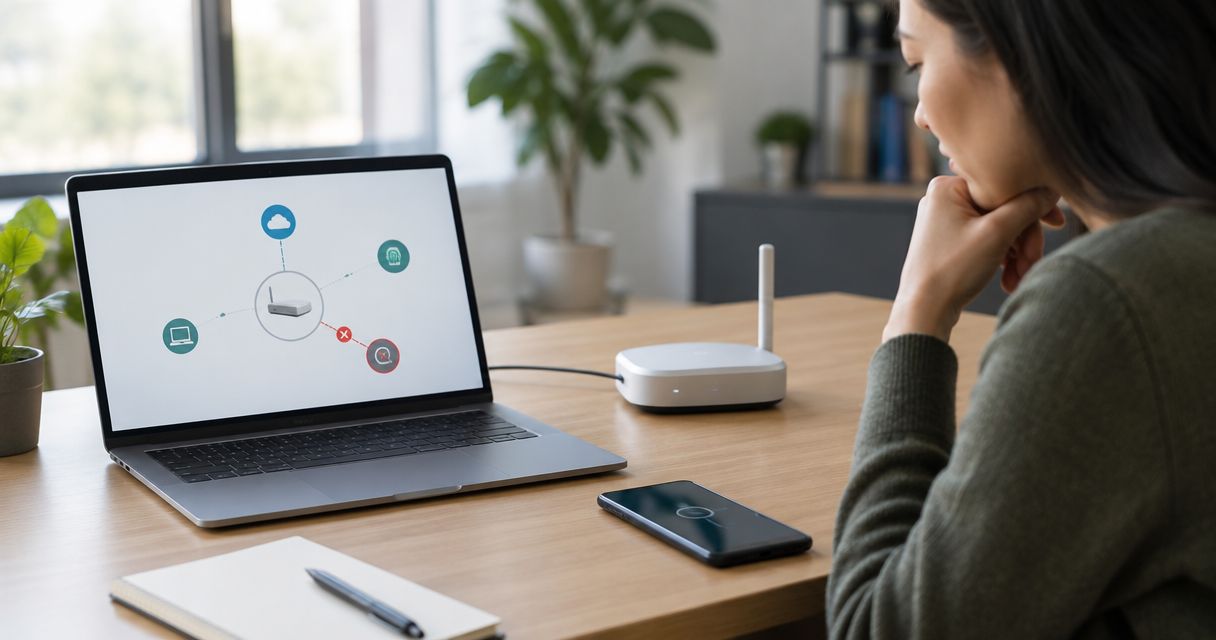
Fleet predictive maintenance software is software that uses vehicle condition and maintenance data to identify developing faults so you can plan service before an avoidable breakdown. This guide explains how to evaluate prediction claims, build a usable maintenance workflow, and assess where an operating layer such as the Kilo IoT Platform fits alongside your fleet and workshop systems.
- Choose predictive maintenance software for fleets by demonstrated fault detection and workshop follow-through, not dashboard appearance.
- Kilo fits connected condition-monitoring workflows; its stated capabilities do not establish vehicle-failure prediction.
- Keep preventive service schedules until evidence supports changing them.
- Require vehicle identity, measurement timestamps, operating context, and inspection outcomes before trusting maintenance predictions.
Why predictive maintenance matters for fleet availability
Fleet maintenance decisions have to account for moving assets, changing loads, different vehicle configurations, and limited workshop access. A temperature increase during a demanding route means something different from the same increase while parked. Your software needs that context before its recommendation becomes useful.
The practical objective isn't to generate more alerts. It's to give a maintenance planner enough reliable notice to inspect an asset, arrange parts, and choose an appropriate service window without ignoring a developing problem.
Three approaches belong in the same maintenance program, but they answer different questions:
- Preventive maintenance schedules work by time, mileage, operating hours, or manufacturer instructions.
- Condition-based maintenance triggers investigation when measured condition crosses a defined boundary or changes materially.
- Predictive maintenance estimates a future fault or deterioration using evidence whose accuracy you can evaluate.
A threshold alarm is condition monitoring, not proof of failure prediction. That distinction determines what evidence you should request and which decisions the software can support.
For a 2026 selection, start with the maintenance decision you want to improve. A system that reliably identifies an inspection need can be useful without estimating the remaining life of a component.
How to evaluate and deploy fleet maintenance software
Define the failure mode and the maintenance decision
Start manually with service records, roadside incidents, technician notes, and your existing maintenance schedule. Group recurring issues by component and vehicle type, then choose a failure mode for which earlier information would change an actual decision.
Avoid starting with a requirement to predict every breakdown. Define what the planner should do when evidence appears: request a diagnostic check, inspect a cooling system, or bring a vehicle into the workshop at its next suitable stop.
A useful project brief connects an observable condition to an action. It also identifies what the proposed system cannot establish, such as the precise cause of a temperature increase without further diagnosis.
- Select a component and a clearly described fault.
- Identify the inspection or service decision that earlier notice supports.
- Name the person responsible for reviewing the evidence.
- Record existing manufacturer maintenance requirements.
- Define the evidence needed to close the investigation.
Audit vehicle data before adding sensors
Build a spreadsheet inventory of the data you already receive from vehicle systems, telematics exports, inspections, and maintenance records. Include units, timestamps, collection methods, and the asset identifier attached to each record. A field name alone doesn't establish that the measurement is usable.
Vehicle interfaces differ. Support for a protocol does not prove access to every diagnostic parameter, and a location tracker does not automatically provide component-condition data.
Check collection time against receipt time. When a vehicle reconnects after a communications gap, an old reading must not appear to describe its current condition. Also distinguish a missing value from a normal measurement.
- Map each measurement to a stable vehicle identifier.
- Confirm units and the meaning of diagnostic fields.
- Preserve collection and receipt timestamps separately.
- Document gaps, duplicate records, and sensor replacements.
- Identify missing signals before specifying additional hardware.
Build a condition-monitoring baseline
Review exported measurements alongside route, load, ambient conditions, and workshop findings before introducing a prediction model. Compare like with like: vehicles doing different work should not automatically share the same normal range.
Use at least 2 operating states, such as working and parked, as an initial context check where those states are available and relevant. This is a recommended evaluation structure, not a diagnostic threshold. Your engineering team must determine which distinctions matter for the component.
Kilo's IoT platform brings device data, dashboards, rules, and alarms into a common operating layer. That supports a connected condition-monitoring approach, but it does not establish a trained fleet-failure model or a ready-made connection to every vehicle.
If additional sensing is justified, source hardware separately. Kilo Electronics is a separate online authorised dealer for compatible hardware, serving individual and business buyers; hardware sourcing is not the platform subscription or a substitute for integration checks.
- Separate operating conditions that materially affect measurements.
- Compare trends within an appropriate vehicle group.
- Mark known inspections and component replacements.
- Establish how missing or stale data will be displayed.
- Document the rationale behind each condition rule.
Demand evidence for every prediction claim
You can assess an initial claim manually by matching historical alerts to workshop findings. Ask the supplier to demonstrate the complete sequence, including alerts that did not identify a fault and faults the system missed. Successful examples alone do not establish reliability.
For your 2026 evaluation, distinguish an anomaly score, a fault classification, and a remaining-life estimate. An anomaly means a pattern differs from a reference; it does not necessarily identify a failing component or tell you when failure will occur.
Historical evaluation must also avoid using information that only became available after the event. Otherwise, a demonstration can look predictive while relying on knowledge the maintenance planner would not have had.
- Request results for the relevant vehicle and component types.
- Ask how confirmed faults and normal operation were labelled.
- Examine false alerts and missed faults together.
- Check whether the warning arrived early enough to act.
- Require an explanation of how changed operating conditions affect results.
Connect each alert to an inspection and outcome
Start with a written response procedure and a shared inspection log. Assign 1 named owner to each alert type, with a backup responsibility when that person is unavailable. Software should make this procedure easier to execute, not hide an undefined process.
An illustrative workflow for a refrigerated fleet is: Observation of an unusual equipment-temperature trend, Decision by the maintenance planner to request inspection, Inspection by a technician, and Feedback recording the finding and subsequent measurements. This is a proposed workflow, not a documented deployment or a claim that cargo temperature alone diagnoses refrigeration faults.
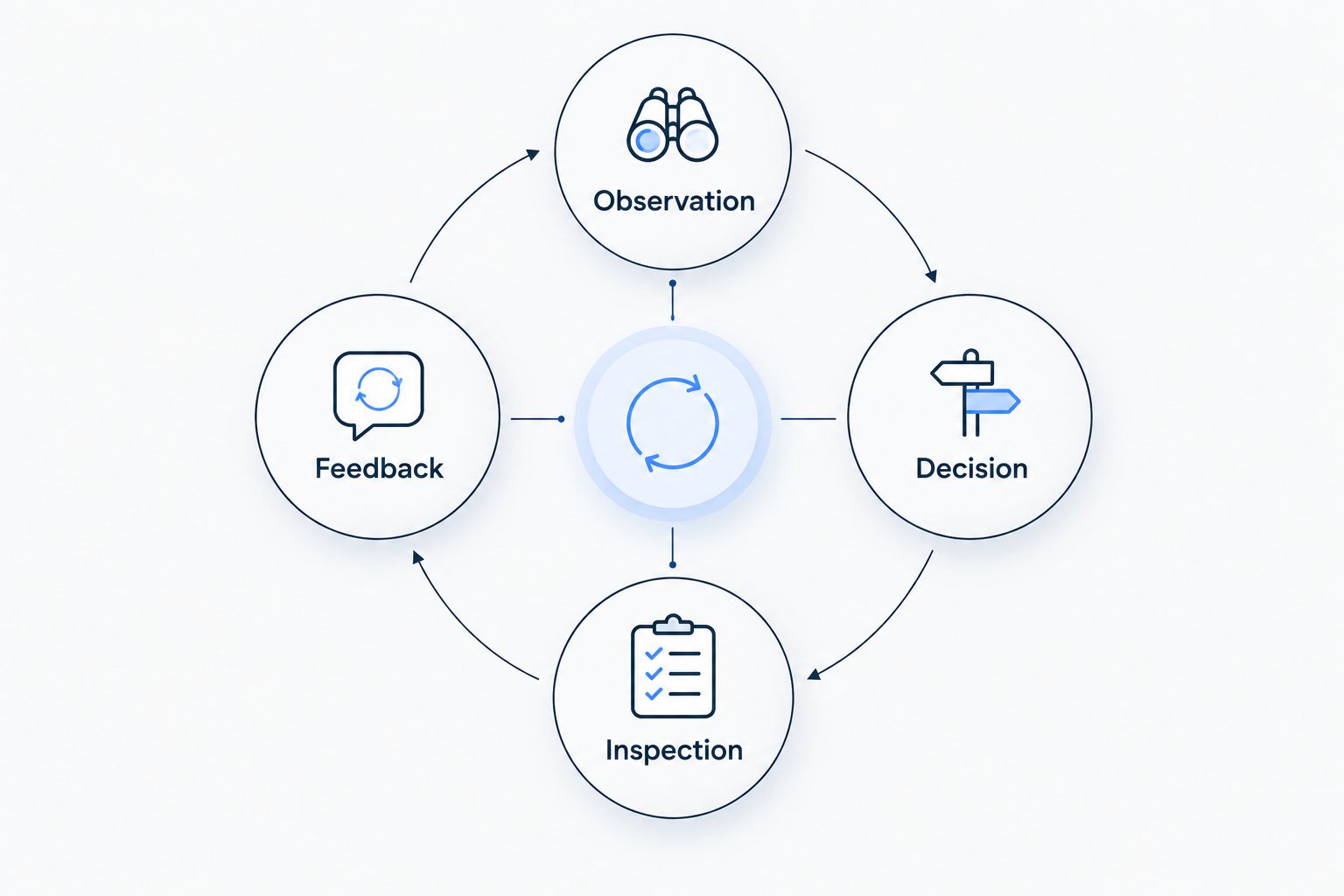
Keep the software boundary explicit. An alarm is not a work order unless a verified integration creates one, and acknowledgement is not evidence that an inspection occurred. Record the workshop outcome in the system responsible for maintenance work.
- Include the asset, measurement, timestamp, and operating context.
- Specify who reviews the alert and who performs the inspection.
- Define how the maintenance system receives the request.
- Record confirmed fault, no fault found, or insufficient evidence.
- Review subsequent measurements before declaring the issue resolved.
Pilot the workflow before expanding the fleet
Run the proposed workflow on a bounded asset group while maintaining existing service obligations. Use a manual comparison log if necessary; you need a trustworthy record of what happened, not an elaborate reporting project.
Track 3 timestamps for each investigated event: when the condition was observed, when someone reviewed it, and when inspection occurred. These reveal whether delay sits in data collection, alert handling, or workshop access. They are recommended tracking fields, not claimed performance benchmarks.
Your rollout decision should consider both technical evidence and the team's ability to respond. Better fault detection does not create workshop capacity, and a technically accurate warning can still arrive too late for your operating schedule.
- Select assets with documented service histories.
- Preserve normal maintenance and safety procedures.
- Log communication gaps and unavailable measurements.
- Compare alerts with independent workshop findings.
- Expand only after reviewing detection and response together.
Compare fleet maintenance software by the job it performs
The right option depends on your missing capability. Scheduling service, collecting measurements, diagnosing faults, and predicting failures are separate jobs, even when a supplier packages them together.
Use the same vehicle data and maintenance scenario in every demonstration. Kilo fits fleet teams building connected condition-monitoring workflows, not buyers expecting a validated vehicle-failure prediction model. Its role is the operating layer; require separate evidence for any prediction capability proposed around it.
| Option | Best for | Useful contribution | Key limitation |
|---|---|---|---|
| Spreadsheet and inspection log | Defining a pilot and checking data quality | Makes assumptions, decisions, and findings visible | Requires manual updates and review |
| Fleet maintenance management software | Scheduling service and recording workshop work | Organizes maintenance tasks and service history | Scheduling functionality alone does not prove predictive capability |
| Telematics-based maintenance workflow | Using available vehicle diagnostics and usage data | Connects maintenance review to vehicle observations | Data depth depends on the vehicle, interface, and service |
| Kilo IoT platform | Combining supported device data, dashboards, rules, and alarms | Provides a shared layer for condition-monitoring workflows | Stated capabilities do not establish fleet-specific prediction or automatic workshop integration |
| Validated predictive analytics implementation | Estimating a defined fault from suitable historical and live data | Supports an evidence-based prediction for its evaluated scope | Needs appropriate data, validation, and continued performance review |
For a 2026 procurement, ask suppliers to show the handoff between these jobs. A strong dashboard demonstration does not answer how a technician receives the inspection request or how the resulting finding returns to the evaluation dataset.
Common mistakes fleet teams make
Treating fault codes as failure forecasts
A diagnostic trouble code can be useful evidence without predicting when a component will fail. Ask what additional information supports the proposed diagnosis, and distinguish a reported fault from an estimated future event.
Comparing vehicles without their operating context
A vehicle working under sustained load and an otherwise similar vehicle waiting at a depot do not provide equivalent reference conditions. Group measurements by relevant usage before interpreting differences as deterioration.
Assuming connectivity follows the vehicle everywhere
Depots, routes, and parked locations present different communication conditions. Test data freshness across actual use, and define what the workflow does when readings stop. Silence is not a healthy measurement.
Closing alerts without recording workshop findings
An acknowledged notification tells you that someone interacted with the workflow. It does not tell you whether the suspected fault existed. Capture the inspection result, repair performed, and available follow-up evidence so future evaluations have useful labels.
Automating vehicle commands as a maintenance shortcut
A monitoring project should not quietly become a remote-control project. Any physical action requires a compatible device, a documented command path, appropriate permissions, and an assessment of operational consequences; command acceptance is not proof of the physical result.
FAQ
What's the best predictive maintenance software for fleets?
The right software demonstrates useful detection for your fleet's specific failure modes and connects that evidence to a workable maintenance response. Compare prediction evidence, vehicle-data coverage, and workshop handoffs rather than choosing by feature count.
Is predictive maintenance better than preventive maintenance?
Predictive maintenance complements preventive maintenance rather than automatically replacing it. Keep manufacturer service requirements and existing obligations unless an appropriately supported maintenance decision changes them.
Can GPS tracking data predict vehicle breakdowns?
GPS location alone does not establish component-condition prediction. Location and usage can add context, but a defensible prediction needs measurements and validation relevant to the suspected fault.
Can I use Kilo for fleet predictive maintenance?
Kilo can provide an operating layer for supported device data, dashboards, rules, and alarms in a fleet condition-monitoring workflow. Its stated capabilities do not establish a trained vehicle-failure model, universal vehicle connectivity, or automatic maintenance work-order creation.
Do I need failure history before starting a fleet maintenance pilot?
You can begin a condition-monitoring pilot without a complete labelled failure history. Claims about fault-prediction accuracy still require suitable evaluation evidence, so keep monitoring results separate from unvalidated forecasts.
What happens when a vehicle loses its data connection?
The maintenance workflow must identify stale or missing readings instead of treating them as current normal operation. Buffering and later delivery depend on the actual device and connection design, so test the proposed setup.
Can an AI assistant replace a fleet maintenance technician?
An assistant does not replace physical inspection or component-specific engineering judgment. Use software assistance within its verified data access and permissions, while keeping diagnosis and repair responsibilities explicit.
Make the inspection result part of the next decision
Before approving a 2026 rollout, ask for a demonstration that ends after the workshop visit, not when an alert appears. Follow the asset identifier from measurement to inspection finding and back to the maintenance review.
The inspection outcome is part of the product requirement. Without it, you cannot reliably distinguish an effective early warning from an alert that happened to precede routine service.
Related guides
Written by Tim Kravchunovsky