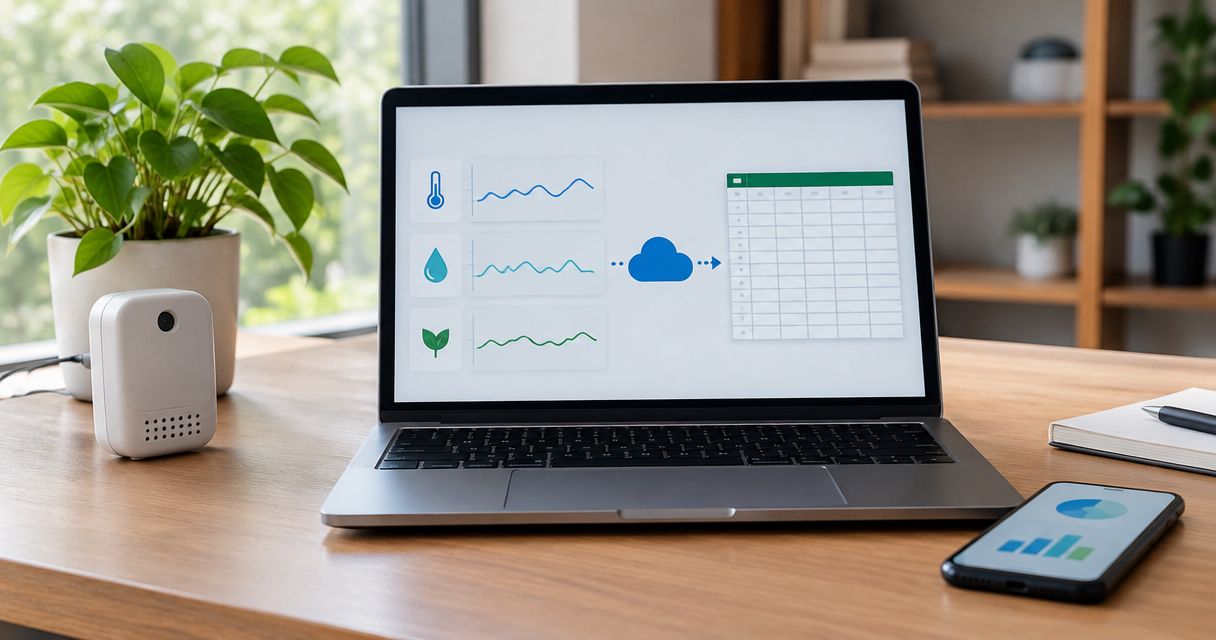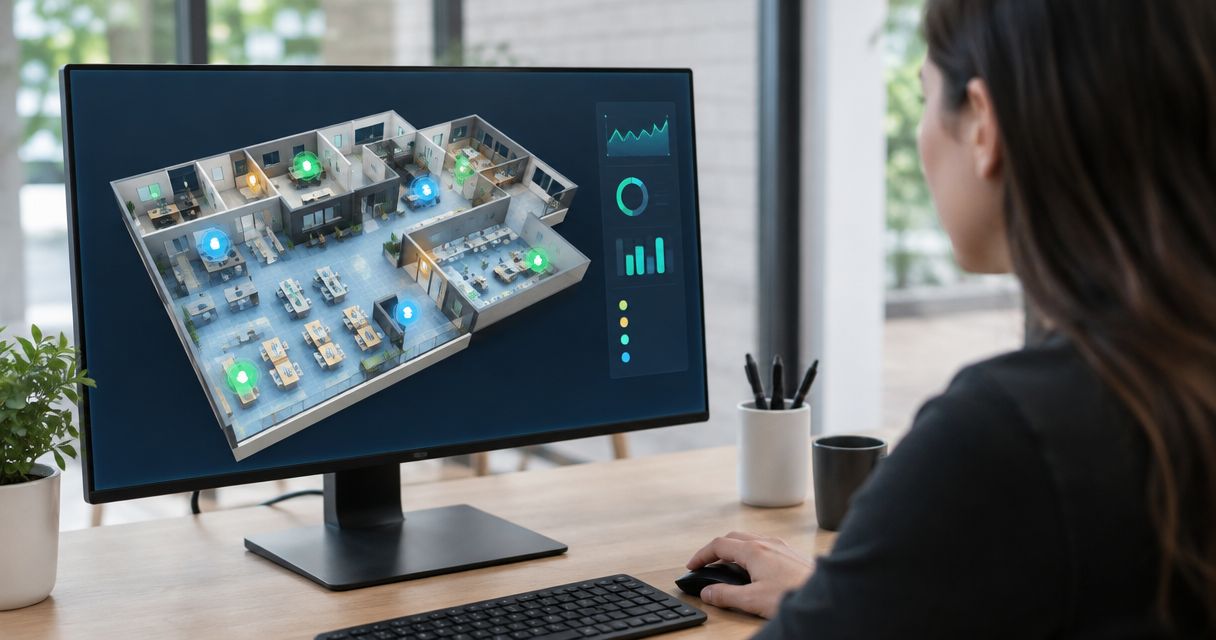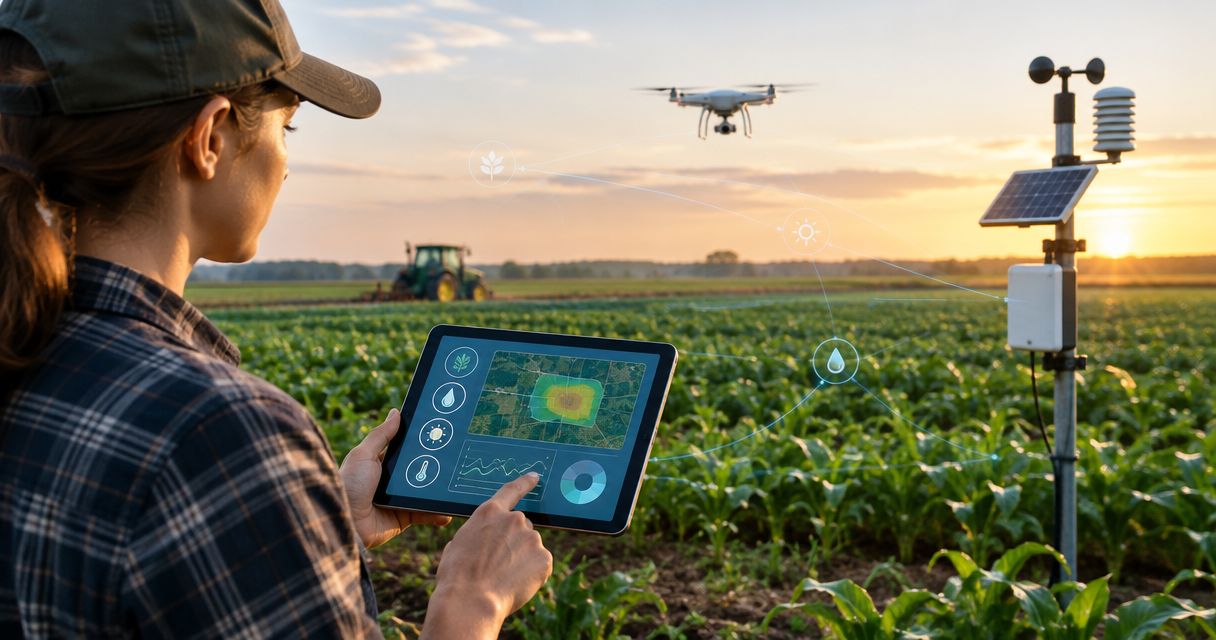
For a mixed-sensor farm, the Kilo IoT Platform belongs on your shortlist for connected-device monitoring and configured automation; ThingsBoard fits a self-hosted application, AWS IoT Core fits a custom cloud backend, and Arduino Cloud fits an Arduino-based prototype. The best IoT platform for precision agriculture is the one that connects your actual field equipment to a useful decision—and shows whether the resulting action worked.
- Kilo fits integrators evaluating an IoT platform for precision agriculture with device monitoring, alarms and configured automation.
- ThingsBoard fits self-hosted agricultural IoT applications; AWS IoT Core fits developer-built cloud backends.
- Arduino Cloud fits Arduino-based smart farming prototypes, not an assumed turnkey farm-management system.
- Evaluate soil moisture monitoring, irrigation feedback and connection failures before expanding a deployment.
Written by Tim Kravchunovsky
Start with the farming decision, not the dashboard
Precision agriculture uses observations to adjust management to conditions within a farm. For an IoT project, that means connecting measurements such as soil moisture, weather, tank level or irrigation flow to a specific decision. Collecting readings is the beginning, not the outcome.
A grower deciding whether to irrigate needs more than a moisture chart. The reading needs a location, measurement depth, timestamp and interpretation appropriate to the soil and crop. An irrigation manager also needs to know whether water is available and whether the equipment responded.
For your 2026 shortlist, separate three responsibilities: measuring field conditions, deciding what to do, and operating equipment. A platform can help connect those responsibilities, but it doesn't replace sensor placement, agronomic judgment or the local controls protecting a pump.
What makes a good IoT platform for precision agriculture?
Use these criteria before comparing platform names:
- Device compatibility: Confirm the sensor interface, payload format and required connector—not just a shared protocol name.
- Agricultural context: Associate measurements with field, irrigation zone, installation depth, units and equipment identity.
- Data freshness: Distinguish a current reading from an old reading that happens to look normal.
- Actionable monitoring: Turn meaningful conditions into an assigned response, rather than another unattended chart.
- Control and feedback: Separate permission to request an action from evidence that equipment performed it.
- Deployment ownership: Decide who maintains connectivity, software, integrations and field equipment after installation.
These criteria prevent a common purchasing mistake: comparing a complete monitoring application with a cloud messaging service as though they were interchangeable. Both can support agriculture, but the engineering work sits in different places.
Precision agriculture platforms at a glance
The order below starts with an integrated monitoring option, then moves toward self-managed software, cloud components and prototyping. Each recommendation serves a different implementation choice; this is a workflow shortlist, not a field-performance ranking.
| Platform | Best for | Standout capability | Key limitation |
|---|---|---|---|
| Kilo | Integrators connecting mixed-device monitoring and configured actions | Device data, dashboards, alarms, rules and AI assistance in one platform | Agricultural interpretation and equipment integrations still need configuration |
| ThingsBoard | Teams building a self-hosted agricultural IoT application | Open-source device management, dashboards and rule processing | Self-hosting requires software operations and maintenance |
| AWS IoT Core | Developers building a custom agricultural cloud backend | Managed device connectivity and message routing into AWS services | Farm-facing applications require additional services and development |
| Arduino Cloud | Makers validating an Arduino-based field prototype | Connected variables and dashboards for supported devices | Hardware and workflow suitability need separate field validation |
1. Kilo: best fit for mixed-device monitoring and automation
Kilo brings device records, measurements, dashboards, alarms and configured automation into a shared operating layer. For agriculture, the relevant starting point is connecting supported devices and giving their readings useful context—not assuming the platform already understands every crop or irrigation installation.
An integrator could configure a workflow around soil observations, reservoir measurements and irrigation equipment feedback. That is an illustrative application, not a claim of a documented farm deployment. The required sensors, interfaces and command definitions determine what the finished system can do.
Kilo is a fit for precision agriculture integrators who need connected-device context, alarms and configured actions in one platform. Its AI assistance adds another way to work with supported platform functions, but it doesn't turn a simple threshold alarm into an agronomic model.
Kilo pros:
- Device management and dashboards support a shared view of connected measurements.
- Rules and alarms provide a path from observations to configured responses.
- Permissions and supported commands establish boundaries for operating connected equipment.
- Built-in AI assistance and compatible external clients support permission-bound workflows.
Kilo cons:
- Sensor compatibility, payload mapping and actuator command paths need confirmation for each deployment.
- Platform capabilities do not establish crop-specific recommendations, yield prediction or autonomous irrigation expertise.
Best for: Integrators assembling monitoring and automation around supported agricultural equipment.
Verdict: Hold a purchase decision until an end-to-end pilot proves the required measurements, response and feedback.
2. ThingsBoard: best fit for a self-hosted agricultural application
ThingsBoard is an open-source IoT platform with device management, telemetry dashboards and rule processing. Its public documentation describes these application-building capabilities; they provide building blocks for a farm monitoring system rather than an agronomy service.
Self-hosting gives your team responsibility for the software environment. That matters when control over deployment is a project requirement, but it also means someone must maintain the application, database, access controls and recovery procedures.
For example, an integrator could build field-specific dashboards and route sensor events through configured rules. The useful comparison isn't whether the dashboard looks better than another platform's dashboard. It's whether your team wants to own the software operations behind it.
ThingsBoard pros:
- Open-source software supports a self-managed deployment approach.
- Dashboards and rule processing provide foundations for monitoring applications.
- Device telemetry can be organised into a custom agricultural workflow.
ThingsBoard cons:
- Self-hosting creates ongoing maintenance and recovery responsibilities.
- Crop interpretation, sensor integration and equipment control remain implementation work.
Best for: Developers or integrators with a clear requirement to operate their own IoT application infrastructure.
Verdict: Hold until you have assigned responsibility for updates, backups and production support.
3. AWS IoT Core: best fit for a custom agricultural cloud backend
AWS IoT Core provides managed device connectivity and message routing. AWS documentation describes its MQTT support, device authentication and rules for directing messages into other AWS services.
This is a foundation for an application, not the finished farm application itself. Developers build the storage, analytics, user interface and operational workflows around it, choosing additional services according to the project's requirements.
An agricultural technology company building its own product could use this approach to connect field devices to a custom backend. A grower expecting a ready-to-configure monitoring dashboard should evaluate the additional development work before selecting it.
AWS IoT Core pros:
- Managed connectivity reduces the need to operate the core device-messaging service yourself.
- Device authentication supports controlled access to the backend.
- Message rules connect incoming device data with other AWS services.
AWS IoT Core cons:
- Farm-facing dashboards and decision workflows require additional implementation.
- The team must manage an application architecture spanning the services it selects.
Best for: Agricultural software teams building a differentiated product with dedicated cloud developers.
Verdict: Hold unless a custom backend is an intentional requirement rather than an accidental project expansion.
4. Arduino Cloud: best fit for an Arduino-based agricultural prototype
Arduino Cloud connects supported devices with cloud variables and dashboards. Arduino's documentation describes this workflow, making it a relevant option when a prototype already uses compatible Arduino hardware.
A prototype can test whether a measurement is useful and whether someone responds to it. It cannot, by itself, establish that the enclosure, power system, connection or sensor installation will withstand agricultural field conditions.
Keep the prototype's question narrow. Validate a sensing workflow before treating it as the operating system for an entire farm.
Arduino Cloud pros:
- Connected variables provide a direct way to expose prototype measurements.
- Dashboards help demonstrate a sensing workflow to its intended users.
- Supported Arduino devices offer a clear starting point for an Arduino-based project.
Arduino Cloud cons:
- Supported-device compatibility is not proof of outdoor deployment suitability.
- A prototype still needs separate validation of reliability, security and operational ownership.
Best for: Makers and developers testing a focused agricultural sensing concept with compatible hardware.
Verdict: Hold a production rollout until the prototype has passed field and failure testing.
How to evaluate an irrigation monitoring workflow
An illustrative irrigation pilot makes the comparison concrete. Assume the project has a soil sensor, a reservoir-level measurement, a compatible irrigation controller and a way to observe water flow. These are design assumptions, not a customer installation or a recommended equipment package.
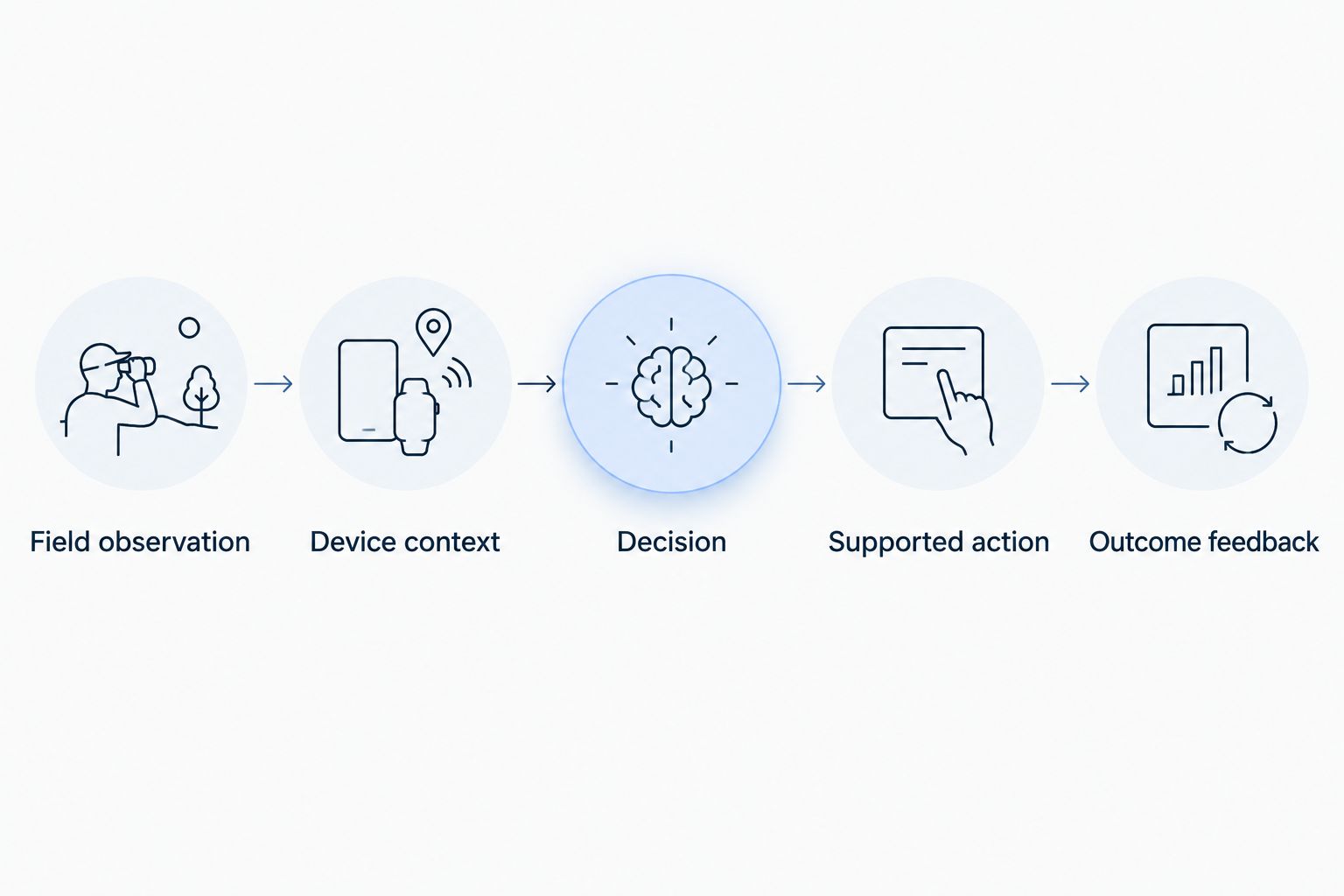
Use the same workflow when evaluating every platform:
- Field observation: Receive measurements with the correct device identity, timestamp and units.
- Device context: Associate each observation with the relevant field, zone and installation details.
- Decision: Apply a grower-approved rule or route the information to the person responsible.
- Supported action: Request an equipment operation only through a verified interface and authorised command path.
- Outcome feedback: Examine device feedback or subsequent measurements to determine what happened.
The distinction between an action request and an outcome is essential. A command marked accepted, queued or delivered doesn't prove that a valve opened or water reached the crop.
If the project uses AI assistance, keep the same boundaries. An assistant needs relevant observations, permission to access the required resources and a supported action path. Compatible clients such as Claude through MCP have their own approval behaviour; don't assume their tools or confirmations match those of a built-in assistant.
Deliberately configured automation can act without waiting for a person. Decide that behaviour explicitly, and retain the local equipment protections required by the installation.
Test failures before expanding across the farm
A useful pilot must show what happens when the expected reading or response never arrives. Start with observation-only monitoring, then introduce alerts, and add equipment commands only after the measurement workflow is dependable.
Test these conditions as distinct cases:
- A sensor stops reporting while its last reading remains normal.
- A payload arrives with unexpected units or an unmapped value.
- The internet connection disappears while local equipment continues operating.
- An alert reaches a user who cannot respond.
- A command is accepted but the expected feedback never appears.
Do not assume cloud software supplies local buffering or autonomous operation during an outage. Those behaviours depend on the selected devices, gateways, controllers and application design.
Hardware sourcing is a separate decision. Kilo Electronics is a separate online authorised dealer for compatible hardware, serving individual and business buyers; selecting a purchasing channel does not establish compatibility with your complete agricultural workflow.
How the shortlist is organised
The recommendations distinguish four implementation choices using the same criteria: device connection, application functionality, operational ownership and the work remaining before deployment. They are not based on invented field trials, yield improvements or measured deployment times.
For your selection, ask each provider to demonstrate the same sensor payload, dashboard requirement, missing-data condition and intended response. Comparing identical tasks exposes the difference between a supported feature and an integration your team still has to build.
Which platform should you choose?
Start with an integrated monitoring platform if your main goal is to connect supported field measurements, show their context and configure useful responses. Choose self-hosted software when operating the application infrastructure is a requirement, or a cloud backend when building a custom product is the objective.
Use an Arduino-based option for a focused prototype when that matches your hardware and skills. Don't turn a prototype choice into a production commitment without testing the field workflow.
For an undecided reader, the next move is a bounded monitoring pilot—not a farm-wide automation purchase. Define the decision, connect representative equipment and require evidence of both normal operation and failure behaviour.
FAQ
What's the best IoT platform for precision agriculture?
The best fit depends on whether you need an integrated application, self-hosted software, a custom cloud backend or a prototype. Compare platforms using the same sensor data, decision workflow and failure tests rather than a generic feature count.
Can an IoT platform automatically control irrigation?
An IoT platform can control irrigation only through compatible equipment and a configured command path. Verify permissions, local equipment protections and feedback; a delivered command is not proof that water flowed.
Do I need AI for soil moisture monitoring?
You don't need AI to collect soil moisture readings or trigger a configured threshold alert. AI assistance is a separate capability, and crop-specific recommendations require suitable agronomic inputs and validation.
Will LoRaWAN sensors work with any agricultural platform?
A shared LoRaWAN connection does not guarantee complete compatibility. Confirm the network integration, payload decoder, measurement mapping and any required downlink commands for the specific device.
Is a soil moisture percentage enough to decide when to irrigate?
A soil moisture percentage alone is not a complete irrigation decision. Interpretation depends on the measurement method, soil, installation depth, crop and management objective.
What happens if the farm loses its internet connection?
Outage behaviour depends on the devices, gateways, local controllers and application design. Test whether measurements are retained and which equipment functions continue without cloud access.
What should I test before buying a platform?
Test a complete workflow from a field measurement to an assigned response and observable outcome. Include stale data, connectivity loss and missing equipment feedback before committing to a wider rollout.
Make a missing reading an explicit event
A normal-looking value can be misleading when it is no longer current. Before adding another sensor or automation rule, define how your system identifies a missing observation and who responds.
That small design decision changes the meaning of every dashboard: you can distinguish a field condition from a monitoring failure. Require both a condition signal and a freshness signal wherever a decision depends on live data.