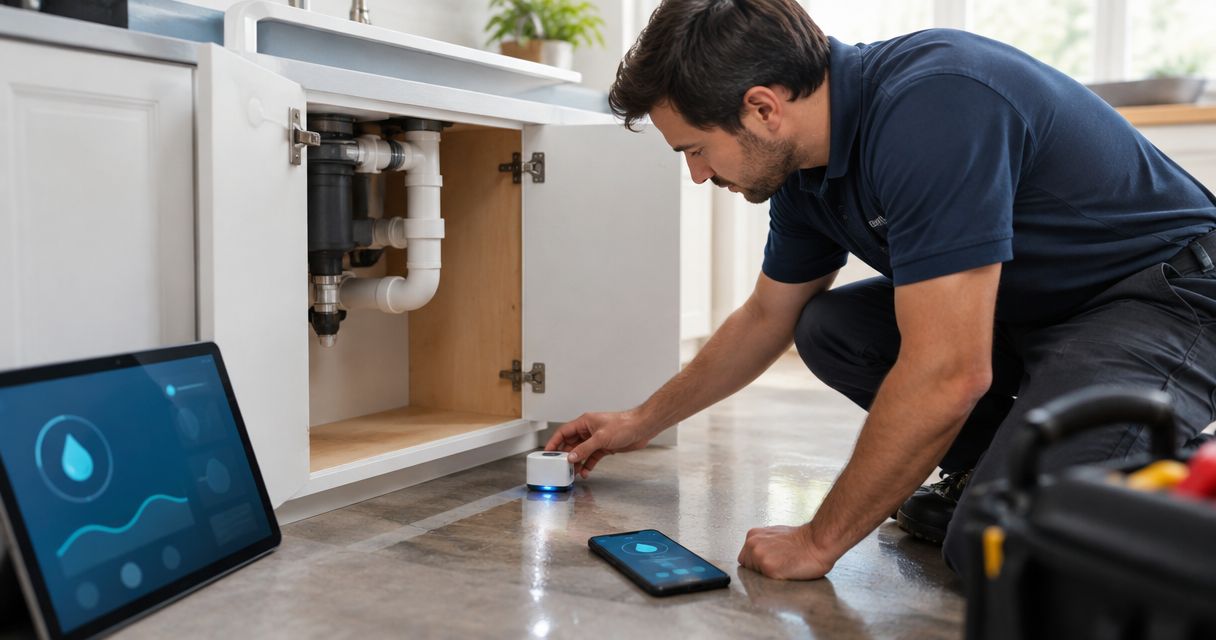
A water leak detection system’s installed cost depends on the detection coverage, installation work, and response you require; a sensor-only quote is not a complete project budget. For connected monitoring, include the IoT platform, network setup, alarm configuration, and commissioning alongside the hardware. Automatic shutoff adds a separate scope: a compatible valve, installation, a supported command path, and testing of the physical result.
- Water leak detection system cost to install depends on coverage, labor, connectivity, and the required response.
- Compare complete installed scopes, not sensor purchase totals; separate commissioning from ongoing operating costs.
- Kilo supports connected monitoring; physical leak detection and shutoff still require compatible hardware and configuration.
- An alert reports a detected condition. Automatic shutoff needs a compatible actuator and verified feedback.
How much does a water leak detection system cost to install?
Get an itemized installed quote for a defined coverage and response plan—not a sensor count alone. A detector under a sink, monitoring across a building, and a system that closes a supply valve are different projects. Their quotes should describe those differences before you compare the totals.
Start by separating initial installation from ongoing operation. Then ask each supplier to account for the same work, including configuration and acceptance testing, so a missing service does not look like a saving.
| Budget component | What the installed quote should identify | What to clarify |
|---|---|---|
| Site survey | Detection locations, access constraints, and network assessment | Whether the survey is included |
| Detection hardware | Sensors, probes, sensing cable, or other specified equipment | Exactly which areas each device covers |
| Network infrastructure | Required gateways, power, and backhaul | Whether existing infrastructure is suitable |
| Installation labor | Mounting, routing, labeling, and any plumbing or electrical work | Access arrangements and excluded work |
| Software setup | Device records, location context, dashboards, and alarms | Who configures and tests the system |
| Shutoff equipment | Compatible valve, actuator, and command integration | Whether shutoff is included or excluded |
| Commissioning | Detection, communication, notification, and response tests | Evidence required before acceptance |
| Ongoing operation | Software, connectivity, maintenance, and support | Billing basis and responsibility |
Request a written exclusions list beside this breakdown. Repairs to an existing leak, opening concealed spaces, and restoring finishes should not be silently assumed to belong to the monitoring installation.
The useful answer is therefore a scoped project quote. An unsupported average would hide the very differences that determine what you receive.
Choose detection and response before requesting quotes
Decide what should happen when water is detected. Do you need someone nearby to hear an alarm, a remote team to receive a location-specific notification, or a configured system to attempt isolation of a water supply?
These options are not interchangeable. Use the following comparison to specify the outcome you want, rather than treating every product labeled leak detection as equivalent.
| System approach | Best for | What it provides | Main limitation | Installation scope to confirm |
|---|---|---|---|---|
| Local leak alarm | Occupied spaces with a nearby responder | An alarm at the detection location | A local alarm alone does not notify a remote team | Placement, power, audibility, and access for testing |
| Connected leak monitoring | Buildings or portfolios needing remote awareness | Detection events delivered through a configured monitoring workflow | Notification still requires someone to respond | Connectivity, device mapping, recipients, and commissioning |
| Connected detection with shutoff | Suitable water supplies where isolation is part of the response plan | Monitoring plus a configured command to a compatible actuator | Command status alone does not prove water has stopped | Plumbing, actuator integration, permissions, and physical verification |
A local alarm avoids a remote notification workflow, but it depends on someone being close enough to respond. Connected monitoring provides remote awareness, but the project must establish reliable communication and clear responsibility for investigating an alarm.
Automatic shutoff changes the engineering question. You must identify the supply being isolated, the consequences of closing it, and how someone restores service afterward. Do not include automatic valve closure merely because a sensor and valve share a protocol name. Compatibility must cover the actual device interface and configured action.
Why water leak detection installation costs vary
The main drivers are the work required to detect water where it matters and the work required to turn that detection into a useful response. Give installers the same information about these factors:
- Detection coverage: Specify the equipment, rooms, pipe routes, or vulnerable areas to monitor. Building floor area alone does not describe where water must reach a detector.
- Site access: Identify concealed locations, occupied units, restricted rooms, and installation windows. Ask who arranges access and reinstatement where needed.
- Connectivity: Establish how events travel from each sensor to the monitoring system. Include gateway placement, power, backhaul, and on-site communication testing where required.
- Response requirements: Separate local notification, remote alarms, and automatic shutoff. Each needs a defined workflow rather than an assumption that detection handles everything.
- Integration work: Identify existing software, device interfaces, payload mapping, and any required command definitions. A supported transport protocol does not establish complete device compatibility.
- Handover and maintenance: Define acceptance tests, staff instruction, replacement access, and ownership of recurring checks. Installation is not finished when the last sensor is mounted.
Ask suppliers to describe assumptions against each driver. This makes a revised quote easier to understand when a survey changes the design, because you can identify the added work rather than receiving an unexplained new total.
What should a commercial installation quote include?
A useful quote connects every physical detector to a location, a monitoring function, and a response owner. Otherwise, you can buy functioning devices without establishing who investigates their alarms or how they find the affected area.
Request a location schedule showing the proposed detection points and their purpose. For each location, record the device type, mounting arrangement, communication path, and access requirements. Keep device identification consistent between the installer’s records and the monitoring software.
Next, define configuration work. A quote should say who onboards devices, interprets incoming data, assigns location names, sets alarm behavior, and configures the intended recipients. Do not assume that supplying a cloud-connected sensor includes these services.
Finally, describe the handover deliverables:
- A device and location inventory that the building team can understand.
- A record of the detection and communication tests performed.
- Confirmation that the intended recipient received the test notification.
- Instructions for investigating, clearing, and retesting an alarm.
- Ownership of maintenance, configuration changes, and support requests.
- Shutoff and restoration instructions where valve control is included.
These deliverables make the installation assessable. They also help a future technician distinguish a failed device, a communication problem, and a configuration issue without starting the investigation from scratch.
How does connected monitoring fit into the budget?
The Kilo IoT Platform brings device data, dashboards, alarms, permissions, and automation into a shared software environment. For a leak-monitoring project, the relevant role is connecting a supported detector’s information to the location context and configured response that people need.
Kilo fits integrators and building teams that need connected-device monitoring, not a hardware-only leak alarm. Its value depends on the connected deployment: software does not detect water without suitable hardware, and an alarm does not close a valve by itself.
Keep procurement responsibilities separate. Kilo Electronics is a separate online authorised dealer for hardware sourcing, serving individual and business buyers; purchasing hardware does not replace platform configuration or site installation.
For an illustrative connected-monitoring workflow, assume a compatible leak sensor is installed beneath equipment and its data is correctly mapped into the platform. The useful sequence is:
- Detection: The sensor reports a wet condition from its installed location.
- Location context: The device record identifies the building, room, and equipment to investigate.
- Alarm routing: Configured alarm behavior directs attention to the responsible recipient.
- Site response: A designated person checks the location and follows the agreed response procedure.
- Outcome verification: The team confirms the physical condition and tests the system again after corrective work.
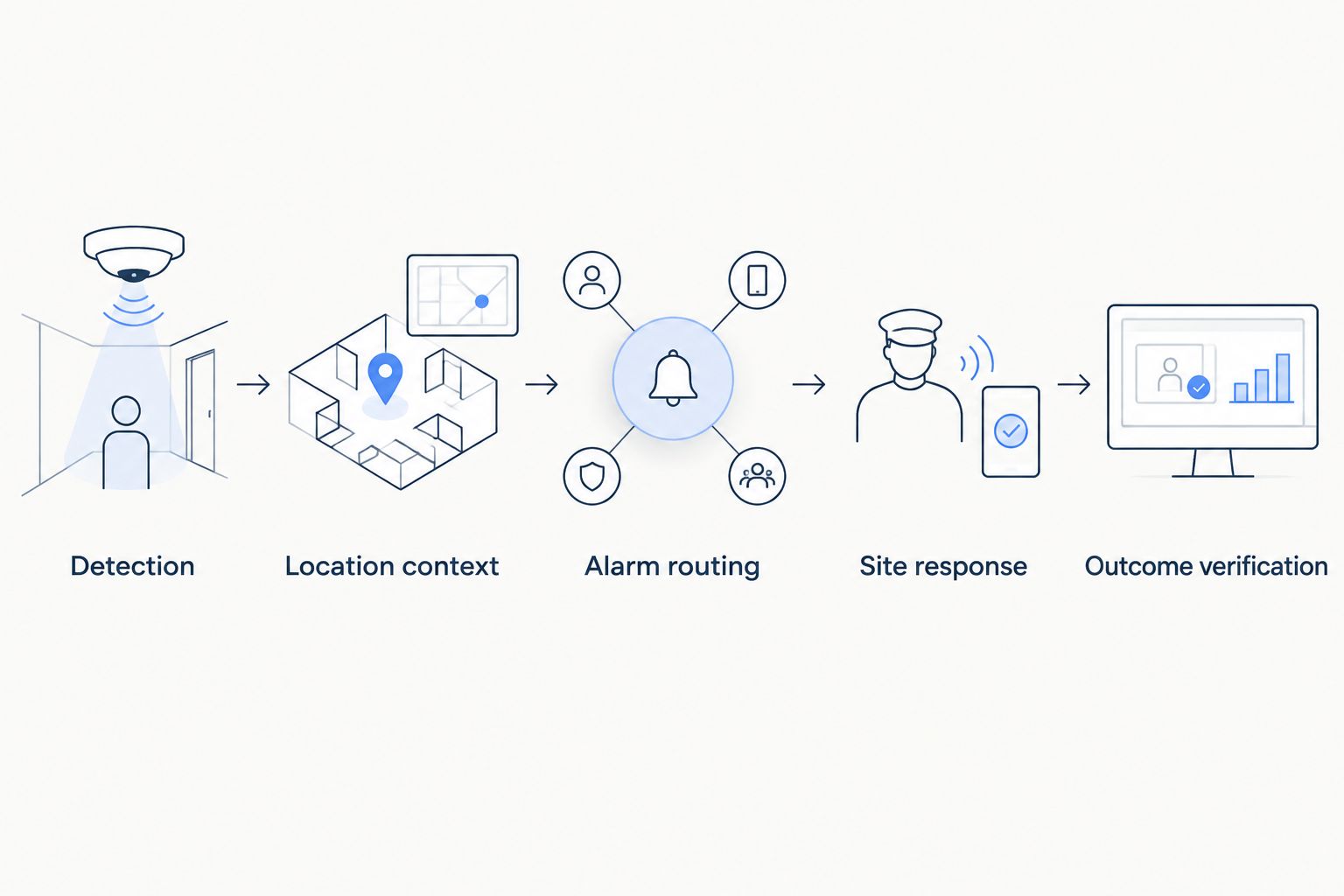
This is an illustrative configuration, not a reported customer deployment. It shows why onboarding, location naming, alarm setup, and handover belong in the installation scope alongside mounting the sensor.
Does automatic water shutoff belong in the installation budget?
Include automatic shutoff when the agreed response requires a compatible actuator to isolate a defined water supply. Specify it separately. Detection, command execution, and physical isolation are different parts of the system.
The installation scope needs to identify the valve arrangement, the supported command interface, and the conditions under which the command executes. It also needs a procedure for restoring service and handling a failed or unavailable actuator.
Where Kilo is used, deliberately configured rules can execute supported commands autonomously; not every automated action waits for a person. That makes configuration and testing part of the engineering work, not a substitute for it.
An accepted, queued, or delivered command is not proof that a valve closed. Verification depends on supported device feedback or subsequent measurements. Require the installer to explain exactly what evidence the proposed system provides and what a responder must check physically.
Before commissioning, agree how tests will avoid an unintended interruption. Restoring software configuration does not reverse a physical action that has already happened.
Can you install water leak sensors yourself?
Self-installation depends on the specified equipment and work. Placing an accessible detector is different from installing a valve, altering wiring, or commissioning a building-wide communications system.
Ask which tasks the manufacturer’s instructions allow you to perform and which require qualified trades or an integrator. Then retain the same acceptance standard: the installed detector must report the intended condition, the monitoring workflow must receive it, and the responsible person must know how to respond.
A self-installed sensor without a tested notification path is not a completed remote-monitoring deployment. Budget your own configuration and testing effort even when no installer invoices for it.
How should you compare installation quotes?
Compare quotes against the same coverage schedule and acceptance test. A lower total does not establish better value when it excludes network work, alarm configuration, or commissioning that another supplier includes.
Send each supplier a common brief containing:
- The areas and equipment requiring detection.
- The intended response, including whether shutoff is required.
- Available network infrastructure and known access constraints.
- Required device identification and location records.
- Notification recipients and response ownership.
- Acceptance tests, handover documents, and ongoing support responsibilities.
Ask each supplier to mark every item as included, excluded, or dependent on the site survey. Keep recurring charges separate from initial work, and ask what triggers additional configuration or support charges without assuming a particular billing model.
For more on the detection workflow behind that scope, see how to monitor water leaks in commercial buildings.
FAQ
Does leak detection need an internet connection?
Remote monitoring needs a working communication path between the detection equipment and the monitoring service. A local alarm is a different arrangement; specify the behavior you require when connectivity is unavailable.
Will wireless leak sensors eliminate installation work?
Wireless sensors do not eliminate placement, mounting, onboarding, communication testing, or handover. They also do not eliminate plumbing work when the project includes an installed shutoff valve.
Should I buy hardware before the site survey?
Define coverage and compatibility before committing to hardware. The survey should establish detection locations, communication requirements, access constraints, and any actuator integration needed.
Does a leak alarm guarantee that damage will be prevented?
A leak alarm does not guarantee damage prevention. Detection placement, communication, notification, response, and any isolation equipment all affect what happens after water appears.
Can existing building infrastructure be reused?
Reuse existing infrastructure only after confirming that it supports the proposed devices and workflow. A gateway or network connection being present does not establish device compatibility or adequate coverage.
What should happen when a sensor stops reporting?
Specify a separate response for missing device data where the system supports it. A lack of incoming reports should not be treated as evidence that the monitored location is dry.
Make the final payment depend on a demonstrated workflow
Ask for a controlled acceptance demonstration before signing off the installation. Follow the signal from the detector to the displayed location, the intended notification recipient, and the person responsible for investigating it.
If shutoff is included, assess its physical result separately from command delivery. That distinction is easy to miss in a quote, but it determines whether you are accepting a notification system or a tested isolation workflow.
The installation is complete when the agreed response works—not merely when the hardware is installed. Put that requirement in the scope before comparing suppliers.
Written by Tim Kravchunovsky