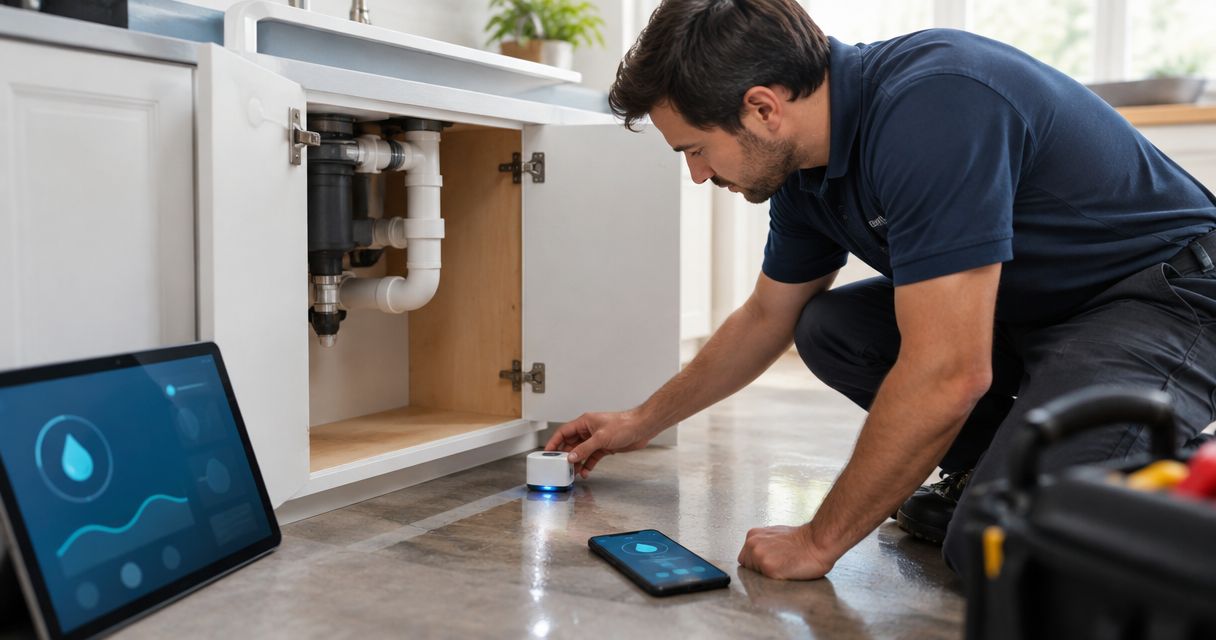
A building energy management system cost estimate should cover hardware, installation, integration, commissioning and ongoing software—not just the IoT platform subscription. The total depends on whether you need energy visibility, equipment-level diagnosis or automatic control. Existing meters can reduce the hardware scope, but connecting and validating their data still requires work.
- Compare building energy management system cost using the same metering, integration, commissioning and support scope.
- Monitoring identifies energy-use patterns; automatic control also requires compatible equipment, configured commands and outcome verification.
- Kilo supports IoT energy-monitoring workflows; platform software and physical hardware are separate purchases.
- Require a documented acceptance test before treating an installed system as an operational system.
How much does a building energy management system cost?
The useful budget is the cost of a working deployment, not the subscription alone. Start with the decisions you want the system to support, then price the equipment, connections and people needed to make those decisions possible.
A whole-building consumption dashboard and an equipment-control project are different purchases. Comparing their headline quotes without separating scope tells you little about value.
Use this breakdown when requesting proposals:
| Budget component | What the proposal should identify | What to clarify before approval |
|---|---|---|
| Metering and sensors | Existing devices to reuse and new devices to install | Measurement type, installation requirements and compatibility |
| Gateways and network access | How readings reach the platform | Coverage, site networking and responsibility for connectivity |
| Installation | Electrical work, mounting, wiring and site access | Shutdown requirements and work excluded from the quote |
| Integration | Device connections, payload mapping and external interfaces | Which readings and actions are actually supported |
| Software | Dashboards, rules, alarms, permissions and required services | Billing basis and the features included in the proposed scope |
| Commissioning | Data validation, configuration tests and handover | Evidence required before accepting the deployment |
| Ongoing operation | Support, device maintenance and configuration ownership | Who investigates failures and maintains the system |
Ask each supplier to mark every component as included, excluded or your responsibility. An inexpensive proposal with undefined integration work is not directly comparable to a commissioned installation.
Choose monitoring or control before requesting quotes
The biggest scope decision is whether the system observes energy use or changes how equipment operates. Make that distinction before selecting devices.
Monitoring gives you evidence for a decision. Control adds a path from that decision to equipment, along with permissions, operating constraints and feedback requirements.
| Project scope | Best for | Useful output | Main limitation |
|---|---|---|---|
| Whole-building monitoring | Establishing a building-level consumption baseline | Trends in total energy use | Does not identify every contributing load |
| Equipment or zone monitoring | Investigating a specific source of consumption | Readings associated with a defined asset or area | Requires suitable measurement points and correct mapping |
| Monitoring with alarms | Bringing defined conditions to someone's attention | A notification tied to a configured condition | An alert does not resolve the underlying issue |
| Integrated equipment control | Acting through supported equipment interfaces | A configured command followed by available feedback | Requires compatible controls and careful commissioning |
Whole-building monitoring: establish the baseline
Whole-building monitoring suits owners and energy managers who need to understand when consumption changes. Its strength is a clear starting point; its limitation is attribution.
A building-level trend can show consumption continuing outside expected operating hours. It cannot, by itself, establish whether the cause is ventilation, refrigeration, lighting or another load. Budget for additional measurements only where they answer a useful question.
Equipment monitoring: investigate a defined load
Equipment-level monitoring suits integrators and facilities teams investigating a particular asset or circuit. The benefit is a closer connection between a reading and an operational decision.
The measurement must support the conclusion. A current measurement is not automatically a complete energy measurement, so specify the quantity you need rather than asking for a generic sensor. Installation and interpretation belong in the proposal alongside the device.
Automatic control: include the action path
Automatic control suits projects where a defined operating change is both useful and supported by the equipment. It requires more than a dashboard button.
Specify the permitted action, the interface that carries it, the conditions that allow it and the feedback used to assess the result. An accepted or delivered command is not proof that equipment changed state. Keep local equipment protections and the responsibility for operating decisions explicit.
Why building energy management system costs vary
These scope factors explain why proposals for apparently similar buildings can describe very different projects:
- Measurement coverage. A main meter, tenant submeters and individual equipment measurements answer different questions. Define coverage by the decisions you need to make.
- Existing infrastructure. Reusable meters and accessible data can remove some hardware work, but their interfaces and readings still need validation.
- Installation conditions. Electrical access, mounting locations, cable routes and permitted shutdown windows affect the work an installer must plan.
- Integration depth. Displaying incoming readings is a different task from mapping equipment context, connecting external systems or enabling commands.
- Control requirements. Read-only monitoring avoids an equipment-action path. Control requires supported interfaces, permissions, testing and available feedback.
- Operating responsibilities. A software subscription and a managed monitoring service are different scopes. Establish who maintains devices, reviews alarms and updates configurations.
Floor area alone does not describe these requirements. Include it in the building brief, but also provide the meter inventory, equipment list, available interfaces and intended workflow.
Turn the building survey into a comparable proposal
A useful specification follows the information from measurement to action and verification. This prevents a supplier from quoting a dashboard while you expect an operational improvement service.
Use the following sequence with your integrator:
- Define decisions. State the question the system must answer, such as whether ventilation continues outside the approved schedule.
- Map measurements. Identify the readings, units, timestamps and equipment context required to answer it.
- Verify connections. Confirm how those readings reach the software and who owns each connection.
- Assign responses. Specify who reviews the finding and whether the response is manual or automated.
- Confirm outcomes. Define the evidence that shows a configuration or equipment change had the intended effect.
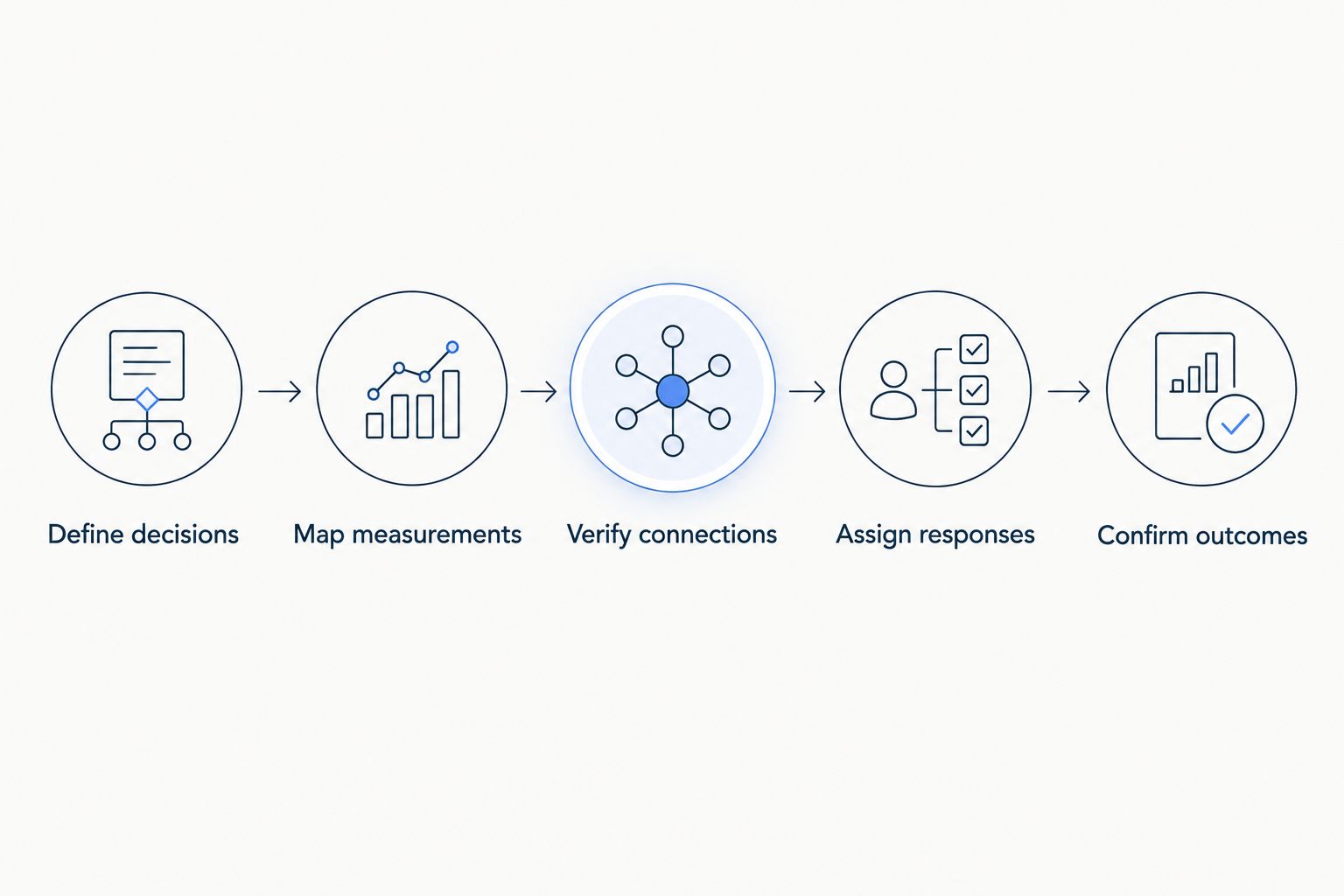
For each step, request a deliverable and an owner. A measurement list belongs to the project documentation; a verbal assurance that the integration should work does not replace a connection test.
Also ask what happens when data stops arriving. The handover should distinguish a genuine low reading from a missing reading, so your team does not mistake a communication problem for reduced consumption.
What should commissioning prove before handover?
Commissioning should demonstrate that the system supports the agreed decisions. A populated dashboard is a starting point, not the entire acceptance test.
Ask the installer or integrator to demonstrate:
- Readings correspond to the intended meter, circuit or equipment.
- Units and timestamps are interpreted correctly.
- Dashboards show the agreed measurements and context.
- Configured alarms reach the intended recipient.
- User permissions match assigned responsibilities.
- Any control workflow uses the documented command path and available feedback.
Separate software configuration from physical installation in the handover record. If an alarm fails because its source reading never arrives, your team needs to know whether the fault belongs to the device, network, integration or configuration.
For control projects, agree on the test conditions before execution. Testing an action against connected equipment can perform a real operation; do not assume a debugging interface is an isolated simulation.
How does an IoT platform fit into the budget?
The Kilo IoT Platform brings device data, dashboards, rules, alarms and permissions into one software layer. For an energy-monitoring project, those capabilities help connect measurements with the people and workflows that use them.
Kilo fits integrators and building teams that need an IoT software layer for connected-device monitoring and automation. It does not replace the meters, electrical installation or equipment-specific integration required by the project.
Consider this illustrative monitoring workflow, not a reported customer deployment: an integrator connects a compatible energy-data source, associates its readings with the relevant equipment and configures a dashboard. A configured condition raises an alarm, and the responsible person investigates the equipment schedule. Subsequent readings provide evidence for assessing the change.
Kilo can support that software workflow, but the system's usefulness still depends on correct measurements and a defined response. A threshold alarm is conventional automation; it does not need to be described as AI.
Hardware remains a separate sourcing decision. Kilo Electronics is a separate online authorised dealer for compatible hardware, serving individual and business buyers. Match hardware to the documented measurement and integration requirements rather than treating a hardware purchase as proof of platform compatibility.
Can you reuse existing meters and building controls?
Yes, where their data or control interfaces are accessible and supported by the proposed integration. Reuse should follow verification, not an assumption based on a protocol name.
Ask the integrator to identify the exact measurements available, the access required and any intermediary equipment. For controls, specify the supported actions separately from read-only data access.
A meter that already provides the required readings can remove the need for another measurement device. It does not remove the work of assigning those readings to the correct equipment, validating units or documenting ownership.
How do you evaluate savings without assuming a payback?
Compare measured energy use before and after an identified intervention, while accounting for relevant operating changes. A dashboard does not create savings simply by displaying consumption.
Record what changed: a schedule, operating practice, equipment setting or maintenance condition. Then assess the subsequent readings alongside occupancy, operating hours, weather or production activity where those factors affect the comparison.
Keep energy reduction separate from financial savings. The financial result also depends on the applicable tariff and charges; a change in consumption does not translate into an identical change in the bill.
FAQ
Should I compare building energy management systems by cost per square foot?
Use cost per square foot only alongside a defined scope. Metering coverage, existing interfaces, installation conditions and control requirements describe work that floor area alone does not capture.
Does an energy-management software subscription include installation?
Treat installation as a separate scope item unless the proposal explicitly includes it. Ask who supplies hardware, performs electrical work, configures connections and commissions the deployment.
Do I need automatic control to start monitoring building energy use?
No, energy monitoring can operate without automatic equipment control. You still need suitable measurements, reliable data connections and someone responsible for acting on findings.
Who should own energy alarms after the installer leaves?
Assign energy alarms to a named person or team with an agreed response. Include configuration maintenance and fault investigation in the handover rather than assuming the installer will continue monitoring.
What should I ask about data access before signing?
Ask how your team can access and export the measurements required for ongoing analysis. Confirm the proposed access method, included scope and responsibilities rather than assuming every interface is available.
Can the same meter data support tenant billing?
Do not assume monitoring data is suitable for tenant billing. Confirm the applicable metering, contractual and legal requirements separately from the energy-monitoring specification.
Request evidence before expanding the deployment
The most useful pilot deliverable is not a screenshot. It is a documented chain from a valid measurement to a useful decision and an observable result.
Before expanding, ask your team to demonstrate that chain using the proposed workflow. If nobody owns the response to a finding, adding more sensors expands the data collection—not the energy-management process.
Related guides
Written by Tim Kravchunovsky