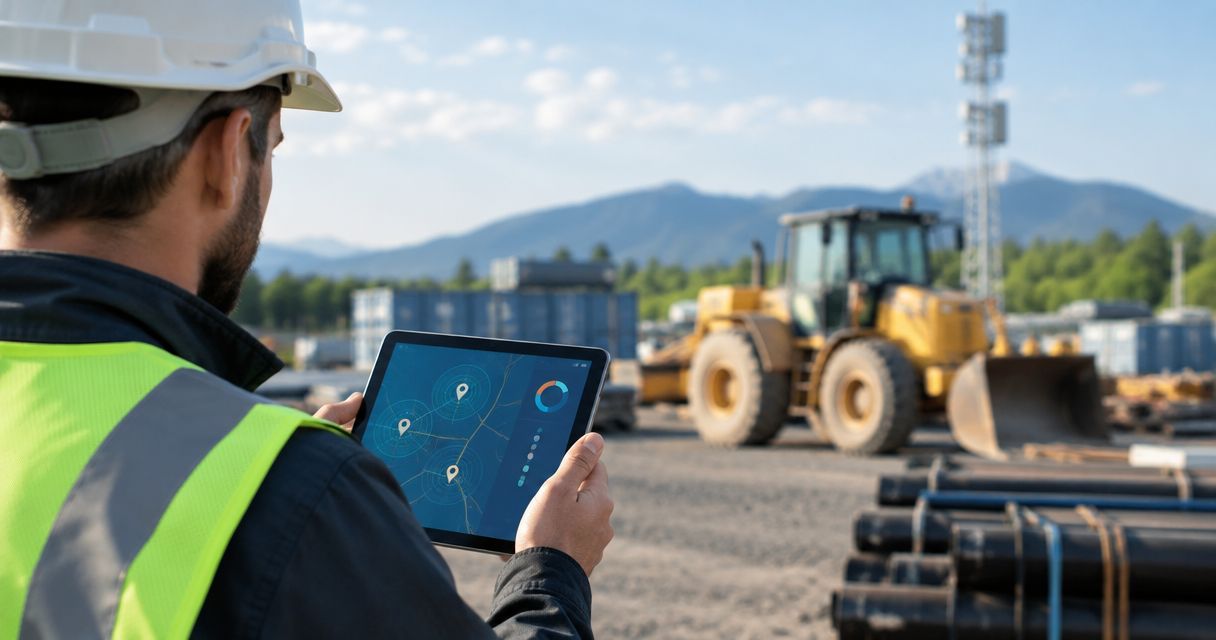

Calculating ROI on an industrial IoT monitoring deployment comes down to comparing what you spend on sensors, connectivity and the platform against what you stop losing — spoiled inventory, unplanned downtime, wasted labor on manual checks, and emergency repairs that a two-minute alarm could have prevented.
- ROI on industrial IoT monitoring = (avoided losses + labor savings - platform cost) / platform cost, tracked over 12 months.
- Pull your baseline numbers before deployment: current downtime hours, spoilage incidents, and manual inspection labor cost.
- Predictive maintenance alerts and vibration monitoring for pumps and motors typically pay back through avoided catastrophic failures, not gradual savings.
- Cold chain compliance monitoring ROI shows up fastest — one avoided spoilage event often covers a full year of sensor cost.
- Recalculate at 90 days with real alarm and downtime data, not the vendor's projected numbers.
Why this matters
Most facilities teams get IoT ROI wrong in one of two ways. They either skip the math entirely and buy sensors because a competitor has them, or they build a spreadsheet before deployment full of vendor-supplied assumptions nobody validates later. Neither approach survives a budget review in 2026.
The fix is to treat ROI as a live number, not a pitch-deck slide. You need a baseline before sensors go live, a cost model that includes hardware, connectivity and platform fees, and a 90-day checkpoint where you replace assumptions with real alarm logs. A predictive maintenance alerts setup that never gets audited against actual downtime avoided is a deployment nobody can defend at renewal time.
What you'll need
- 12 months of baseline data — downtime hours, spoilage or scrap incidents, manual inspection labor hours, emergency repair invoices
- A cost breakdown — sensor hardware, gateway or connectivity fees, platform subscription, install labor
- A monitoring platform with alarm history and export — you can't calculate avoided losses without a record of what triggered and when
- A stakeholder who owns the downtime or spoilage cost — plant manager, facilities director, or cold chain compliance lead
- A spreadsheet or BI tool for the actual ROI calculation — nothing fancy, just consistent formulas
The steps
1. Establish your baseline cost of the problem
This is the number everything else gets measured against. Pull the last 12 months of incident data: how many hours of unplanned downtime, how many spoilage or quality-hold events, how many emergency service calls at overtime rates.
Multiply hours by your known cost per hour of downtime — plant controllers usually have this number already for insurance or budgeting purposes. If a compressor failure cost you 14 hours of line downtime at $3,200/hour last year, that's $44,800 from one event alone. Expected outcome: a single annualized dollar figure representing your current exposure. Common mistake: using industry-average downtime costs instead of your own — a beverage line and a cold storage facility have wildly different numbers.
2. Build the full deployment cost, not just hardware
Sensor cost is the smallest line item most teams get right and the smallest part of total cost of ownership. Add gateway hardware, LoRaWAN or mioty connectivity fees, the platform subscription, and install labor — including the hours it takes to mount sensors and configure a dashboard.
A deployment with 40 temperature and vibration sensors across a plant floor might run $6,000-$9,000 in hardware, plus a recurring platform fee. Expected outcome: a first-year cost and an ongoing annual cost, kept separate. Common mistake: ignoring the labor hours spent on manual data pulls before automation — that's a real cost you're currently paying and should count as a baseline expense, not a wash.
3. Map each sensor type to a specific avoided-loss category
Not every sensor pays back the same way. Temperature sensors on a cold storage unit avoid spoilage. Vibration monitoring for industrial pumps and motors avoids catastrophic bearing failure and the six-figure repair that follows. Tank level sensors avoid overflow cleanup and regulatory fines.
List each sensor deployment against the specific loss category it targets before you calculate anything. Expected outcome: a table linking sensor type to loss category, so the ROI math isn't one blended guess. Common mistake: lumping every sensor into "efficiency gains" — vague categories don't survive a budget review.
4. Calculate avoided losses using alarm history, not projections
Once the platform is live for 60-90 days, pull the alarm log. Count how many alarms fired, how many were acted on before an incident occurred, and estimate what each prevented event would have cost using your baseline numbers from step 1.
If your cold chain compliance monitoring caught three temperature excursions in a walk-in freezer before product hit an unsafe threshold, and each excursion would have cost $4,000-$12,000 in spoiled inventory, that's your first real avoided-loss number. Expected outcome: a dollar figure backed by actual alarm timestamps, not vendor marketing claims. Common mistake: counting every alarm as an avoided loss — most alarms are noise or near-misses that never would have escalated.
5. Add labor savings from eliminated manual checks
If staff used to walk the floor twice a shift logging temperatures or pressure readings on a clipboard, that labor is now redeployable. Multiply hours saved per week by loaded labor cost.
Ten hours a week at $28/hour loaded cost is $14,560 a year — real money even before you factor in faster response time. Expected outcome: a labor-savings line item separate from avoided-loss figures. Common mistake: double-counting labor hours that were already being cut for unrelated reasons.
6. Run the ROI formula and set a payback timeline
(Avoided losses + labor savings - total platform cost) / total platform cost = ROI percentage. Divide total first-year cost by monthly avoided losses plus labor savings to get payback period in months.
A plant spending $18,000 in year one and avoiding $52,000 in losses plus $14,000 in labor sees a 267% ROI and roughly a 4-month payback. Expected outcome: one number leadership can act on. Common mistake: presenting ROI as a single static figure instead of a range with a confidence note tied to how much alarm history you actually have.
7. Recalculate at 90 days, 6 months, and 12 months
ROI on industrial IoT monitoring isn't a one-time calculation — it's a number that firms up as you accumulate real incident data. The 90-day number is a rough draft. The 12-month number is what goes in the budget review.
Expected outcome: three checkpoints, each replacing assumptions with actuals. Common mistake: stopping the calculation after the initial pitch deck and never revisiting it, which is exactly why finance teams distrust IoT ROI claims.
Troubleshooting
- Avoided losses feel impossible to prove — cross-reference alarm timestamps against maintenance logs or quality-hold records from the same window. If a vibration alert fired 6 hours before a scheduled bearing inspection found early wear, that's your evidence trail.
- Baseline data doesn't exist — if you never tracked downtime cost before, start tracking now and use the first 90 days post-deployment as your baseline instead of pretending you have historical numbers.
- ROI looks weak in year one — hardware and install costs front-load in year one; recalculate on a 24-month basis since connectivity and platform fees stay flat while avoided-loss totals compound.
- Stakeholders don't trust the numbers — bring the plant manager or facilities director who owns the downtime cost into the calculation from day one, not after the fact.
- Too many sensors, too little signal — an over-alarmed dashboard makes it impossible to tell which alerts actually prevented a loss; tighten thresholds before recalculating ROI.
- Connectivity costs weren't budgeted — multi-site deployments on cellular or satellite links can add recurring fees that weren't in the original hardware quote; add them retroactively to keep the cost side honest.
See your deployment's ROI inputs
Walk through alarm history and cost data on a live Kilo Cloud dashboard.
Tools and resources
- An alarm-history export from your monitoring platform — the single most important input for step 4
- A cost model that separates hardware, connectivity, and platform fees
- Vibration monitoring for industrial pumps and motors if catastrophic mechanical failure is your biggest loss category
- Cold chain compliance monitoring if spoilage and regulatory risk drive your baseline cost
- A broader look at industrial IoT platforms for manufacturers if you're still comparing platform options before the ROI math even starts
What to do next
Once your 90-day ROI checkpoint is done, the next move is tightening the alarm rules that drive your avoided-loss numbers — vague thresholds inflate false positives and make the ROI harder to defend at the 12-month mark.
FAQ
How do you calculate ROI on industrial IoT monitoring?
ROI equals avoided losses plus labor savings minus total platform cost, divided by total platform cost. Run the calculation at 90 days using real alarm history, then again at 12 months once you have a full year of data.
What's a typical payback period for an IoT monitoring deployment?
Payback period depends entirely on your baseline downtime and spoilage costs, but most industrial deployments that target a specific high-cost failure mode, like pump bearing failure or cold storage excursions, see payback inside the first year once real alarm data replaces projections.
Should ROI include labor savings from eliminated manual checks?
Yes. If staff previously logged readings manually on a schedule, the redeployed labor hours are a real cost saving and belong in the calculation alongside avoided losses.
How many months of baseline data do you need before deploying sensors?
Twelve months of downtime, spoilage, and labor cost data gives the most reliable baseline. If that history doesn't exist, use the first 90 days after deployment as your baseline instead of guessing at historical figures.
Does vibration monitoring pay for itself faster than temperature monitoring?
It depends on your failure costs, not the sensor type. Vibration monitoring on pumps and motors tends to pay back through avoided catastrophic repairs, while temperature monitoring in cold storage pays back through avoided spoilage events, which can happen more frequently at lower individual cost.
What costs get missed most often in IoT ROI calculations?
Connectivity fees on multi-site cellular or satellite deployments and the install labor for mounting and configuring sensors are the two costs teams most often leave out of year-one totals.
Can you calculate ROI before deploying any sensors?
You can build a projected ROI using baseline downtime and spoilage costs, but treat it as a rough estimate. The real ROI figure only firms up once you have 90 days of actual alarm history to compare against those projections.
How often should ROI be recalculated after deployment?
Recalculate at 90 days, 6 months, and 12 months. Each checkpoint replaces assumptions with real incident data, and the 12-month figure is the one that should go into a budget or renewal review.
One last thing
The ROI number that actually survives a budget review isn't the biggest one — it's the one backed by a specific alarm timestamp tied to a specific avoided cost. A single documented cold storage excursion caught at 8°C for 10 minutes, before product crossed an unsafe threshold, is worth more to your case than a dozen vague efficiency-gain estimates.