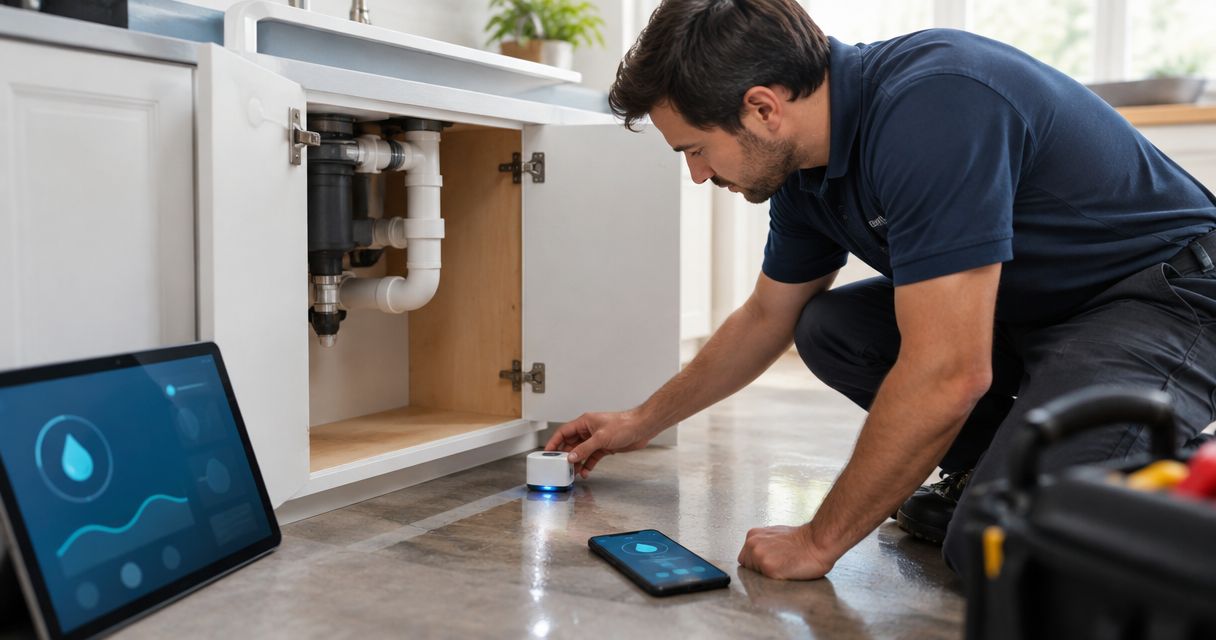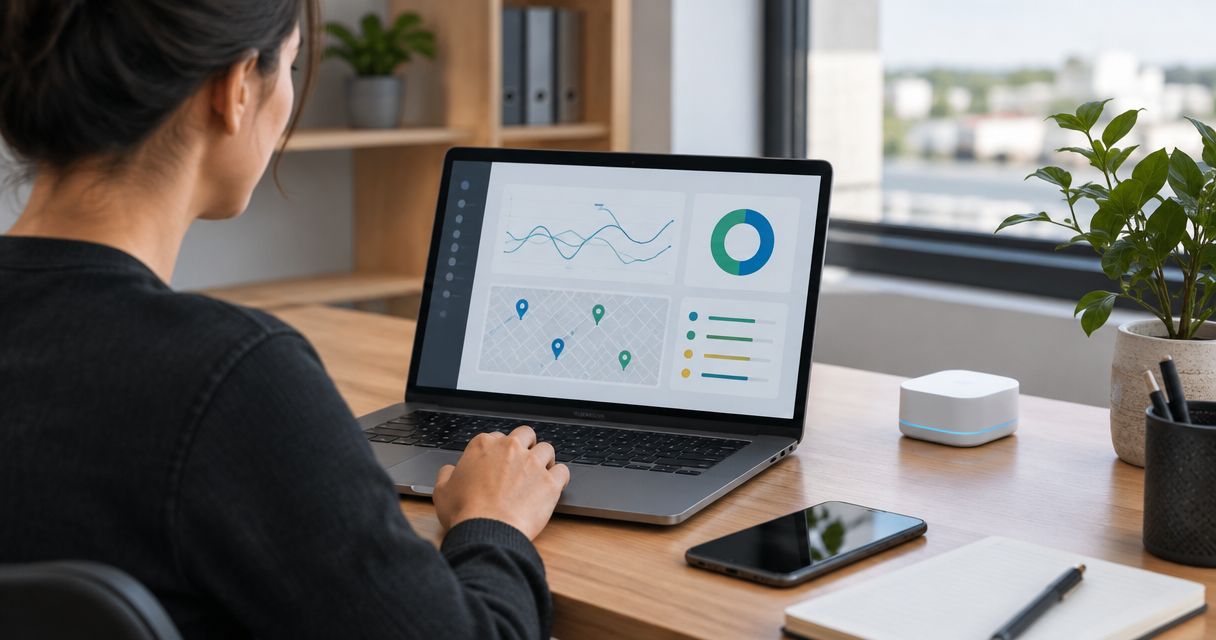
An IoT monitoring platform’s cost for one site depends on the devices, data workload and functions you need—not simply the number of buildings. For a platform such as the Kilo IoT Platform, budget software separately from sensors, connectivity, installation and ongoing support; the subscription alone is not the deployment budget.
- IoT monitoring platform cost single site planning must separate software, hardware, connectivity and installation.
- Kilo brings device management, dashboards, rules and alarms together; confirm the plan against your actual monitoring requirements.
- Compare deployment and recurring costs separately, using the same device inventory and response workflow.
- Start with the measurements and alerts you need, not an unrestricted feature list.
How much does an iot monitoring platform cost for one site?
A useful single-site estimate is an itemized deployment budget plus a recurring operating budget. A site count alone doesn't tell a supplier how many devices will connect, how much data they'll produce or who will configure the monitoring workflow.
Ask for the software subscription as a separate line, then establish which other services the proposal includes. An installation proposal and a software-only subscription are different purchases, even when both describe themselves as site monitoring.
| Budget component | What to include | What to establish before approval |
|---|---|---|
| Platform software | Device management, dashboards, rules, alarms and required access | Billing basis, included functions and usage conditions |
| Sensors and gateways | Required measurement devices and network equipment | Existing equipment compatibility and additional hardware needs |
| Connectivity | The connection carrying site data to the platform | Provider, responsibility and recurring charges |
| Deployment | Installation, device mapping, configuration and testing | Who completes each task and what counts as acceptance |
| Ongoing operation | Support, maintenance and configuration changes | Included responsibilities and separately charged work |
For an annual comparison, use this budgeting equation:
First-year total = one-time deployment costs + software, connectivity and support charges covering 12 months.
Keep annual charges annual. Multiply only genuinely monthly charges by 12, and don't add installation again when estimating a later operating year. If a contract starts partway through your financial year, distinguish that accounting-period spend from a full year of operation.
Does the platform subscription include the whole monitoring system?
The platform subscription covers the software scope in the agreement, not automatically the complete physical installation. Establish whether hardware procurement, network setup, sensor mounting, dashboard configuration and staff handover belong to separate suppliers.
The practical question is ownership: when readings stop arriving, who investigates the sensor, network and application? A proposal without that division of responsibility leaves work unassigned.
Is the first year the right number to compare?
The first-year total is useful for deployment approval, while the recurring annual total is useful for operating budgets. Compare both, because reusing installed equipment changes the initial project scope without necessarily changing software requirements.
Also record contract duration and renewal conditions. A monthly billing presentation doesn't establish that you can cancel monthly.
Why single-site monitoring costs vary
A small building can have a demanding monitoring workload, while a larger facility can have a narrow requirement. Define the workload before asking suppliers to estimate it.
- Device inventory: List the actual sensors, meters and gateways, including equipment you intend to reuse. Ask how each type is treated for billing.
- Data workload: Specify reporting intervals and required history. Ask whether ingestion, storage or exports affect the agreement.
- Network requirements: Identify the sensor network and the site's connection to the platform. Include any necessary coverage assessment or additional network equipment.
- Monitoring workflow: Describe dashboards, alarm conditions and intended recipients. Configuration work belongs in scope even when the software supports those functions.
- Integration and control: Separate viewing measurements from connecting business systems or sending device commands. Each requires its own implementation checks.
- Support responsibilities: Identify who handles installation, routine changes, hardware maintenance and troubleshooting. Don't assume software support includes site visits.
These aren't reasons to buy a larger plan by default. They're the questions that turn a vague site description into a comparable proposal.
Define the smallest useful monitoring deployment
Start with the decision you want someone to make. “Monitor the building” leaves too much open; “notify the responsible person when a monitored storage area crosses its configured temperature limit” identifies a measurement, a condition and a response.
Then work backward to the equipment and software required. This keeps optional visualization, integrations and control work from entering the initial scope without a clear purpose.
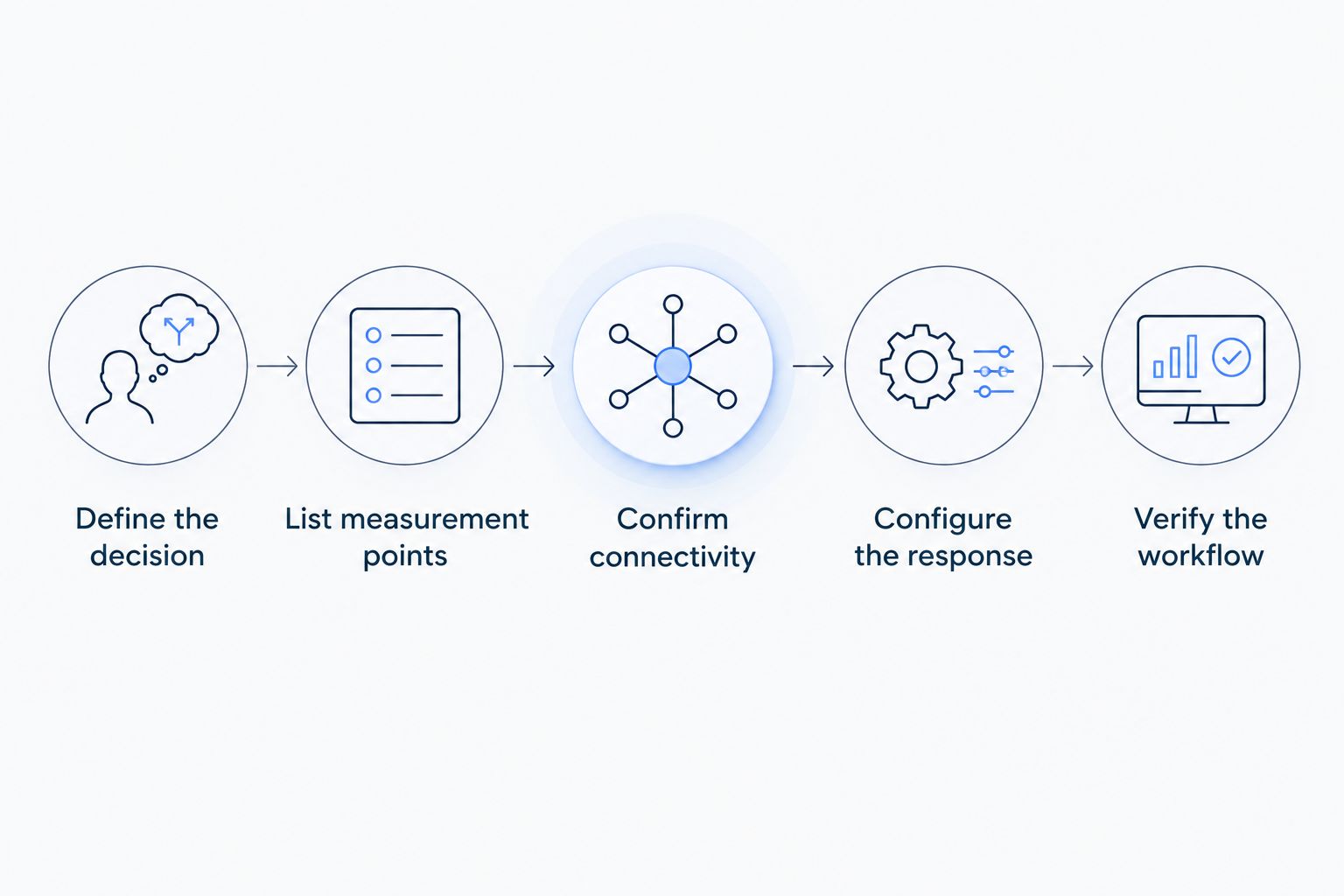
- Define the decision. State what someone will do differently when the monitoring system reports a problem.
- List measurement points. Record the locations, equipment and variables needed to support that decision.
- Confirm connectivity. Establish how each device's data reaches the platform and who maintains that path.
- Configure the response. Identify dashboard views, alarm conditions, recipients and access permissions.
- Verify the workflow. Test that the intended readings arrive and that the responsible person receives the expected information.
Illustrative scope, not a customer deployment: Consider a site that needs temperature readings from storage areas and door-state information for investigating excursions. The proposed workflow collects those inputs, displays the readings and alerts a designated facilities contact when configured conditions occur.
Acceptance should cover the complete path: correctly identified devices, understandable readings, the intended alarm behavior and a recipient who knows what to do. A dashboard displaying data proves only part of that workflow.
Keep remote equipment control outside this example unless it's genuinely required. Monitoring a temperature excursion and changing refrigeration equipment are separate implementation tasks, with different device interfaces and verification needs.
Compare software-only and managed deployment proposals fairly
Choose the purchasing approach according to who will do the work. Neither a software subscription nor a managed deployment removes the need for installation, configuration and ongoing ownership; they allocate that work differently.
| Approach | Best for | Practical advantage | Limitation to budget for |
|---|---|---|---|
| Software-only platform | Teams with integration and site-installation skills | Your team controls configuration and equipment selection | Internal implementation and support effort remain your responsibility |
| Platform with an integrator | Buyers needing help connecting equipment and configuring workflows | Installation and software configuration can have a named delivery owner | Confirm the boundary between integrator support and platform support |
| Managed monitoring service | Buyers wanting a supplier to take defined operational responsibilities | Responsibilities can be specified in a service agreement | Check exactly what monitoring, response and maintenance the agreement includes |
Ask every supplier to quote against the same inventory and acceptance criteria. Otherwise, one proposal might include commissioning and handover while another covers only access to software.
If you already have suitable equipment and engineering capacity, request a software-focused proposal. If nobody owns installation and troubleshooting, request those services explicitly rather than treating them as work the platform will somehow absorb.
Where Kilo fits in a single-site budget
Kilo is an IoT platform for teams that need device data, dashboards, automation and alarms in one operating layer. For a single-site project, those capabilities are relevant when the requirement extends beyond reading an isolated sensor to managing a connected monitoring workflow.
Kilo fits integrators, developers and facilities teams that need shared IoT monitoring and configuration. The decision still depends on supported devices, required functions and the commercial terms for the proposed deployment—not a generic claim that every site needs the same platform package.
The platform and physical hardware are separate purchases. Kilo Electronics is a separate online authorised dealer for compatible hardware, serving individual and business buyers; hardware sourcing does not replace checking the exact device interface and integration requirements.
For a proposal, describe the monitoring job first, then confirm the relevant software scope. Don't assume a supported protocol means every device payload or command is already configured, or that an available feature is included under every commercial arrangement.
AI assistance also needs a defined purpose. A conventional threshold alarm doesn't require an AI workflow, and a basic monitoring budget shouldn't include external model usage unless the proposed solution actually needs it.
Ask for a quote that exposes the billing basis
Send suppliers a short scope document rather than asking only for their single-site rate. The response should explain what you're buying and what changes the bill.
Include these requirements in the request:
- Inventory: Device types, measurement points, gateways and existing equipment proposed for reuse.
- Data: Reporting requirements, history requirements and any export or integration needs.
- Users: Who configures the system, who views data and who responds to alarms.
- Delivery: Installation, configuration, testing, training and handover responsibilities.
- Commercial basis: Contract period, billing units, included scope, renewal terms and treatment of changes.
- Acceptance: The evidence needed to confirm that the agreed monitoring workflow works.
Ask the supplier to distinguish included work from optional work and customer responsibilities. A clear exclusion is more useful than a vague promise of a complete solution.
Also request a change scenario: what happens commercially if you add measurement points, extend history requirements or introduce an integration? You don't need to buy those capabilities immediately, but you do need to understand how expansion is handled.
Reduce scope without removing the monitoring outcome
Cut optional work before cutting the measurements and response path that make the project useful. Start with a defined monitoring problem, then add broader functionality when there's a named user and decision for it.
Reusing equipment is sensible only after confirming that its measurements and data interfaces meet the requirement. Record any configuration or integration work needed for reuse; an existing sensor isn't automatically ready to connect.
Keep initial dashboards focused on the information needed to act. Additional views, elaborate visual models and business-system integrations need a purpose, especially when someone must configure and maintain them.
Don't remove commissioning to make the proposal look smaller. Test device identity, measurement interpretation and alarm behavior before handover, because an installed sensor and a working response workflow are different acceptance outcomes.
Finally, keep claimed savings separate from the purchase budget. Reduced manual work or avoided losses belong in a business case only when you have defensible inputs; they aren't guaranteed offsets against the subscription.
FAQ
Can I get an accurate IoT monitoring quote by giving the supplier my site count?
Site count alone isn't enough for an accurate monitoring quote. Provide the device inventory, data requirements, alarm workflow and deployment responsibilities so the supplier can define the actual scope.
Will my existing sensors reduce the deployment budget?
Existing sensors can remove a hardware purchase from scope when their measurements and interfaces meet the requirement. Confirm compatibility and any configuration work before counting them as reusable equipment.
Does a cloud IoT platform replace the sensor network?
A cloud IoT platform doesn't automatically replace the network carrying sensor data. Establish the device connection, any required gateway or network service, and the path from the site to the platform.
Do I need AI features for basic site monitoring?
Basic site monitoring doesn't require AI when configured measurements, dashboards and threshold alarms meet the requirement. Include AI-related services only when you've defined the task they will perform.
What should happen before I approve the installation handover?
Approve handover after the agreed monitoring workflow passes its acceptance checks. Confirm device identification, readable measurements, configured alarm behavior and the responsibilities of the people receiving alerts.
Does a delivered device command prove the equipment changed state?
A delivered command doesn't prove a physical outcome. Control workflows need supported device feedback or subsequent measurements to establish what actually happened.
Should I compare subscriptions monthly or annually?
Compare proposals over the same operating period and separate one-time deployment work from recurring charges. Check the contract term as well as billing frequency, because monthly billing doesn't establish monthly cancellation rights.
Before approval, test the handoff—not just the sensor
A technically correct alert still needs a responsible recipient. Before signing off the project, ask the intended user to explain what the alert means, what action follows and who takes over when that person isn't available.
That exercise connects the budget to the outcome you're buying. Approve a defined monitoring workflow, not just a device list and a subscription.
Related guides
Written by Tim Kravchunovsky