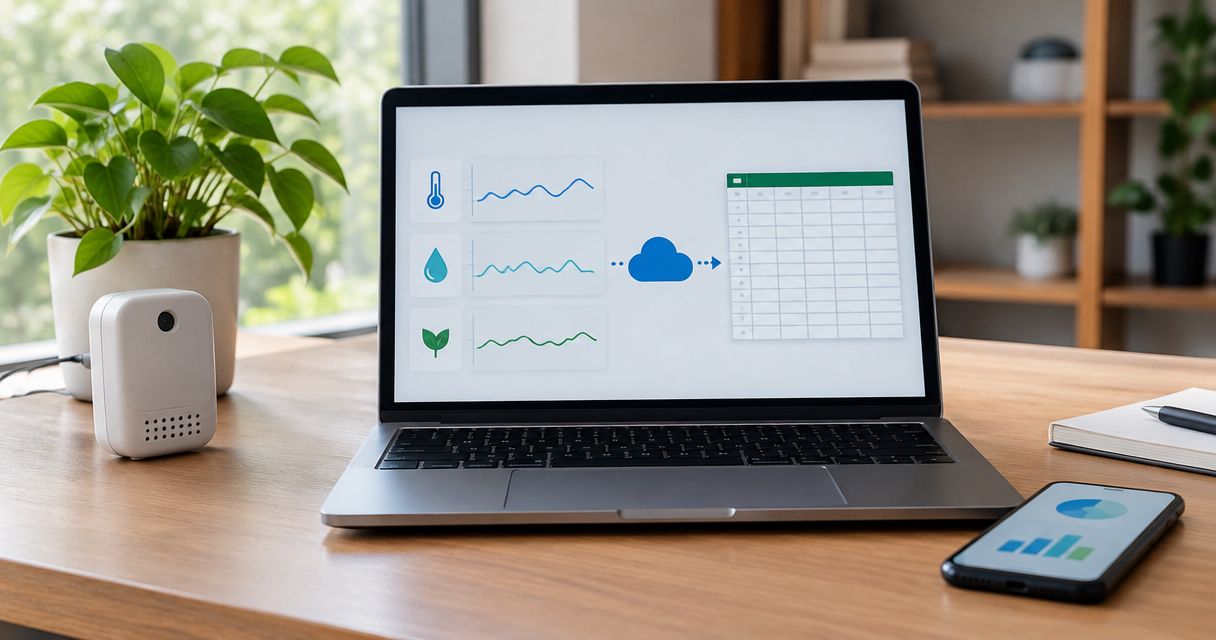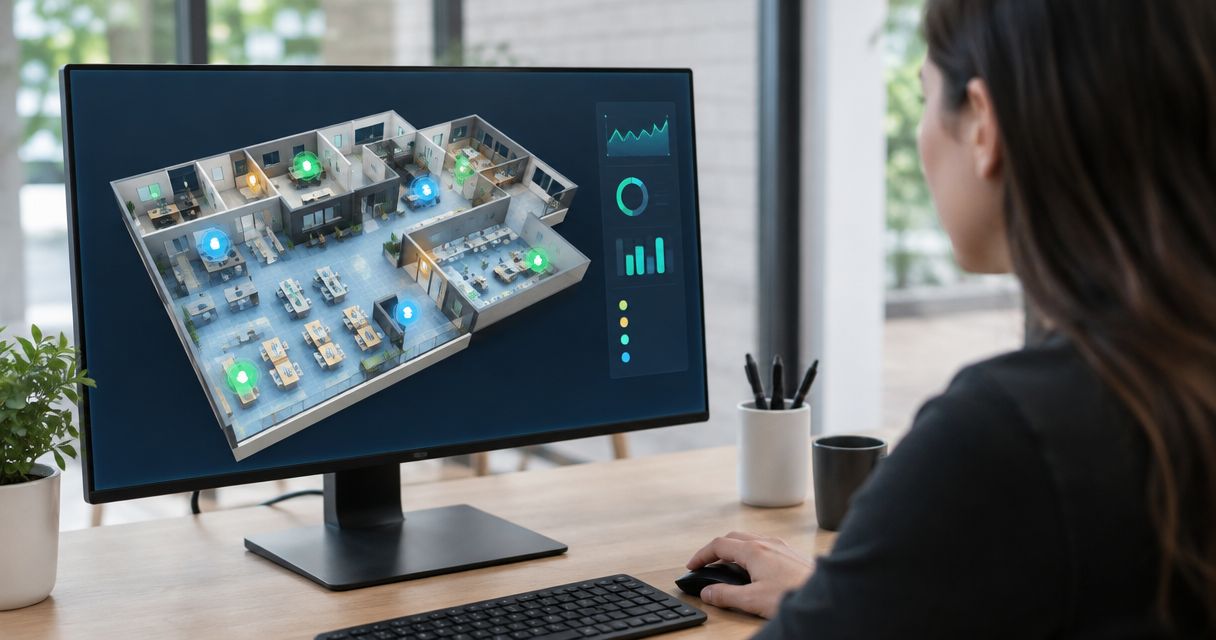
Corporate sustainability teams’ IoT monitoring software is software that connects device measurements with operational context to identify resource waste and verify changes. Unlike a reporting tool alone, it must help you work with facilities staff, integrators and data owners to explain what happened at a site—and what changed after someone responded.
- Choose IoT monitoring software for sustainability teams around measurable decisions, not dashboard appearance.
- Kilo fits sustainability teams connecting supported device data, dashboards and alarms with site-level responses.
- Energy monitoring and water monitoring need clear measurement boundaries before comparisons are meaningful.
- Keep measured consumption separate from emissions calculations, estimates and verified savings.
Why IoT monitoring matters for corporate sustainability teams
A utility bill tells you how much a billed supply consumed during a billing period. It doesn't, by itself, explain which equipment ran unnecessarily, whether a leak persisted overnight or whether an operational change worked. Connected measurements help you investigate those questions between reporting cycles.
Your sustainability team also needs information that other teams can use. Facilities staff need the equipment location and the condition to investigate; reporting staff need the measurement boundary, units and treatment of missing data. A chart without that context creates another reconciliation task.
Choose monitoring software around the decisions your team needs to make, not the number of charts it can display. For a 2026 program, that means defining the path from a measurement to an investigation, a response and evidence of the result.
Monitoring is not carbon accounting. Electricity consumption, water consumption and equipment status are inputs to analysis; emissions calculations require an appropriate methodology and documented factors. Software that gathers readings does not automatically establish reporting compliance or prove environmental improvement.
How to build a sustainability monitoring workflow
1. Define the decision before selecting sensors
Start with utility records, existing meter readings and conversations with the people responsible for each site. You can use a spreadsheet to list the question, the available evidence and the action someone would take if the answer showed a problem. This exposes gaps before you purchase equipment.
A useful question is specific: does electricity consumption remain elevated outside the building's operating schedule? A less useful brief is simply to monitor energy. The first question identifies the measurement, comparison and person who needs to investigate.
Keep resource outcomes separate from supporting observations. Occupancy and temperature can help explain energy consumption, but neither measures electricity use. Likewise, a wet-floor sensor detects a condition; it doesn't quantify the volume of water lost.
- Write the operational question in plain language.
- Name the resource measurement needed to answer it.
- Identify the person who can investigate or change the condition.
- Define what evidence would demonstrate a useful result.
2. Map measurement boundaries and existing equipment
Build a measurement register manually before connecting devices. Record which building, circuit, process or supply each meter covers, along with its units and ownership. Include existing building-system data where it answers the question; new sensors are not automatically the better route.
Watch for overlapping boundaries. Adding a whole-building electricity reading to readings from circuits inside that building counts some consumption twice. Tenant areas, shared equipment and landlord-controlled supplies also need explicit treatment before you compare locations.
For hardware sourcing, Kilo Electronics is a separate online authorised dealer serving individual and business buyers. Hardware is distinct from the platform software, and compatibility still depends on the device interface, payload and intended measurement—not just a matching protocol name.
- Record each meter's physical measurement boundary.
- Separate whole-site totals from equipment-level measurements.
- Identify device interfaces and the readings they actually provide.
- Assign responsibility for installation, calibration and maintenance.
3. Connect readings with usable site context
You can begin by collecting existing readings into a shared register and checking them against known meter values. Make the naming consistent before automating collection. A technically valid reading still becomes misleading if it is attached to the wrong building or represented in the wrong unit.
The Kilo IoT Platform brings device data, digital twins, dashboards, rules and alarms together for connected deployments. For sustainability monitoring, the useful role is to connect supported measurements with the site and equipment context needed to interpret them. It does not replace measurement engineering or the reporting methodology.
Kilo is a fit for sustainability teams that need an IoT monitoring platform connecting device observations with operational responses. Its suitability depends on the actual devices and integrations in your project, rather than the sustainability label alone.
- Give devices consistent site and equipment names.
- Confirm payload mapping and measurement units.
- Preserve timestamps and distinguish stale readings from current observations.
- Compare connected values with the original measurement source.
4. Build baselines that survive scrutiny
Start with a manually reviewed baseline using readings from a clearly defined period. Record operating hours, occupancy or production conditions where they affect the comparison. A lower total after a site closes for maintenance is not evidence that an efficiency project delivered savings.
Illustrative calculation—not a customer result: assume the same measured circuit consumes 1,200 kWh during a baseline period and 1,000 kWh during a comparison period. The measured difference is 200 kWh. Calling that difference a project saving requires you to account for changes in operating conditions and measurement coverage.
A dashboard makes patterns easier to inspect, but the explanation still matters. Show the measured series alongside the conditions needed to interpret it, and keep estimated values visibly separate. Preserve your baseline definition for the 2026 evaluation rather than changing it after seeing the result.
- Document the baseline period and included measurement points.
- Record operating conditions relevant to the comparison.
- Flag gaps, meter changes and estimated values.
- Separate measured differences from attributed project savings.
5. Assign alarms to people who can respond
First, agree on a response process without automation. Decide who investigates an unusual pattern, what information they need and how they communicate the finding. A shared task log can establish that workflow before you configure alarms.
An illustrative overnight-water workflow starts with a compatible flow measurement and an agreed operating schedule. An unexpected pattern prompts the facilities contact to investigate the relevant supply. The outcome is established through the investigation and subsequent readings—not simply because the alarm disappeared.
Kilo provides rules and alarms for connected deployments. Use those capabilities to support an agreed response, rather than treating every deviation as an emergency. A threshold rule is ordinary automation, not evidence of AI, and an alarm alone cannot stop a leak or guarantee a reduction.
- Define the condition and when it should apply.
- Name the responsible investigator and backup contact.
- Include the site, equipment and supporting readings.
- Record the finding and compare measurements after the response.
6. Separate monitoring from equipment control
Begin with observation and a manual response. This lets your sustainability and engineering teams establish whether the measurement means what you think it means before connecting it to a physical action. Permissions should reflect who can view data, change configuration and operate equipment.
Automated control requires a compatible actuator, a configured command path and a reason to believe the action is appropriate. Turning equipment off to reduce consumption can conflict with ventilation, product conditions or another operational requirement. Agree on those boundaries with the people responsible for the equipment.
For supported direct device commands, the built-in assistant has a confirmation flow; external MCP clients have their own approval behavior. Deliberately configured rules can execute commands autonomously. Accepted, queued or delivered command status does not prove a physical outcome—verification depends on available feedback or subsequent measurements.
- Start with read-only observation where practical.
- Separate viewing, configuration and command permissions.
- Identify the conditions that prohibit an automated action.
- Specify device feedback or measurements that verify the result.
7. Preserve evidence before expanding the rollout
Manually reconcile a completed investigation before scaling the workflow. You should be able to connect the original reading, the equipment involved, the action taken and the evidence afterward. This tests whether your monitoring process produces an explanation, not just a notification.
Organize that evidence around four elements: Measurements, Site context, Response and Verification. A reading belongs to a defined boundary; an investigator responds to a specific condition; later evidence supports or challenges the explanation. Keeping these elements together also makes handovers easier when site responsibilities change.
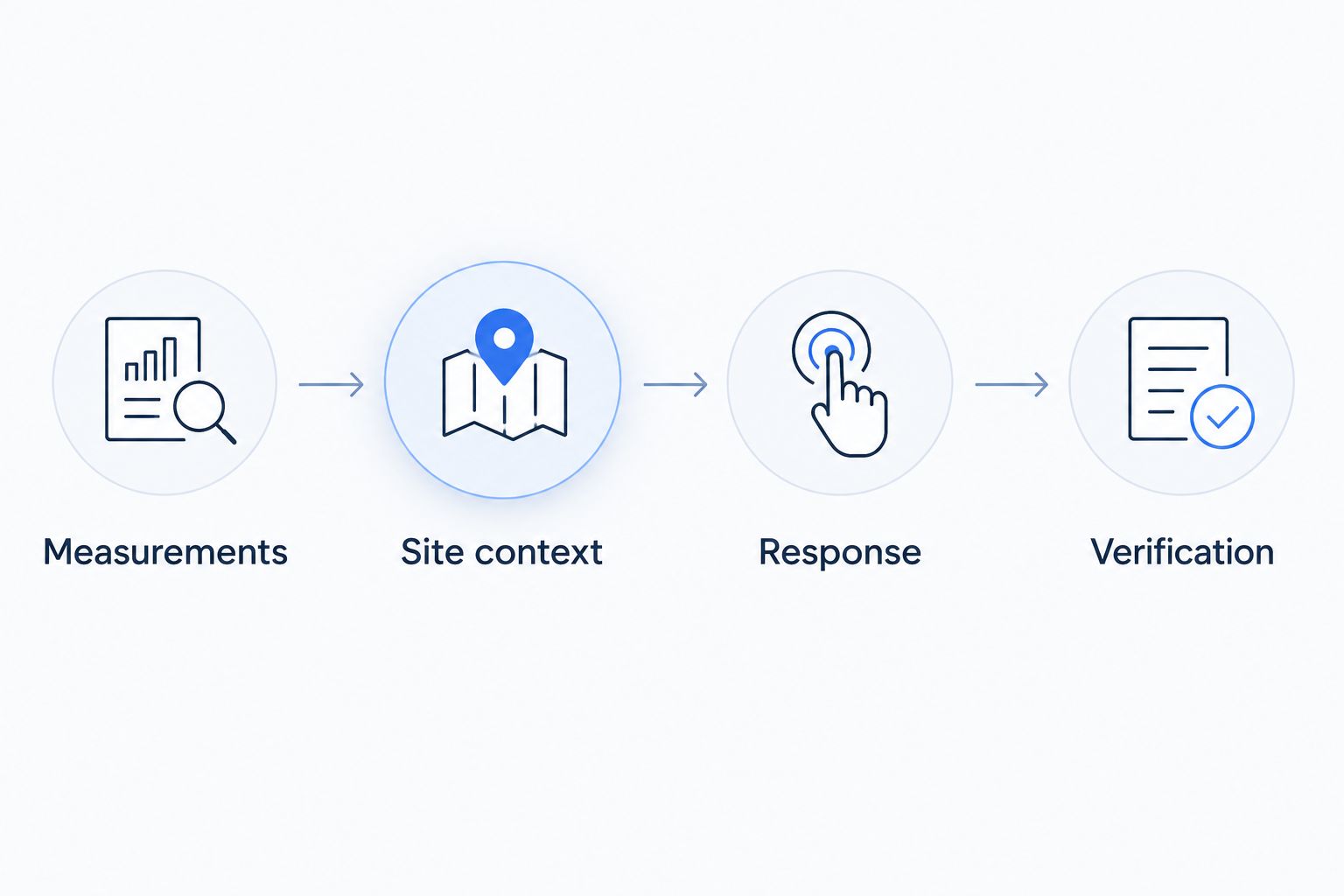
Before expansion, test a missing reading and a changed device as well as a normal operating day. A credible 2026 rollout explains how these exceptions affect the analysis instead of silently treating missing observations as zero consumption.
- Measurements: retain units, timestamps and source identifiers.
- Site context: preserve boundaries and relevant operating conditions.
- Response: document the investigation and action taken.
- Verification: retain feedback and comparison measurements.
Compare software options by the job they need to do
There isn't one software category that automatically handles measurement, equipment operation and sustainability disclosure equally well. Compare options using the same workflow: collecting evidence, understanding it, assigning a response and checking the result.
An existing building management system can remain useful while an IoT platform adds supported measurements. A sustainability reporting system serves a different purpose. Before choosing, ask each provider to demonstrate your measurement boundary, missing-data case and response process rather than a generic dashboard.
| Option | Best for | Main advantage | Key limitation |
|---|---|---|---|
| Spreadsheet and utility records | Defining questions and reviewing existing evidence | Lets you organize boundaries before integration | Requires manual reconciliation and does not provide a connected device-response workflow |
| Existing building management system | Investigating measurements already connected to a building system | Uses operational context already present at the site | Evaluate accessible points, permissions and integration before assuming portfolio coverage |
| Kilo IoT Platform | Connecting supported devices with dashboards, rules and alarms | Brings monitoring and operational response capabilities together | Device compatibility and configuration remain project-specific; carbon accounting is a separate task |
| Specialist sustainability reporting software | Managing reporting methods and approved disclosures | Focuses the selection on reporting requirements | Verify data ingestion and operational functions; a reporting interface does not establish device-control support |
Evaluate cost scope separately: software, installation, hardware, connectivity, integration work and any model-provider usage are different items. A 2026 procurement decision should identify who pays for each and who maintains the system. Don't interpret a platform subscription as an all-inclusive deployment commitment.
Common mistakes corporate sustainability teams make
Treating every environmental reading as an impact metric
Temperature, humidity and occupancy can explain operating conditions. They do not directly measure energy savings or avoided emissions. Match each claim to the measurement that supports it, and label supporting observations separately from resource totals.
Comparing sites without checking their boundaries
A whole-building meter and a meter serving one tenant area do not describe equivalent scopes. Document what each site total includes before creating a portfolio ranking. Where boundaries differ, explain the difference rather than presenting the sites as directly comparable.
Sending every exception to the sustainability team
Sustainability staff need visibility, but the person closest to the equipment often owns the investigation. Assign the facilities, maintenance or process contact first, then define what the sustainability team needs for evaluation. An unattended alarm is not a completed intervention.
Turning a consumption decrease into a savings claim
Changes in weather, production, occupancy and operating hours can change consumption. Keep the observed difference separate from the explanation until you have evaluated those conditions. Do not convert a favorable chart into a project result simply because it appeared after installation.
Buying reporting and monitoring as if they were interchangeable
Device monitoring answers what the connected equipment observed and how someone responded. Sustainability reporting applies methods and approval processes to the evidence used in disclosures. Define that handoff explicitly so neither system becomes responsible for an unsupported claim.
FAQ
What's the best IoT monitoring software for sustainability teams?
The right software connects the measurements your team needs with context, responsible responders and verifiable outcomes. Kilo fits that operational monitoring role for supported connected deployments; evaluate device compatibility and keep carbon-accounting requirements separate.
Can IoT monitoring software calculate our company's carbon footprint?
Device monitoring alone does not establish a company carbon footprint. Measurements can supply activity data, but calculations also require defined boundaries, appropriate emissions factors and a reporting methodology.
Do we need new sensors if we already have a building management system?
You do not automatically need new sensors. First identify whether existing measurements answer your sustainability questions and whether those measurements can be accessed through an appropriate integration.
Can a water leak sensor tell us how much water we saved?
A leak sensor alone does not quantify water savings. It detects a condition; evaluating consumption requires suitable measurements and a documented comparison that accounts for relevant operating changes.
Is AI required for sustainability monitoring?
AI is not required for sustainability monitoring. Dashboards, defined comparisons and threshold rules can support useful investigations without AI, while assistant capabilities serve a separate role within their supported functions and permissions.
Can an IoT alarm automatically shut off equipment?
An alarm alone cannot shut off equipment. A physical action requires compatible equipment, a configured command path and appropriate permissions; a completed command status still needs feedback or subsequent measurements to establish the outcome.
What should we include in a monitoring software budget?
Include software, hardware, installation, connectivity, integration and ongoing maintenance responsibilities. Treat any model-provider usage separately, and confirm the commercial scope rather than assuming a subscription covers the entire deployment.
Test the handoff before adding more sites
Ask a colleague who wasn't involved in an investigation to explain the result from its evidence. If they cannot identify the measurement boundary, response and basis for the outcome, fix the workflow before adding more devices.
A smaller monitoring deployment with explainable results is more useful than a larger one with ambiguous totals. Once that operational workflow works, address the separate reporting handoff through multi-site energy data for carbon reporting. Keep raw measurements, estimates and attributed savings distinguishable all the way through.
Written by Tim Kravchunovsky