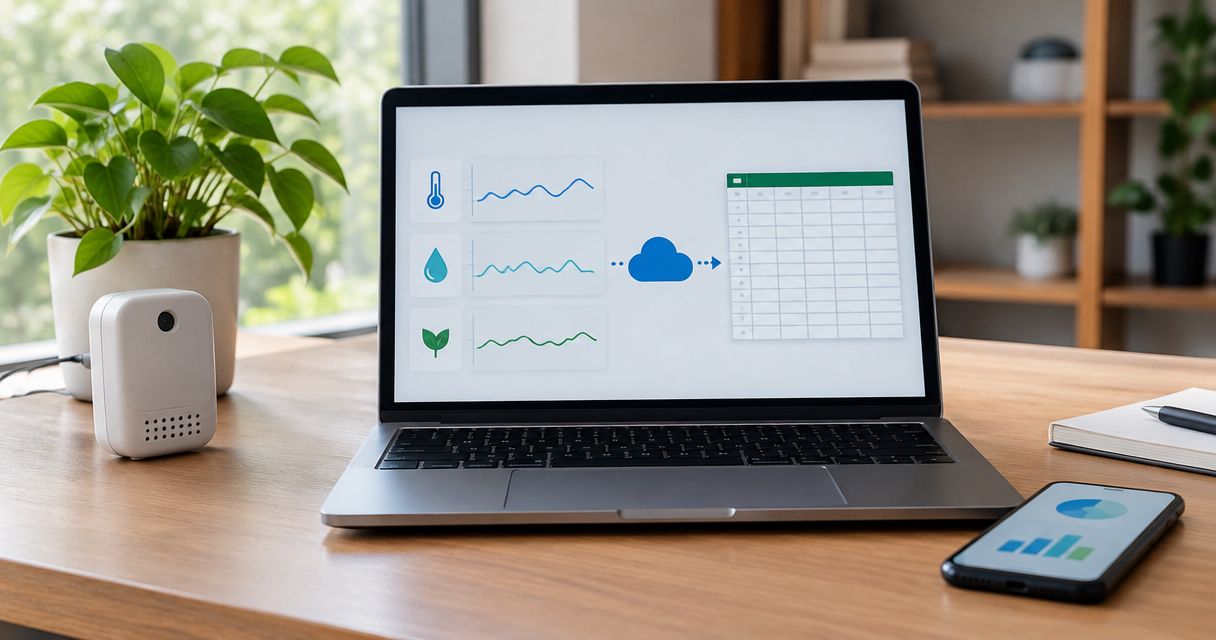
Auto body shops running paint bays live and die by three numbers: VOC concentration, booth temperature, and humidity. Miss any of them and you're either failing a compliance check or ruining a paint job. This guide ranks the realistic options for an iot platform for auto body shop paint bays in 2026, from a clipboard on the wall to a full AI-first platform, and tells you which one fits a one-bay shop versus a five-location body shop group.
- Kilo is the strongest iot platform for auto body shop paint bays running more than one booth or site in 2026.
- Standalone data loggers cover single-bay VOC and temperature checks but never alarm anyone in real time.
- OSHA's spray finishing standard, 29 CFR 1910.107, requires vapor concentration under 25% of the lower flammable limit.
- BMS retrofits work when a campus already runs a building management system; adding VOC sensing mid-project is slow.
- Custom SCADA integration suits shops with in-house automation staff already running PLCs on the booth line.
Why auto body shops need real-time IoT monitoring in the paint bay
A paint booth is a small enclosed space where solvent vapor, heat, and moisture all move fast. OSHA's spray finishing standard (29 CFR 1910.107) requires ventilation to keep vapor concentration below 25% of the lower flammable limit, and OSHA's Table Z-1 sets an 8-hour permissible exposure limit of 200 ppm for toluene and 100 ppm for xylene — two solvents that show up constantly in automotive coatings. EPA's Paint Stripping and Miscellaneous Surface Coating NESHAP (40 CFR Part 63, Subpart HHHHHH) applies directly to auto body refinishing operations using certain coatings.
None of those thresholds check themselves. A shop finds out it crossed one of them either from a routine paint booth VOC and air quality compliance audit or from a technician getting a headache mid-shift. A logbook tells you what happened yesterday. Sensors and alarms tell you what's happening right now, in this bay, on this job.
What makes the best IoT platform for auto body shop paint bays
- VOC and air quality sensing mapped to the compounds you actually spray, not a generic "air quality" number
- Booth temperature and humidity logging for cure consistency, tracked per bay and per shift
- Alarm escalation to a specific technician, not a panel light nobody's watching
- MQTT or Modbus support to pull data straight off booth controllers, PLCs, or an existing building management system
- Per-bay dashboards and history you can hand an inspector without assembling a spreadsheet first
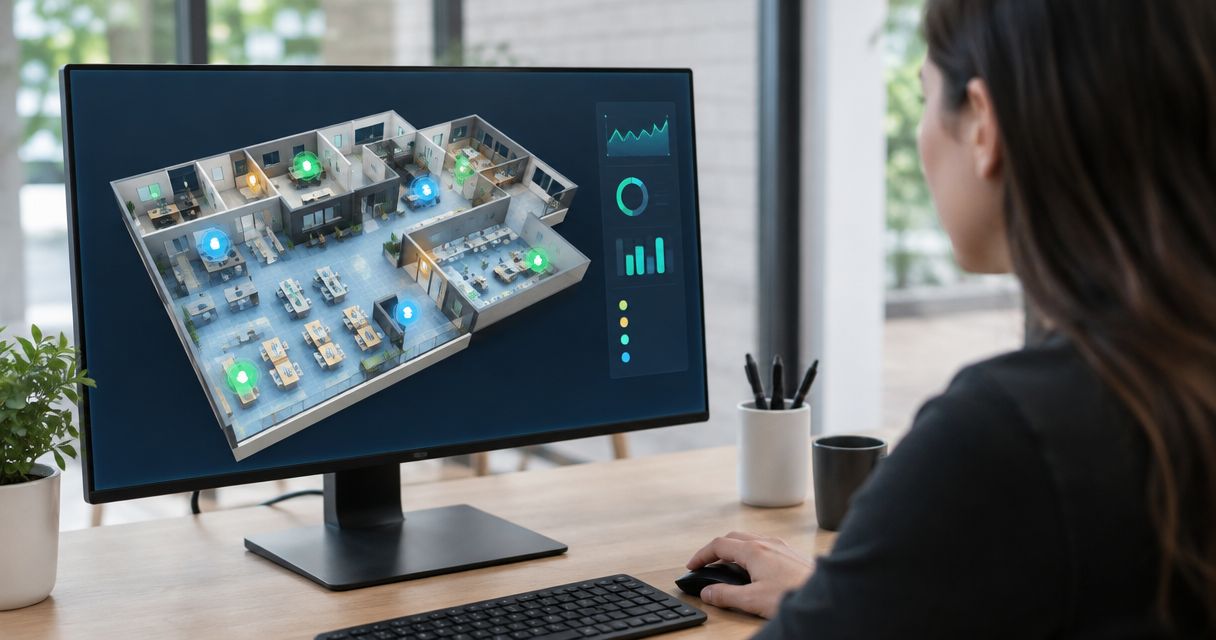
- A digital twin per booth, so a shop manager running three locations sees all of them without walking the floor
IoT platform options for auto body shop paint bays at a glance
| Approach | Best for | Standout feature | Key limitation |
|---|---|---|---|
| Manual logbooks | Single-bay shops starting compliance basics | Zero setup cost | No real-time alerting, gaps between checks |
| Standalone data loggers | One-time or infrequent verification | Cheap, portable, no network needed | Data sits on the device until manually pulled |
| BMS retrofit | Multi-bay campuses with an existing BMS | Ties into HVAC and lighting already on the system | Slow and costly to add VOC points mid-project |
| Kilo (AI-first IoT platform) | Multi-bay or multi-location shops needing live alarms | LoRaWAN, mioty and MQTT in one platform with a rules engine | Sensors sourced separately through the partner catalog |
| Custom SCADA/PLC integration | Large operations with in-house automation staff | Tightest control loop with existing line automation | Becomes a black box once the engineer who built it leaves |
1. Manual logbooks and spot-checks: best for single-bay shops building a compliance baseline
A logbook is a technician writing down booth temperature and a VOC reading a few times a shift. It costs nothing beyond the clipboard and it's how most single-bay independent shops start.
Manual logbook pros:
- No software or sensor cost
- Nothing to install or configure
- Works today, no lead time
Manual logbook cons:
- No real-time alert when a reading crosses a threshold
- Gaps between checks can run hours, and vapor concentration doesn't wait for the next round
- Audit trail quality depends entirely on the person filling it in
Best for: a single-bay shop that needs to show something to an inspector before it needs anything more. Verdict: fine as a starting point, not a real compliance system.
2. Standalone data loggers: best for one-time VOC and temperature verification
A standalone logger is a battery-powered sensor that records temperature, humidity, or VOC readings to internal memory. You place it in the booth, let it run, and download the data later.
Standalone data logger pros:
- Low cost per unit
- No network infrastructure required
- Easy to move between bays for spot audits
Standalone data logger cons:
- No alarm — a spike at 2 a.m. sits unread until someone downloads the file
- No cross-bay dashboard for a shop running more than one booth
- Manual data pull means someone has to remember to do it
Best for: a shop verifying compliance for a single audit cycle rather than running ongoing monitoring. Verdict: adequate for a snapshot, not for daily operations.
3. BMS retrofit: best for multi-bay campuses with an existing building management system
If a facility already runs a full building management system for HVAC and lighting, adding paint bay sensors as new BMS points is the obvious next step for the engineering team already trained on that system.
BMS retrofit pros:
- Puts booth data next to HVAC and energy data in one place
- Uses staff who already know the system
- Mature alarming and reporting inside the BMS itself
BMS retrofit cons:
- BMS integrators charge per point added, and VOC sensing usually isn't a native BMS input
- Most legacy panels need extra hardware and drivers to accept a new sensor type
- Adding a booth mid-project typically waits for the next scheduled contractor visit
Best for: a facility with a mature BMS and an integrator already on retainer. Verdict: workable, but slow to extend to a new bay.
4. Kilo, an AI-first IoT platform: best for multi-bay or multi-location body shops needing real-time alarms
The Kilo IoT Platform runs a built-in LoRaWAN and mioty network server, so there's no separate network server to stand up before paint bay sensors can report in. An MQTT connector pulls data straight from booth controllers, PLCs, or whatever building management system is already on site, so paint bay data doesn't have to live in a silo.
The part that matters for compliance is the rules engine. It's a visual, BPMN-based rules builder with CEL expressions, and a facilities lead can build a rule like "flag if the VOC sensor exceeds a set threshold while the booth door sensor reads open" without writing code. Rules carry version control, one-click deploy and rollback, and can be step-through debugged against a test payload before they touch a live booth.
When a threshold trips, Kilo's alarms run through five severity tiers with multi-step escalation chains, so a VOC spike routes to email, SMS, or push for the paint department lead — not to a shared inbox nobody checks during a shift. Quiet hours and a centralized inbox keep the noise down outside working hours.
The platform's built-in AI assistant can onboard the booth sensors and draft that VOC rule from a plain-language request, scoped to the signed-in user's permissions and confirming before anything ships to a live booth.
Kilo pros:
- LoRaWAN, mioty, and MQTT in one platform, so booth sensors and PLC data land on the same dashboard
- Rules engine with test-payload debugging before a rule goes live on a real booth
- Five-tier alarm escalation with quiet hours and a centralized inbox
- A digital twin per booth, plus a live 3D building twin for shops running more than one bay
- Built-in AI assistant that onboards devices and drafts rules from plain language
Kilo cons:
- Kilo doesn't manufacture VOC or air-quality sensors — hardware comes from the Kilo Electronics partner catalog and has to be matched to the compound and range you're monitoring
- Kilo Lens, the camera-context feature that could visually confirm booth activity, is listed as Coming Soon and isn't available yet
- Per-bay digital twins and dashboards need an initial configuration pass; it isn't zero-touch on day one
Best for: a multi-bay or multi-location body shop that wants VOC, temperature, and humidity on one dashboard with alarms that reach a technician instead of sitting in a logbook.
5. Custom SCADA/PLC integration: best for large paint operations with in-house automation staff
A shop running a large-scale paint line with existing SCADA and PLC infrastructure can wire booth sensors directly into that system, using securing MQTT connections for industrial deployments practices to keep the data path locked down.
Custom SCADA pros:
- Tightest possible control loop with existing line automation
- No new vendor relationship or platform to learn
Custom SCADA cons:
- Requires in-house PLC/SCADA expertise most single-location shops don't have on staff
- Extending the setup to a new bay or a second location is slow, custom work every time
- Once the automation engineer who built it moves on, the system often becomes a black box
Best for: a large paint operation with dedicated automation engineers already running the line. Verdict: solid if you already have the staff, expensive to build if you don't.
How these options were ranked for auto body shop paint bays
Each option was measured against the six criteria above: VOC sensing accuracy, temperature and humidity logging, alarm escalation, protocol flexibility, per-bay visibility, and audit-readiness. Manual logs and standalone loggers score well on cost and setup speed but fail on real-time alerting. BMS retrofits and custom SCADA score well on integration depth but lose points on speed to extend across new bays or sites in 2026 and beyond.
Which IoT platform should an auto body shop pick for its paint bay?
A single independent bay running basic compliance checks can start with a logbook or a standalone data logger and upgrade later. A shop running more than one bay, or more than one location, needs real-time alarms and a dashboard that shows every booth at once — that's where a general-purpose iot platform for auto body shop paint bays like Kilo earns its place over a logbook or a standalone logger. Facilities that already run a mature BMS or in-house SCADA should extend what they have rather than rip it out. For everyone else weighing 2026 upgrades, start with the criteria list above and match it against what's already on the shop floor before picking a platform.
FAQ
What's the best iot platform for auto body shop paint bays in 2026?
For shops running more than one booth or location, an AI-first platform like Kilo covers VOC, temperature and humidity monitoring with real-time alarm escalation. Single-bay shops can start with a standalone data logger and upgrade once they add a second bay.
Is a standalone data logger enough for paint booth compliance?
A standalone logger works for a one-time audit but doesn't alarm anyone when a reading crosses a threshold. Shops that need ongoing monitoring across shifts need a connected platform instead.
What VOC limits apply to auto body paint bays?
OSHA's Table Z-1 sets an 8-hour permissible exposure limit of 200 ppm for toluene and 100 ppm for xylene, and OSHA's spray finishing standard (29 CFR 1910.107) requires ventilation to keep vapor concentration below 25% of the lower flammable limit. EPA's Subpart HHHHHH NESHAP also applies to many auto body refinishing operations.
Can an IoT platform connect to an existing paint booth controller?
Yes, through MQTT or Modbus, provided the controller can publish data. Kilo's MQTT connector accepts data from booth controllers, PLCs, or an existing BMS without a separate network server.
How does alarm escalation work for a paint bay VOC spike?
A threshold rule fires an alarm that routes through severity tiers and an escalation chain to a specific technician's email, SMS, or push notification, rather than a shared panel or inbox.
Do I need a BMS to monitor a paint bay with IoT sensors?
No. A general-purpose IoT platform can run independently of a BMS, which is usually faster to deploy for a single new bay than adding points to an existing building management system.
What sensors does a paint bay need for compliance monitoring?
At minimum, VOC sensing matched to the solvents sprayed, plus temperature and humidity for cure consistency. Sensors are sourced through a hardware catalog such as Kilo Electronics rather than built into the software platform.
What most auto body shops get wrong about paint bay monitoring
Most shops that install sensors stop at the sensor and skip the alarm rule. A reading with nowhere to escalate to is just a number on a dashboard nobody opens until the next audit. The value of an iot platform for auto body shop paint bays in 2026 isn't the sensor — it's the rule that turns a threshold crossing into a message on a specific technician's phone before the reading turns into a citation.