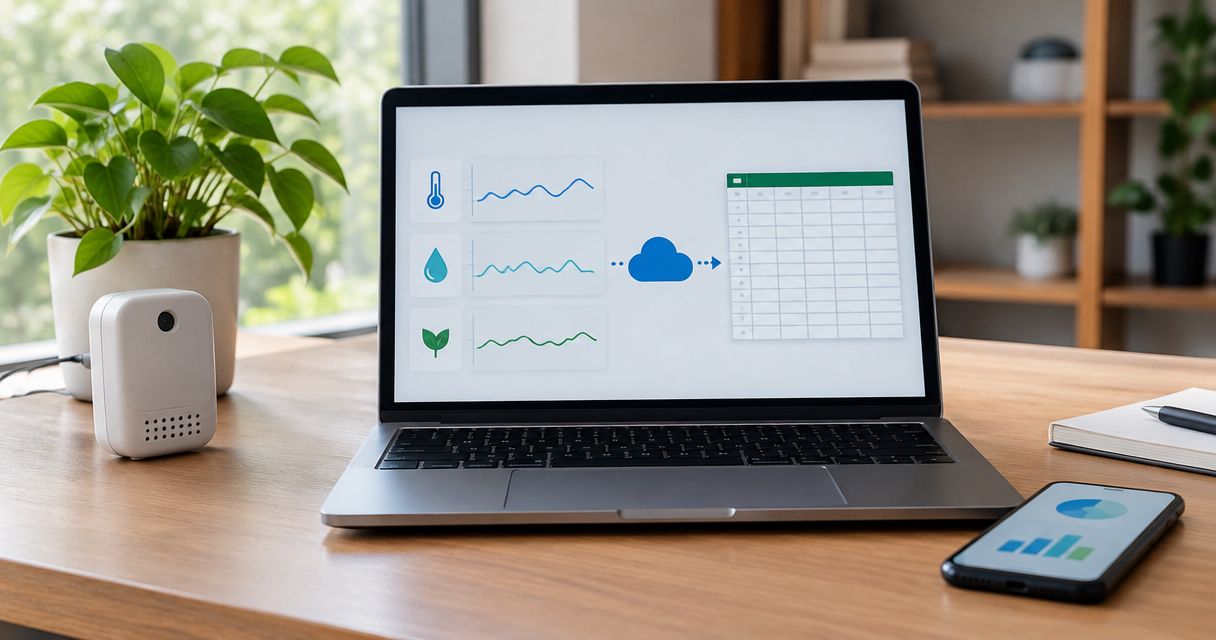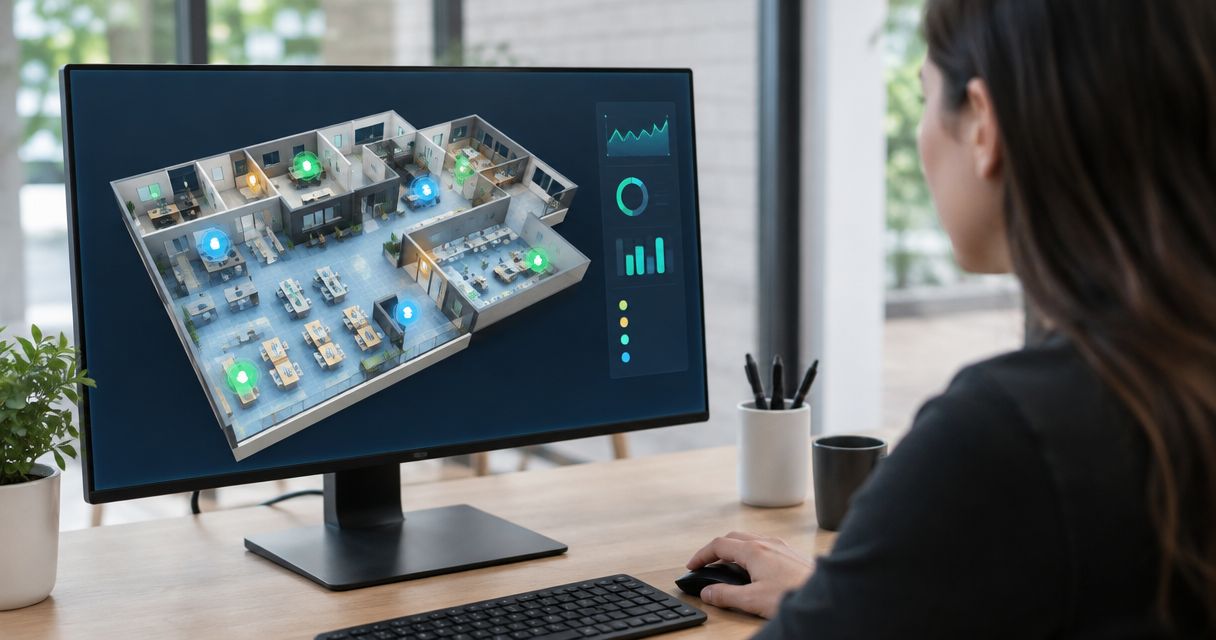
Paint booth VOC monitoring is continuous tracking of volatile organic compound concentrations, exhaust airflow velocity, and particulate levels inside a spray finishing operation, with the aim of keeping exposure and emissions documented without a technician walking the floor with a handheld meter. Auto body shops, OEM paint lines, and industrial coating plants all face the same constraint: the compliance record has to exist between inspections, not just during them.
- IoT monitoring for paint booth VOC compliance replaces spot checks with continuous PID or electrochemical sensor readings logged automatically.
- NFPA 33 sets a minimum booth face velocity near 100 ft/min for enclosed spray booths; a wireless airflow sensor flags drift below that before an inspector does.
- A rules engine can turn a VOC threshold breach into an SMS alarm and a timestamped record in the same step, not two separate systems.
- Kilo Cloud runs free for up to 5 devices, which covers one booth's airflow, VOC, and particulate sensors on most layouts.
Why paint booths need continuous VOC monitoring, not spot checks
A handheld PID meter tells you the VOC concentration at one point, at one moment. Spray booths don't stay at one concentration — solvent load spikes during flash-off, filter loading drops face velocity over a shift, and a door left open changes the exhaust pattern entirely. OSHA's 8-hour permissible exposure limits (29 CFR 1910.1000, Table Z-1) are time-weighted averages, which means a single good reading doesn't prove compliance across the shift it was taken in.
NFPA 33, the Standard for Spray Application Using Flammable or Combustible Materials, sets airflow requirements meant to keep vapor concentration below 25% of the lower flammable limit inside the booth. That's a ventilation problem as much as an air-quality one, and it's why airflow sensors belong next to VOC sensors, not instead of them. EPA's NESHAP Subpart HHHHHH (40 CFR Part 63) adds a separate layer for facilities doing surface coating and paint stripping, with recordkeeping obligations that a paper logbook satisfies poorly.
The Kilo IoT Platform is built for exactly this kind of continuous, multi-sensor monitoring — normalized telemetry from airflow, VOC, and particulate sensors lands in one dashboard instead of three separate systems that don't talk to each other.
How to set up IoT VOC monitoring for a paint booth
Map your measurement points before you buy a single sensor
Booth geometry decides sensor placement more than any spec sheet does. Get this wrong and you'll log clean air while the breathing zone runs hot.
- Exhaust plenum or filter bank, where cumulative VOC load concentrates
- Breathing zone height near the operator's typical spray position
- Make-up air inlet, to catch supply-side airflow drops
- Booth door or curtain line, where face velocity is easiest to lose
- Ambient point outside the booth, as a baseline for background readings
Choose sensors rated for the booth's hazard classification
Most enclosed spray booths fall under a Class I hazardous location during spraying. A sensor that isn't rated for that environment is a liability, not a monitoring point.
- PID (photoionization detector) sensors for broad VOC coverage at ppm resolution
- Electrochemical sensors for specific compounds like isocyanates or formaldehyde
- Explosion-proof or intrinsically safe housings for any sensor inside the spray zone — see explosion-proof IoT sensors for hazardous industrial environments for what that rating actually covers
- Particulate sensors for overspray and dry filter monitoring, detailed in particulate matter sensors for industrial dust monitoring
- Airflow or differential pressure sensors at the filter bank to catch loading before velocity drops below the NFPA 33 line
Kilo Electronics, Kilo's hardware sister company, ships PID, particulate, and airflow sensors with worldwide shipping if you need hardware sourced alongside the platform — see kiloelectronics.com.
Set thresholds before you set up an alarm
A sensor without a threshold is just a chart nobody watches. Pick numbers tied to a real standard, not a guess.
- OSHA PEL or a facility-specific action level set below it, with margin for TWA averaging
- NFPA 33's 25%-of-LFL vapor concentration target, translated into a booth-specific airflow minimum
- A secondary, tighter threshold that triggers a warning before the compliance threshold itself
- A different threshold set for spray hours versus flash-off/cure hours, since baseline VOC load differs
Build the alarm and escalation path
A threshold that only emails one inbox fails the moment that person is off shift. Kilo's rules engine uses CEL expressions with version control, so a VOC or airflow rule can be tested against a sample payload before it goes live, and rolled back in one click if it misfires.
- Multi-step escalation: operator first, shift supervisor next, EHS manager last
- Severity tiers so a filter-loading warning doesn't page the same person as a PEL exceedance
- Quiet-hours logic so off-shift alerts still reach someone, just through a different channel
- A centralized alarm inbox so the compliance officer isn't hunting through email threads during an audit
For the specific mechanics of getting alerts to a phone instead of a dashboard nobody's watching, see how to set up SMS and email alerts for critical sensor thresholds.
Turn the sensor history into an audit-ready record
An inspector doesn't want a chart. They want a timestamped record they can hand to a regulator. Continuous logging with export capability does that automatically; a logbook does it only as well as whoever filled it in that week.
- Timestamped sensor history with no gaps during operating hours
- Escalation and acknowledgment history attached to each alarm event
- Exportable reports scoped to a date range for an inspection window
- Calibration and maintenance records tied to the same device profile
Calibrate on a schedule, not when a reading looks wrong
PID sensors drift. Electrochemical sensors have a service life measured in months, not years, depending on exposure. A calibration schedule catches drift before it shows up as a false compliance reading.
- Set a recurring calibration reminder tied to manufacturer service intervals
- Log calibration events against the sensor's device history, not a separate spreadsheet
- Flag any sensor with a calibration gap as unverified until it's checked
Comparing monitoring options for paint booth compliance
| Option | Best for | Starting price | Key limitation |
|---|---|---|---|
| Handheld PID meter + paper log | Single booth, occasional spot checks | Varies by meter model | No continuous record; misses spikes between checks |
| Fixed sensor wired to an existing PLC/SCADA | Plants with an existing control system | Varies by integrator | Escalation to phone or email usually needs extra integration work |
| Kilo Cloud with wireless VOC, airflow, and particulate sensors | Multi-booth or multi-site compliance programs | Free for up to 5 devices; 25 EUR/month Starter tier for up to 25 devices | Needs a sensor placement and calibration plan before go-live |
| Third-party compliance consultant with periodic audits | Permit strategy and inspection prep | Varies by scope | Point-in-time snapshot, not continuous data |
Kilo Cloud is best for facilities that need continuous, audit-ready records across more than one booth or site without building custom integration work. A single handheld meter still has a place for spot-checking a new coating formulation; it just doesn't replace the continuous record a regulator wants to see.
“If the VOC reading only exists on a clipboard, it doesn't exist for an inspector.”
Common mistakes paint booths make with VOC monitoring
- Measuring at the booth door instead of the breathing zone or exhaust plenum — the reading looks clean while actual operator exposure runs higher.
- Treating face velocity as a one-time commissioning number. Filters load up over weeks; velocity that passed commissioning in January can fail by March with no alert to show for it.
- Logging exceedances in a spreadsheet that gets reviewed monthly. By the time someone reads it, the exposure event is long over and unactioned.
- Installing a general-purpose sensor in a Class I hazardous location. It works fine until an inspector asks for the hazardous-location rating on the spec sheet.
- One alarm recipient, no escalation. A weekend shift change with nobody watching the inbox means a threshold breach sits unread for two days.
Map your booth's sensor points
See how Kilo Cloud handles VOC, airflow, and particulate alarms in one dashboard.
FAQ
What's the best way to monitor VOC levels in a paint booth?
Continuous fixed PID or electrochemical sensors placed in the exhaust plenum and breathing zone, paired with airflow sensors at the filter bank, give a time-weighted record that a single handheld reading can't. Pairing that data with an alarm and escalation workflow is what turns a sensor reading into a compliance record.
Is continuous IoT monitoring required for paint booth compliance in 2026?
OSHA and EPA rules don't mandate a specific monitoring technology, but they do require documented exposure and emissions data that a manual logbook struggles to produce consistently. Continuous monitoring is the practical way to meet that documentation burden without adding headcount.
How much does IoT air quality monitoring cost for a spray booth?
Sensor hardware cost varies by sensor type and manufacturer. The platform side is separate from hardware: Kilo Cloud runs free for up to 5 devices and 25 EUR per month on the Starter tier for up to 25 devices, which covers most single-booth deployments.
What sensors do I need for paint booth VOC monitoring?
A PID sensor for broad VOC coverage, an airflow or differential pressure sensor at the filter bank, and a particulate sensor for overspray are the core set. Add an electrochemical sensor if the coating line uses isocyanates or another compound that needs specific detection.
Does NFPA 33 require continuous air monitoring in spray booths?
NFPA 33 sets ventilation and airflow requirements meant to keep vapor concentration below 25% of the lower flammable limit, and enforcement of that standard is easier to demonstrate with continuous airflow data than with periodic checks. It's a ventilation standard first, but continuous monitoring is the practical way to prove ongoing compliance with it.
How do I document VOC readings for an EPA or state inspection?
Export a timestamped sensor history for the inspection window, including any threshold exceedances and their escalation and acknowledgment records. A platform that logs calibration events alongside sensor readings makes that export defensible, not just a chart.
Can IoT sensors replace handheld VOC meters entirely?
Fixed sensors replace the continuous monitoring role, but a handheld meter still has a place for spot-checking a new coating or troubleshooting a specific complaint. Most paint booths in 2026 run both: fixed sensors for the compliance record, handheld meters for one-off checks.
What's the difference between PID sensors and electrochemical VOC sensors?
PID sensors detect a broad range of VOCs at ppm resolution and respond fast, which suits general booth monitoring. Electrochemical sensors target specific compounds like isocyanates and typically have a shorter service life, which makes them better suited to a targeted exposure concern than blanket VOC coverage.
One detail that surprises most facilities the first time they switch from spot checks to continuous monitoring: the airflow reading moves more than the VOC reading does. Filter loading is gradual and easy to miss on a weekly walk-through, but it shows up immediately on a continuous chart — and a booth running below its NFPA 33 face velocity target is usually the root cause behind a VOC exceedance that looks, at first glance, like a solvent problem.