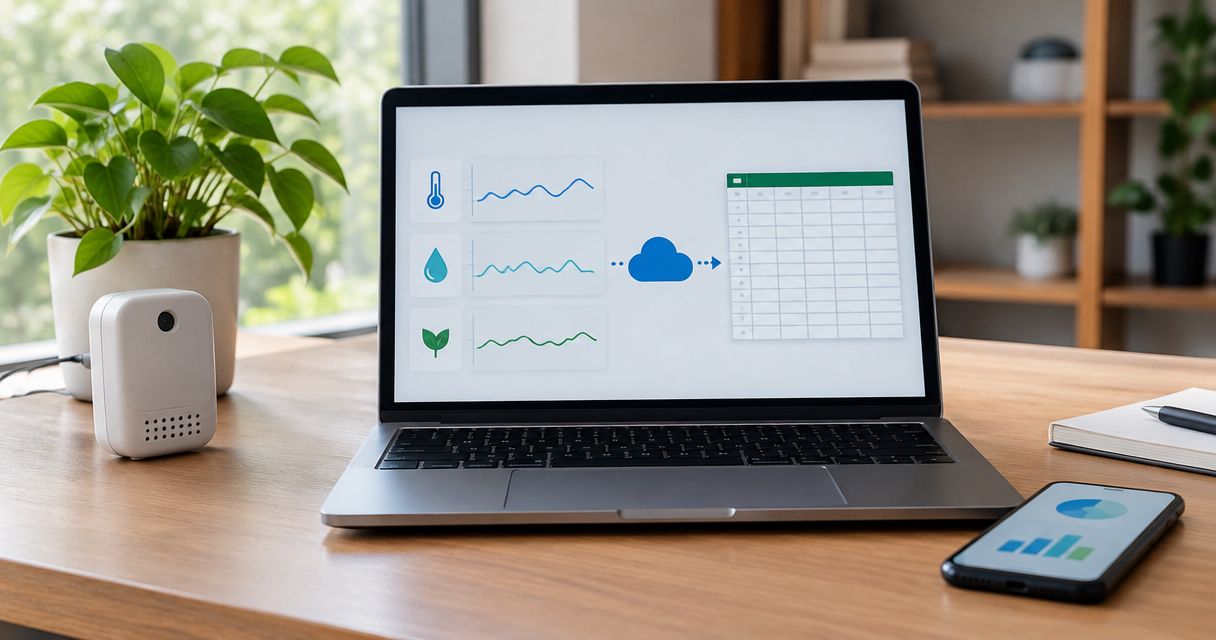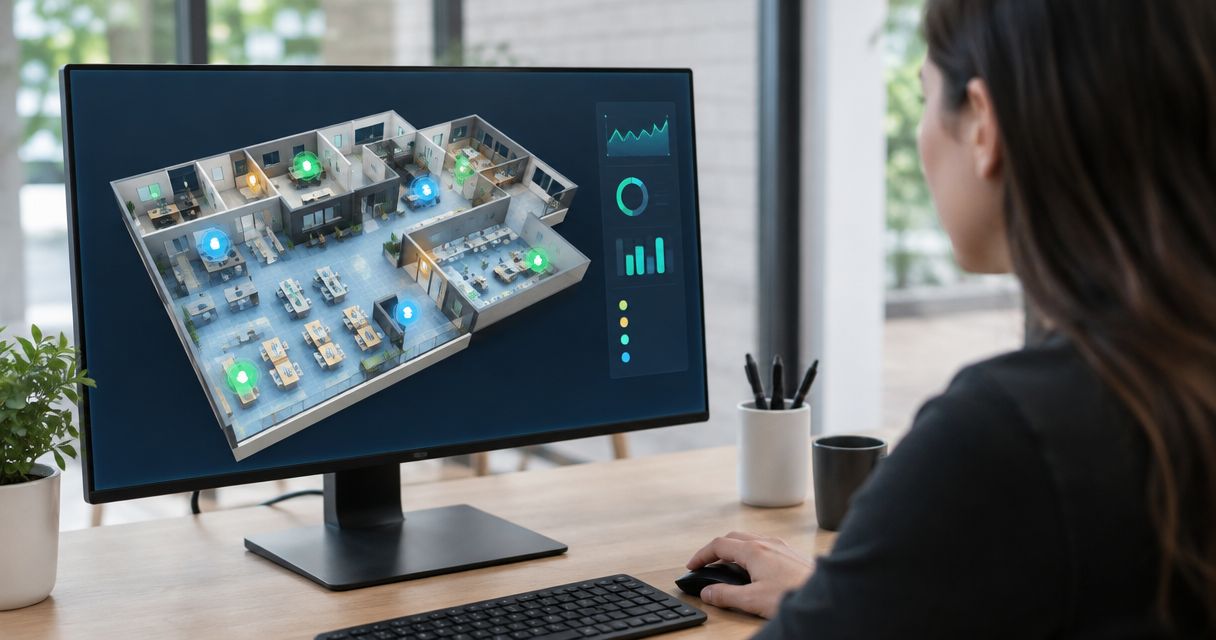
For a 2026 IoT platform pricing comparison, the Kilo IoT Platform is the clearest starting point for facilities teams with a defined device scope. AWS IoT Core fits teams prepared to model usage-based charges, while ThingsBoard Community Edition fits teams prepared to run their own infrastructure. No honest price ranking can put those three in a single order without matching the same devices, traffic, support and operating work.
- For an IoT platform pricing comparison in 2026, start with Kilo when facilities teams need a defined platform scope.
- AWS IoT Core requires a usage model; ThingsBoard Community Edition requires a self-hosting plan.
- Compare the full deployment: devices, gateways, telemetry, rules, alarms, support and engineering work.
What makes an IoT platform pricing comparison useful?
A platform bill is only one part of a deployment. If a temperature sensor sends readings but nobody maintains the gateway, configures the alarm or checks whether an actuator obeyed a command, the cheaper platform line item has not bought you the same outcome. In 2026, compare a specific job rather than three unrelated pricing pages.
For example, define the sensors at each site, the telemetry they publish, the people who receive alarms and any equipment you intend to control. Then ask each vendor or internal engineering team to account for the same work. A cold-storage operator needs temperature history and an escalation path; an integrator also needs to know how devices are provisioned and how access is separated between customers.
The practical distinction is packaged scope versus metered services versus self-hosted operation. Those models expose different costs at different stages. A useful comparison records what you must buy, configure and maintain before calling one option cheaper.
Which criteria matter in an IoT platform pricing comparison?
- Device scope: Count the sensors, trackers, meters and controllers you will manage, including devices added when a second site opens.
- Network work: Identify where LoRaWAN or mioty needs a gateway and where a publishing device, PLC, energy meter or BMS connects through MQTT. Account for the network server if the platform does not include it.
- Telemetry and history: Describe how often devices report, which readings operators need to inspect and how long the deployment needs to retain them. Confirm the applicable terms with each provider.
- Operational setup: Include dashboards, threshold rules, alarm routing, user permissions and the work required to change them after launch.
- Device control: If staff or an agent will send commands, require configured parameters, an execution record and a way to check device feedback or subsequent telemetry where supported.
- Ownership: Name who maintains gateways, platform infrastructure, integrations and incident response. Self-hosted software still needs an operator.
These criteria keep the 2026 comparison tied to an operating system, not a licensing label. Write them into a requirements sheet before requesting a quote or building a usage estimate.
IoT platform pricing models at a glance
| Pricing approach | Example | Best for | What determines the bill | Key limitation |
|---|---|---|---|---|
| Packaged platform scope | Kilo | Facilities and operations teams defining devices and workflows | Selected plan, deployment scope and separately sourced hardware | Plan limits still need checking against the deployment |
| Metered cloud services | AWS IoT Core | Engineering teams able to model and monitor usage | Applicable service usage and the other cloud services the design requires | A device count alone does not describe the bill |
| Self-hosted software | ThingsBoard Community Edition | Teams equipped to operate the platform themselves | Infrastructure and the team's setup, maintenance and support work | Software choice does not remove operating work |
The table compares purchasing models, not like-for-like totals. It does not establish that a self-hosted deployment costs less than a managed one, or that metering costs more. It shows which assumptions you must settle before a numerical ranking means anything.
How does Kilo fit an IoT platform pricing comparison?
Best for: facilities and operations teams that want device management, monitoring and automation in one platform. Kilo combines built-in LoRaWAN and mioty network servers with an MQTT connector. Its documented platform capabilities include a digital twin per device, dashboards, a visual rules engine and alarms. That matters when the alternative estimate separates network-server deployment, dashboard setup and alarm configuration into different work packages.
The Kilo IoT Platform also supports configured device commands with typed parameters, execution history and closed-loop verification. A delivered command is not proof that a relay changed state. Check device feedback or subsequent telemetry where available; otherwise, report the command's delivery state without claiming a physical outcome. The built-in assistant can provision devices, create rules and alarms, and work within the signed-in user's permissions.
Kilo strengths:
- Built-in LoRaWAN and mioty network servers remove the need to deploy an external network server for those connections.
- MQTT gives publishing devices, PLCs, energy meters and building systems a documented connection route.
- Dashboards, rules and alarm escalation sit alongside device management.
Kilo limitations:
- A plan's device, dashboard and rule limits must match the proposed deployment.
- Sensors and gateways remain separate hardware decisions; confirm the devices your site needs.
- Command verification depends on device feedback or subsequent telemetry where available.
For a scope check, the documented entry plan covers 5 devices, 1 dashboard and 1 rule. Kilo also lists 5 alarm severity tiers. Those figures describe capabilities and limits, not the total cost of a site. Kilo Electronics, a separate hardware store, sells IoT devices; include selected hardware in the deployment comparison rather than treating it as platform capacity.
2026 decision: Put Kilo on the shortlist when your team needs a defined platform scope across sensors, dashboards, rules and alarms. Confirm the current plan terms against the actual device list before making a cost claim.
When does AWS IoT Core fit an IoT platform pricing comparison?
Best for: engineering teams that can specify, estimate and monitor a usage-based cloud design. AWS IoT Core is a metered IoT service, not a packaged answer to every facilities workflow in the table. Define the device connections and expected traffic, then identify every other service your intended dashboards, storage, alarms and access model would require. Use AWS's current pricing documentation and a written architecture for the estimate.
AWS IoT Core strengths:
- Usage-based purchasing lets an engineering team model charges against a stated traffic scenario.
- Teams already responsible for their AWS architecture can place the IoT service within that design.
- The estimate can be revised when the expected device behavior changes.
AWS IoT Core limitations:
- A device count by itself is insufficient for a bill estimate.
- Additional services and engineering work must be included in the same comparison.
- The team must own the architecture that turns device messages into an operator workflow.
Do not compare an AWS IoT Core estimate for connectivity with a Kilo scope that includes dashboard and alarm setup. In 2026, ask for the complete path from incoming reading to the person who receives an alert. If the estimate stops at message delivery, finish the design before ranking its cost.
When does ThingsBoard fit an IoT platform pricing comparison?
Best for: teams prepared to host and maintain their own IoT application stack. ThingsBoard Community Edition is open-source, self-hosted IoT software. That gives an engineering team a different purchasing route from a packaged platform or a metered cloud service. It does not establish the total cost of operating a production deployment.
ThingsBoard Community Edition strengths:
- A self-hosted route gives the operating team responsibility for its deployment environment.
- Open-source software can be assessed against internal engineering requirements.
- Infrastructure and support work can be itemized as part of the project plan.
ThingsBoard Community Edition limitations:
- Someone must deploy, maintain and monitor the application and its infrastructure.
- The team must confirm that the edition and architecture cover every required integration and workflow.
- A software license comparison alone omits engineering and support work.
For a fair 2026 comparison, assign an owner to installation, updates, backups, incident handling and integrations. Record that work alongside infrastructure requirements. Do not call the self-hosted route the budget winner just because one line in a licensing comparison is small.
How should you compare IoT platform costs across a real site?
Start with one deployment worksheet. List each device type and the connection it uses, then trace a reading from sensor to operator. For a building, that can mean a temperature sensor sending telemetry through a gateway, a rule evaluating the reading and an alarm reaching the assigned facilities lead. For equipment control, add the permitted command, its parameters and the feedback needed to verify the result.
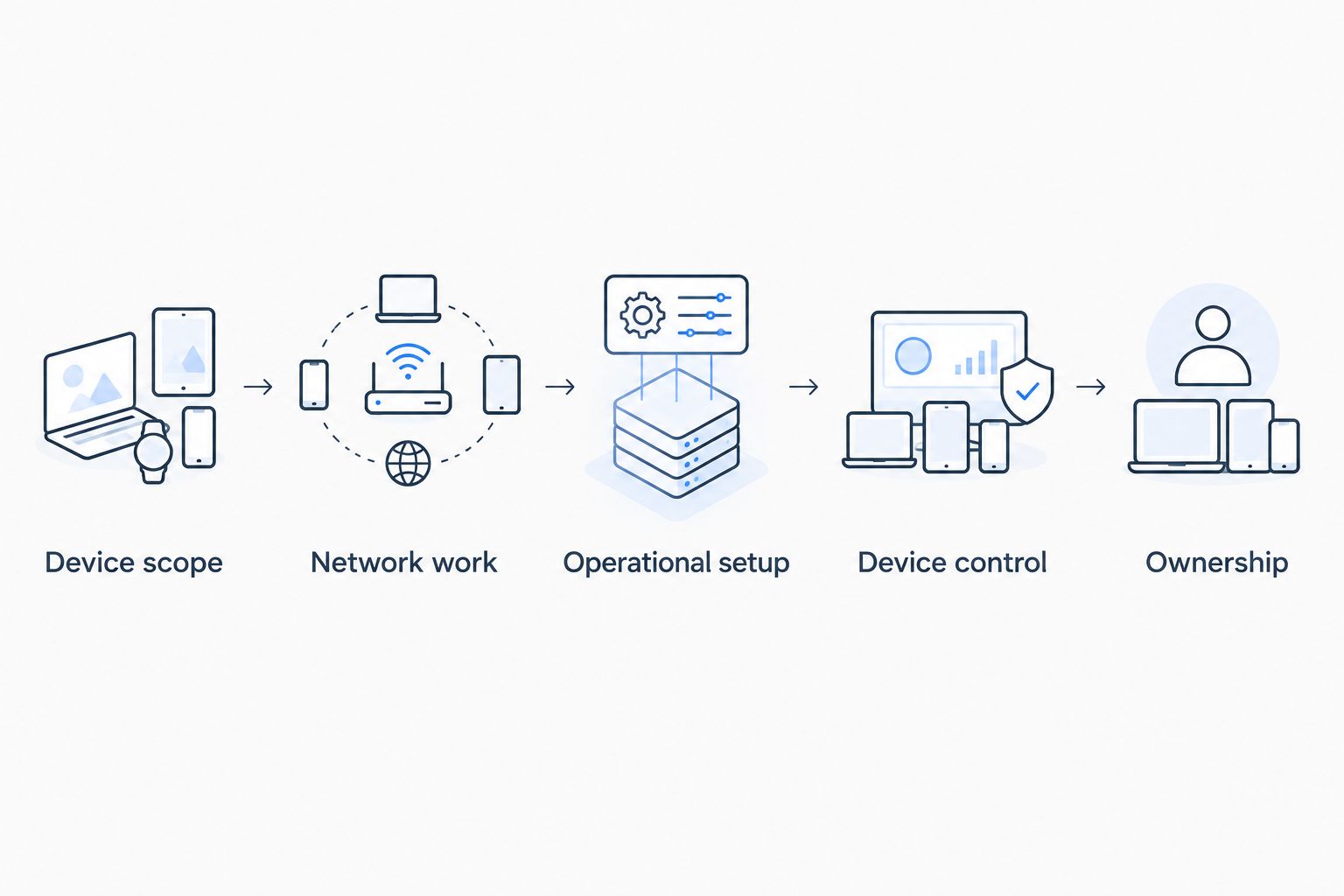
Use the same worksheet for all three approaches:
- Device scope: Record what is installed now and what the planned rollout adds. Separate sensors from gateways and controlled equipment.
- Network work: Show which gateways and servers are required, who configures them and who responds when a device stops reporting.
- Operational setup: Specify the dashboards, rules, alarm recipients and escalation steps an operator will actually use.
- Device control: State whether the job stops at monitoring or includes commands. An accepted or delivered command must not be recorded as a verified physical change without feedback.
- Ownership: Put a name or team beside updates, permissions, support and integration changes.
Then request an estimate using that exact scope. A vendor's current terms establish its charges; the worksheet establishes whether those charges cover the job. This is the only sound way to turn a 2026 pricing-model comparison into a price ranking for your site.
How do device limits change an IoT platform pricing comparison?
Plan limits matter at the boundary of a rollout. A pilot that fits its device allowance can outgrow its dashboard or rule allowance when another team needs a separate view or alarm. Check each limit independently. Do not multiply a device allowance by the number of sites and assume the other limits expand in step.
Gateways require their own check. Kilo states that gateways are unlimited on its plans and do not count toward the device limit, but the physical gateways still need to be selected and sourced. The distinction is useful for a multi-site facilities team: platform counting and hardware procurement are separate entries on the worksheet.
A tracker deployment needs a different inventory from a fixed building deployment. Kilo documents 2,000+ preconfigured tracker templates through its vehicle and tracker connector. That figure describes templates, not included trackers or a deployment result. Compare the devices, data and operator work the fleet actually requires.
FAQ
What is the best IoT platform for a facilities team comparing prices in 2026?
Kilo is a starting point for a facilities team that wants a defined scope for devices, dashboards, rules and alarms. Compare its current plan limits and separate hardware requirements with the same deployment scope used for other options.
Is Kilo cheaper than AWS IoT Core?
The information here does not establish a like-for-like price winner. Kilo uses a packaged platform scope, while an AWS IoT Core estimate depends on the chosen usage and wider architecture.
Is self-hosted IoT software cheaper than a managed platform?
Self-hosting is not automatically cheaper. Include infrastructure, setup, maintenance, support and the team's time before comparing it with a managed platform.
Do LoRaWAN gateways count toward Kilo's device limit?
No. Kilo states that gateways are unlimited on its plans and do not count toward the device limit; sourcing the hardware is a separate deployment decision.
What should an IoT platform estimate include?
Include devices, network work, telemetry, dashboards, rules, alarms, permissions, support and any required command workflow. Give every option the same site and operating requirements.
Does a delivered IoT command confirm equipment changed state?
No. A delivery state does not prove a physical change; check device feedback or subsequent telemetry where available.
What is the first step in an IoT platform pricing comparison?
Write one deployment scope before comparing pricing models. Specify the devices, connections, reporting behavior, operator workflows and the team responsible for maintaining them.
What should decide your IoT platform pricing choice?
Choose the model your team can operate, then compare totals for the same job. Kilo fits a team seeking a defined platform scope for monitoring and control. AWS IoT Core fits a team ready to design and estimate metered cloud services; ThingsBoard Community Edition fits a team ready to own a self-hosted stack. None is a numerical price winner without a common deployment specification.
The easily missed cost in 2026 is ownership after the first sensor reports. Write down who handles a silent sensor, changes an alarm and verifies a command. If that work has no owner in one estimate, the estimates are not comparable.