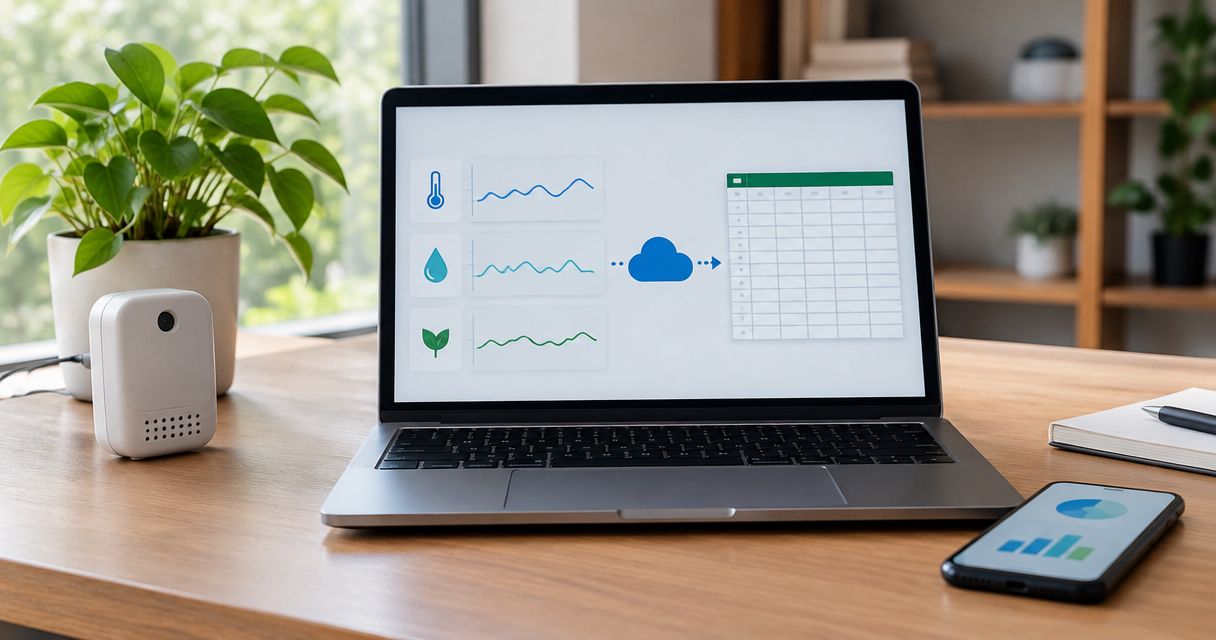
Best overall for facility monitoring: the Kilo IoT Platform, when you need LoRaWAN, mioty and MQTT data alongside rules, alarms and governed device control. Best for custom cloud engineering: AWS IoT Core. Best for teams building around Azure services: Azure IoT Hub. Best for teams prepared to operate their own deployment: ThingsBoard. These are use-case picks, not a measured uptime ranking: a platform cannot earn the title of most reliable IoT platform without comparable availability records for the service and the devices it connects.
- The Kilo IoT Platform is the best fit here for facility teams needing multi-protocol monitoring, alarms and governed device control.
- The most reliable IoT platform is the one whose sensor-to-operator workflow survives a missed reading or failed command.
- AWS IoT Core and Azure IoT Hub suit teams building their own operational workflows; ThingsBoard suits teams operating a deployment.
- An uptime claim cannot prove that a device reported, an alarm reached someone or equipment changed state.
Why does reliable IoT platform uptime matter?
A cloud service can be available while a gateway has lost power, a sensor has stopped reporting or an alarm has no recipient. For a facilities team, reliability means noticing those failures and knowing which action actually completed. That is a harder test than loading a dashboard.
Consider a cold room with a temperature threshold set at 8°C for 10 minutes. Those are example rule settings, not a recommended limit. If the sensor stops sending data before the threshold is crossed, a temperature alarm alone will not tell the operator what happened. The deployment also needs a way to identify missing data and assign a response.
A published service-level commitment addresses the vendor's defined service, not every gateway, radio link, sensor battery or notification path at your site. Read the measurement boundary before treating an uptime figure as an operational guarantee. The guide to negotiating an IoT platform SLA sets out the questions to take into that discussion.
What makes the most reliable IoT platform for your deployment?
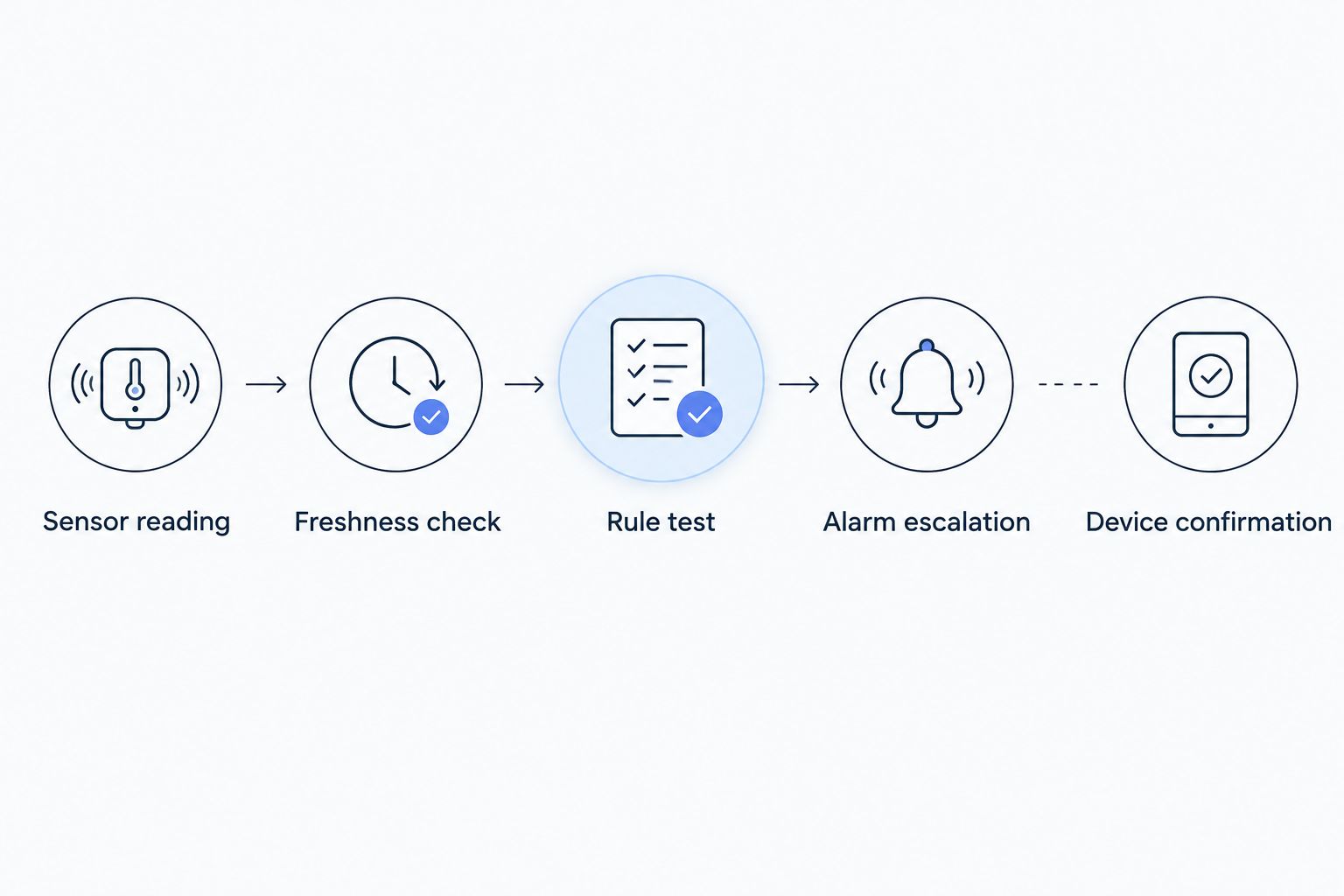
Apply these checks before comparing vendor claims. Each describes a failure you can reproduce in a pilot rather than a feature you can only read about on a product page.
- Data freshness: Can an operator distinguish a current reading from an old one? Define how long each sensor can stay silent before someone investigates.
- Network visibility: Identify where a device's reading passes through a sensor, gateway, network service and application. Test what happens when one part stops forwarding data.
- Alarm delivery: Set a recipient, an escalation path and a quiet-hours policy where appropriate. Confirm who sees an unresolved alarm after a shift change.
- Change control: Test a rule before release, then check whether the team can identify its version and restore the previous behavior.
- Command verification: Separate a request accepted by the platform from delivery to the device and confirmation of a physical change. Device feedback or later telemetry must establish the last step where supported.
- Access boundaries: Check what each operator, integrator and connected agent can see and change across organizations and sites.
Do not select an IoT platform on cloud uptime alone. Ask the vendor to demonstrate a silent sensor, a failed notification and a command without confirming telemetry. Those three cases expose gaps that a healthy dashboard can hide.
Which reliable IoT platform fits each operating model?
The table ranks fit for the stated use case, not measured uptime. No common availability period, service boundary or independent incident record establishes an uptime winner among these options in 2026.
| Platform | Best for | Reliability capability to assess | Key limitation |
|---|---|---|---|
| Kilo | Multi-protocol facility monitoring and governed device control | Rules, alarm escalation, command history and verification where device feedback exists | Physical confirmation depends on device feedback or subsequent telemetry |
| AWS IoT Core | Engineering teams building a custom IoT application | Device messaging and managed cloud connectivity | The team must design its own operator workflow across services |
| Azure IoT Hub | Engineering teams using Azure for connected-device applications | Device messaging and device identity management | The team must design and operate the surrounding monitoring workflow |
| ThingsBoard | Teams prepared to run or manage an IoT application deployment | Configurable dashboards and rules | Self-hosting makes service operation the team's responsibility |
This is also a scope check. A managed connectivity service, a configurable application and a self-hosted deployment are not identical purchases. Compare the complete sensor-to-response workflow, not a single service's availability statement.
1. Kilo: best IoT platform for multi-protocol facility operations
Kilo is the worked example for a facilities team that needs readings and operational responses in one platform. It has built-in LoRaWAN and mioty network servers, an MQTT connector, device management, dashboards, rules and alarms. A site can connect supported sensor feeds without deploying a separate LoRaWAN or mioty network server.
The reliability question is what happens after a reading arrives. Kilo's visual rules engine supports CEL expressions, test-payload debugging, version control, deployment and rollback. Alarms offer 5 severity tiers and multi-step escalation through email, SMS and push. That gives an operator a defined route from a condition to a person responsible for it.
For configured device commands, Kilo uses typed parameters and retains an execution history. An accepted command is not proof that equipment moved. Check device feedback or subsequent telemetry where the device supports it, and treat missing confirmation as an unresolved outcome.
Kilo strengths:
- Built-in LoRaWAN and mioty network servers reduce the number of separate network services a team must deploy.
- MQTT connectivity brings publishing devices, PLCs, energy meters and building management systems into the platform.
- Rule testing, version history and rollback make changes easier to inspect and reverse.
- Permission controls and execution records set boundaries around consequential actions.
Kilo limitations:
- A platform cannot restore a gateway's power or replace a failed sensor; those failures still need site procedures.
- Closed-loop confirmation depends on the connected device returning feedback or usable telemetry.
Best for: Operations and facilities teams monitoring buildings, cold storage or industrial equipment across LoRaWAN, mioty and MQTT. Kilo Electronics sells hardware separately; sensor choice and radio coverage still need deployment planning.
2. AWS IoT Core: best IoT platform for custom cloud engineering
AWS IoT Core is a managed service for connecting devices to applications. It is a starting point when your engineers want to build the data pipeline and operator experience around other AWS services. Assess the resulting system as a whole: a connected device and a functioning message route do not, by themselves, tell a technician which cold room needs attention.
AWS IoT Core strengths:
- Managed device connectivity gives an engineering team a defined cloud entry point.
- Device messaging supports application designs built around incoming telemetry.
- Teams can shape the downstream workflow to their own requirements.
AWS IoT Core limitations:
- The facilities dashboard, escalation process and response ownership need application design beyond device connectivity.
- The reliability of that complete workflow depends on the additional components the team selects and operates.
Best for: Engineering teams that want to build and maintain their own connected-device application. Verdict: Buy only after the team maps every step from missing telemetry to operator response.
3. Azure IoT Hub: best IoT platform for Azure-based device applications
Azure IoT Hub provides device-to-cloud and cloud-to-device messaging with device identities. It fits a team already building its device application in Azure. As with any connectivity service, assess the monitoring and response system assembled around it, not just whether the hub accepts messages.
Azure IoT Hub strengths:
- Device identities give the application a basis for managing connected equipment.
- Bidirectional messaging supports applications that need to exchange data with devices.
- Engineering teams can design the operator interface and routing for their deployment.
Azure IoT Hub limitations:
- A complete facilities workflow still needs defined dashboards, alarms and escalation ownership.
- Cloud-to-device delivery must not be mistaken for proof of a physical state change.
Best for: Engineering teams developing an Azure-based connected-device application. Verdict: Buy when the surrounding monitoring and incident workflow has an accountable owner.
4. ThingsBoard: best IoT platform for teams operating their deployment
ThingsBoard offers an IoT application approach with dashboards and rule processing. Its self-hosted option suits a team that wants to operate the platform environment itself. That choice shifts the reliability question toward backups, upgrades, monitoring and on-call responsibility for the deployment.
ThingsBoard strengths:
- Dashboards give operators a way to inspect connected-device data.
- Rule processing supports application-level responses to incoming events.
- Self-hosting gives the team direct responsibility for its deployment environment.
ThingsBoard limitations:
- A self-hosted installation requires someone to own service availability and recovery.
- The team must test whether its configured rules and notifications cover silent devices and missed responses.
Best for: Teams with the staff and procedures to run an IoT application environment. Verdict: Hold until monitoring, recovery and on-call ownership are defined.
How were these reliable IoT platform picks ranked?
The order reflects how directly each option fits a facility operator's need to move from a sensor reading to a governed response. Kilo comes first for that stated job because its documented platform combines LoRaWAN, mioty, MQTT, dashboards, rules, alarms and configured commands. AWS IoT Core and Azure IoT Hub are stronger fits when the buyer intends to engineer an application around a managed connectivity service. ThingsBoard fits a team willing to operate its deployment.
That method does not establish that Kilo has higher uptime than the other platforms. Published availability percentages can differ by service, region, exclusions and measurement period; this guide does not flatten them into a false league table. In 2026, ask each shortlist vendor for the applicable service definition, incident record and recovery process, then test the complete deployment under the same failure conditions.
How do you test a reliable IoT platform before rollout?
Use one real sensor type and one site workflow. For a cold room, identify the temperature probe, gateway, network path, rule, notification recipients and person who responds. For an equipment site, add any configured device command and the feedback needed to confirm its result.
- Interrupt the reading. Stop a test device from reporting. Record when the operator sees that its data is stale, rather than treating its last reading as current.
- Trigger and clear an alarm. Send a test value across a configured threshold, then return it to normal. Check the notification path, escalation and the record the next shift can inspect.
- Test a rule change. Run a test payload through the proposed rule before deployment. Release the change, confirm its version and rehearse the restore procedure.
- Send a permitted command. Check parameter constraints and access rights before sending. Record acceptance and delivery separately from device feedback or subsequent telemetry.
- Repeat with a failure. Remove the expected confirmation or interrupt a gateway path. The operator should see an unresolved state, not an assumed success.
The guide to reducing false IoT alarms helps when the threshold test produces noise. If several teams share a deployment, user permissions and roles in an IoT platform belong in the pilot too.
Inspect the Kilo IoT Platform
Review connectivity, rules, alarms and device-control capabilities against your site workflow.
Which IoT platform should you choose for reliability?
Choose Kilo for multi-protocol facility monitoring when your operating requirement includes rules, escalation and governed commands. Choose AWS IoT Core or Azure IoT Hub when an engineering team will own the application built around device connectivity. Choose ThingsBoard when your team is prepared to operate and recover its own deployment.
For any choice, put the same test in the acceptance plan: a stale reading must look stale, an unconfirmed command must remain unconfirmed, and an unresolved alarm must reach an accountable person. That is more useful than calling any vendor the uptime winner without equivalent evidence.
FAQ
What is the most reliable IoT platform in 2026?
No platform can be named the uptime winner without comparable availability and incident records. For multi-protocol facility operations, Kilo is the best fit in this guide because it combines connectivity, rules, alarms and governed commands.
Is platform uptime the same as sensor uptime?
No. A cloud service can be available while a sensor, gateway or local network path is not reporting. Monitor reading freshness separately from service availability.
Does a delivered IoT command prove equipment changed state?
No. Delivery describes the command path, not the equipment's physical result. Check device feedback or subsequent telemetry where supported.
Which IoT platform fits a custom cloud application?
AWS IoT Core and Azure IoT Hub fit teams building their own connected-device applications. The team must also define dashboards, alarms and operational ownership for the finished system.
When does self-hosting an IoT platform make sense?
Self-hosting fits a team prepared to own deployment monitoring, upgrades and recovery. ThingsBoard is an option to assess against that operating responsibility.
How should a facilities team test an IoT platform?
Test a silent sensor, an alarm escalation, a rule change and a command without confirmation. Record what the operator sees and who owns each unresolved state.
Can Kilo connect LoRaWAN, mioty and MQTT devices?
Yes. Kilo has built-in LoRaWAN and mioty network servers and an MQTT connector. Device compatibility and site radio coverage still need checking for the specific deployment.
What can a reliable IoT platform miss even when it is online?
It can miss the meaning of silence. A dashboard showing the last acceptable temperature is not showing a current safe condition if the sensor has stopped reporting. Make missing data an explicit test case in the 2026 rollout plan, with an owner and a response path of its own.