
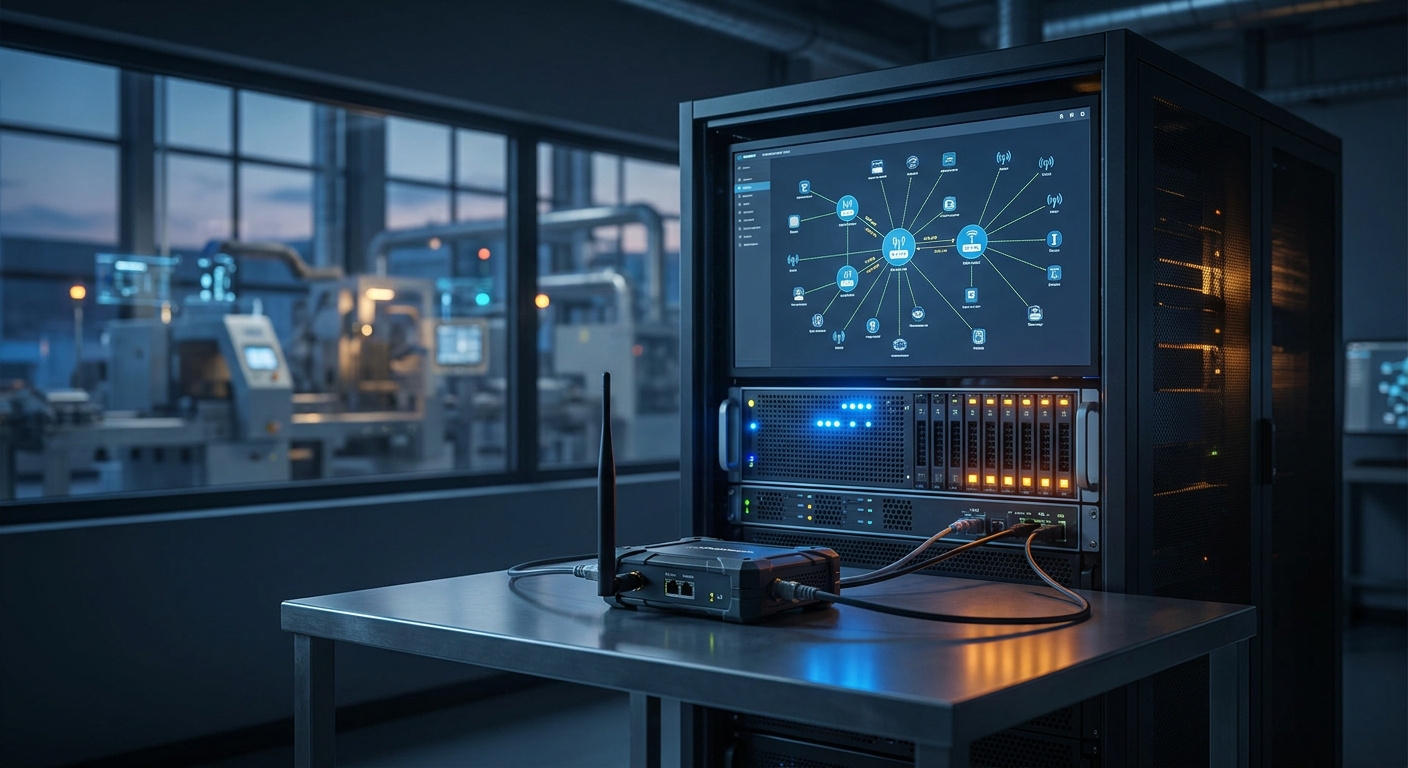
Picking LoRaWAN network server software in 2026 comes down to one split: free, self-hosted stacks you maintain yourself, or managed clouds that turn raw uplinks into alarms and dashboards without extra engineering. Get the pick wrong and you spend the next six months building a rules engine on top of a server that was never meant to have one.
- ChirpStack is the free, self-hosted lorawan network server software pick for 2026 — Buy if you have ops staff to run it.
- The Things Stack wins for teams wanting a managed cloud with Class A, B and C support out of the box — Buy.
- Kilo IoT is the pick when the network server needs to trigger alarms and automation, not just route packets — Buy.
- Actility ThingPark suits carriers and multi-site rollouts — Consider, Skip for single-facility monitoring.
- AWS IoT Core for LoRaWAN only pays off if you already run production workloads on AWS — Hold otherwise.
Why this matters
A LoRaWAN network server's only job is to deduplicate uplinks from multiple gateways, manage device sessions, and hand clean data to whatever sits above it. Get a weak one and you get duplicate readings, dropped downlinks, and devices that silently fall off the network for days before anyone notices.
Most industrial teams don't actually want "just" a network server in 2026 — they want the server wired to rules, alarms, and a dashboard so a temperature spike in a cold room becomes an action, not a log entry. Kilo builds the network server, rules engine, and alarms into one AIoT platform instead of three separate vendor contracts.
The cost of getting this wrong shows up later, not on day one. A bare-bones network server looks cheaper in the quote, then you're paying integration hours to bolt on the dashboard and alerting layer that a full platform ships with by default.
How we ranked
This ranking weighs five things pulled from each vendor's own documentation and deployment model as published in 2026: protocol support (LoRaWAN Class A/B/C, mioty, MQTT), deployment model (self-hosted vs. managed cloud), native rules and alarm handling versus "bring your own integration," multi-tenancy and scale for multi-site rollouts, and total cost of ownership once engineering time is counted.
This isn't a lab benchmark of throughput or packet loss — no vendor here has published comparable third-party test numbers for 2026, and inventing one would be worse than skipping it. It's a buying framework based on what each server actually does out of the box.
The ranked list
1. The Things Stack (The Things Industries) — the default open ecosystem pick
The Things Stack runs on the open LoRaWAN standard and supports Class A, B, and C devices across the regional frequency plans LoRaWAN Alliance members use. The community edition is free to run yourself; the Enterprise tier adds a managed cloud and support contract.
It's the safest starting point if you want a network server that isn't tied to one hardware vendor and has years of ecosystem tooling behind it. What it doesn't give you natively: a rules engine or dashboard layer — you're pairing it with something else for alarms and visualization.
Verdict: Buy if you want an open standard without building your own server from scratch.
2. ChirpStack — the zero-license-cost, self-hosted pick
ChirpStack ships under the MIT license, so the software itself costs $0. You run it on your own infrastructure, which means you also own the Postgres, Redis, and MQTT broker stack underneath it.
That's the trade: no licensing bill, but every gateway firmware quirk and version upgrade is your team's problem to solve. Teams that already run Kubernetes or a solid DevOps practice get a fully capable network server for the price of compute.
Verdict: Buy if you have engineering headcount to run it. Skip if your team's time is better spent on facilities work, not server maintenance.
3. Actility ThingPark — the carrier-grade pick
Actility's ThingPark is built for network operators and large multi-tenant rollouts spanning hundreds of sites, with roaming and carrier-level device management baked in. It's overbuilt for a single warehouse or a five-site cold storage operation.
Where it earns its keep is exactly the scenario most SMB buyers never hit: managing device populations across multiple customers or regions under one contract.
Verdict: Consider for enterprise, multi-tenant rollouts. Skip for single-facility monitoring — you're paying for scale you won't use.
4. Loriot — the lightweight multi-tenant SaaS pick
Loriot is cloud-hosted, provisions quickly, and prices per device, which makes it a common choice for resellers building white-label LoRaWAN offerings on top of someone else's brand.
It handles the network server layer cleanly but, like The Things Stack, leaves rules and dashboards to a separate tool in most deployments.
Verdict: Consider if you're reselling connectivity under your own brand. Hold if you're monitoring your own sites and want fewer vendor seams.
5. AWS IoT Core for LoRaWAN — the pick if you already live in AWS
AWS IoT Core for LoRaWAN plugs gateway traffic straight into existing AWS IoT Core device shadows and rules, which only matters if your stack is already built on AWS Lambda, IoT Core, and Timestream.
For teams starting from zero, it adds AWS's own learning curve on top of the LoRaWAN one — two platforms to master instead of one.
Verdict: Hold unless production workloads already run on AWS. Otherwise this adds complexity, not simplicity.
6. Senet — the North America public coverage pick
Senet operates a public LoRaWAN network across parts of the US, which matters when you don't want to deploy and maintain your own gateways at every site.
It solves a coverage problem, not an alarms-and-automation problem — you're still pairing it with a platform layer for dashboards and rules.
Verdict: Consider for US sites without existing gateway coverage. Skip outside North America or where you're already running private gateways.
7. Kilo — the pick when packets need to trigger action
Kilo runs LoRaWAN, mioty, and MQTT connectivity into one AIoT platform, with a rules engine, alarms, dashboards, and a digital building twin sitting directly on top of the network server layer — not bolted on months later. An alarm rule like 8°C for 10 minutes on a cold storage sensor fires an action the moment it crosses the threshold, instead of waiting for someone to notice a chart.
That's the difference from the six servers above: they route packets and hand you raw data; Kilo decides and acts on it. For teams monitoring cold storage, buildings, or industrial equipment, that closes the loop between the sensor reading and the response.
Verdict: Buy for operations and facilities teams who need the network server wired directly into alerts and automation, not a separate integration project.
Comparison table
| Software | Deployment | Protocols | Best for | Verdict |
|---|---|---|---|---|
| The Things Stack | Self-hosted or managed | LoRaWAN (Class A/B/C) | Open ecosystem, no vendor lock-in | Buy |
| ChirpStack | Self-hosted | LoRaWAN | Teams with DevOps capacity | Buy |
| Actility ThingPark | Managed, carrier-grade | LoRaWAN | Multi-tenant, multi-site rollouts | Consider |
| Loriot | Managed cloud | LoRaWAN | Resellers, white-label deployments | Consider |
| AWS IoT Core for LoRaWAN | Managed cloud | LoRaWAN | Teams already on AWS | Hold |
| Senet | Public network | LoRaWAN | US coverage without own gateways | Consider |
| Kilo | Managed AIoT platform | LoRaWAN, mioty, MQTT | Facilities teams needing rules + alarms | Buy |
Where to buy
Don't sign anything until you've matched protocol support to the sensors you actually own — a server that only speaks LoRaWAN is a dead end if part of your site runs mioty for range or density reasons.
Check whether alarms and rules ship natively or require a separate integration contract. Kilo bundles the rules engine and alarms with the network server; ChirpStack and The Things Stack expect you to add that layer yourself, which is a real line item in 2026 engineering budgets.
For cold storage specifically, look at how the platform handles temperature-threshold alerting end to end, not just data ingestion — the cold storage temperature monitoring dashboards approach is a useful reference point for what that should look like in practice.
FAQ
What's the best LoRaWAN network server software in 2026?
ChirpStack is the best free, self-hosted option in 2026 if you have engineering staff to run it. Kilo is the better pick when you need the network server tied directly to alarms, rules, and a dashboard instead of a separate integration project.
Is ChirpStack better than The Things Stack?
ChirpStack costs $0 to license and gives you full control since you self-host it, while The Things Stack offers both a free community edition and a managed Enterprise tier with support. Pick ChirpStack if you have DevOps capacity; pick The Things Stack if you want a managed option with the same open standard.
How much does LoRaWAN network server software cost?
Open-source options like ChirpStack cost $0 in licensing but require infrastructure and engineering time to run. Managed platforms charge per device or per site, and the total cost shifts depending on whether rules and dashboards are bundled or sold separately.
Can one network server support both LoRaWAN and mioty?
Most dedicated LoRaWAN network servers, including ChirpStack and The Things Stack, only handle LoRaWAN. Kilo supports LoRaWAN, mioty, and MQTT connectivity in one platform, which matters if a site mixes both sensor types.
Do I need a network server if I use a public LoRaWAN network like Senet?
Yes — Senet provides the radio network coverage, but you still need a server or platform to manage device sessions, deduplicate uplinks, and turn data into alarms and dashboards. Senet solves coverage, not the application layer.
What's the difference between a network server and an IoT platform?
A network server's job stops at deduplicating uplinks and managing device sessions. An IoT platform like Kilo adds the rules engine, alarms, dashboards, and digital twin on top, so data triggers an action instead of sitting in a database.
How long does it take to deploy a LoRaWAN network server?
A self-hosted server like ChirpStack can take days to weeks depending on your infrastructure maturity, since you're standing up the database and broker layer yourself. Managed platforms in 2026 typically onboard a site in hours once gateways are physically installed.
Is Kilo a network server or a full IoT platform?
Kilo is a full AIoT platform that includes LoRaWAN, mioty, and MQTT connectivity along with dashboards, a rules engine, alarms, and a digital building twin. It replaces the network server plus the separate rules and dashboard tools most other options require.
One last thing
Most buyers price a bare network server against a full platform and assume the server is cheaper. It rarely is once you count the hours spent building the rules engine, alarm logic, and dashboard that a platform like Kilo ships with by default in 2026 — the total engineering cost lands in the same place either way, just split across more invoices if you go the piecemeal route.