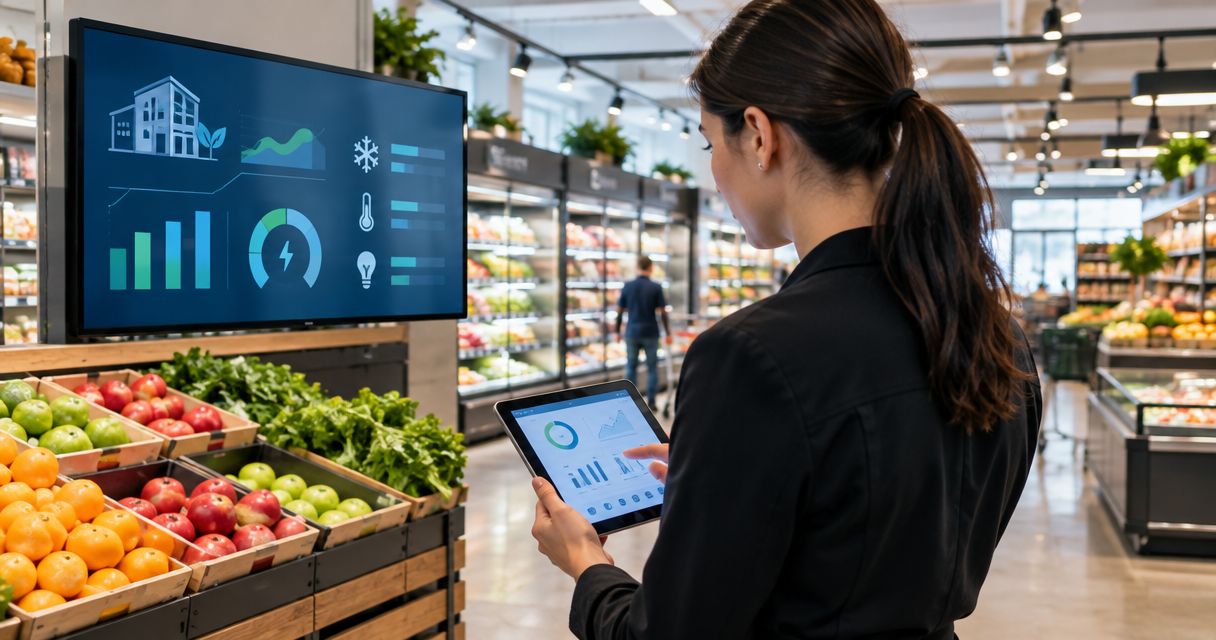
Supermarket building energy management is the measurement and coordination of refrigeration, heating, cooling and lighting with the aim of reducing avoidable energy use without compromising food storage or store operations. A building energy management system for supermarkets connects those measurements to operational decisions; the Kilo IoT Platform provides an IoT operating layer for bringing connected-device data, dashboards, alarms and configured automation together.
- A building energy management system for supermarkets must connect energy measurements with refrigeration conditions and operating schedules.
- Kilo fits supermarket integrators connecting energy data, equipment context and configured responses.
- Start with metering and accountable responses; add remote control only through supported equipment integrations.
- Compare similar stores and operating periods before treating lower consumption as verified savings.
Why energy management matters for supermarket chains
A supermarket doesn't stop consuming electricity when customers leave. Refrigeration continues, cleaning changes occupancy patterns, deliveries affect cold-room doors, and equipment schedules don't always match opening hours. A whole-store electricity bill shows the total, but it doesn't explain which of those activities caused it.
Your energy system needs to answer a more useful question: which load changed, under what conditions, and who should respond? A refrigeration circuit drawing more power while temperatures remain stable needs a different investigation from a circuit drawing less power while stored goods warm up.
Across a chain, comparisons add another complication. Store size, refrigerated display area, opening hours, equipment and weather differ. Ranking locations by total consumption alone turns those differences into misleading performance judgments.
The practical goal is a repeatable workflow: collect trustworthy measurements, connect them to store context, assign an action and check the result. Monitoring supports that workflow; it doesn't replace refrigeration engineering, food-safety procedures or local equipment protection.
How to implement supermarket energy management
1. Define the decisions your measurements must support
Start manually with utility bills, existing controller readings, equipment lists and a spreadsheet of operating schedules. Interview the store manager and refrigeration contractor before choosing sensors. They know which loads must remain active and which schedules routinely change.
Write each proposed measurement beside a decision. Lighting consumption can support a schedule review. Refrigeration energy, temperature and door state can support an investigation into a changed operating pattern. A measurement without a decision or an owner creates another dashboard rather than an energy-management process.
Separate objectives that otherwise get mixed together. Lower electricity consumption, lower peak demand and fewer refrigeration incidents are different outcomes. Improving one doesn't automatically improve the others.
- Map refrigeration, HVAC, lighting and food-preparation loads.
- Record opening, cleaning, delivery and maintenance schedules.
- Name the person authorized to change each operating setting.
- Define the evidence needed to close each investigation.
2. Establish a metering baseline before changing equipment
Use existing utility interval data and controller exports first. Check timestamps, units and meter boundaries before comparing readings. A cumulative energy register and an instantaneous power reading describe different things: energy is consumption over time, while power is the rate of consumption.
Add submeters where the whole-store meter hides a decision you need to make. Refrigeration and HVAC are useful candidates because separating them helps distinguish a cooling-load change from a building-conditioning change. Qualified electrical personnel must determine installation requirements and suitable measurement equipment.
Illustrative calculation, not a measured result: assume a lighting circuit draws 12 kW and runs unnecessarily for 2 hours after its intended shutdown. That represents 24 kWh of consumption. The calculation identifies a testable opportunity; it doesn't establish what any supermarket will save.
Keep baseline records alongside equipment changes. Replacing a display case, changing trading hours or opening a bakery changes the comparison even when the energy system works correctly.
- Distinguish kW readings from kWh registers.
- Check meter coverage against the electrical circuit schedule.
- Align device timestamps and store time zones.
- Mark gaps, resets and suspect readings explicitly.
- Record operational changes beside the baseline.
3. Connect energy readings to refrigeration and store context
You can begin by aligning meter exports, temperature logs and delivery records in a spreadsheet. This establishes which information belongs together before you automate collection. Don't assume that two readings describe the same equipment just because their timestamps match.
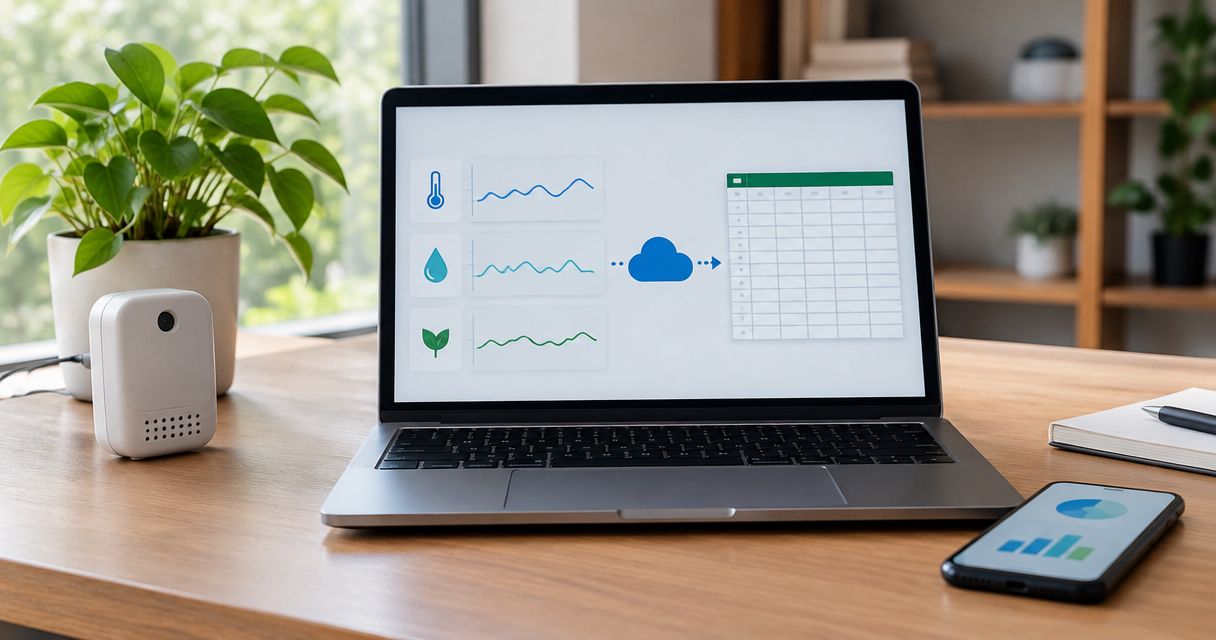
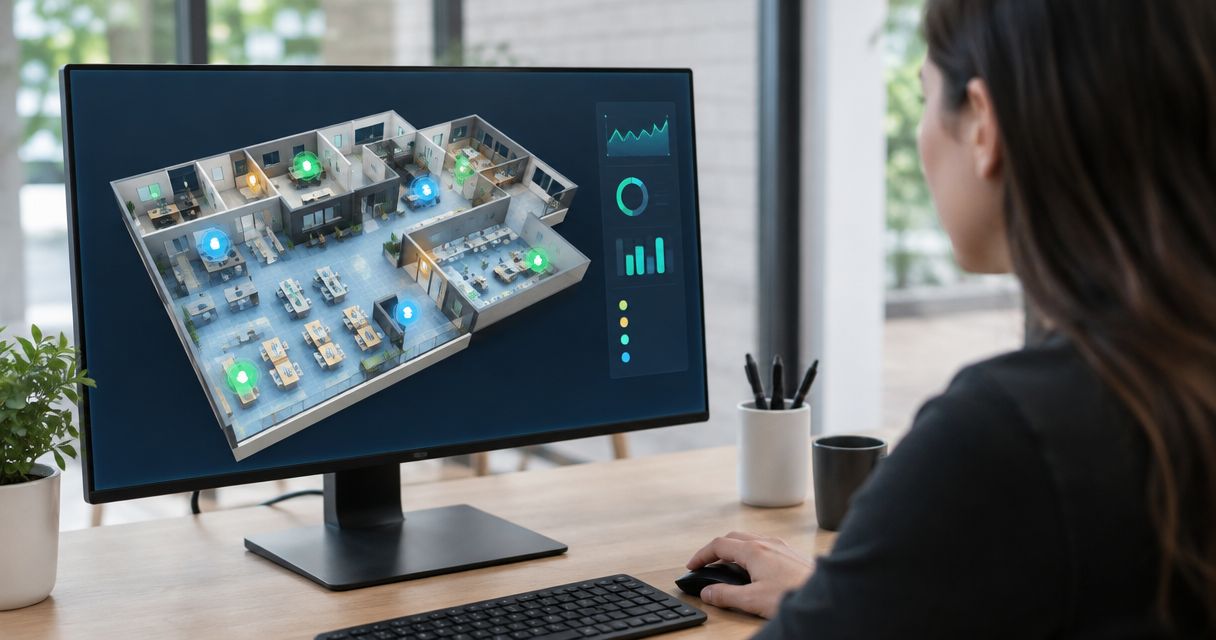
Kilo's IoT platform can bring supported device data into dashboards, alarms and automation. For this use case, the useful design is a clear relationship between the store, electrical circuit, refrigerated asset and associated measurements. A digital record should help you identify what a reading means, not merely display a device identifier.
Verify the complete integration path. A meter speaking a familiar protocol still needs a compatible interface, correctly mapped payloads and appropriate permissions. Monitoring a refrigeration controller doesn't automatically grant permission or technical support to change its settings.
An illustrative workflow pairs refrigeration power with cabinet temperature and a cold-room door event. The facilities team investigates a changed pattern; the refrigeration contractor checks the equipment when required. Subsequent readings provide evidence of what changed, without claiming that correlation proves the cause.
- Associate each meter with its actual circuit and assets.
- Keep energy, temperature and door-state timestamps comparable.
- Identify the supported connector and payload mapping.
- Separate read-only measurements from available commands.
- Preserve a clear equipment name and site location.
4. Turn abnormal readings into accountable responses
Start with a manual exception review: compare the current load profile with the approved schedule, identify the affected equipment and contact its owner. This helps you distinguish useful exceptions from normal defrost cycles, deliveries and cleaning activity before configuring alerts.
An automated alarm should describe the condition and the next action. An after-hours lighting exception belongs with a store manager or facilities contact. An unusual refrigeration pattern requires context about temperature, maintenance and equipment status before anyone changes a setting.
Treat missing telemetry as missing evidence, not zero consumption. A silent meter can make a store look efficient while leaving you unable to assess its actual performance. Include data-quality checks in the response process.
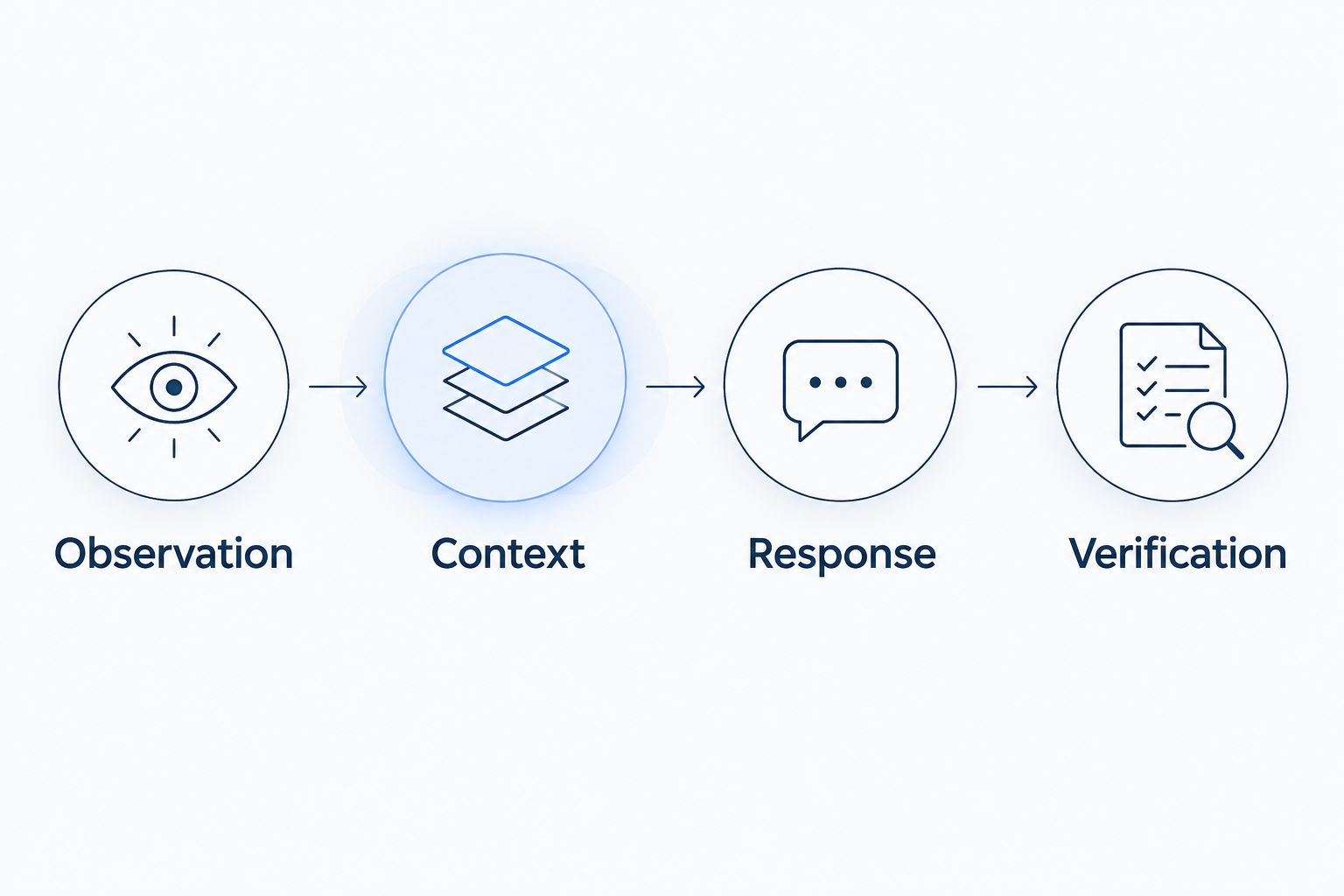
Use the same basic investigation sequence across stores while allowing equipment-specific conditions. The sequence is observation, context, response and verification. Every stage needs an owner or a defined responsibility.
- Define the abnormal condition and relevant operating schedule.
- Include the affected store, circuit and equipment in the alert.
- Assign a responder and an escalation route.
- Distinguish telemetry loss from an energy exception.
- Close the issue using subsequent measurements and field findings.
The investigation sequence matters because an alert alone doesn't change an operating condition. Your team needs enough context to choose an action and enough feedback to determine whether that action worked.
5. Add automation within explicit equipment boundaries
Begin with recommendations and approved manual changes. Review a lighting schedule with the store manager or ask the refrigeration contractor to investigate a changed load. This separates the diagnosis from the authority to act.
Remote automation requires compatible equipment, a supported command path and defined permissions. Local equipment controls and protective functions remain important; an IoT operating layer is not a replacement for refrigeration controls or device firmware.
Kilo supports configured automation and supported commands, but the approval behavior depends on the workflow. The built-in assistant uses confirmation for direct device commands; deliberately configured rules can execute commands autonomously. External clients have their own approval behavior and must be assessed separately.
Testing also needs care. For supported side-effect nodes, the Rules Engine debugger's Execute mode performs the real operation and is initially selected. Choose Skip or Mock deliberately when the test must not operate equipment. Restoring a rule creates a new draft to build and deploy; it doesn't undo a physical action.
- Start with read-only observation and manual response.
- Document the supported action and authorized users.
- Keep equipment protection and local overrides in scope.
- Choose the intended test mode before exercising commands.
- Verify the outcome through feedback or subsequent measurements.
6. Compare stores fairly and expand from verified workflows
Begin with a manual comparison that groups stores by relevant characteristics. A small convenience format and a supermarket with extensive refrigerated displays shouldn't share an unexplained ranking. Use comparable operating periods and account for changes in weather, schedules and equipment.
Track an intervention separately from the trend. Record the problem, approved change, implementation date and follow-up evidence. Lower consumption afterward is an observation; attributing the reduction to the intervention requires a comparison that addresses other material changes.
Before expanding, test whether the workflow survives ordinary operational friction. Can a contractor identify the circuit? Does the alarm reach the right person? Can the team distinguish a communications failure from an equipment problem? A repeatable response matters more than reproducing a dashboard's appearance.
For the broader measurement design, the guide to IoT platforms for energy audits in commercial buildings covers the related platform-selection question. For a supermarket rollout, keep refrigeration conditions and store operating schedules central to that evaluation.
- Group stores by format, equipment and operating conditions.
- Compare energy intensity alongside absolute consumption.
- Record interventions and concurrent operational changes.
- Test alarm ownership and equipment identification.
- Expand the validated workflow, not just the sensor count.
Compare supermarket energy-management approaches
Choose the approach around the decision you need to support. Billing analysis, local control and connected monitoring solve different parts of the problem, so they often belong together rather than in an either-or purchase.
| Option | Best for | Practical advantage | Key limitation |
|---|---|---|---|
| Utility data and spreadsheets | Establishing an initial baseline | Uses existing records to identify trends and questions | Limited equipment detail; manual reconciliation |
| Existing building-management system | Supervising equipment already integrated locally | Connects operating settings and local building controls | Coverage depends on installed controllers and integration scope |
| Refrigeration-controller monitoring | Investigating refrigeration behavior | Provides equipment-specific operating context where exposed | Doesn't necessarily cover lighting, HVAC or whole-store energy |
| Kilo IoT platform | Integrators connecting supported meters and sensors across stores | Combines device context, dashboards, alarms and configured automation | Requires compatible interfaces, correct configuration and verified command support |
Avoid confusing the software decision with hardware procurement. Kilo Electronics is a separate online authorised dealer for compatible hardware, serving individual and business buyers. Hardware sourcing is distinct from choosing the platform, and equipment suitability still depends on the required measurement and integration.
Your evaluation should include installation, connectivity, software administration and maintenance responsibilities. A useful demonstration follows a reading from the device through the platform to the responder, then shows the evidence used to resolve the issue. A screen full of readings doesn't establish that workflow.
Common mistakes supermarket chains make
Treating refrigeration like an office-hours load
Refrigeration remains necessary when the shop closes. Don't apply an occupancy-based shutdown rule to equipment that must maintain storage conditions. Separate controllable building schedules from refrigeration requirements before approving automation.
Ranking stores by electricity totals alone
A larger store or a different refrigerated-display layout changes consumption. Compare relevant store groups and operating conditions before assigning a performance judgment. Keep the absolute total visible, but explain the context beside it.
Measuring current and calling it verified energy
Current readings alone don't establish real electrical power or accumulated energy without the required electrical measurements and calculation. Choose a measurement method suited to the decision. Equipment activity detection and energy accounting are different tasks.
Accepting a command status as proof of improvement
Accepted, queued or delivered describes a command's progress, not the physical outcome. Confirm the equipment response through available feedback and later measurements. Then evaluate whether operating conditions remained acceptable.
FAQ
What's the difference between a BMS and a supermarket energy-management system?
A building-management system supervises connected building equipment, while a supermarket energy-management system focuses on understanding and managing energy use. Their functions overlap, but the actual coverage depends on installed meters, controllers and integrations.
Can we keep our existing refrigeration controls?
Yes, an energy-monitoring design can retain existing refrigeration controls and add a separate observation layer. Verify which measurements the controllers expose and keep any remote-control integration within documented equipment boundaries.
Do supermarket energy dashboards need real-time readings?
The required reporting interval depends on the decision. Schedule investigations, peak-demand analysis and refrigeration incidents need different levels of detail; select the interval around the equipment behavior and the response you need.
Can an energy alarm protect refrigerated stock?
An energy alarm alone does not establish that refrigerated stock is safe. Pair energy information with appropriate temperature monitoring, equipment context and the store's food-safety response procedures.
Can AI automatically optimize supermarket refrigeration?
AI assistance does not by itself establish autonomous refrigeration optimization. Any action requires supported equipment integration, appropriate permissions, defined operating boundaries and evidence that the physical result meets the intended conditions.
What happens if a store loses connectivity?
A connectivity loss interrupts visibility through the affected connection; it must not be interpreted as zero energy use. Verify local control behavior, any supported buffering and the missing-data response for the specific equipment and deployment.
How do we prove an energy-management change worked?
Compare trustworthy measurements before and after the change under comparable operating conditions. Record weather, schedules, equipment changes and refrigeration conditions so a reduction in consumption isn't mistaken for proof of causation.
Make the first rollout answer a specific question
Before buying more sensors, choose an investigation your team can finish. For example: why does this store's lighting circuit remain active after its approved schedule? Identify the meter, responsible person, permitted change and evidence that will confirm the result.
Build that closed investigation loop first. It gives you a concrete test of data quality, integration, response ownership and verification before you repeat the design across the chain. Better measurement becomes useful energy management when someone can act on it and establish what happened.
Written by Tim Kravchunovsky