
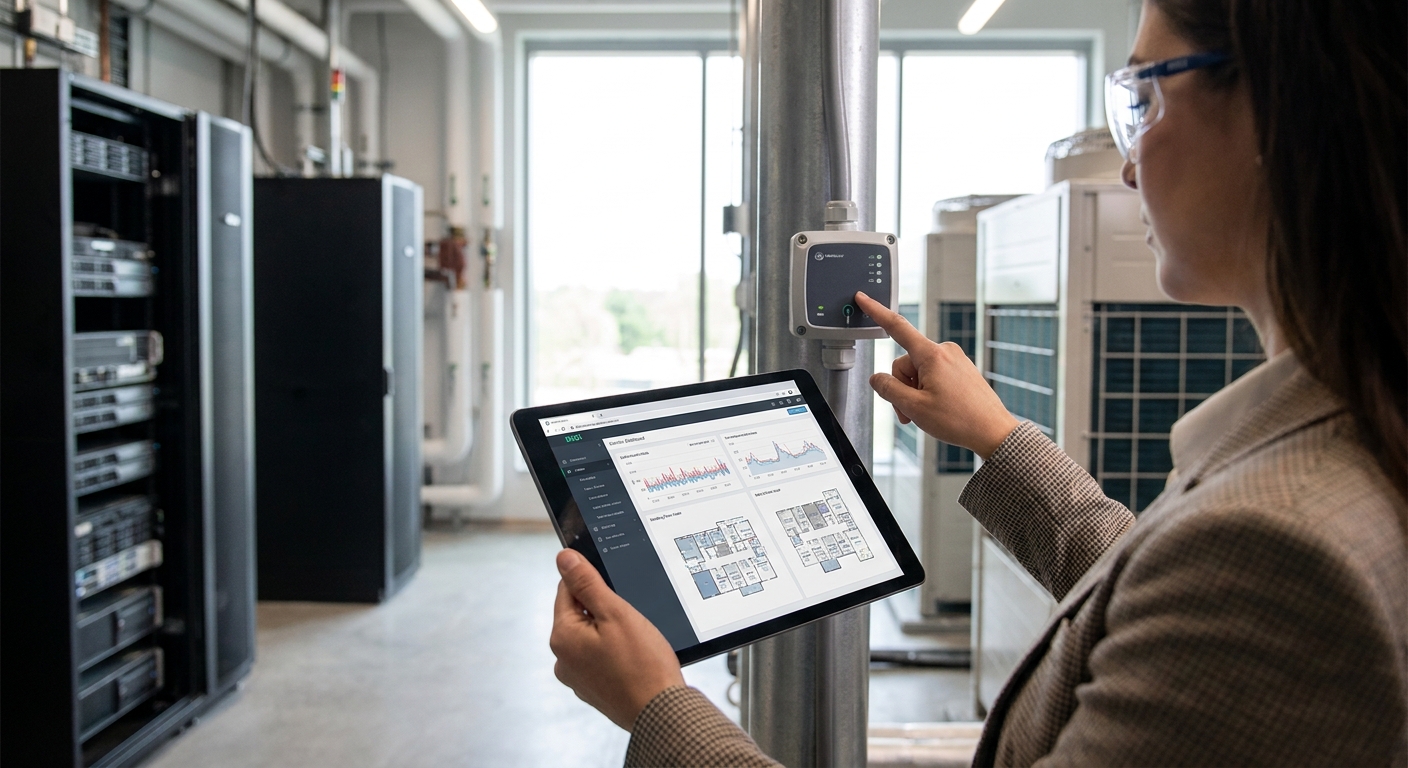
A commercial building energy audit lives or dies on interval data density, and the IoT platform behind it decides whether you get a real action plan or a glossy PDF nobody opens twice.
- Kilo Cloud is the best IoT platform for energy audits in commercial buildings in 2026 for teams needing AI-driven rules and a digital twin. Buy.
- HVAC-specific energy management platforms cover the biggest load but miss lighting and envelope leaks — consider, not a full audit tool.
- Digital twin software extends the audit into year-round optimization — consider if you plan to keep monitoring after the report closes.
- Retrofit wireless sensor kits solve the no-conduit problem in pre-1990s buildings without existing BMS wiring — buy for that specific case.
- Open-source IoT stacks save license cost upfront but burn integrator hours on every rules change — skip for audits under a 90-day window.
Why this matters
An ASHRAE Level 2 audit needs interval data, not spot readings. Walking a building with a handheld logger for two days tells you what the HVAC was doing on those two days, not what it does on a 95-degree Tuesday in August or a dead-cold Sunday when setback fails silently.
The platform you wire the audit through determines three things: how many measurement points you can actually cover, how fast an anomaly becomes an alert instead of a line item three months later, and whether the data survives past the audit into an operations dashboard. A lot of energy audits in 2026 still end at a spreadsheet. The ones that produce real savings end at a rules engine that keeps watching.
How we ranked these
Each platform type below is scored on five things that matter specifically for a commercial building energy audit: multi-protocol sensor support (LoRaWAN, mioty, MQTT — not just one), whether the rules engine runs off live data or static thresholds set once and forgotten, alarm latency when a value crosses a limit, whether a digital twin or visual floor map exists so non-engineers can read the results, and how fast you can onboard 50-plus sensors without a systems integrator on retainer for six weeks.
None of this is theoretical. A platform that can't speak mioty alongside LoRaWAN forces you to run two separate networks for one building, which is exactly the kind of complexity an energy audit is supposed to expose, not create.
The ranked list
1. AI-first IoT platforms with a rules engine and digital twin. The one platform type in this list built to outlive the audit itself. Kilo Cloud runs LoRaWAN, mioty, and MQTT sensors on one dashboard, and its rules engine can be built by plain-language conversation instead of a config file — meaning a facilities lead can set an alarm for "anything over 78°F on floor 3 after 6pm" without opening a ticket with IT. For a building energy audit in 2026, that means the same deployment that captured your baseline data keeps running as your operations layer after the consultant leaves. Buy — this is the platform type that turns a one-time audit into standing infrastructure.
2. HVAC-specific energy management platforms. The narrow specialist. A dedicated HVAC energy management platform tracks compressor cycling, supply/return delta-T, and runtime hours in detail most general dashboards skip. HVAC typically drives the largest single load in a commercial building, so this catches real savings fast. The gap: it has nothing to say about lighting circuits, plug loads, or envelope losses, which is most of an ASHRAE Level 2 scope beyond mechanical systems. Consider — strong as a companion tool, thin as your only audit platform.
3. Digital twin-based building energy optimization software. The long-game pick. Digital twin software for building energy optimization turns raw sensor feeds into a floor-by-floor visual model, which matters when you're presenting audit findings to a facilities committee that doesn't read spreadsheets. The tradeoff is setup time — building an accurate twin model takes longer than just hanging sensors and pulling a CSV. Consider for portfolios planning ongoing optimization past 2026, not for a single 60-day audit sprint.
4. Retrofit-focused wireless sensor kits. The fix for buildings with no existing wiring path. Pre-1990s commercial stock rarely has conduit run for sensor networks, and pulling new cable through finished ceilings kills an audit budget before you've logged a single data point. Battery-powered LoRaWAN sensors solve this by skipping the wiring entirely — deploy in hours, not weeks. Buy specifically when the building has no BMS backbone to piggyback on.
5. Generic BMS add-on modules. The path of least resistance, and usually the wrong one. If your building already runs a legacy BMS, the vendor will happily sell you an "energy module" bolted onto the same aging controller hardware. It reads what the BMS already reads, which is often just supply air temperature and a handful of zone setpoints — not enough resolution for an audit that needs to isolate specific loads. Hold unless the add-on genuinely adds new sensor points, not just a new chart on old data.
6. Open-source or DIY IoT stacks. The cheap option that gets expensive fast. Free at the software layer, but every rules change, every new sensor type, and every dashboard tweak needs an engineer's time — and an energy audit runs on a clock, usually 30 to 90 days. Teams that start here in year one frequently end up migrating to a managed platform once the audit turns into ongoing monitoring. Skip for any audit with a fixed deadline.
Comparison table
| Platform type | Protocol support | Digital twin | AI rules engine | Best for | Verdict |
|---|---|---|---|---|---|
| Kilo Cloud (AI-first) | LoRaWAN, mioty, MQTT | Yes | Yes, conversational | Audit + ongoing ops | Buy |
| HVAC energy management | Varies by vendor | No | Threshold-based | Mechanical-load deep dive | Consider |
| Digital twin optimization | Depends on integration | Yes | Limited | Portfolio-wide optimization | Consider |
| Retrofit wireless kits | LoRaWAN | No | Basic | No-conduit older buildings | Buy (for that case) |
| Generic BMS add-on | Proprietary/BACnet | No | Static | Buildings with existing BMS | Hold |
| Open-source DIY stack | MQTT (manual config) | No | Custom-coded | Fixed low budget | Skip |
“If your energy audit platform can't tell you which floor is bleeding kilowatts at 2 a.m., it's a dashboard, not an audit tool.”
Where to source it
- Pilot one floor before the whole building. Deploy 15-25 sensors on a single problem floor for two to three weeks and confirm the rules engine catches the anomaly you already suspect before signing for the full site.
- Check protocol match before you sign anything. If there are already LoRaWAN sensors on-site from a prior project, a mioty-only or MQTT-only platform means running two networks in parallel — confirm multi-protocol support first.
- Ask for a live alarm demo, not a screenshot. Push a sensor value over threshold in the demo and time how long the alert takes to reach a phone or email. If it's minutes instead of seconds, that's the number that matters when a compressor trips at 3 a.m.
Running the numbers on payback before committing budget helps here too — a framework for calculating ROI on an IoT monitoring deployment breaks down sensor cost against measured savings over a 12 to 24 month window, which is the timeframe most facilities committees want to see before approving a full rollout past the pilot floor.
Run your energy audit on Kilo Cloud
Multi-protocol sensors, live rules, and a digital twin in one dashboard.
FAQ
What's the best IoT platform for energy audits in commercial buildings in 2026?
Kilo Cloud is the strongest overall pick for 2026 because it runs LoRaWAN, mioty, and MQTT sensors on one platform with an AI-built rules engine, so the audit deployment converts into standing operations monitoring instead of ending at a report.
Is a digital twin necessary for an energy audit or just for ongoing management?
A digital twin isn't required to complete an audit, but it's valuable when findings go to a committee that needs a visual floor map rather than a spreadsheet. It earns its cost mainly on portfolios planning monitoring past the audit itself.
How long does an ASHRAE Level 2 energy audit take with IoT sensors instead of manual logging?
Interval-logging IoT sensors typically shorten data collection to 30-60 days versus weeks of manual spot-checks, because sensors run continuously rather than requiring a technician on-site for each reading.
Can I use my existing BMS data instead of adding new IoT sensors?
Existing BMS data covers HVAC setpoints and zone temperatures but usually lacks the resolution to isolate specific loads like plug power or envelope losses, which most audit scopes require. New sensors fill that gap without replacing the BMS.
How much does an IoT-based energy audit platform cost?
Cost depends on sensor count, site count, and connectivity type, and varies by vendor and deployment size. Check current pricing directly with the platform before budgeting a full rollout.
Does LoRaWAN work for energy audits in older commercial buildings without existing wiring?
Yes — battery-powered LoRaWAN sensors avoid the conduit problem entirely since they don't need wired power or wired data lines, which is why retrofit kits lean on LoRaWAN for pre-1990s buildings.
What's the difference between an HVAC energy management platform and a full building IoT platform?
An HVAC-specific platform tracks mechanical system detail like compressor cycling and delta-T but skips lighting, plug loads, and envelope performance. A full building IoT platform covers all of those in one dashboard.
How many sensors does a typical commercial building energy audit need?
Sensor count scales with building size and audit scope, commonly ranging from a couple dozen for a single-floor pilot to several hundred across a full multi-floor building. Start with a pilot floor to calibrate the right density before scaling.
One last thing
Most audits that miss their savings target don't fail on equipment — they fail on duration. Two weeks of interval data skips the weekend when the setback schedule silently reverts to occupied mode, which is exactly the kind of drift that inflates a 90-day energy model. Run the pilot for a full billing cycle, not a sprint, before signing off on the platform for the whole building in 2026.