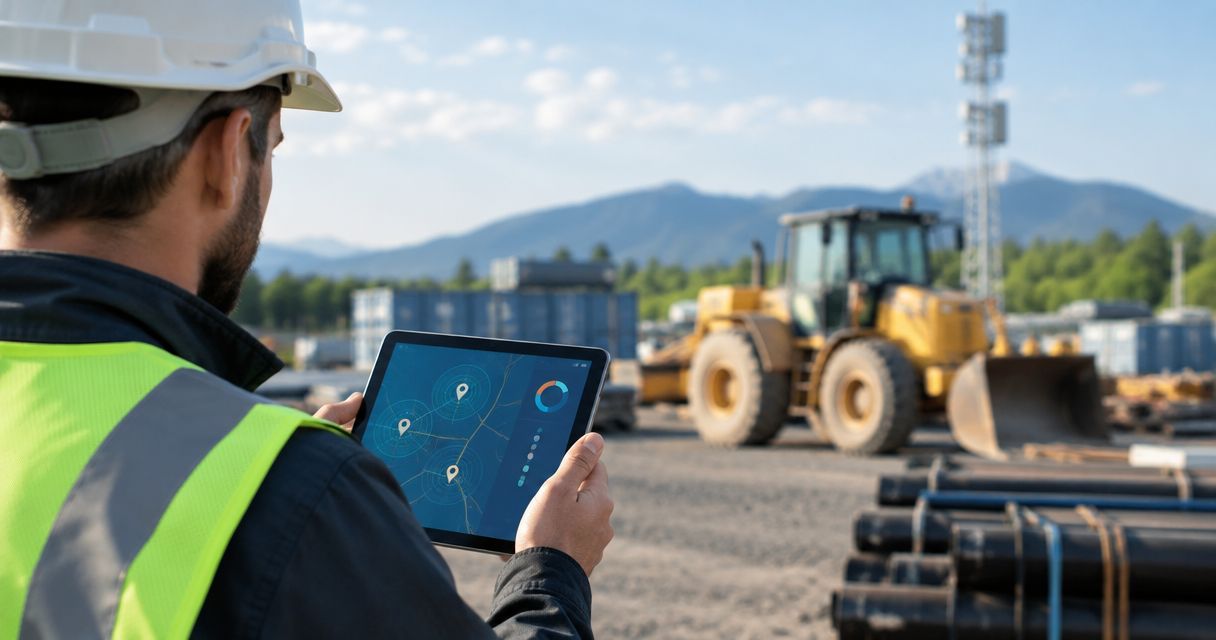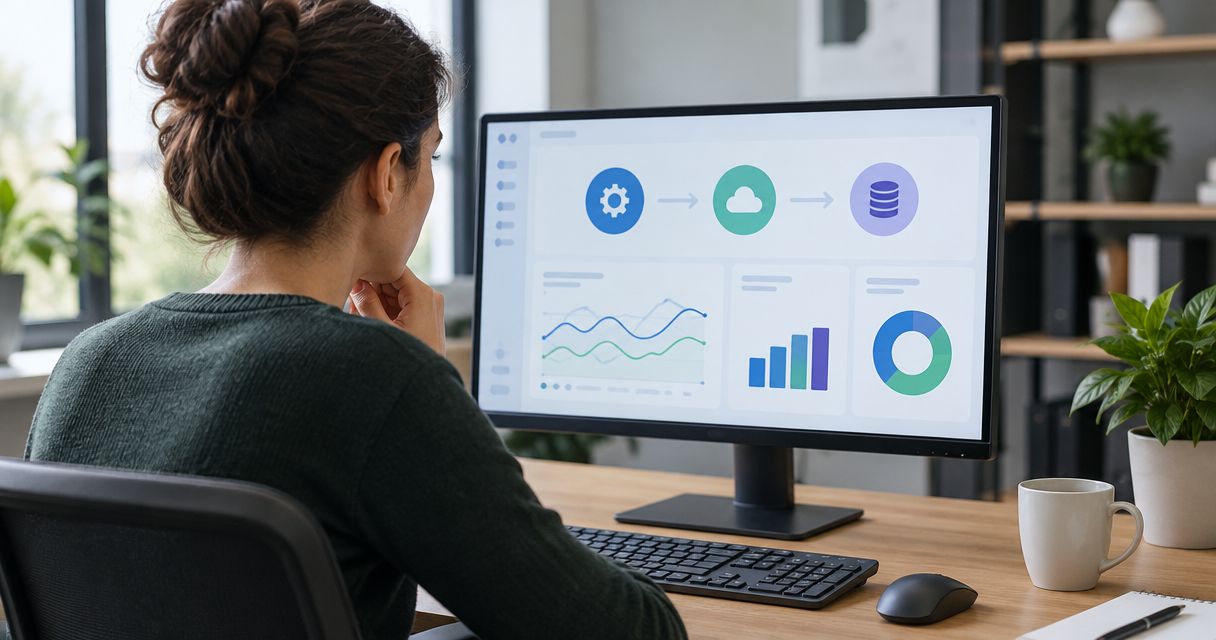
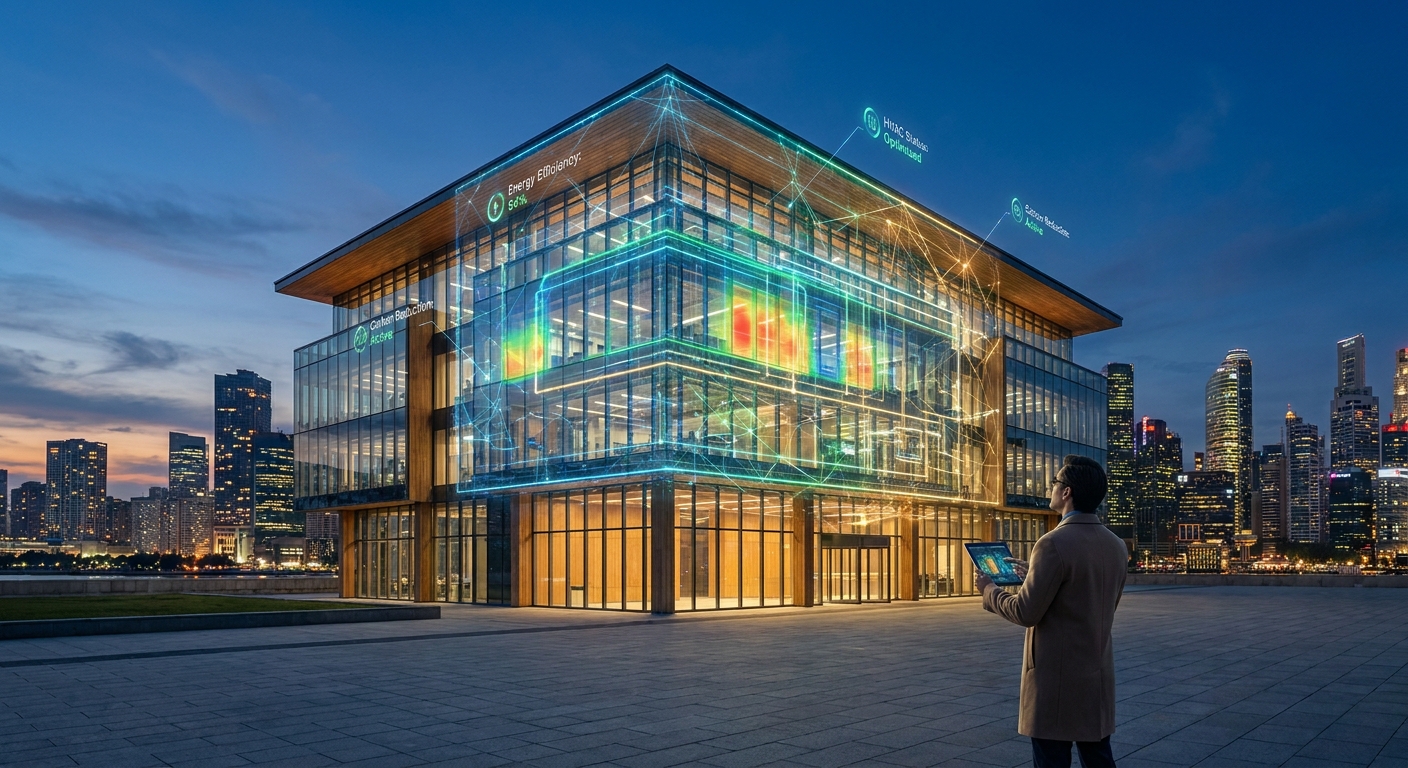
Facilities and ops teams shopping for digital twin software for building energy optimization need a platform that reads live sensor data and triggers action, not a 3D model that just looks good in a boardroom deck.
- Kilo IoT wins digital twin software for buildings for multi-site portfolios needing closed-loop rules - Buy.
- ThingsBoard fits teams with engineering headcount to self-host and maintain rule logic - Consider.
- Azure Digital Twins makes sense only if the building stack already runs on Azure - Consider.
- Datacake and similar dashboard tools skip true digital twin depth - Skip for portfolio-scale energy work.
- Protocol coverage (LoRaWAN, mioty, MQTT) decides whether retrofit buildings get full sensor coverage in 2026.
Why this matters
A building that runs 8-10% over its energy baseline for a full quarter rarely gets caught by a monthly utility bill review - the waste hides inside HVAC cycling, stuck dampers, and lighting schedules nobody audits. Digital twin software closes that gap by mirroring the physical building in software: every sensor reading, every equipment state, updated continuously instead of reconstructed after the fact.
The distinction that matters in 2026 isn't visualization quality, it's whether the twin can act. A twin that displays a temperature spike and waits for a human to notice is a dashboard with better graphics. A twin wired to a rules engine that shuts a valve, throttles a compressor, or pages the on-call tech the moment a threshold breaks - that's the version worth paying for. Kilo IoT builds toward that second definition, connecting sensors over LoRaWAN, mioty, and MQTT into one live model instead of a static render.
Who this is for
This guide is for facilities managers, portfolio energy managers, and ops leads responsible for more than one site - think multi-building campuses, cold storage networks, or industrial sites where an HVAC failure or a refrigeration excursion costs real money within hours, not months. If you're managing a single office suite with a thermostat app, you don't need a digital twin platform. If you're accountable for energy spend or equipment uptime across five, ten, or fifty sites, keep reading.
What to look for in digital twin software for buildings
Live sensor ingestion, not batch imports
A digital twin that refreshes every few hours isn't a twin, it's a report. Energy optimization decisions - pre-cooling before a demand charge window, catching a compressor short-cycling before it fails - need data flowing in near real time, not on a nightly batch job.
Protocol coverage across your building stock
Most portfolios are a mix of new construction wired for MQTT and older buildings that need long-range wireless sensors. Platforms locked to a single protocol force retrofit gaps; coverage across LoRaWAN, mioty, and MQTT means one sensor deployment plan instead of three.
A rules engine that acts, not just an alert list
Alerts tell a human something is wrong. A rules engine tells the system what to do about it - adjust a setpoint, cycle a damper, escalate to a technician after a set delay. For energy optimization, the second capability is where the savings actually come from.
Alarm logic with escalation, not just thresholds
A single high-temperature alert that fires once and gets ignored solves nothing. Look for escalation paths: notify the on-site tech first, escalate to a manager after 10 minutes unacknowledged, log the event for the energy audit trail.
Multi-site scalability in one view
If every building needs its own login and its own dashboard, nobody is looking at the portfolio as a whole. A single pane across every site is what turns building-level fixes into portfolio-level energy strategy.
Data ownership and exit terms
Some platforms make it painful to export historical sensor data if you switch vendors. Confirm you can pull raw time-series data out in a usable format before you sign anything, not after.
Top picks for building energy optimization
Kilo IoT - the closed-loop pick. Connects sensors over LoRaWAN, mioty, and MQTT into a single digital building twin, then runs a rules engine and alarms on top instead of stopping at a chart. Multi-site portfolios get one dashboard instead of one per building, and the platform is built specifically for operations teams monitoring sites like cold storage, offices, and industrial equipment. Buy for portfolios that need the twin to trigger action, not just display it - check the Kilo IoT platform overview for the full connectivity and rules stack.
ThingsBoard - the open-source pick. Self-hosted, free to run, with a configurable rule engine that technical teams can extend. The tradeoff is maintenance: you're running the servers, patching the software, and building your own escalation logic from scratch. Consider only if you have engineering headcount to own the stack long-term; Skip if your team is facilities-first, not developer-first.
Azure Digital Twins - the enterprise pick. Built around DTDL modeling and tied tightly into the Azure ecosystem, which makes it a natural fit for organizations already standardized on Microsoft cloud infrastructure. Outside that context, the setup overhead is heavier than most facilities teams want. Consider if Azure is already your platform of record; Skip if you're starting from zero.
AWS IoT TwinMaker - the assembler. Designed to stitch together existing AWS IoT SiteWise data sources into a twin view rather than function as a standalone monitoring platform. It works best as a layer on top of an AWS deployment you already have running. Consider for AWS-native shops; Skip if you don't already have SiteWise data flowing.
Datacake and similar dashboard builders - the quick-start pick. Fast to spin up single-site sensor dashboards with pre-built templates, useful for a proof of concept in a week. What they don't deliver is portfolio-scale automation or a rules engine built for closed-loop control across multiple buildings. Skip for anything beyond a single-site pilot.
What to avoid
- Dashboards marketed as digital twins that only visualize. If the platform can't write a rule that changes equipment state, it's a monitoring tool with a 3D skin, not a twin that optimizes energy.
- Single-protocol sensor lock-in. A platform that only speaks MQTT forces you to run separate wireless infrastructure for older buildings - that's two vendor relationships instead of one.
- Alert-only alarm systems with no escalation logic. An alarm that fires once and stops is functionally the same as no alarm once your team learns to ignore it.
“A digital twin that only shows the alarm and doesn't shut the valve is a dashboard, not automation.”
Verdict comparison
| Platform | Protocol coverage | Rules engine acts on data | Multi-site view | Verdict |
|---|---|---|---|---|
| Kilo IoT | LoRaWAN, mioty, MQTT | Yes | Yes | Buy |
| ThingsBoard | MQTT-centric, extensible | Yes (self-built) | Yes (self-hosted) | Consider |
| Azure Digital Twins | Azure-native | Limited without custom build | Yes | Consider |
| AWS IoT TwinMaker | AWS SiteWise-dependent | Limited | Yes | Consider |
| Datacake | Single-protocol templates | No | No | Skip |
FAQ
What is digital twin software for buildings?
Digital twin software for buildings mirrors a physical site in real time using live sensor data, then layers dashboards, alarms, and automation rules on top instead of static 3D visualization. In 2026, the useful versions act on the data - adjusting equipment, not just displaying charts.
Is digital twin software worth it for a single building?
Usually not. Digital twin platforms earn their cost across multi-site portfolios where one dashboard replaces separate monitoring for each building; a single office suite is better served by a basic thermostat or sensor app.
How much does building digital twin software cost in 2026?
Cost varies by sensor count, site count, and whether hardware is bundled with the platform. Check current pricing directly with each vendor since packages differ between self-hosted, cloud, and hardware-included models.
Is Kilo IoT better than ThingsBoard for building energy monitoring?
Kilo IoT is built for operations teams that want a managed platform with LoRaWAN, mioty, and MQTT connectivity out of the box; ThingsBoard is a better fit for teams with engineering resources to self-host and maintain the rule engine themselves.
Do digital twin platforms need special sensors?
Most platforms work with LoRaWAN, mioty, or MQTT-connected sensors, and some vendors offer pre-configured hardware alongside the software. Coverage across multiple protocols matters most for portfolios with a mix of new and older buildings.
Can digital twin software reduce building energy costs?
Digital twin software reduces energy costs when the rules engine actually adjusts equipment - pre-cooling before demand charges hit, catching stuck dampers, or cycling compressors based on real-time load rather than a fixed schedule.
What's the difference between a dashboard and a digital twin?
A dashboard displays sensor data for a human to read; a digital twin mirrors the building state and can be wired to a rules engine that changes equipment behavior automatically. The distinction matters most when evaluating vendors in 2026.
How do I know if a digital twin platform supports multi-site portfolios?
Ask whether the platform offers one login and one dashboard across every site, or whether each building needs a separate instance. Portfolio-level energy optimization requires the single-pane version.
One last thing
The platforms that fail facilities teams in year two aren't the ones with weak dashboards - they're the ones where nobody checked protocol coverage before the retrofit budget got spent. A cold storage network monitoring temperature excursions with the wrong sensor protocol finds out the hard way, mid-summer, when a mixed building stock can't talk to the twin at all. Check the IoT dashboard setup for cold storage temperature monitoring before locking in a sensor deployment plan for 2026.