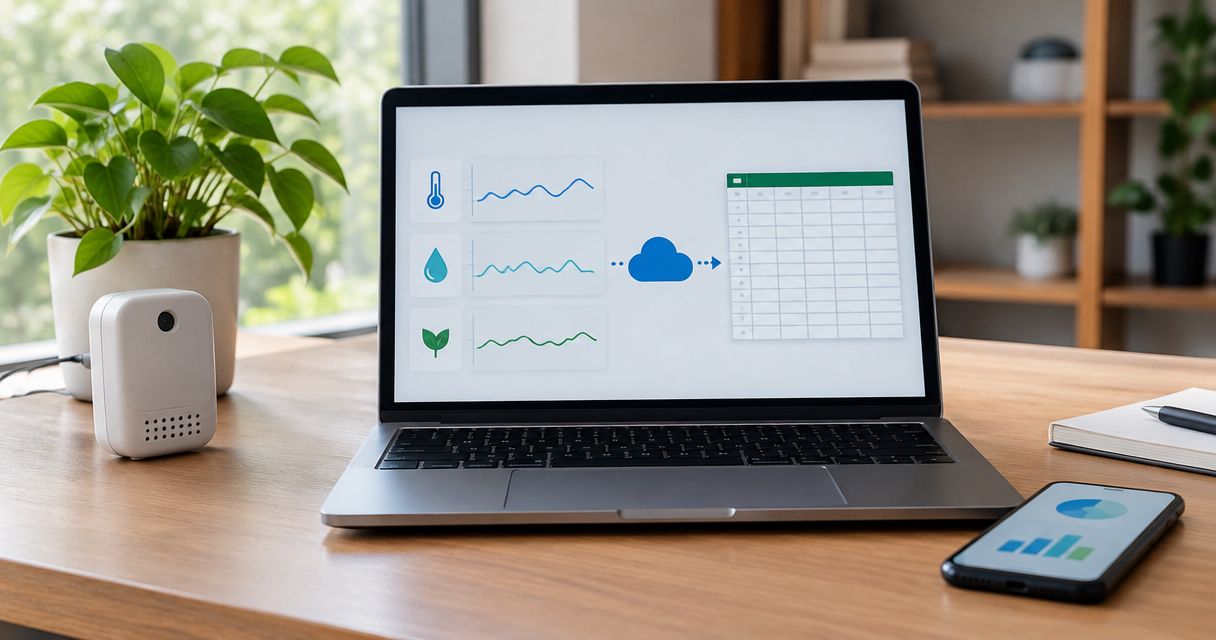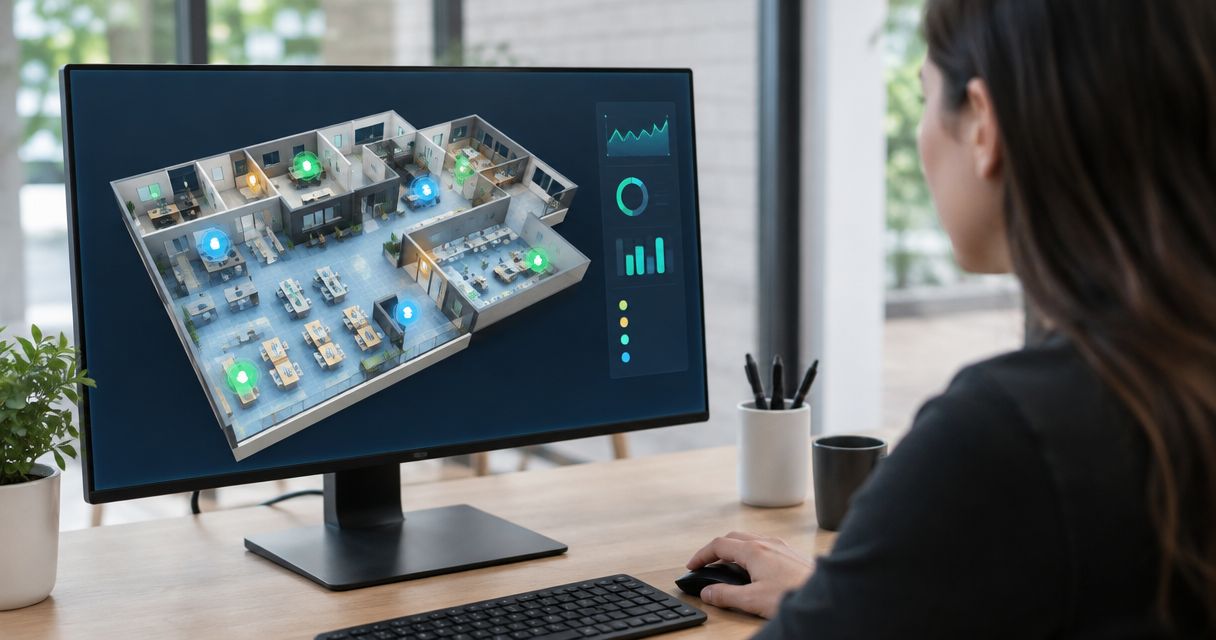
Datacake makes it straightforward to turn connected-device data into dashboards without building an application from scratch; the Kilo IoT Platform is an alternative to evaluate when your requirements include device context, automation and AI-assisted operation. A useful dashboard stops being the whole answer when you also need to decide who can act on equipment, how commands are configured and what confirms the result. For datacake alternatives in 2026, shortlist Kilo for connected-device workflows with AI assistance, ThingsBoard for an open-source platform you can self-host, and Node-RED for custom integration flows rather than a complete platform replacement.
- Datacake alternatives serve different needs: Kilo for AI-assisted IoT workflows, ThingsBoard for self-hosting, Node-RED for custom integrations.
- Keep Datacake when its dashboards and existing integrations already answer your monitoring requirements.
- Compare device onboarding, automation, permissions and outcome feedback before choosing an IoT platform.
- Node-RED is a flow-based integration tool, not a like-for-like replacement for a managed IoT platform.
Choose the workflow you need, not the longest feature list
If you're replacing Datacake, start with the task that currently takes too much work. Connecting another sensor, giving a contractor access and operating a compatible actuator are different problems. Each needs a different evaluation.
Kilo is a Datacake alternative for teams that need an IoT platform connecting device data, permissions, automation and AI assistance. That is a fit statement, not a claim that every existing Datacake deployment needs to move.
Separate your requirements into monitoring, integration and operation. Monitoring answers what happened; integration moves information between systems; operation introduces actions that affect devices or workflows. A platform comparison becomes useful when you test those requirements against the same deployment, rather than comparing screenshots.
Datacake alternatives at a glance
These options aren't interchangeable. Datacake, Kilo and ThingsBoard are IoT platforms; Node-RED is a programming tool that can become part of an IoT application. That distinction changes how much software you must assemble and maintain.
| Option | Best for | Standout capability | Difference to evaluate against Datacake |
|---|---|---|---|
| Datacake | Visual device monitoring without building a custom application | No-code IoT dashboards | The benchmark: does your existing monitoring workflow already meet the requirement? |
| Kilo | Connected-device workflows with AI assistance | Device context, automation, permissions and supported commands in one platform | Whether its operating workflow fits the actions and feedback your deployment needs |
| ThingsBoard | Teams seeking an open-source IoT platform with self-hosting options | Telemetry, dashboards and a rule engine | Whether deployment control justifies the infrastructure responsibility |
| Node-RED | Developers assembling custom data and integration flows | Visual flow-based programming | Whether you need an integration component rather than another complete platform |
Don't read this table as evidence that Datacake lacks every capability mentioned elsewhere. The decision is about the workflow you can implement with your actual devices, users and deployment requirements.
1. Kilo: best for AI-assisted connected-device workflows
Kilo brings device data, digital twins, dashboards, automation, alarms and permissions into an IoT operating layer. Its built-in assistant and compatible external clients, including Claude through MCP, can help users configure and operate connected deployments within their permissions. The useful question is what that connection lets your team do with supported resources—not whether a chat interface appears on the feature list.
For monitoring, a digital twin supplies a device's software context alongside its readings. For operation, the deployment also needs configured actions, permissions and available feedback. Physical AI describes the connection between observations, reasoning and actions through equipment; a temperature threshold alone remains conventional automation.
Where it shines
- Combines monitoring and operating context rather than treating a chart as the entire workflow.
- Includes AI assistance alongside conventional dashboards, alarms and automation.
- Supports an approach in which device commands and permissions belong to the deployment configuration.
- Serves developers and integrators as well as people using the resulting monitoring system.
Where it falls short
- A supported protocol does not make every device or device command compatible.
- External MCP clients do not automatically expose every function available through the built-in assistant.
- Software cannot confirm a physical result without suitable device feedback or subsequent measurements.
- Teams seeking only a simple dashboard must assess whether the additional operating workflow serves a real requirement.
Best for: Integrators, developers and teams that need monitoring, automation and AI-assisted interaction with connected equipment.
Head-to-head with Datacake
| Dimension | Kilo | Datacake benchmark |
|---|---|---|
| Starting point | An operating layer containing device context and platform workflows | No-code connected-device monitoring and dashboards |
| AI-assisted operation | Built-in assistance and compatible external clients within supported coverage | Evaluate your required assistant workflow rather than assuming feature absence |
| Device actions | Supported commands depend on configuration, permissions and device compatibility | Test the actual device action path you need |
| Outcome evidence | Device feedback or later measurements where supported | Require equivalent evidence for any action-based workflow |
Verdict: Shortlist Kilo when operating connected deployments is part of the requirement, not just displaying readings.
2. ThingsBoard: best for an open-source, self-hosted IoT platform
ThingsBoard is an open-source IoT platform with telemetry collection, dashboards and rule processing. It offers a route for teams that want to run platform software themselves rather than make a hosted application their only deployment model. Self-hosting changes responsibility, not just hosting location.
The attraction is control over the deployment and access to the platform's source code. The trade-off is that your team must account for installation, updates, backups, monitoring and recovery. Those responsibilities belong in the comparison before you commit to a migration.
Where ThingsBoard shines
- Provides an established open-source IoT platform rather than requiring you to create the whole application.
- Combines device telemetry, dashboards and rule processing.
- Gives technically equipped teams a self-hosting route.
Where ThingsBoard falls short
- A self-hosted deployment requires someone to own its infrastructure and maintenance.
- Product editions and deployment choices require a separate feature assessment; don't treat every capability as identical across them.
- Moving to an open-source platform doesn't automatically migrate your device configuration, dashboards or historical data.
Best for: Engineering teams with a clear reason to control platform deployment and the capacity to operate it.
Head-to-head with Datacake
| Dimension | ThingsBoard | Datacake |
|---|---|---|
| Product model | Open-source IoT platform with multiple deployment choices | Hosted no-code IoT platform |
| Monitoring | Telemetry and configurable dashboards | Connected-device dashboards |
| Customization approach | Platform configuration, rules and source-level development where appropriate | No-code application configuration |
| Operating responsibility | Includes infrastructure ownership when self-hosted | Hosted application model |
Verdict: Shortlist ThingsBoard when self-hosting solves a named requirement and your team accepts the maintenance work.
3. Node-RED: best for custom IoT integration flows
Node-RED is a flow-based programming tool for connecting devices, APIs and services. It's useful when the difficult part of your project is translating messages, calling another system or assembling custom logic. It is not a complete substitute for everything an IoT platform provides.
Where Node-RED shines
- Makes message routing and integration logic visible as connected flows.
- Lets developers assemble application-specific workflows using nodes and code.
- Fits projects that already have separate systems for storage, identity and visualization.
Where Node-RED falls short
- Flow programming doesn't automatically provide a complete device-management or customer-access model.
- You must design the surrounding application, deployment and security responsibilities.
- Community nodes require their own compatibility and maintenance assessment.
Best for: Developers solving a specific integration problem or building a custom application around existing systems.
| Dimension | Node-RED | Datacake |
|---|---|---|
| Scope | Programming and integration tool | IoT application platform |
| Logic | Custom flows assembled by the developer | Platform configuration for supported workflows |
| Application ownership | Your team assembles the surrounding services | The hosted platform supplies the application environment |
Verdict: Use Node-RED for integration work; skip it as a direct platform replacement unless you're prepared to build the missing application layers.
Why teams evaluate alternatives to Datacake
A sound reason to compare platforms is a requirement your current deployment cannot satisfy acceptably. That might be a self-hosting requirement, an AI-assisted operating workflow or an integration that needs custom programming. None establishes a general defect in Datacake.
Write the requirement as an acceptance test. Instead of asking for better automation, specify which observation starts the workflow, which user or rule responds, which action is permitted and which evidence confirms the result. This makes vendor demonstrations comparable.
Also distinguish changing the application platform from changing the network server or hardware. A different dashboard doesn't automatically require replacing sensors, and an existing sensor doesn't automatically work with every candidate. Payload interpretation, credentials and any command path still need attention.
Test a complete monitoring-and-response workflow
Use an illustrative cold-room workflow to compare candidates. Assume an existing temperature sensor, an approved operating range and a named person responsible for responding. This is an evaluation scenario, not a customer deployment or a recommended compliance threshold.
The input is a timestamped temperature reading. The configured condition creates an alarm, and the responsible person investigates the equipment and records the response in the agreed operational process. A later reading shows whether the temperature returned to the approved range; an alarm alone doesn't establish that the problem was resolved.
If you also require remote control, add a compatible actuator and a documented command path. Test the distinction between a command being accepted and equipment actually changing state. Keep local equipment protections outside any assumption that a cloud platform guarantees a safe outcome.
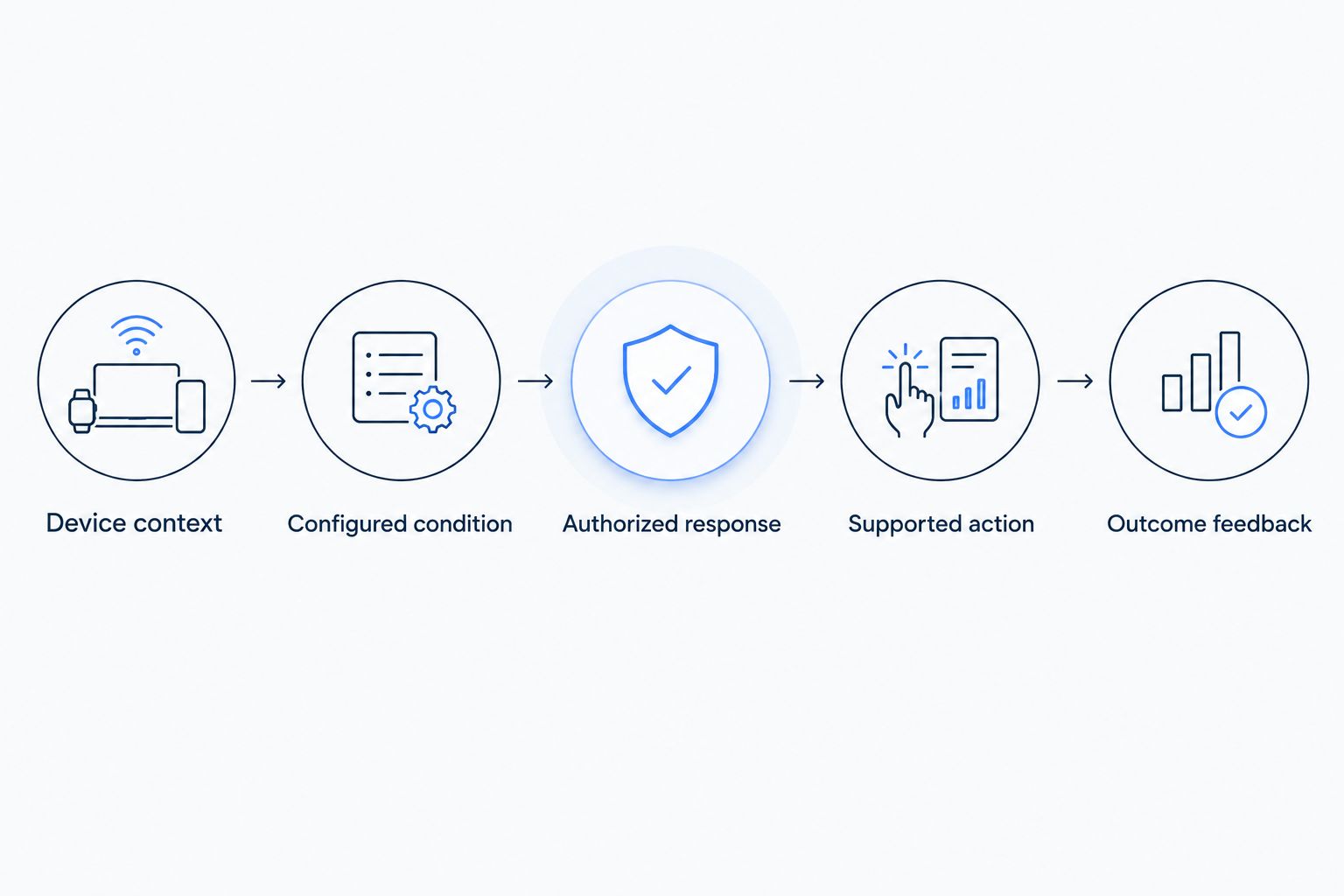
Use the following sequence for each candidate:
- Device context: Confirm identity, location, units and the meaning of the incoming payload.
- Configured condition: Apply the agreed alarm or automation logic.
- Authorized response: Establish who can acknowledge, investigate or request an action.
- Supported action: Exercise only the configured command path the device supports.
- Outcome feedback: Inspect subsequent measurements or device feedback rather than stopping at command status.
For AI-assisted operation, add a permissions test. An assistant's ability to explain a reading doesn't establish permission to change a device. Built-in command confirmation, external-client approval behavior and deliberately configured autonomous rules are distinct operating paths.
Plan the migration before recreating dashboards
Start with an inventory of device identifiers, payload decoders, units, dashboard fields, alarm conditions and user access. Preserve the meaning of the data before reproducing its presentation. A familiar chart with incorrectly mapped readings is not a successful migration.
Historical data needs a separate plan. Determine what you can export, how timestamps and identifiers are represented, and whether the destination accepts the required history. Use the guide to migrating historical sensor data when switching IoT platforms to structure that part of the evaluation.
Hardware sourcing is separate from platform selection. Kilo Electronics is a separate online authorised dealer for compatible hardware serving individual and business buyers; purchasing new equipment isn't automatically a requirement for changing platform software.
FAQ
Which Datacake alternative should I choose in 2026?
Choose according to the workflow: evaluate Kilo for AI-assisted connected-device operation, ThingsBoard for self-hosting and Node-RED for custom integrations. Keep Datacake in the comparison if its existing monitoring workflow already meets your needs.
Is ThingsBoard a direct alternative to Datacake?
ThingsBoard is an IoT platform alternative with telemetry, dashboards and rule processing. Its open-source and self-hosted options introduce deployment choices and operating responsibilities that differ from a hosted no-code application.
Can Node-RED replace Datacake by itself?
Node-RED is not a like-for-like complete platform replacement. It provides flow-based programming, while your application still needs appropriate storage, access control, visualization and operational management.
Can I keep my existing sensors when changing IoT platforms?
You can keep existing sensors when the destination supports their integration and payload requirements. Verify credentials, decoding, units and any command path rather than relying on a shared protocol name.
Does an AI assistant confirm that a device command worked?
An assistant's response does not prove the physical outcome of a device command. Confirmation requires suitable device feedback or subsequent measurements where supported.
Should I migrate historical data before switching dashboards?
Plan historical-data handling before switching your production workflow. Decide how exports, timestamps, device identifiers and destination import requirements will preserve the meaning of the records.
Keep Datacake when the requirement is already met
Staying with Datacake is the right call when its dashboards, integrations and existing operating process satisfy your requirements. A new platform must solve a concrete problem large enough to justify rebuilding configuration and retraining users. A different feature list isn't that problem.
One final recommendation: include a stale or missing sensor reading in your evaluation. The system's response to unavailable evidence is as important as its response to a normal reading, especially when a person or automation is expected to act.
Written by Tim Kravchunovsky