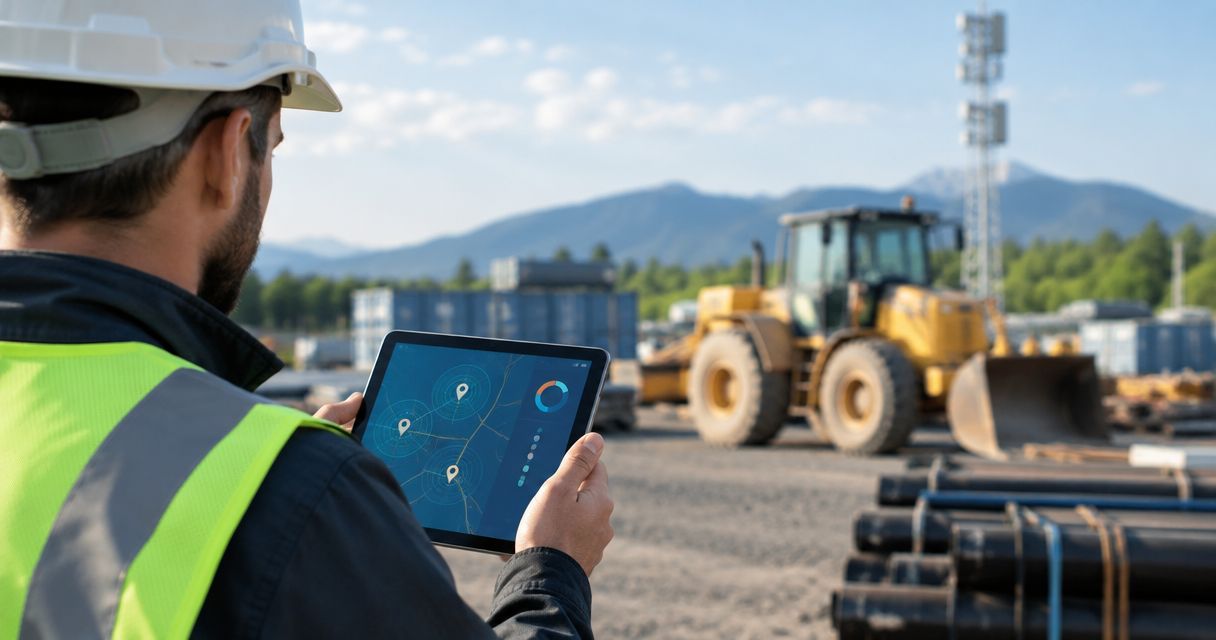
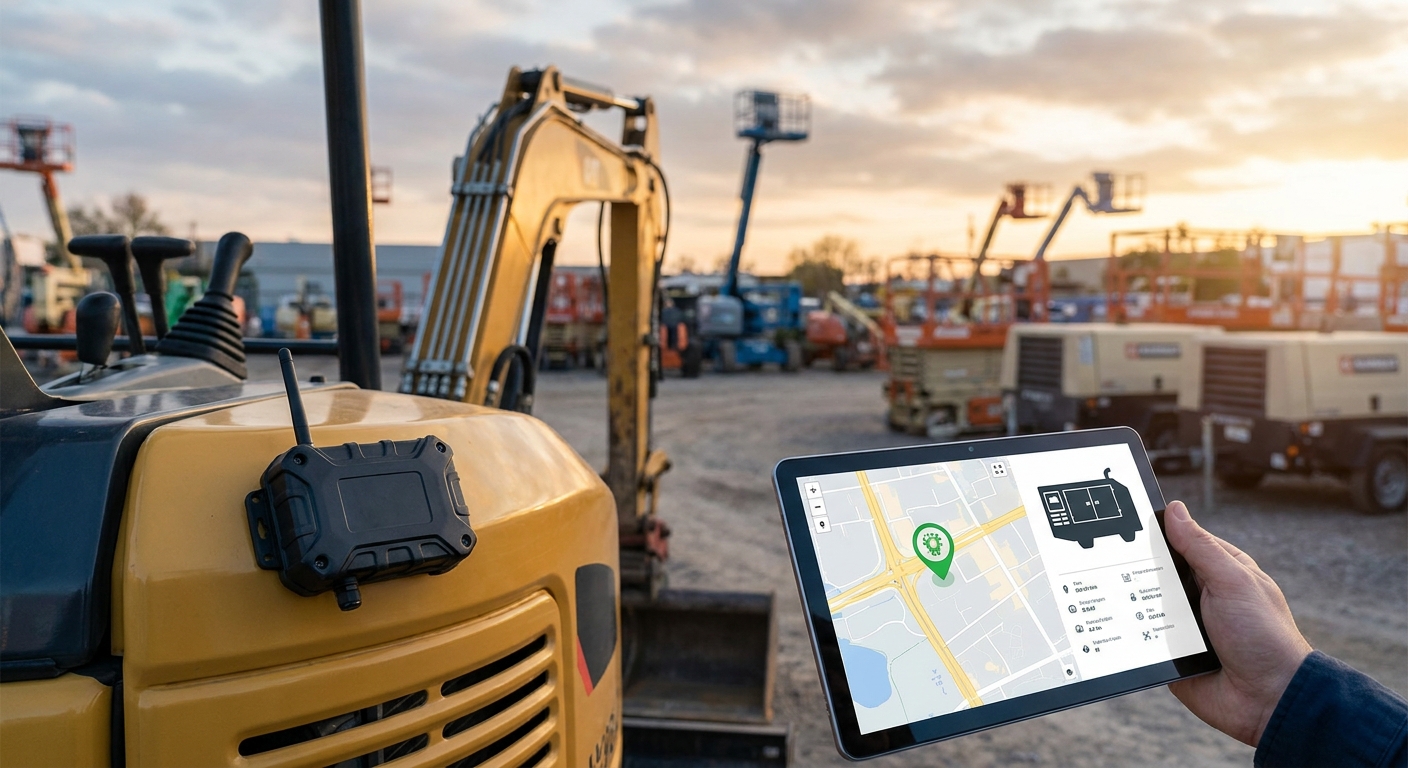
Rental fleets bleed money when equipment sits lost in a yard, walks off a jobsite, or comes back three days late with nobody noticing until the next customer calls. IoT asset tracking for rental equipment fixes that by putting a location ping, a runtime hour count, or a check-out alert on every unit that leaves your gate.
- IoT asset tracking for rental equipment starts with LoRaWAN yard tags running 5-10 years on one battery. Buy.
- Cellular GPS trackers are the right call for long-haul rental gear that leaves the yard for weeks. Buy.
- A private LoRaWAN network server pays for itself past 20 acres of yard space. Consider.
- RFID gate scanning catches check-in and check-out gaps a GPS ping alone misses. Consider.
Why this matters
Rental fleets run at 30-70% utilization on a good year, and every unit sitting untracked in a back corner of the yard is dead capital. Late returns and misplaced units cost rental operators real revenue in 2026 — not because the equipment is stolen, but because nobody can say where it is or whether it's due back Tuesday or last Tuesday.
A regional manager checking a multi-site dashboard software view across five branch yards catches a $40,000 skid steer sitting idle for three weeks before it becomes a write-off conversation. That's the entire pitch for IoT asset tracking rental equipment programs: turn scattered gear into a list you can actually manage.
Who this is for
This guide is for construction equipment rental yards, event and party rental operations, and tool rental chains running more than one branch. If your fleet includes anything that leaves a controlled site — a generator, a skid steer, a scaffold tower, a folding chair pallet — and you've ever had a customer dispute a return date, this is the buying decision in front of you.
What to look for in IoT asset tracking for rental equipment
Tracking technology matched to asset value and range
A $200 power tool doesn't need the same tracking tech as a $150,000 excavator. LoRaWAN tags cover yard-and-jobsite range at low cost per unit; cellular GPS covers assets that travel between sites or across state lines. Matching technology to asset value keeps your per-unit tracking cost sane instead of tagging everything the same way.
Battery life and ruggedness for outdoor duty cycles
Rental gear sits outside, gets rained on, and gets dropped off a truck bed. A tracker rated for indoor use fails inside six months on a jobsite. Look for units built for outdoor duty cycles with battery life measured in years, not weeks — 5-10 years is the realistic range for passive LoRaWAN tags in 2026.
Late-return and geofence alerts
The single highest-value alert for a rental business is "this unit left its assigned zone" or "this unit is still out past the rental end date." An alarm rules engine that fires a text or email the moment a geofence breaks turns a manual spreadsheet check into an automatic catch.
Utilization data tied to rental billing
Tracking that only shows a dot on a map is half the job. The other half is runtime hours and idle time that tie back to what you're billing customers and which units in the fleet actually earn their keep. Idle-time reporting is what tells you to sell the third pressure washer instead of buying a fourth.
Multi-branch visibility and API integration
A single-yard operation can run on one dashboard. A five-branch tool rental chain needs one login that rolls every branch's fleet into a single view, plus an API that pushes location and status data into whatever rental management software already runs your contracts and billing.
Tag durability and labeling
A tracker is only as good as the mount holding it to the asset. Tags that fall off during a wash-down, or barcode labels that fade after two months outdoors, turn a tracking program into a guessing program within a quarter.
Top picks for rental equipment tracking
LoRaWAN yard tags — the workhorse pick. These run 5-10 years on a single battery and cost the least per unit to deploy across a large fleet of small-to-mid-value equipment. One spec that matters: LoRaWAN range typically covers a full yard and adjacent jobsite from a single gateway, which is why it's the default choice for IoT asset tracking for construction equipment fleets. Buy for tool cribs, small equipment, and single-site or campus-style yards.
Cellular GPS trackers — the road pick. For gear that leaves the yard for weeks — generators on a remote job, scaffolding shipped to a second site — cellular GPS keeps reporting location with no gateway infrastructure required. Battery life runs 1-2 years on a rechargeable pack, shorter than LoRaWAN but justified by the range. This is the model built into asset tracking for logistics fleets, and it applies directly to rental gear that crosses site boundaries. Buy if more than 20% of your fleet leaves controlled sites regularly.
Private LoRaWAN network for large yards — the scale pick. Past 20 acres of yard, or with steel buildings and stacked containers blocking signal, a single public gateway leaves dead zones. A dedicated LoRaWAN network server for private enterprise deployments closes those gaps with additional gateway coverage. Consider this once you've mapped actual dead spots — don't buy infrastructure before you've confirmed you need it.
RFID gate scanning — the wildcard. A read-point at the yard exit catches every check-out and check-in automatically, which matters most for small tools that are too cheap to justify a $30 LoRaWAN tag each. It won't tell you where a tool is mid-rental, only that it left and came back. Consider for tool cribs; Skip if your fleet is mostly heavy equipment already covered by LoRaWAN or GPS.
See your fleet on one dashboard
Map your rental equipment tracking options before you buy tags.
What to avoid
Consumer Bluetooth beacons with no gateway plan. BLE tags look cheap upfront, but without dedicated gateways covering the yard, range drops to a few meters and the "tracking" becomes a scavenger hunt. Skip these for anything leaving a small indoor space.
GPS trackers sized for cars, not machines. A tracker built for consumer vehicle fleets often assumes constant power from an ignition circuit. Rental equipment sitting idle for weeks drains a battery-only unit fast if the polling interval isn't tuned down for storage periods.
Labels that fade before the rental cycle ends. Barcode or asset ID labels printed on standard stock peel or fade within a season outdoors. Rental operators pairing IoT trackers with a physical ID system get more mileage out of RFID-compatible labels printed on a thermal printer built for outdoor durability — the label needs to survive as many wash-downs and weather cycles as the tag mounted next to it.
Verdict comparison
| Approach | Best for | Battery/power | Verdict |
|---|---|---|---|
| LoRaWAN yard tags | Tool cribs, single-site yards | 5-10 years | Buy |
| Cellular GPS trackers | Equipment leaving the site | 1-2 years rechargeable | Buy |
| Private LoRaWAN network | Yards over 20 acres | Infrastructure, not battery | Consider |
| RFID gate scanning | Small tools, check-out control | N/A (fixed reader) | Consider |
| Consumer BLE beacons | Nothing at rental scale | Weeks to months | Skip |
FAQ
What is the best IoT asset tracking for rental equipment companies in 2026?
LoRaWAN yard tags are the best default for rental equipment tracking in 2026 because they run 5-10 years on one battery and cover a full yard from a single gateway. Fleets with gear that leaves the site need cellular GPS added on top.
How much does IoT tracking cost per rental unit?
Per-unit tracking cost varies by technology, with LoRaWAN tags running far cheaper than cellular GPS units due to lower hardware and no monthly SIM fee. Most rental operators tag high-value or high-loss-rate equipment first rather than the entire fleet at once.
Is cellular GPS better than LoRaWAN for rental equipment?
Cellular GPS is better when equipment leaves the yard for extended periods, while LoRaWAN wins on cost and battery life for gear that stays within yard or jobsite range. Most mixed rental fleets in 2026 run both technologies side by side.
Can IoT tracking prevent equipment theft?
IoT tracking reduces theft losses by alerting on geofence breaches the moment a unit leaves its assigned zone, rather than preventing theft outright. Combined with a rules engine, an alert can fire within minutes instead of when the unit is reported missing days later.
Do I need a private LoRaWAN network for a rental yard?
A private LoRaWAN network is worth the investment once a yard exceeds roughly 20 acres or has structures blocking signal from a single public gateway. Smaller yards typically get full coverage from one gateway without dedicated infrastructure.
How does asset tracking tie into rental billing?
Runtime hours and idle-time data from tracked equipment feed directly into utilization reporting, showing which units in the fleet are earning their rental rate. That data also settles billing disputes over actual usage versus contracted hours.
What's the difference between RFID and GPS tracking for rental gear?
RFID confirms an asset crossed a fixed read point, like a yard gate, but says nothing about location in between. GPS reports continuous location, which matters for equipment that travels between multiple job sites during a single rental.
Does IoT asset tracking work across multiple rental branches?
Multi-branch rental chains need a platform with one login rolling every branch's fleet into a single dashboard rather than separate logins per site. API integration into existing rental management software keeps location data connected to the same contracts and billing records.
One last thing
The rental operators getting the most out of tracking in 2026 aren't the ones with the most tags — they're the ones who set up alarms before they tag a single unit. A geofence alert configured on day one catches more lost equipment in the first month than a dashboard full of location dots nobody checks daily.