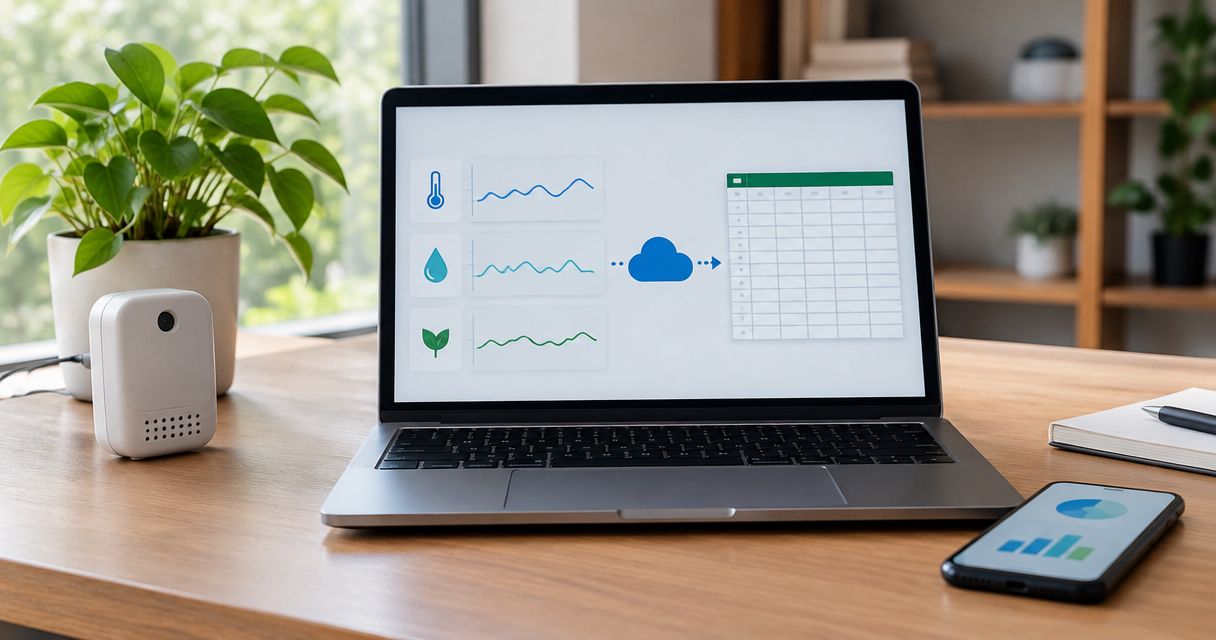
If you're weighing Kilo vs UseKilo in 2026, the short answer is this: choose Kilo, the IoT platform for Physical AI, if you need device data, dashboards, rules, alarms and AI-assisted operation in one place. Choose UseKilo only if its own documentation shows it covers your protocols, devices and actions, because nothing in Kilo's materials establishes that it does.
- Kilo is an IoT platform for Physical AI: device data, dashboards, rules, alarms, digital twins and AI assistance in one platform.
- Kilo connects through LoRaWAN, mioty and MQTT, plus APIs and MCP for compatible AI clients such as Claude.
- UseKilo has no verified specification here, so every claim about it needs checking against its own documentation.
- Kilo vs UseKilo in 2026: shortlist Kilo for IoT operations; shortlist UseKilo only after a documented feature check.
Kilo vs UseKilo: what are you actually comparing?
The two names look almost identical, and that is the first problem. Searchers land on this comparison from a typo, a half-remembered product name, or a vendor shortlist where both appear.
This page treats Kilo as the verified side. Kilo's capabilities come from its own documentation and product pages. UseKilo is treated as the unverified side: no source here documents its features, protocols, pricing or limits, so none are asserted.
That asymmetry is the honest way to run this comparison. A table that invents UseKilo's weaknesses would be worthless, and so would one that invents its strengths.
What Kilo is, in plain terms
The Kilo IoT Platform is software that sits between real-world devices and the people or AI agents operating them. It brings device data, digital twins, dashboards, automation, alarms, permissions and supported commands into one platform.
The built-in AI assistant helps users configure and operate connected deployments within their permissions. Compatible external clients, Claude through MCP being the best-known example, can do similar work through the same governed layer. Tool coverage differs by client, so confirm what a given client can create or change before you plan around it.
Kilo is platform software. It is not device firmware, a robotics model, or hardware. Physical sensors and gateways are sourced separately, for example from Kilo Electronics, a separate online authorised dealer for compatible hardware.
At a glance: Kilo vs UseKilo
| Dimension | Kilo | UseKilo |
|---|---|---|
| Best for | Teams building and running IoT deployments, integrators, developers, AI teams | Confirm against UseKilo's own materials |
| Product type | IoT platform software | Verify before shortlisting |
| Connectivity | LoRaWAN, mioty, MQTT, APIs | Check supported protocols and payload mapping |
| AI assistance | Built-in assistant plus MCP for compatible clients | Check whether AI can act, or only report |
| Automation | Rules Engine with debugging and versioned releases | Check rule testing and release workflow |
| Alarms | Alarms with notifications and escalation | Check escalation options |
| Digital twin | Digital building twin with sensor-linked 3D | Check availability |
| Pricing model | Plans published on the Kilo site | Request current terms in writing |
| Standout feature | AI acting on devices within permissions | Ask the vendor to name it |
Kilo offers a broader operating layer than a single-purpose tool
Kilo is built as one platform rather than a chain of separate products. A sensor reading arrives, lands on a device record, feeds a dashboard, can trigger a rule, and can raise an alarm. The same context is available to the AI assistant.
That matters when you run more than one kind of site. A cold room, a building and a tank farm all use the same device model, the same permissions and the same alarm routing.
For UseKilo, the question to put to the vendor is whether those pieces ship together or need stitching from other tools. Stitching is not automatically bad, but it moves integration work onto your team.
Kilo is the documented choice for AI that acts on devices
This is where Kilo's positioning is most specific. Physical AI, as Kilo uses the term, means AI that works with real equipment through device context, permissions, configured actions, automation and available feedback. It is an operating layer, not onboard control.
The boundaries are worth knowing before you buy anything in this category:
- The built-in assistant has a confirmation flow for direct device commands. External MCP clients apply their own approval behavior.
- Rules you deliberately configure can run commands without a person in the loop.
- A command showing as accepted, queued or delivered is not proof the physical outcome happened. Confirmation needs device feedback or a later measurement.
- Shutting a valve needs a compatible actuator and a configured command path. Software alone cannot do it.
Ask UseKilo the same four questions. A vendor that answers them clearly is worth a trial. A vendor that answers with slogans is not.
Both need the same device and protocol check
This is a tie, and it is the dimension most buyers skip. Sharing a protocol name does not prove a device or an action works. Kilo's own guidance is to check supported protocols, device interfaces, payload mapping and command definitions per device.
Apply that to every platform on your list, Kilo included. Pick two or three real devices you plan to deploy, not a generic list, and confirm each one end to end during a trial.
Rules, testing and releases: check the workflow, not the feature name
Kilo's Rules Engine is purpose-built rather than a Node-RED wrapper. Two details matter for safety. In the debugger, supported side-effect nodes run the real operation by default, and Skip or Mock must be chosen deliberately. Restoring an earlier rule version creates a new draft that you build and deploy separately. It does not undo a physical action that already happened.
When you evaluate UseKilo, ask what its test mode does to live equipment and what a rollback actually reverses. Those two answers tell you more than any feature list.
Pricing: compare models and billing basis
Kilo publishes its plans on its site, so read the current terms there rather than relying on a third-party summary. Quoted Kilo prices are in EUR, and you should confirm the billing basis before comparing totals.
For UseKilo, get the model in writing: per device, per user, per data volume, or flat. Predictable per-device pricing is easy to budget. Usage-based pricing can fit small pilots and surprise you at scale.
Keep software cost separate from everything else. Hardware, connectivity and AI model usage are different line items on any platform. A cheap subscription with expensive integration work is not cheap.
Scorecard
| Dimension | Verdict |
|---|---|
| Unified platform scope | Kilo, on documented evidence |
| AI acting through devices | Kilo, on documented evidence |
| Protocol coverage | Tie until UseKilo is verified |
| Rule testing and release safety | Verify both |
| Pricing transparency | Kilo publishes plans; UseKilo needs a written quote |
| Hardware | Not a platform differentiator; sourced separately |
Kilo is the better-documented choice for teams that want AI and IoT operations on one platform in 2026.
Which should you choose in 2026?
Choose Kilo if you run or build IoT deployments across buildings, industry or fleets and want dashboards, alarms, automation and AI assistance under one permission model. It also fits integrators and developers who need APIs and MCP access.
Choose UseKilo if its documentation covers your exact devices, protocols and actions, and its pricing model fits your scale. Run a trial on your own hardware before committing. If you can't get answers to the questions above in writing, move on.
For background on what Physical AI means before you decide, the definition and how it works explains the operating-layer idea in more detail.
FAQ
Is Kilo the same as UseKilo?
No verified source here treats them as the same product. Kilo is the IoT platform at kiloiot.io. Check UseKilo's own site to confirm what it is and who runs it.
What is Kilo best for in 2026?
Kilo is best for teams building and running IoT deployments that want dashboards, rules, alarms, digital twins and AI assistance in one platform. It suits integrators, developers and AI teams.
Does Kilo work with Claude?
Yes, through a compatible MCP connection. Confirm current tool coverage before assuming Claude can create, change or control a specific resource, since not every assistant function is exposed to every client.
Does Kilo sell sensors and hardware?
No. Kilo is platform software. Compatible hardware is sold separately, for example by Kilo Electronics, an online authorised dealer.
Can Kilo shut off equipment automatically?
Only if you have a compatible actuator and a configured command path. A rule can run a command without human approval, so test it deliberately before going live.
How should I compare IoT platforms fairly?
Use the same criteria for each: protocols and devices you actually own, rule testing behavior, alarm escalation, permissions, pricing model and billing basis. Trial each on real hardware.
One last thing
When two products share a near-identical name, the cheapest due diligence is a single question sent to both vendors: which of my three real devices work today, and which actions can your platform send to them? Kilo's answer comes from its documentation. Hold UseKilo to the same standard.
Written by Tim Kravchunovsky