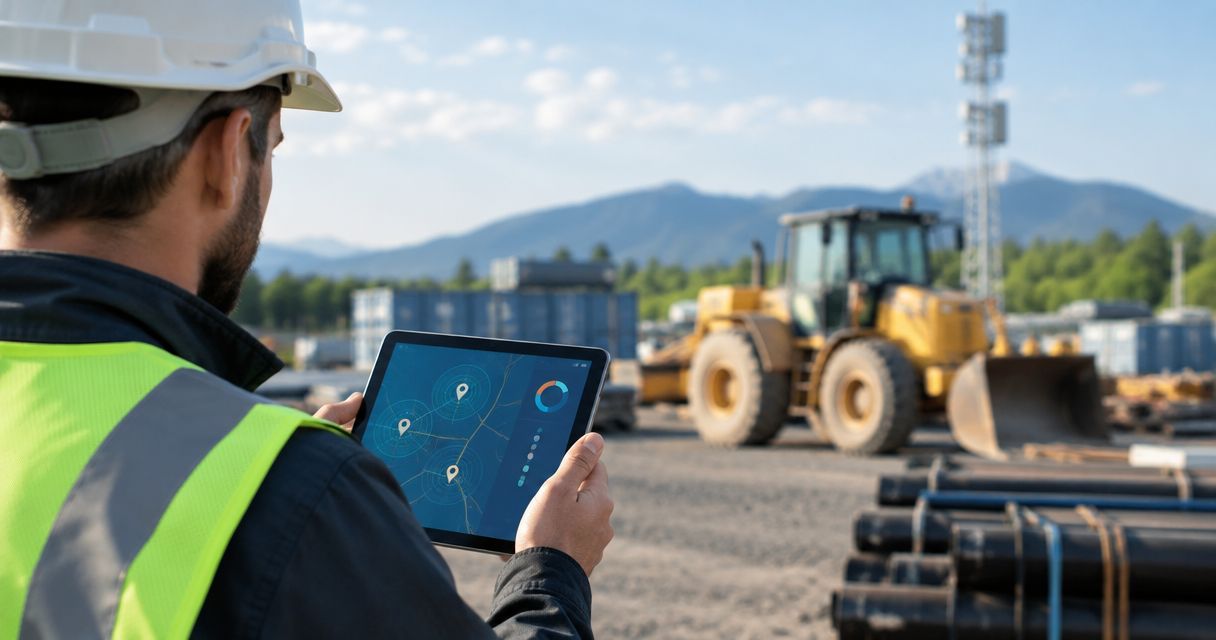
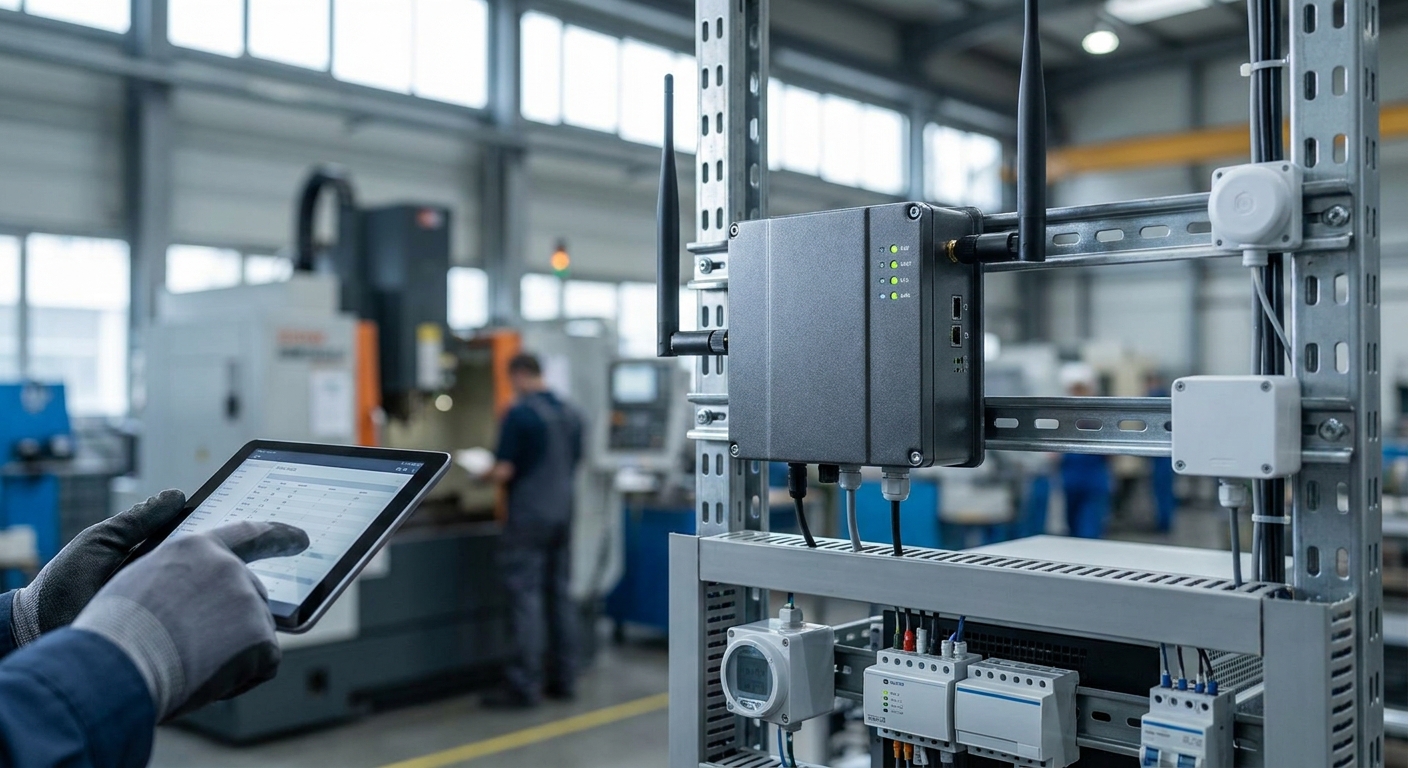
Industrial LoRaWAN gateways in 2026 range from sub-$300 Raspberry Pi-based indoor units to $2,500+ IP67 macro cells rated for -40°C mining sites. The channel count on the spec sheet matters less than whether the gateway survives your environment and talks cleanly to your network server.
- Kerlink Wirnet iBTS is the buy for outdoor, multi-building industrial campuses needing IP67 durability and PoE+ in 2026.
- Tektelic Kona Macro wins on temperature range (-40°C to 65°C) for mining, oil and gas, and outdoor cold storage yards.
- MultiTech Conduit AP is the integrator default -- cellular failover plus 8-channel LoRaWAN in one enclosure.
- Skip Laird Sentrius RG191 for new 2026 builds -- firmware support has effectively stalled since 2020.
- The best lorawan gateways for industrial deployments only matter if your network server is LNS-agnostic and ingests Basic Station or Semtech UDP without a rebuild.
Why this matters
A gateway is a radio and a packet forwarder. It hears LoRaWAN uplinks, timestamps them, and hands them to a network server over the internet. Pick the wrong enclosure and a mining site loses gateways to condensation in year one. Pick the wrong backhaul and a remote tank farm gateway goes dark the first time cellular coverage drops.
The bigger mistake in 2026 deployments is buying a gateway before locking the network server. If the private enterprise LoRaWAN network server running your rules engine and alarms can't ingest the gateway's forwarder protocol, you're re-provisioning hardware six months in. Every gateway on this list supports either Basic Station or Semtech UDP -- confirm which one before you order.
“A gateway spec sheet is worthless if the network server on the other end can't parse the packets it forwards.”
How we ranked
This ranking weighs five factors that matter for industrial sites, not consumer or smart-home deployments: ingress protection rating, operating temperature range, backhaul options (Ethernet, PoE, cellular, satellite), channel count and concurrent demodulation, and firmware update cadence through 2026. Published vendor spec sheets and LoRa Alliance certification status form the baseline -- deployment patterns come from what actually shows up on cold storage roofs, mine sites, and multi-building campuses, not marketing claims.
A gateway that scores well on paper but hasn't shipped a firmware update in three years drops in rank regardless of its original spec. Support lifespan is as much a buying criterion as IP rating for anything going on a roof for five years.
The ranked LoRaWAN gateway list for 2026
1. Kerlink Wirnet iBTS -- the outdoor macro cell. This is the unit you put on a rooftop or a pole and forget for years. IP67-rated, PoE+ powered, built for multi-kilometer outdoor range across industrial campuses and smart-city-adjacent deployments. It's overbuilt for a single warehouse but right-sized for a site with several buildings on one LoRaWAN network. Buy for outdoor, multi-structure industrial campuses in 2026.
2. Tektelic Kona Macro -- the extreme-environment pick. Rated for a -40°C to 65°C operating window, this is the gateway that keeps working on an oil pad in a North Dakota winter or a cement plant roof in summer. Mining and oil-and-gas operators lean on it specifically because indoor-rated hardware fails in these conditions within a season. Buy for mining, oil and gas, and outdoor cold storage.
3. MultiTech Conduit AP -- the integrator's default. An 8-channel LoRaWAN Conduit with an optional cellular backhaul module means a system integrator can quote one box that keeps reporting even when the site's primary internet drops. It's the gateway most system integrators standardize on because spare units are interchangeable across client sites. Buy for facilities teams that need cellular failover without a second SKU.
4. Milesight UG67 -- the compact hybrid. IP67-rated but small enough to mount indoors or out, the UG67 is built for teams scaling across many sites where a bulky macro cell is overkill. Remote configuration through a native cloud console cuts the truck-roll problem for facility teams managing a dozen locations. Buy for multi-site rollouts that need plug-and-play scale over 2026 and 2027.
5. RAK Wireless RAK7289 -- the budget indoor unit. An 8-channel, Raspberry Pi Compute Module-based gateway that sits well under $500 in hardware cost, this is the right call for a single indoor facility -- a plant floor, a warehouse, a single cold storage room -- where outdoor durability isn't a requirement. It's not built for a rooftop. Buy for single-building indoor deployments on a tight hardware budget.
6. ChirpStack Gateway OS on generic 8-channel hardware -- the network-server-agnostic pick. Running an open packet forwarder on commodity concentrator hardware gives integrators flexibility to swap network servers later without touching the radio layer. It costs more in setup time than a turnkey vendor box. Consider this route only if your team already runs its own provisioning pipeline.
7. Laird Sentrius RG191 -- the legacy indoor unit. Widely deployed between 2018 and 2020, the RG191 still passes packets, but firmware updates have effectively stopped and LoRaWAN 1.1 support was never added. Sites still running it are due for a swap. Skip for any new 2026 deployment -- there's no upgrade path left in this hardware.
Comparison table
| Gateway | Best for | IP rating | Operating temp | Backhaul | Verdict |
|---|---|---|---|---|---|
| Kerlink Wirnet iBTS | Outdoor campuses | IP67 | -40°C to 60°C | PoE+, Ethernet | Buy |
| Tektelic Kona Macro | Mining, oil & gas | IP67 | -40°C to 65°C | PoE, cellular | Buy |
| MultiTech Conduit AP | Integrators, failover | IP30 (indoor) | -20°C to 65°C | Ethernet, cellular | Buy |
| Milesight UG67 | Multi-site rollouts | IP67 | -20°C to 60°C | PoE, cellular | Buy |
| RAK7289 | Single indoor site | IP30 (indoor) | 0°C to 40°C | Ethernet, PoE | Buy |
| ChirpStack + generic hardware | Custom stacks | Varies | Varies | Varies | Consider |
| Laird Sentrius RG191 | Legacy sites only | IP30 (indoor) | 0°C to 40°C | Ethernet | Skip |
Match gateways to a network server that fits
See how Kilo IoT's LoRaWAN network server handles Basic Station and Semtech UDP gateways.
Where to buy industrial LoRaWAN gateways
- Buy from a distributor or reseller that stocks spare units for the exact model -- a dead gateway on a remote oil pad with a six-week lead time is a monitoring gap, not a minor inconvenience.
- Confirm LoRa Alliance certification for the specific firmware version shipped in 2026, not just the hardware generation -- certification lapses between firmware branches more often than vendors advertise.
- Verify the gateway's forwarder protocol against your network server before ordering. Kilo IoT's industrial LoRaWAN network server software runs Basic Station and Semtech UDP side by side, which removes this as a blocking decision, but plenty of network servers only support one.
FAQ
What are the best lorawan gateways for industrial deployments in 2026?
Kerlink Wirnet iBTS and Tektelic Kona Macro lead for outdoor and extreme-temperature industrial sites in 2026, while MultiTech Conduit AP is the pick when cellular failover matters. Choice depends on IP rating, temperature range, and backhaul, not channel count alone.
How many LoRaWAN gateways does an industrial site need?
Most single-building sites run on one gateway; multi-building campuses or large outdoor yards typically need one gateway per structure or per 1-2 km of outdoor coverage. Sensor density and building materials (metal roofing, concrete) push that number up.
Is an indoor LoRaWAN gateway enough for a warehouse?
Yes, an indoor-rated gateway like the RAK7289 covers most single-building warehouses without the added cost of an IP67 enclosure. Multi-building or outdoor yard coverage needs an outdoor-rated unit instead.
What's the difference between Basic Station and Semtech UDP forwarders?
Basic Station uses a secure, authenticated connection to the network server and supports over-the-air firmware updates; Semtech UDP is older, unauthenticated, and simpler to set up. Most 2026 industrial deployments favor Basic Station for the added security.
Is mioty better than LoRaWAN for industrial gateways?
Mioty handles dense sensor deployments and interference-heavy industrial floors better than LoRaWAN in some cases, but it requires mioty-specific hardware and a smaller vendor pool. Kilo IoT's guide to [mioty-based industrial monitoring](https://kiloiot.byryze.com/best-sensors-for-mioty-based-industrial-monitoring) covers when that tradeoff makes sense.
How much does an industrial LoRaWAN gateway cost in 2026?
Indoor gateways like the RAK7289 run under $500 in hardware cost, while outdoor IP67 macro cells like the Kerlink Wirnet iBTS or Tektelic Kona Macro run into the low thousands. Installation and PoE cabling add to the total beyond the unit price.
Can one LoRaWAN network server manage gateways from different vendors?
Yes, as long as the network server supports the gateway's forwarder protocol -- Basic Station or Semtech UDP. An LNS-agnostic platform lets a site mix Kerlink, Tektelic, and Milesight hardware on one network without a migration.
Do old LoRaWAN gateways need to be replaced?
Gateways without firmware updates since roughly 2020, like the Laird Sentrius RG191, should be replaced before expanding a network in 2026 -- they lack LoRaWAN 1.1 support and won't receive further security patches.
One last thing
The failure mode nobody puts in a spec sheet: a $2,500 outdoor gateway with a badly planned channel plan covers less usable range than a $250 indoor unit with correct spreading factor allocation. Gateway hardware sets the ceiling; network configuration decides whether you ever get near it. Get the channel plan and network server matched to the site before arguing over which vendor's enclosure looks tougher.