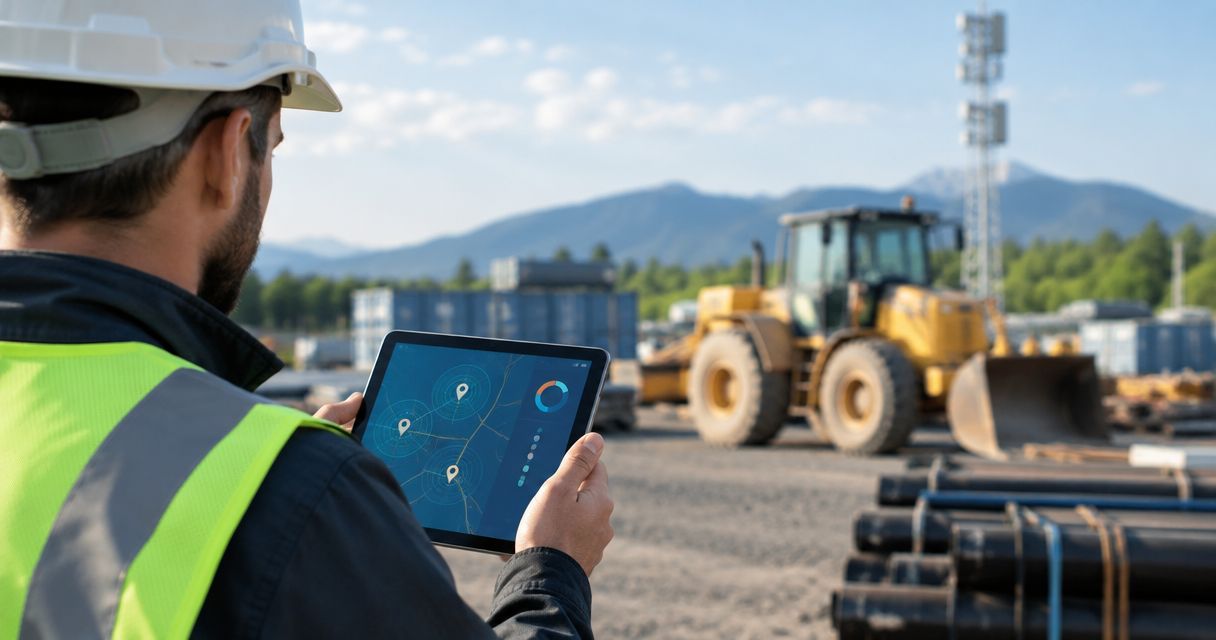
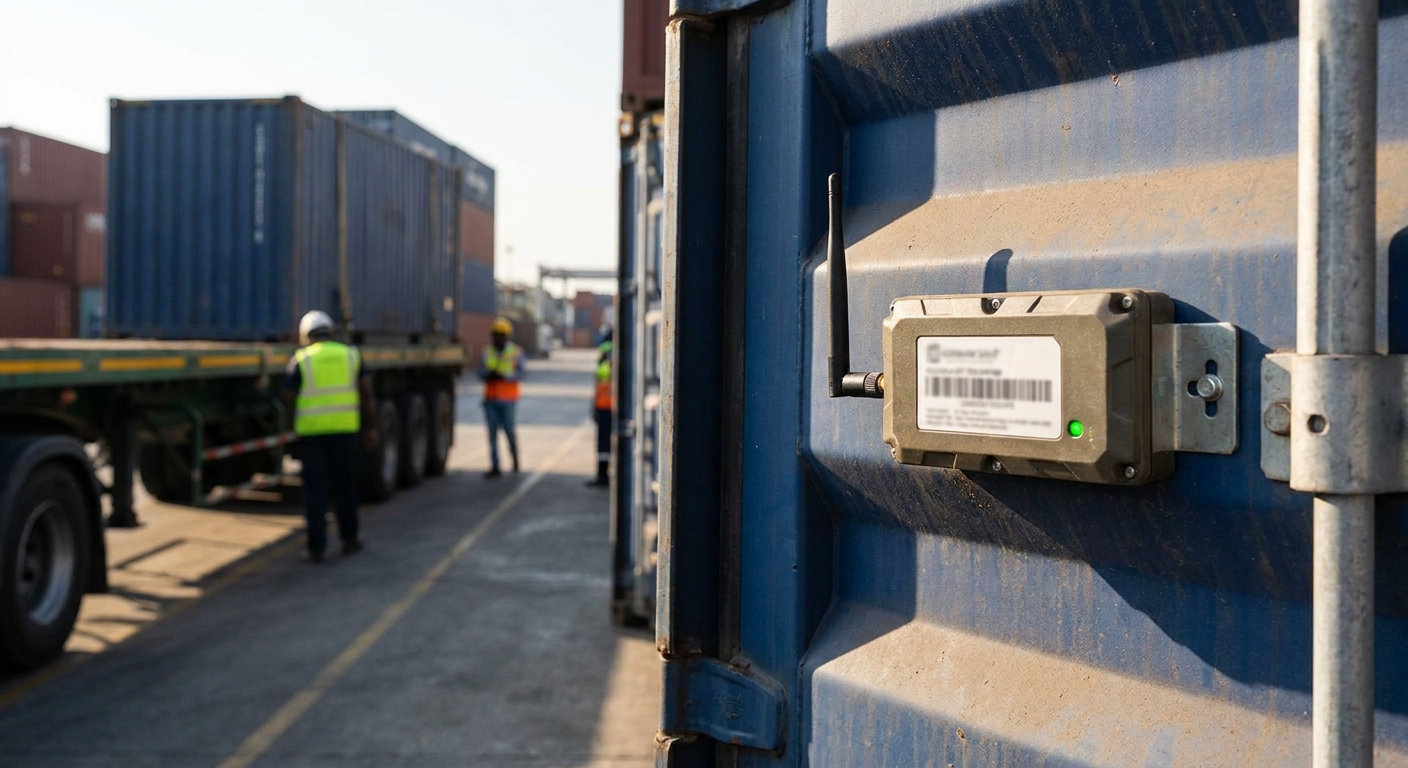
Cellular IoT connectivity picks up where fixed-site LoRaWAN and mioty networks stop: it follows equipment onto the highway, into a rental yard, or across a hospital floor. This guide is for the teams choosing a cellular tracking setup for assets that actually move in 2026, not for buildings that sit still.
- NB-IoT trackers reporting every 15 minutes run 3-5 years on one battery — the right pick for low-value moving assets.
- LTE-M wins when you need sub-minute location updates for high-theft equipment. Buy it for logistics fleets.
- Single-carrier SIMs fail in dead zones — multi-carrier fallback is non-negotiable for job sites, not optional.
- Cellular trackers publishing over MQTT slot into the same dashboard as LoRaWAN and mioty sensors — no separate app.
- Skip cellular for anything under 50 meters of your own gateway; LoRaWAN is cheaper per device there.
Why this matters
Most operations teams already run fixed sensors on LoRaWAN or mioty for cold storage, tanks, and buildings. The gap shows up the moment an asset leaves that footprint: a generator that gets trucked between sites, a forklift that rotates between warehouses, a stack of tools that rides in a pickup bed. Cellular IoT connectivity for asset tracking closes that gap because it doesn't need a private gateway in range.
The catch is data fragmentation. A cellular tracker that reports to its own app while your fixed sensors report to Kilo Cloud means two logins, two alarm systems, and a blind spot every time someone forgets to check the second one. Cellular trackers that publish over MQTT avoid that split entirely — the same protocol Kilo Cloud already uses to ingest LoRaWAN and mioty data lands cellular tracker updates in one dashboard, one rules engine, one alarm feed.
That's the buying decision in 2026: not "which tracker has the best battery," but "which cellular setup reports into the system your team already watches."
Who this is for
This is written for fleet managers, facilities operators, and equipment managers tracking assets that physically relocate — construction equipment moving between job sites, logistics trucks and trailers, rental equipment cycling through customers, hand tools that walk off a jobsite, and mobile hospital equipment that migrates floor to floor. If your assets sit in one building, you don't need cellular — LoRaWAN or mioty is cheaper per device and doesn't carry a monthly SIM bill.
What to look for in cellular IoT connectivity for asset tracking
Report interval vs battery life
A tracker reporting every 60 seconds burns through a battery in months; one reporting every 15 minutes can run 3-5 years on the same cell. Match the interval to how fast the asset actually needs to be found — a stolen trailer needs minutes, a parked generator needs hours.
Coverage and carrier fallback
A tracker locked to one carrier goes dark the second that carrier has a dead zone, which happens constantly on rural job sites and remote yards. Multi-carrier SIMs that fail over automatically are the difference between "found it" and "lost it for three days."
NB-IoT vs LTE-M
NB-IoT costs less per device and sips power, but it's slower to reconnect after a signal drop — fine for stationary-ish assets checked a few times a day. LTE-M costs more but handles fast movement and frequent reconnects, which matters for anything on a highway.
Data ingestion protocol
If the tracker can't publish over MQTT or a documented API, it becomes an island. Kilo Cloud ingests LoRaWAN, mioty, and MQTT data into one dashboard — a cellular tracker that speaks MQTT sits next to your fixed sensors instead of living in a separate app.
Geofencing and alarm logic
Location data alone doesn't alert anyone. The value comes from rules: an asset leaving a defined zone after hours, a trailer moving without a scheduled dispatch, a tool cage opened outside shift hours. Alarms need to reach a phone, not just populate a map.
Total cost per tracked asset
Hardware plus a cellular data plan typically runs $2-$5 per device per month in 2026, on top of the tracker cost itself. That recurring line item adds up fast across a 200-unit fleet — price the plan, not just the hardware.
Put cellular trackers on one dashboard
Connect cellular trackers over MQTT next to your LoRaWAN and mioty sensors.
Top picks by asset type
Construction equipment fleets — the workhorse pick. Excavators, generators, and skid steers that rotate between job sites need NB-IoT trackers reporting every 30-60 minutes, paired with geofence alarms for after-hours movement. Battery life of 3+ years matters more than update speed here because theft usually happens overnight, not mid-shift. See the full setup for construction equipment fleets. Buy.
Logistics fleets — the speed pick. Trailers and high-value freight need LTE-M for sub-minute location updates and fast reconnects after tunnels or dead zones. Multi-carrier SIM fallback is mandatory here, not a nice-to-have, because a single dropped carrier on a 500-mile route means hours of blind transit. Details are in the logistics fleet tracking guide. Buy.
Rental equipment companies — the utilization pick. Rental fleets need cellular tracking less for theft and more for utilization data — knowing which units sit idle at a customer site for 40 days versus which ones move every week. A mid-tier NB-IoT setup reporting every few hours is enough; the win is in the rules engine flagging idle units for recall. Full breakdown at rental equipment tracking. Consider.
High-value tools across job sites — the loss-prevention pick. Tool cages and individual high-value tools (welders, laser levels, compressors) need shorter report intervals and tamper alarms more than long battery life, since these assets change hands daily. The tradeoff is battery replacement every 12-18 months instead of every 3 years. Setup notes are in tracking high-value tools across job sites. Consider.
Hospital equipment — the niche pick. Mobile infusion pumps and portable monitors that migrate floor to floor usually pair cellular or BLE-based tracking with tight geofences per wing, since losing a $15,000 unit inside a building for a shift costs more in staff time than the tracker itself. Wait on cellular alone here unless the facility spans multiple buildings — indoor BLE beacon tracking is usually cheaper for single-building hospitals.
What to avoid
- Single-carrier SIMs with no fallback. They look identical to multi-carrier plans on a spec sheet and cost less, but one dead zone means the asset disappears from the map with no warning.
- Trackers with proprietary apps and no MQTT or API export. They solve tracking in isolation and create a second dashboard nobody checks after week three.
- Cellular on assets that never leave a building. Paying $3-$5 a month per device for cellular data on a stationary asset is money a LoRaWAN sensor would save every month of 2026.
Verdict comparison
| Segment | Connectivity | Report interval | Battery life | Verdict |
|---|---|---|---|---|
| Construction equipment | NB-IoT | 30-60 min | 3+ years | Buy |
| Logistics fleets | LTE-M | Under 5 min | 1-2 years | Buy |
| Rental equipment | NB-IoT | 2-6 hours | 3+ years | Consider |
| High-value tools | NB-IoT/LTE-M | 15-30 min | 12-18 months | Consider |
| Hospital equipment | Cellular/BLE hybrid | Real-time (BLE) | Varies | Wait |
Where the data has to land
A tracker choice only matters as much as where the location and alarm data end up. If a cellular tracker publishes over MQTT, it can feed into the same rules engine and alarm system watching your fixed LoRaWAN and mioty sensors — one dashboard for a cold room, a tank, and a fleet of trucks. That single-pane setup is what separates a tracking project that gets checked daily from one that gets ignored after the first month.
FAQ
What's the best cellular IoT connectivity for mobile asset tracking in 2026?
NB-IoT wins for slow-moving assets like construction equipment because it delivers 3+ years of battery life on a 30-60 minute report interval. LTE-M wins for fast-moving assets like logistics trailers that need sub-minute location updates and fast reconnects.
Is cellular better than LoRaWAN for tracking moving equipment?
Cellular is better once an asset leaves your gateway's range, since it doesn't depend on a private network. For assets that stay within about 50 meters of a LoRaWAN gateway, LoRaWAN is cheaper per device with no monthly data plan.
How much does a cellular asset tracker cost per month in 2026?
Cellular data plans for asset trackers typically run $2-$5 per device per month in 2026, on top of the hardware cost. Multi-carrier fallback plans usually sit at the higher end of that range.
Do cellular trackers work in remote areas with no signal?
No — a cellular tracker needs a carrier signal to report, so it goes dark in true dead zones. Multi-carrier SIMs reduce the odds of a full blackout but don't eliminate it; remote sites with no cellular coverage at all need a satellite or LoRaWAN-with-relay setup instead.
Can cellular trackers connect to the same platform as LoRaWAN sensors?
Yes, if the tracker publishes over MQTT or a documented API. Kilo Cloud ingests LoRaWAN, mioty, and MQTT data into one dashboard, so a cellular tracker sits alongside fixed sensors instead of living in a separate app.
How long does the battery last on a cellular GPS tracker?
NB-IoT trackers reporting every 15-60 minutes typically last 3-5 years on one battery. LTE-M trackers reporting more frequently for fast-moving assets usually last 1-2 years before a swap.
What's the difference between NB-IoT and LTE-M for asset tracking?
NB-IoT uses less power and costs less per device but reconnects slower after a signal drop, making it better for stationary-ish assets. LTE-M costs more and draws more power but handles fast movement and frequent reconnects, making it the pick for vehicles and trailers.
Is a SIM card required for every cellular tracker?
Yes, every cellular tracker needs an active SIM and data plan to transmit, whether it's a physical SIM or an embedded eSIM. Multi-carrier eSIM setups are becoming the 2026 default because they fail over automatically instead of locking a device to one network.
One last thing
The number that catches most teams off guard isn't battery life or coverage — it's the monthly data bill across a full fleet. At $3 a device, 200 trackers run $600 a month before hardware, which is why teams tracking hundreds of low-value tools often mix cellular for the expensive equipment and cheaper LoRaWAN tags for everything parked inside a yard gateway's range.