Mining sites break IoT platforms built for office buildings and warehouses. Dust, vibration, remote terrain and zero cell coverage expose weak connectivity and flimsy hardware fast, and this guide breaks down what an industrial IoT platform for mining actually needs to hold up on a working pit.
- An industrial IoT platform for mining needs private LoRaWAN or mioty connectivity to cover dead zones cell towers never reach — Buy for remote pits.
- Kilo IoT's asset tracking follows loaders and haul trucks across a moving site instead of pinging one fixed point.
- Mioty-rated sensors handle dust, vibration and temperature swings from -20°C to 60°C that kill consumer-grade hardware within months.
- Alarms that reach a supervisor's phone in under 60 seconds matter more than a dashboard nobody checks at 2am.
Why this matters
A sensor that stops reporting on a haul road three kilometers from the nearest gateway isn't a software bug — it's a connectivity choice made before anyone touched a dashboard. Mining operations lose more uptime to blind spots in monitoring than to the equipment failures themselves, because nobody sees the failure coming.
By 2026, most mid-size mining operations run some mix of fixed sensors (tanks, conveyors, environmental) and moving assets (loaders, trucks, rental equipment). An industrial IoT platform built for that mix needs to handle both without forcing two separate systems.
Who this is for
This is for operations managers, site engineers and maintenance leads running open-pit or underground mining sites who need visibility into fuel tanks, equipment condition and environmental readings across terrain where cellular coverage is patchy or absent. If your site already has full 4G/5G coverage end to end, some of this still applies, but the connectivity criteria below matter less.
What to look for in an industrial IoT platform for mining
Connectivity that survives dead zones
A platform that only supports cellular fails the moment a truck drives past the last tower. LoRaWAN and mioty both run on private gateways you control, which means coverage across a 5-10 km radius from a single gateway on open terrain, independent of carrier signal.
Sensor hardware rated for the site, not the showroom
Dust ingress, vibration from blasting and haul traffic, and temperature swings from -20°C to 60°C across seasons wear through consumer-grade sensors in months. Anything going on a mine site needs an IP67-rated enclosure at minimum.
Asset tracking that follows equipment, not just a fixed point
Haul trucks, loaders and rented equipment move constantly across a site and often between sites. A platform that only supports fixed-location sensors misses the point of tracking mobile assets in the first place.
Alarms that escalate to a person, not a dashboard
A tank overflow alarm that sits in a dashboard nobody opens until the next shift change is worthless. Alerts need to reach a phone or a pager within about a minute of the threshold being crossed.
A single view across pits, stockpiles and tanks
Sites running fuel tanks, water storage, conveyors and fixed sensors across multiple pit zones need one dashboard, not five logins. A digital twin view that maps sensors to physical locations cuts the time spent figuring out which reading belongs to which tank.
API access to feed your existing SCADA or ERP
Most mines already run a SCADA system or an ERP for maintenance scheduling. A platform that locks sensor data inside its own dashboard forces manual re-entry, which means someone eventually stops doing it.
Top picks for mining IoT deployments
The private-network pick. A private LoRaWAN network server puts the gateway on your terms instead of sharing bandwidth with a public network you don't control. Kilo IoT's LoRaWAN network server for private enterprise deployments runs gateways dedicated to your site, covering a benched open-pit or underground zone without depending on a carrier's tower placement. One dead zone caused by a rock wall blocking line of sight is the difference between catching a tank leak and finding it a shift late. Buy if your site has any area outside reliable cell coverage.
The harsh-environment sensor pick. Mioty's telegram-splitting transmission spreads a single reading across multiple frequency hops, which matters on a site where your own machinery generates RF noise in the same 868/915 MHz band LoRaWAN uses. Kilo IoT lists sensors built for mioty-based industrial monitoring rated for the dust and vibration common on a working pit. Buy for sites with heavy blasting or dense metal equipment interference.
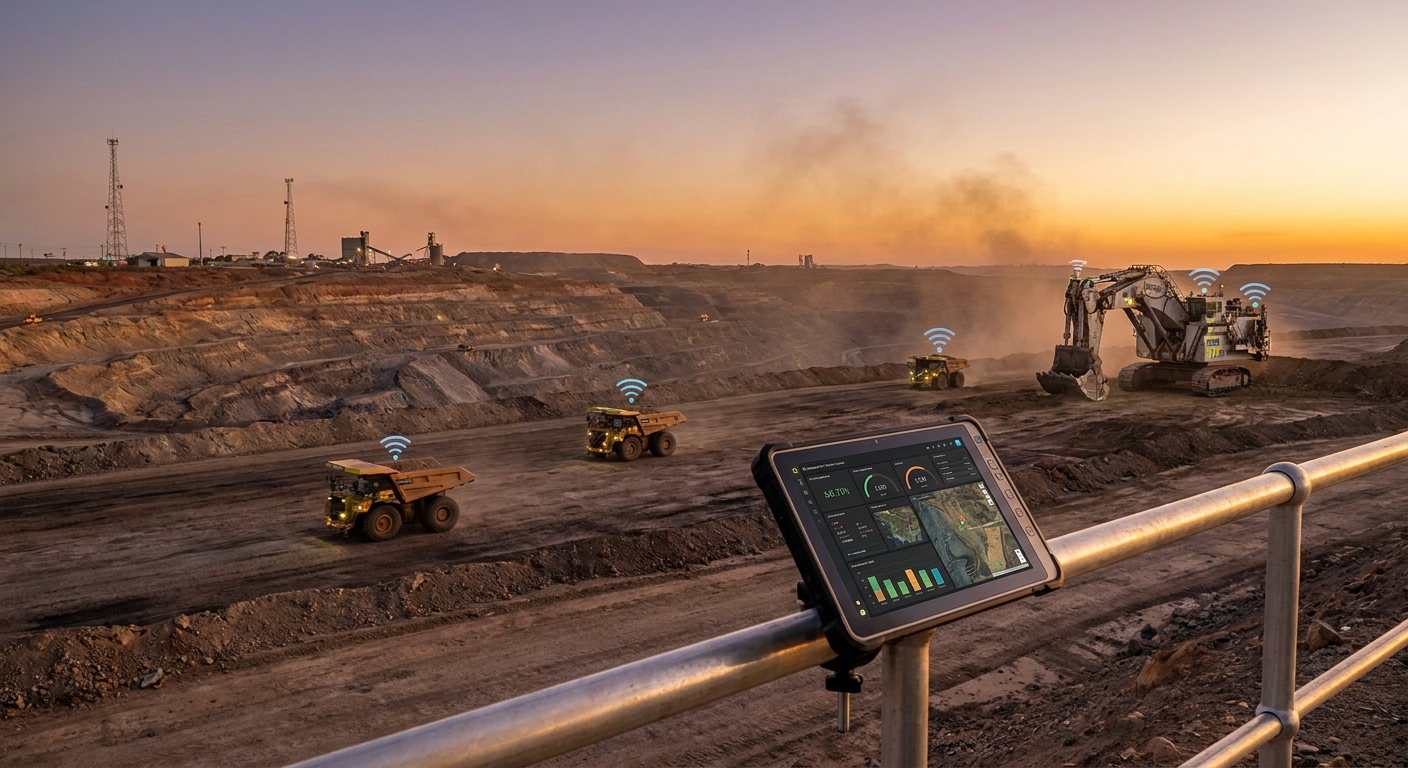
The moving-equipment pick. Loaders, haul trucks and rented machinery don't stay in one spot, and a fixed-sensor platform can't track them. Kilo IoT's page on IoT asset tracking for rental equipment companies covers the same tracking logic mining fleets need for owned and leased machinery moving across a site or between sites. Consider this if more than a handful of your assets change location weekly.
The integration pick. If your maintenance team already lives inside a SCADA system or an ERP, pulling sensor readings out through an API beats forcing everyone onto a new dashboard. Kilo IoT documents how to integrate IoT sensor data with your dashboard via API, which covers pulling readings, alarms and asset status into whatever system your team already checks. Buy if replacing your existing operations software isn't on the table this year.
What to avoid
- Public or shared LoRaWAN networks relying on third-party gateways you don't control — coverage gaps show up exactly where you need them least, and you can't add a gateway to fix a dead zone on someone else's network.
- Cellular-only asset trackers with no fallback connectivity — the moment a truck drops into a pit or drives past the last tower, the tracker goes dark until it resurfaces.
- Consumer-grade or off-the-shelf sensors not rated for dust and vibration — a $20 temperature sensor built for a warehouse shelf doesn't survive six months of blast vibration and diesel dust.
Verdict comparison table
| Pick | Built for | Connectivity | Verdict |
|---|---|---|---|
| Private LoRaWAN network | Sites with dead zones | Private gateway, 5-10 km radius | Buy |
| Mioty-based sensors | High RF interference, dust, vibration | Frequency-hopping telegram splitting | Buy |
| Rental/fleet asset tracking | Loaders, trucks, moving equipment | LoRaWAN, tracks across sites | Consider |
| API integration | Sites with existing SCADA/ERP | Feeds data into current systems | Buy |
Map your site's dead zones first
See where Kilo IoT's private LoRaWAN and mioty coverage fits your site layout.
FAQ
What's the best industrial IoT platform for mining operations in 2026?
There's no single answer independent of your terrain, but a platform combining private LoRaWAN or mioty connectivity with mobile asset tracking covers most open-pit and underground needs in 2026. Kilo IoT pairs both under one dashboard rather than forcing two separate systems.
Does LoRaWAN work underground in a mine?
LoRaWAN signal degrades significantly underground and behind rock, so most underground deployments rely on repeater gateways placed at intervals rather than a single surface gateway. Mioty's frequency-hopping approach can hold up better in high-interference tunnel sections.
Is mioty better than LoRaWAN for mining sites?
Mioty tends to perform better in sites with heavy RF interference from machinery because it splits each reading across multiple frequency hops instead of one channel. LoRaWAN still wins on sensor availability and cost for straightforward open-pit deployments with less interference.
Can you track loaders and haul trucks with IoT asset tracking?
Yes, IoT asset tracking follows mobile equipment like loaders and haul trucks across a site using LoRaWAN-connected trackers rather than fixed-point sensors. This works for owned fleets and rented equipment moving between sites.
How do you get sensor data into an existing SCADA system?
Sensor readings, alarms and asset status pull into an existing SCADA or ERP system through an API rather than requiring a full software swap. This keeps maintenance teams working inside the tools they already check daily.
What sensors handle dust and vibration in mining environments?
Sensors rated IP67 or higher with enclosures built for vibration and temperature swings from -20°C to 60°C hold up on active mining sites. Consumer-grade sensors without that rating typically fail within months of exposure to blast dust and equipment vibration.
Do you need cellular coverage for a private LoRaWAN network?
No, a private LoRaWAN network runs on gateways you control and doesn't depend on carrier cell towers. That's the main reason mining sites with dead zones choose private LoRaWAN over cellular-only tracking.
How fast should a tank or equipment alarm reach a supervisor?
Alarms should reach a supervisor's phone within about 60 seconds of a threshold being crossed, not sit in a dashboard until the next shift check. Escalation to a person, not just a screen, is what actually prevents an overflow or a stalled loader from going unnoticed.
One last thing
The detail most sites miss until it costs them a shift: mioty's frequency-hopping isn't just a spec sheet feature, it's the difference between a reading that survives your own equipment's RF noise and one that drops silently in the exact conditions a working pit generates every day. Pick connectivity for the interference you actually have on site, not the interference a vendor tested in a lab.