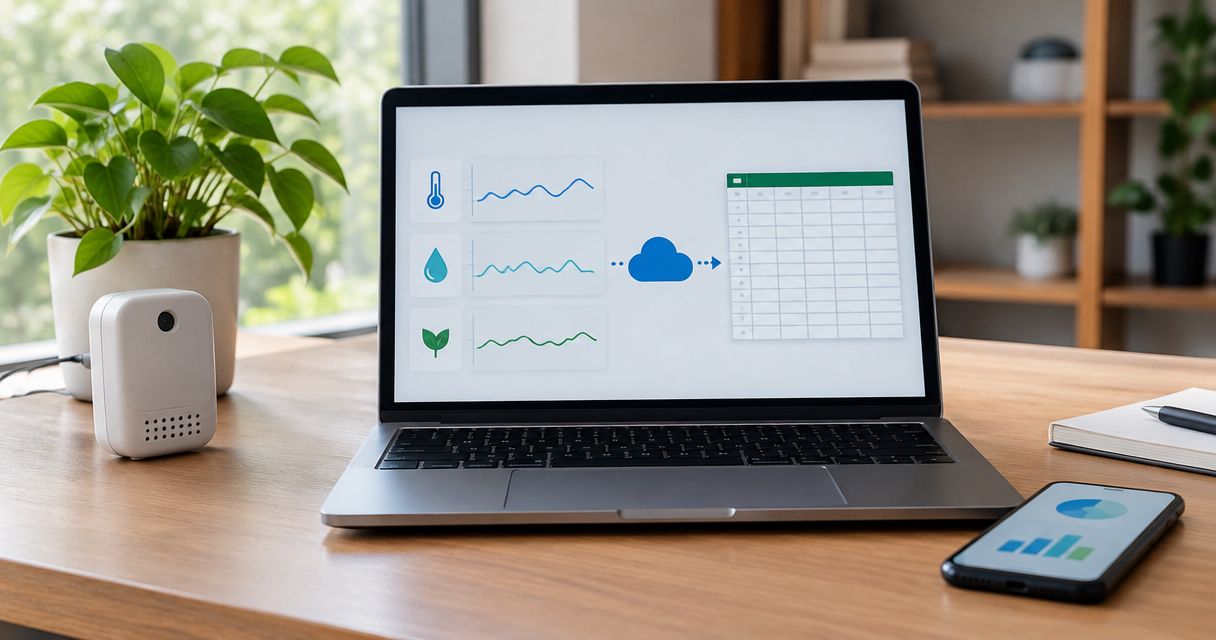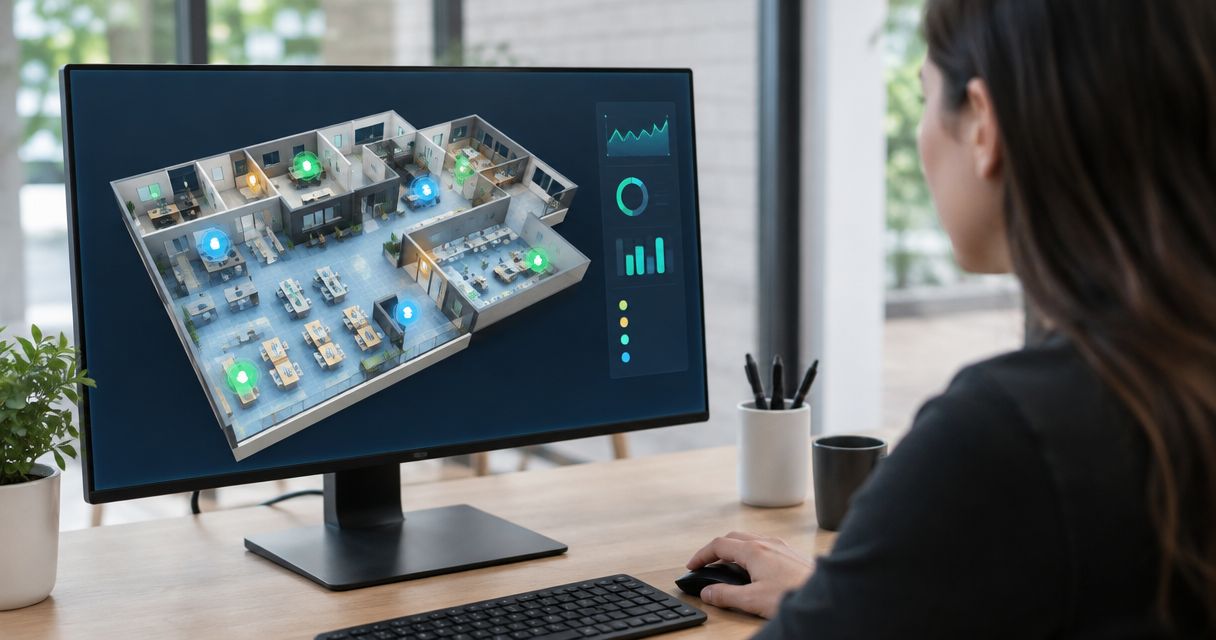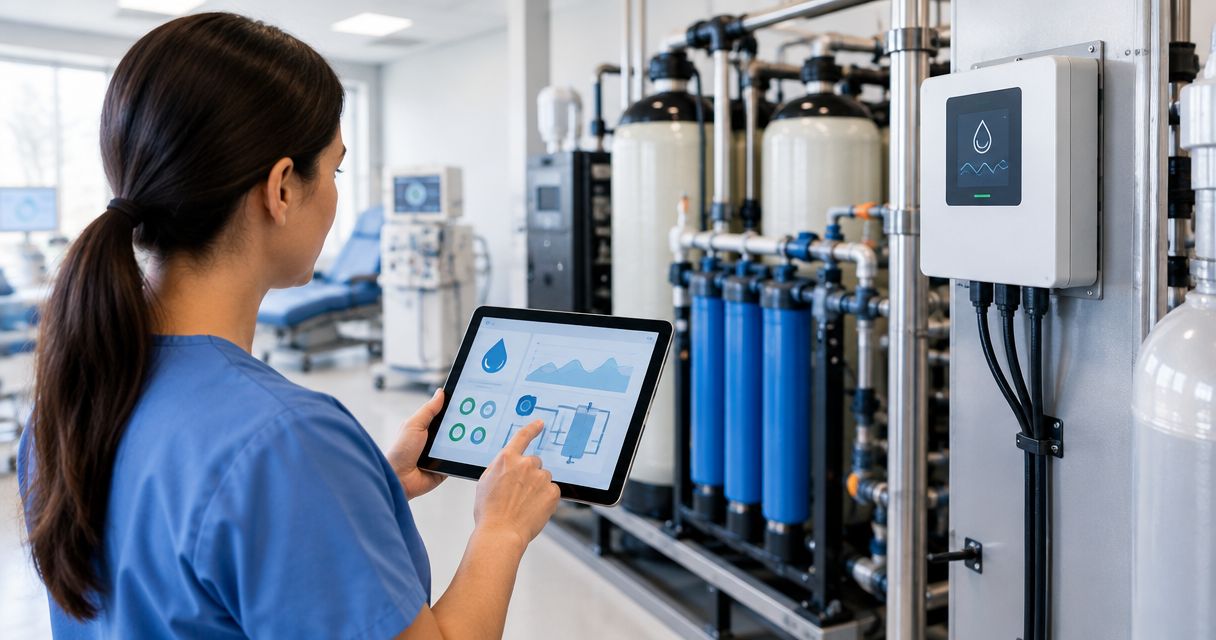
IoT monitoring for dialysis center water treatment applies continuous sensors and automated alarms to the reverse osmosis skid, carbon tanks, and distribution loop that feed dialysis machines, so a biomedical technician or facilities lead sees chlorine breakthrough, conductivity drift, or a stalled loop within minutes instead of at the next scheduled rounds. Independent dialysis centers and hospital-based dialysis units need this specifically because a water treatment failure reaches a patient in hours, and CMS Conditions for Coverage hold the facility accountable for the testing record, not just the treatment.
- IoT monitoring for dialysis center water treatment tracks RO product water conductivity, chlorine/chloramine breakthrough, and loop temperature continuously, not on a weekly grab-sample schedule.
- AAMI/ISO 23500-3 sets bacteria and endotoxin limits (100 CFU/mL and 0.25 EU/mL maximum) that a sensor-fed dashboard can trend against in real time.
- The Kilo IoT Platform turns those thresholds into CEL-based rules that escalate by SMS, email or push when water quality drifts outside range.
- Manual test strips still matter for chemical confirmation, but they cannot catch a Saturday-afternoon chloramine breakthrough the way a continuous sensor can.
Why does water treatment monitoring matter in dialysis centers?
A hemodialysis patient is exposed to roughly 120 liters of water per treatment, far more than anyone drinks in a week, and that water crosses the dialyzer membrane directly into the bloodstream. Chloramine that a municipal utility adds for disinfection is safe to drink but causes hemolytic anemia in dialysis patients if the carbon tanks stop removing it. AAMI RD52/ISO 13959 sets the chemical contaminant limit for chloramine at 0.1 mg/L specifically because of that risk.
CMS Conditions for Coverage (42 CFR 494.40) require ESRD facilities to test and document water treatment performance, and surveyors ask for the logs during inspection. A platform like the Kilo IoT Platform turns that documentation requirement into a byproduct of monitoring instead of a separate paperwork task — every reading, alarm, and rule change lands in a timestamped history automatically.
Most centers still run water quality on a testing calendar: chlorine strips at shift start, conductivity checked during morning rounds, bacteria and endotoxin samples sent to a lab monthly or quarterly per AAMI guidance. That schedule catches slow drift. It does not catch a carbon tank exhausting on a Friday night before a Saturday morning shift, which is exactly when breakthrough events happen most often because nobody is standing at the panel.
“Chloramine breakthrough doesn't wait for the Monday morning grab sample.”
How do you set up IoT monitoring for a dialysis water treatment system?
The water treatment train in most centers runs pretreatment, carbon filtration, reverse osmosis, and a distribution loop back to the treatment stations. Each stage has a different failure mode, so each one needs its own sensor point and its own threshold, not one generic "water quality" alarm.
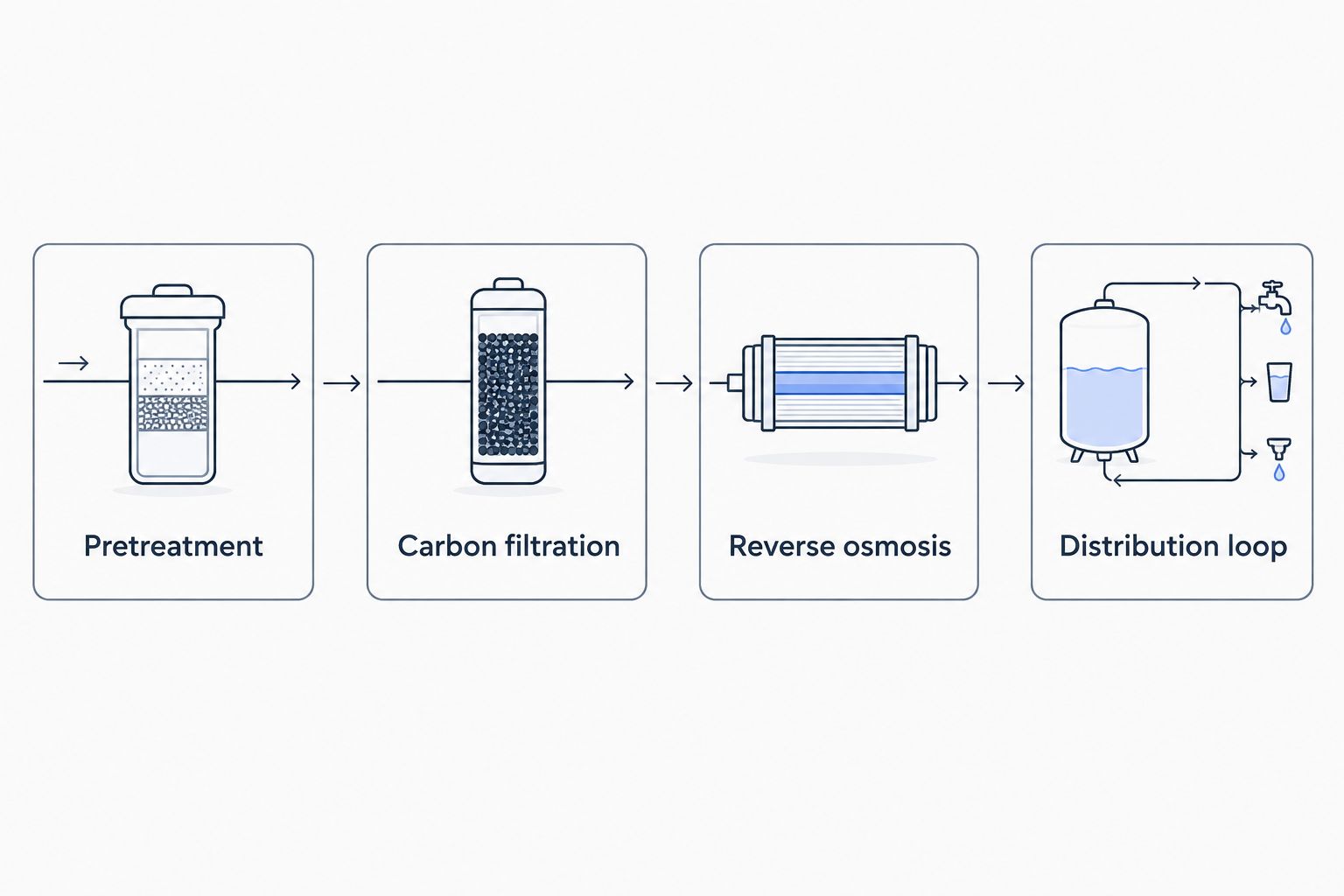
Monitor RO product water conductivity continuously
Conductivity is the fastest signal that the RO membrane is fouling or that a seal has failed, because it moves before a lab-confirmed contaminant test would.
- Log product water conductivity in-line, not by dipping a handheld meter during rounds
- Set a threshold rule against your facility's baseline, since "acceptable" varies by feed water
- Trend the value over weeks to catch slow membrane degradation before it fails a spot check
- Compare conductivity against reject/concentrate flow to separate a membrane problem from a flow problem
Track chlorine and chloramine breakthrough after the carbon tanks
This is the single highest-consequence point in the whole system, because chloramine breakthrough is a direct patient safety event, not a maintenance nuisance.
- Test free chlorine and total chlorine downstream of the carbon tanks at least every four hours per AAMI guidance, more often during high-usage periods
- Add a continuous chlorine/chloramine sensor where budget allows so breakthrough triggers an alarm the moment it happens, not at the next scheduled check
- Track carbon tank run hours or gallons treated against manufacturer breakthrough curves so replacement happens on data, not on a fixed calendar
- Keep a documented backup plan (second carbon tank in series, or a hold on treatment) for when a breakthrough alarm fires outside clinic hours
Watch pressure differential across filters and the RO membrane
Rising differential pressure across a sediment filter or the RO membrane housing is the earliest sign of fouling, well before flow drops enough for staff to notice by hand.
- Install pressure sensors before and after each filter stage and calculate the differential automatically
- Set a rising-trend alarm, not just a fixed ceiling, since a slow climb over three weeks is as informative as a sudden spike
- Log pump discharge pressure alongside differential pressure to separate a filter problem from a pump problem
- Compare readings across sister sites if you run more than one center, since a filter that fails at 15 psi differential in one building may run fine longer at another with cleaner feed water
Monitor distribution loop temperature and flow
A stagnant loop or a warm dead-leg is where biofilm builds, and biofilm is what drives bacteria and endotoxin counts past the AAMI action level of 50 CFU/mL.
- Track loop return flow continuously so a drop that signals a closed valve or a dead-leg gets caught fast
- Log loop temperature at the point of use and at the return, since cooling along a long loop points to insulation or flow issues
- Flag any period where the loop sits below turnover velocity long enough to risk biofilm growth
- Correlate flow drops with your periodic bacteria and endotoxin lab results to see whether flow problems precede quality problems
Automate alarm escalation instead of relying on rounds
A sensor reading nobody sees at 2 a.m. is not a monitoring system, it is a data logger. The value is in getting the right person notified before the shift starts, not after.
- Define severity tiers so a slow conductivity drift and a chloramine breakthrough don't ring the same phone the same way
- Route the highest tier to more than one person, since a single point of failure in the notification chain defeats the purpose
- Confirm delivery, not just that a rule fired, so an SMS that never arrived doesn't sit as a silent gap
- Keep an escalation chain that steps up if nobody acknowledges the first alert within a set window
The Kilo IoT Platform builds these as visual rules with CEL expressions and version control, and ships alarms across five severity tiers with multi-step escalation over email, SMS and push, plus a centralized inbox so nothing gets lost in someone's personal phone. For teams that want alerts organized by threshold before building anything custom, setting up SMS and email alerts for critical sensor thresholds covers the escalation-chain pattern in more detail.
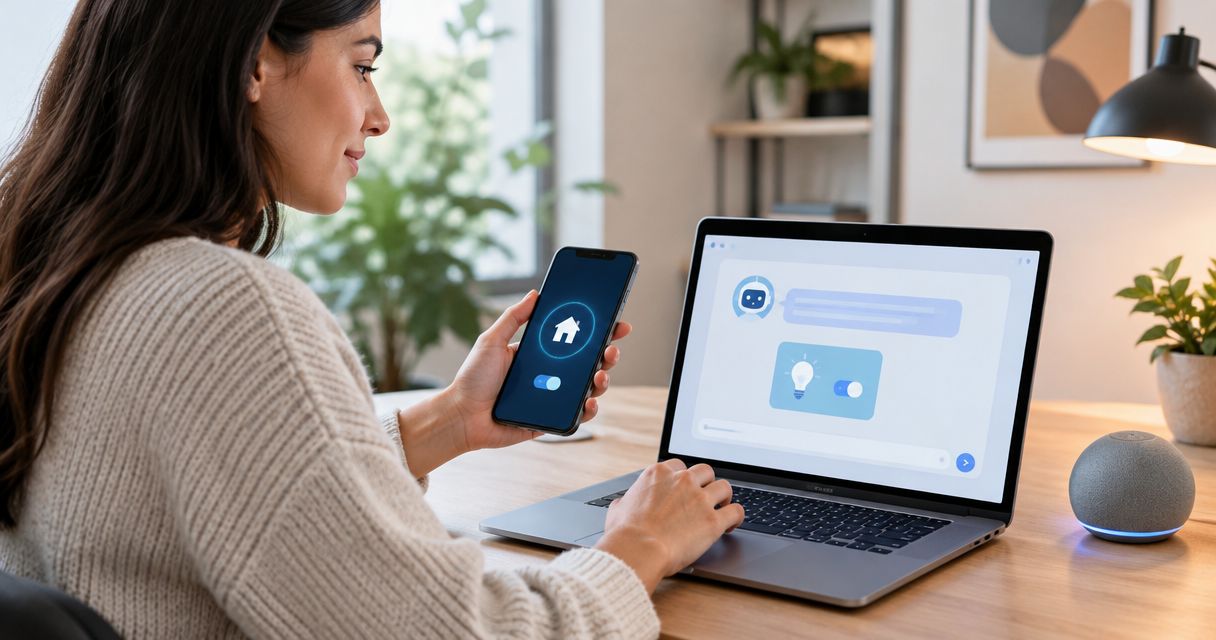
Let the AI assistant build and adjust the rules
Writing a CEL rule for four separate sensor types across pretreatment, carbon, RO, and loop stages is exactly the kind of task that used to require an integrator on retainer.
- Describe the threshold in plain language — "alert me if chlorine after the carbon tanks goes above 0.1 mg/L" — and let the assistant draft the rule
- Review the rule before it deploys, since the assistant confirms consequential changes rather than pushing them silently
- Ask it to adjust an existing rule when your feed water chemistry changes seasonally, instead of rebuilding from scratch
- Use it to onboard a new sensor and bind it to the right dashboard widget without a manual configuration pass
Kilo's built-in assistant operates within the signed-in user's permissions, so a technician's access doesn't expand just because they're talking to it instead of clicking through menus.
Keep an audit trail for AAMI and CMS documentation
Surveyors don't just want to know the water was fine. They want to see when it was checked, who set the threshold, and what happened when it drifted.
- Keep sensor history and alarm history together, tied to the same timestamp
- Version-control your alarm rules so you can show when a threshold was last changed and why
- Export readings and alarm logs in a format that maps to your existing AAMI/CMS documentation template
- Restrict who can edit thresholds using role-based permissions, so the record of "who changed what" stays clean
Sensors compatible with MQTT or LoRaWAN for conductivity, temperature, and pressure differential are available worldwide through Kilo Electronics, Kilo's hardware sister company, if your current skid doesn't already output a usable signal.
What are the options for monitoring dialysis center water treatment systems?
| Option | Best for | Key limitation |
|---|---|---|
| Manual test strips and paper logs | Small single-station centers meeting minimum AAMI testing frequency | No continuous trend, no after-hours alert, and prone to gaps when staffing is tight |
| Built-in RO skid alarms | Catching gross failures at the skid itself (low pressure, membrane fault) | Rarely covers the full train — loop, carbon breakthrough, and pretreatment often sit outside its scope |
| Building automation system (BAS) integration | Centers that already have a BAS wired into other building systems | Water-specific thresholds and healthcare documentation needs often require custom configuration a BAS wasn't built for |
| Wireless IoT monitoring platform | Multi-point coverage across pretreatment, carbon, RO, and loop with off-hours escalation | Needs sensor installation and a monitoring budget line, which smaller centers weigh against staffing costs |
Common mistakes dialysis centers make monitoring water treatment
- Testing chlorine only during business hours. Breakthrough on a weekend or overnight goes undetected until the next shift walks in.
- Treating one lab sample as proof of ongoing quality. A quarterly endotoxin test tells you the water was fine on that day, not that it's fine on the other 89.
- Ignoring a slow pressure differential climb. Staff notice a filter failure when flow visibly drops, which is often weeks after the trend started.
- No documented escalation path for after-hours alarms. An alert that goes to one person's phone, with no backup, is a single point of failure in a patient safety system.
- Treating the audit trail as a separate task from monitoring. Logs built after the fact for a survey are harder to trust than logs generated automatically as readings come in.
FAQ
What is IoT monitoring for dialysis center water treatment?
It's the use of continuous sensors on the RO system, carbon tanks, and distribution loop to track conductivity, chlorine/chloramine, pressure, and flow, with automated alarms replacing or supplementing manual test rounds. It gives facilities teams a real-time view instead of a snapshot from the last scheduled check.
What water quality standard applies to dialysis water treatment?
AAMI RD52/ISO 13959 and ISO 23500-3 set the chemical, bacteria, and endotoxin limits for water used in hemodialysis, including a maximum bacteria level of 100 CFU/mL and a maximum endotoxin level of 0.25 EU/mL. CMS Conditions for Coverage (42 CFR 494.40) require facilities to test against these limits and keep records.
How often should dialysis water be tested for chlorine and chloramine?
AAMI guidance calls for testing free and total chlorine downstream of the carbon tanks at least every four hours during operation. A continuous sensor tied to an alarm rule catches breakthrough between those checks instead of waiting for the next test.
Can IoT sensors replace lab testing for bacteria and endotoxin in dialysis water?
No. Continuous sensors track conductivity, temperature, pressure, and flow as leading indicators, but bacteria and endotoxin counts still require periodic lab sampling per AAMI/ISO 23500-3. Sensor trends help you catch conditions that lead to bacterial growth before the next lab result comes back.
What causes chloramine breakthrough in a dialysis water treatment system?
Chloramine breakthrough happens when the carbon tanks reach the end of their adsorption capacity and stop removing chloramine from the municipal feed water. It's driven by total gallons treated and feed water chloramine concentration, which is why tracking run hours or throughput against manufacturer curves matters more than a fixed replacement calendar.
Does an IoT monitoring platform help with CMS survey documentation?
Yes, if it keeps sensor readings and alarm history together with timestamps and rule version history, since that's what CMS surveyors ask to see under Conditions for Coverage. A platform that generates this record automatically removes the separate paperwork step most centers currently run by hand.
What sensors are needed to monitor a dialysis water treatment system?
A full setup covers conductivity at the RO product water outlet, pressure sensors before and after each filter stage for differential calculations, temperature and flow sensors on the distribution loop, and ideally a continuous chlorine/chloramine sensor downstream of the carbon tanks. Compatible sensors are available through Kilo Electronics for centers that need to add sensing to an existing skid.
Is a wireless IoT platform better than a building automation system for dialysis water monitoring?
A BAS covers general building systems well but usually needs custom configuration to handle healthcare-specific thresholds and documentation. A wireless IoT platform built around configurable rules and alarm escalation, like the Kilo IoT Platform, is often faster to set up for the specific thresholds AAMI and CMS require.
See dialysis water alarms in Kilo
Build a threshold rule for conductivity or chloramine and watch it escalate.
What's the single biggest blind spot in dialysis water treatment monitoring?
Most centers put their monitoring effort into the test they're required to log, not the failure mode most likely to hurt someone. Chloramine breakthrough is a chemical event that can happen between two scheduled checks, and 2026 CMS survey cycles still find centers relying on a fixed testing calendar with no continuous backstop. The fix isn't testing more often on a fixed schedule — it's putting a sensor and an escalation rule on the one point in the train where an undetected failure reaches a patient fastest.