Water towers don't fail quietly. A stuck float switch or a radar sensor that loses power reports a flat line for hours before anyone notices the tank ran dry or overflowed onto a parking lot. This guide covers what to look for in tank level monitoring for water towers and municipal utilities, and which setup fits your system size.
- LoRaWAN ultrasonic sensors are the standard for tank level monitoring water towers in 2026 — buy for 1-10 tank systems.
- Mioty or cellular fallback wins for spread-out rural utilities where a single LoRaWAN gateway can't reach every tower.
- Skip WiFi-based consumer sensors for elevated tanks — they lose signal past 100-200 feet and drain fast outdoors.
- A digital twin dashboard is worth it once a utility runs 5+ tanks or lift stations across a service area.
Why this matters
A missed low-level alarm on an elevated tank means a fire hydrant runs dry during an actual fire call. A missed high-level alarm means overflow, wasted treated water, and a cleanup crew on a Saturday. Most municipal systems still run on manual gauge checks or SCADA that only covers the plant, not the remote tower five miles out of town.
An IoT platform for utility companies closes that gap by putting a sensor on the tank itself and pushing readings to a dashboard whether or not the tower has a phone line or fiber run to it. That's the entire pitch for tank level monitoring water towers in 2026 — visibility at the asset, not just at the plant.
Who this is for
This is for water utility operators, public works directors, and rural water district managers responsible for elevated or ground-level storage tanks, especially where towers sit outside cell coverage or too far from the treatment plant for a hardwired SCADA tie-in. If your system runs 1 to 50+ tanks and your current method is a paper log or a manual drive-by check, the criteria below apply directly.
What to look for in tank level monitoring for water towers
Read frequency and alarm latency
A sensor that reports once a day is useless for overflow prevention — by the time the reading lands, the tank has already spilled. Look for platforms that support configurable intervals down to 5-15 minutes, with alarm rules that fire on threshold crossing, not just on the next scheduled read. If the level sensor doesn't wake up and report within 15 minutes of a rapid drop, the alarm arrives after the tank's already dry.
Connectivity range for remote sites
Most water towers sit at the edge of town, sometimes outside cell coverage entirely. LoRaWAN covers 5-10 miles line-of-sight from a single gateway, which handles the majority of municipal footprints. Systems spread across a larger rural district need mioty for its longer link budget and higher device density per gateway, or cellular as a fallback where no private network makes sense.
Power and battery life
Towers aren't wired for power at the sensor mount point, so battery life decides how often a crew has to climb the ladder. A LoRaWAN ultrasonic or radar sensor reporting every 15 minutes typically runs 5-10 years on a single battery pack — daily readings can stretch that further. Anything requiring line power at the sensor defeats the purpose on a remote tower.
Alarm and rules logic
A flat threshold alarm (below 20%) catches slow drains but misses fast ones. You want a rules engine that can flag rate-of-change — a tank losing 10% in an hour reads differently than one losing 10% over a week, and only one of those is a burst main. Configurable high/low/rate alarms routed to the right on-call person by text or email matter more than the sensor spec sheet.
Multi-tower dashboard view
A single tank is easy to watch on a gauge. A district running eight elevated tanks and three ground storage tanks needs one screen showing all of them, not eight separate logins. A digital twin view — the physical layout mapped to live data — cuts the time it takes an operator to spot the one tank that's behaving differently from the rest.
Integration with existing SCADA
Most utilities already run SCADA at the treatment plant. A tank monitoring platform that pushes data via API or MQTT into that existing historian avoids building a second system operators have to check separately — it extends the one they already trust.
“If the level sensor doesn't wake up and report within 15 minutes of a rapid drop, the alarm arrives after the tank's already dry.”
Top picks for different utility profiles
The straightforward pick — single-tower LoRaWAN setup. One elevated tank, one ultrasonic level sensor, 15-minute read interval, LoRaWAN gateway mounted at the treatment plant or town hall. Fits systems with 1-3 tanks inside a 5-mile radius of a gateway. Buy for small municipal systems and rural water districts just getting off manual gauge checks.
The scale pick — multi-tower dashboard. Once a utility runs 5+ tanks or lift stations, the value shifts from any single sensor to the view across all of them. A private LoRaWAN network server covering the whole service area, paired with a digital twin dashboard, lets one operator scan every tower's status in one screen instead of logging into separate systems per site. Buy for county-level water authorities and multi-town districts.
The remote coverage pick — mioty or cellular fallback. Districts spread across 20+ miles with towers outside any single gateway's range need either a mioty deployment for its longer link budget and higher device density, or cellular as a straightforward fallback where building a private network doesn't pencil out for one or two remote sites. Consider for rural districts with towers more than 10 miles apart.
The SCADA-integrated pick — API-first monitoring. Utilities with an existing SCADA historian want tank data flowing into that system, not a second dashboard nobody checks. Pushing sensor reads via API or MQTT into the plant's existing SCADA keeps operators in one interface. Consider for utilities with mature SCADA already in place and IT staff to manage the integration.
The cross-utility pick — tanks beyond just water. Municipalities running backup generator fuel tanks alongside water towers sometimes look for one vendor to cover both. The setup for fuel level differs from water level on the sensor side — see the tank level monitoring system for fuel distributors guide for that side of the deployment. Consider if fuel tank visibility is part of the same procurement.
What to avoid
- Consumer WiFi leak sensors marketed for tanks. They're built for indoor use, lose signal past 100-200 feet, and drain their battery in weeks outdoors. Fine for a basement sump pump, wrong for a 100-foot elevated tower.
- Cellular-only sensors with no local fallback. A single carrier outage during a storm — exactly when you need the alarm most — takes the whole monitoring layer down with it.
- Platforms with fixed daily reporting and no rules engine. A daily average reading tells you the tank drained sometime yesterday. It doesn't tell you it happened at 2am during a main break.
Verdict comparison
| Setup | Best for | Read interval | Verdict |
|---|---|---|---|
| Single-tower LoRaWAN | 1-3 tanks, one town | 15 min | Buy |
| Multi-tower dashboard | 5+ tanks, one district | 15 min | Buy |
| Mioty / cellular fallback | Spread-out rural system | 15-30 min | Consider |
| SCADA-integrated API feed | Utilities with existing SCADA | 15 min | Consider |
| Cross-utility (fuel + water) | Combined tank procurement | Varies | Consider |
See the platform behind these picks
Check how Kilo IoT handles multi-tower dashboards and alarms.
FAQ
What's the best tank level monitoring system for water towers in 2026?
For most municipal systems, a LoRaWAN ultrasonic sensor reporting every 15 minutes into a rules-driven dashboard is the standard setup in 2026. Utilities with 5 or more tanks get more value from a multi-site dashboard than from any single sensor spec.
How does LoRaWAN tank level monitoring work for water towers?
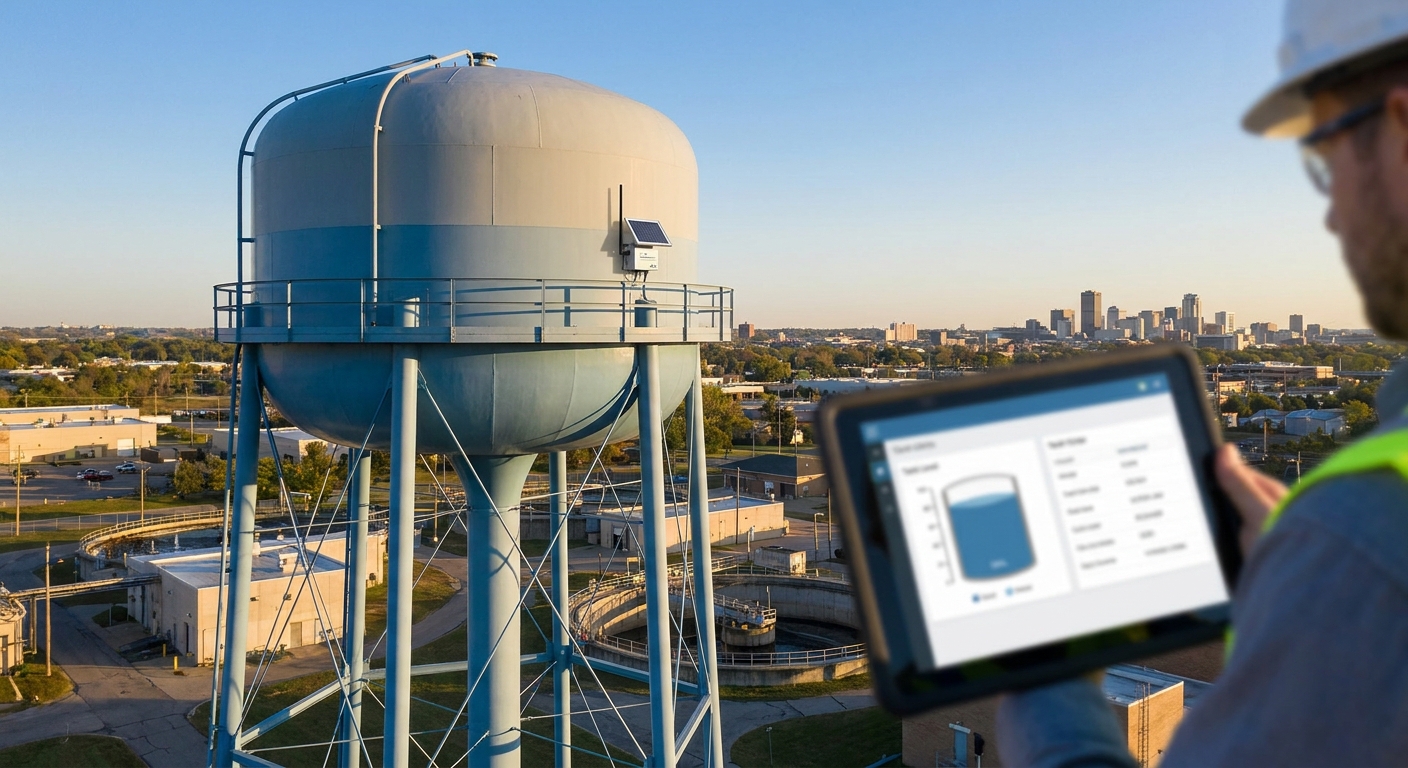
A level sensor mounted at the top or side of the tank measures distance to the water surface and transmits over LoRaWAN to a gateway, typically covering 5-10 miles line-of-sight. The gateway forwards readings to a cloud platform where rules and alarms trigger on threshold or rate-of-change.
Is cellular or LoRaWAN better for water tower monitoring?
LoRaWAN wins on battery life and covers most municipal footprints from one gateway at lower ongoing cost. Cellular makes sense for one or two isolated towers where building a private network doesn't justify the cost.
How often should water tower level readings update?
Every 15 minutes is the practical baseline for overflow and low-level alarms. Faster intervals shorten battery life; slower intervals delay alarm response on fast-draining events like a burst main.
Can tank level monitoring integrate with existing SCADA?
Yes, most modern IoT tank monitoring platforms push readings via API or MQTT into an existing SCADA historian, so operators keep one interface instead of running a second dashboard.
What sensor type works best for elevated water towers?
Ultrasonic and radar level sensors mounted at the tank top are the standard choice, since they avoid contact with the water and hold up outdoors for years without maintenance.
How long do battery-powered tank level sensors last?
Typically 5 to 10 years on a 15-minute read interval, depending on sensor model and radio conditions. Longer intervals or hourly reporting extend that further.
Does mioty make sense for municipal tank monitoring?
Mioty fits districts with towers spread far apart or with a high density of sensors per site, since it offers a longer link budget than standard LoRaWAN. Most single-town systems don't need it.
One last thing
The biggest gap isn't the sensor — it's the alarm routing. A tank that drops 15% in 20 minutes and pages a text to the wrong on-call rotation is functionally the same as no alarm at all. Test the escalation path before you test the sensor accuracy.