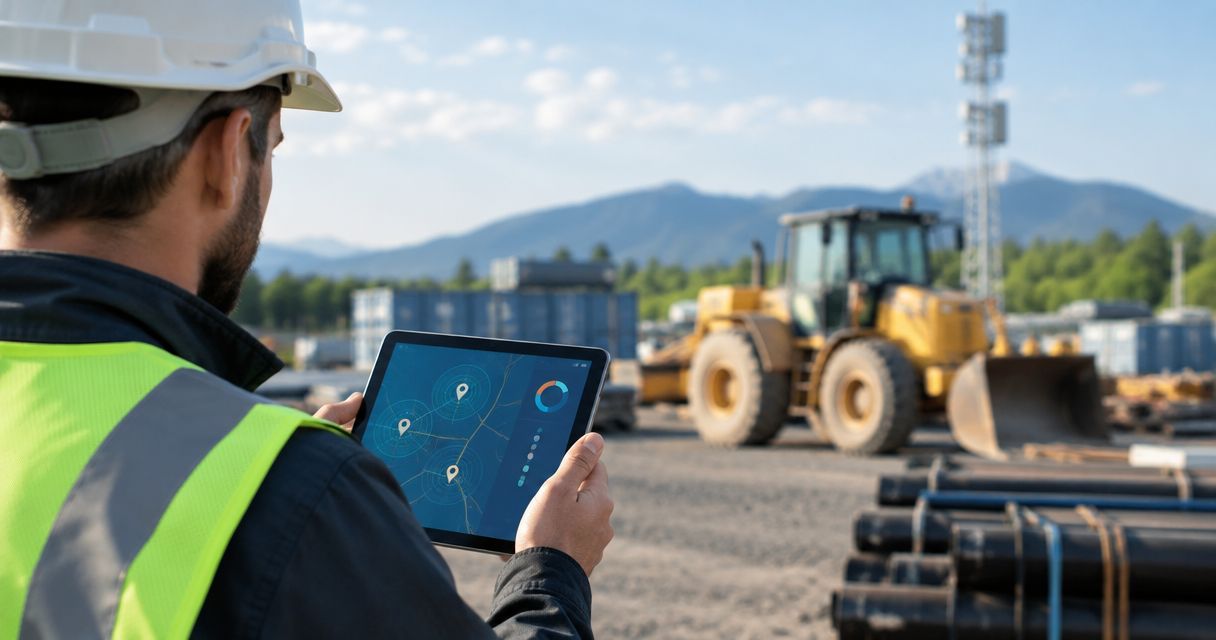
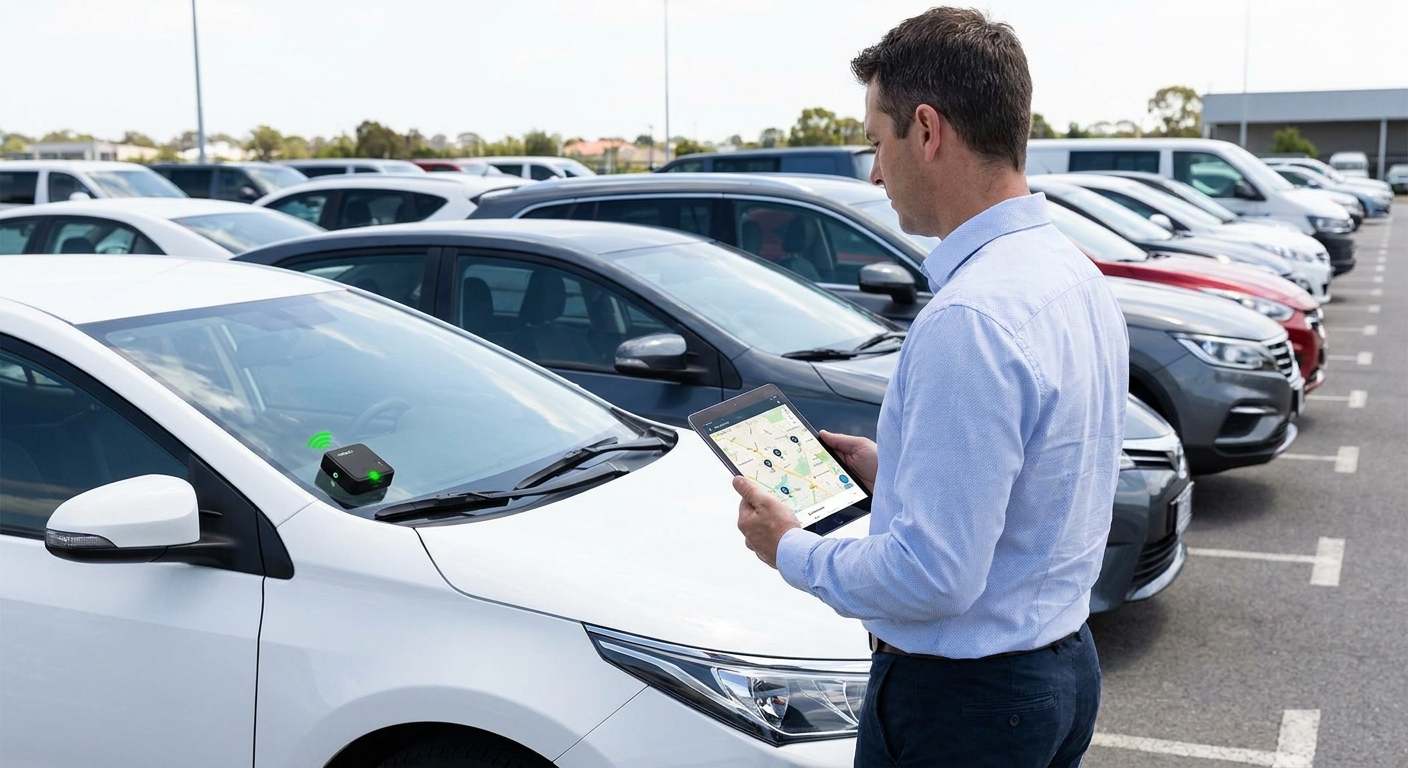
Car rental and leasing fleets lose money in three predictable ways: vehicles nobody can locate on a 2,000-space lot, units that sit idle for days between rentals, and utilization reports built from a spreadsheet that's three days stale. Asset tracking IoT for car rental fleets fixes this only if you pick connectivity and alarm logic built for vehicles that move, not sensors built for a warehouse that doesn't.
- Kilo IoT's asset tracking platform for logistics fleets is the buy for fleet-wide utilization tracking in 2026.
- Lot-level return tracking needs geofencing over raw GPS pings — consider a dealership-lot style deployment, not a fleet-wide rollout.
- Refrigerated trailer leasing needs temperature and location in one alarm rule, not two separate systems.
- Skip platforms billing per-SIM with no multi-carrier fallback — roaming vehicles drop coverage more than fixed sites do.
- Asset tracking IoT for car rental fleets pays back fastest through reduced vehicle-search time and lower idle days, not theft prevention alone.
Why this matters
A rental lot running 500 vehicles with a 3-5 day turnover cycle can't run on a checkout board and a lot walk. Every hour a car sits misplaced or an idle unit goes unreported is an hour it's not generating revenue. Leasing companies have the same problem at longer intervals — a leased vehicle out of contact for two weeks looks identical to a stolen one until someone checks.
Asset tracking IoT closes that gap by turning vehicle location and status into a rule, not a manual check. The platform question isn't whether it has a map. It's whether the rules engine can fire an alarm before a manager has to go looking.
Who this is for
This guide is for fleet operations managers, rental branch managers, and leasing portfolio managers running 50 or more vehicles across one or more lots, where vehicle location, idle status, and utilization data currently live in a telematics dashboard, a spreadsheet, or a manager's memory. If your fleet turns over vehicles every few years and needs asset tracking that survives that turnover without rewiring anything, this applies to you directly.
What to look for in asset tracking IoT for car rental fleets
Cellular-first connectivity, not fixed-site wireless
A warehouse sensor network built on LoRaWAN assumes fixed gateways and fixed distances. A rental vehicle doesn't stay in range of anything — it leaves the lot, crosses cities, sometimes crosses state lines. Cellular IoT connectivity built for mobile asset tracking matters more here than any sensor spec, because the connection has to travel with the vehicle, not wait for it to come home.
Geofencing and lot-boundary alarms
A map that shows where a vehicle is right now is a lookup tool. A geofence that fires an alarm when a vehicle leaves a return lot without a checkout record is a control. For rental operations, the geofence boundary should map to actual lot layout, not a rough radius around a GPS pin.
Idle time and utilization rules, not just a map
Rental and leasing margins live in utilization percentage. A vehicle idle for more than a set number of days between rentals is lost revenue that a location map alone won't surface — you need a rule that flags it. This is the difference between asset tracking as a locator and asset tracking as an operations tool.
Multi-carrier failover for cross-border and rural routes
Leasing fleets moving across regions or borders hit carrier gaps that a single-SIM tracker can't cover. A platform that fails over between carriers automatically keeps location data flowing through the exact stretches of highway where a single-carrier device goes dark.
Rules and alarms that plug into what you already run
Asset location data is only useful if it reaches the people who act on it — dispatch, branch managers, or a CMMS. A rules engine that can trigger an alert to an existing workflow beats a standalone app that adds one more screen to check.
Top picks for car rental and fleet leasing operators
The fleet-wide pick. Kilo IoT's asset tracking platform for logistics fleets is built around cellular connectivity plus a rules engine that fires idle-vehicle and geofence-exit alarms without a custom build. For a car rental operator running vehicles across multiple lots in 2026, this is the platform to size the deployment around first. Verdict: Buy.
The lot manager's shortcut. IoT asset tracking for vehicle dealership lots is built for exactly the return-lot counting problem rental branches deal with daily — knowing what's on the lot versus what's checked out, without a physical walk. It's narrower than a fleet-wide platform, but for a single high-turnover lot it solves the immediate pain fast. Verdict: Consider for lot-level rollouts, not as the sole fleet-wide system.
The cold-chain add-on. Leasing companies running refrigerated trucks or trailers have a compliance problem a location pin doesn't solve. IoT tracking for refrigerated trailers and reefer trucks combines temperature alarms with location in one rule, so a reefer unit that's both off-route and out of temperature range triggers a single alert instead of two disconnected ones. Verdict: Consider if any portion of the leased fleet is temperature-controlled.
The wildcard. A platform built for rental equipment companies handles similar problems — check-out, check-in, idle detection — but the asset profile assumes stationary equipment, not vehicles covering hundreds of miles a week. It's close enough to look tempting and different enough to underperform on a moving fleet. Verdict: Skip for vehicle-specific rollouts.
See the platform behind the picks
Cellular tracking, geofence alarms, and rules built for moving fleets.
What to avoid
Hardwire-only installations. A tracker that requires cutting into a vehicle's wiring harness looks more "professional" on a spec sheet, but leasing companies rotate vehicles out of the fleet every few years. Reinstalling a hardwired unit on every replacement vehicle adds labor cost that a plug-in or battery unit avoids entirely.
Warehouse-grade sensor kits rebadged as fleet tracking. Some platforms extend a fixed-site LoRaWAN sensor line into "asset tracking" by adding a battery and calling it mobile. Without cellular or multi-carrier fallback, coverage drops the moment the vehicle leaves the gateway's range — which, for a rental car, is the entire point of the trip.
Location-only platforms with no compliance layer. Vehicle location data solves half the operations problem. It doesn't solve the other half: knowing which vehicle in the fleet is due for its next mandatory inspection. That's a separate scheduling discipline, and organizing fleet inspections across a leasing portfolio needs to sit alongside asset tracking data, not replace it. A platform that treats compliance as an afterthought leaves that gap for someone to manage manually.
Verdict comparison
| Pick | Best for | Connectivity | Key alarm | Verdict |
|---|---|---|---|---|
| Kilo IoT asset tracking for logistics fleets | Fleet-wide rollout | Cellular, multi-carrier | Idle-vehicle, geofence-exit | Buy |
| IoT asset tracking for dealership lots | Single lot / return yard | Cellular | Lot-boundary exit | Consider |
| IoT tracking for reefer trucks and trailers | Temperature-controlled units | Cellular | Temp + location combined | Consider |
| Rental equipment platform (repurposed) | Stationary equipment fleets | Varies | Check-out/check-in | Skip |
FAQ
What is asset tracking IoT for car rental fleets?
It's a cellular-connected tracking system paired with rules and alarms that flags idle vehicles, geofence exits, and utilization gaps automatically, instead of relying on manual lot checks. For rental and leasing operators in 2026, the value is in the alarm logic, not just the map.
Is LoRaWAN good enough for tracking rental vehicles?
No, not on its own. LoRaWAN works for fixed sites within gateway range, but rental vehicles leave that range constantly, so cellular connectivity with multi-carrier fallback is the baseline requirement for moving fleets.
How much does asset tracking IoT cost for a rental fleet?
Cost varies by fleet size, connectivity plan, and hardware choice — get current pricing directly from the platform rather than relying on a general estimate, since per-vehicle SIM and hardware costs shift by carrier and region.
Can asset tracking IoT replace a telematics system?
It can overlap with basic telematics but isn't a full replacement for diagnostics-focused telematics platforms. Asset tracking IoT focuses on location, idle status, and rule-based alarms rather than engine diagnostics or driver behavior scoring.
Does asset tracking IoT help with vehicle inspection compliance?
Location and utilization tracking doesn't automatically manage inspection schedules — that's a separate workflow leasing fleets still have to run alongside asset tracking data.
What's the biggest mistake fleets make when picking asset tracking IoT?
Choosing a platform built for fixed-site sensors and expecting it to perform on moving vehicles. Coverage gaps show up the moment a vehicle leaves the original gateway's range.
How fast should an idle-vehicle alarm fire?
Most rental operations set idle alarms between several hours and a few days depending on lot size and turnover speed — the threshold should match how fast a manager can actually act on the alert, not an arbitrary default.
Is multi-carrier failover worth the extra cost?
Yes, for any fleet crossing rural routes, state lines, or borders. A single-carrier device that drops signal for even part of a route leaves a location gap exactly when the vehicle is hardest to track manually.
One last thing
The number that changes minds fastest isn't location accuracy — it's idle days. A rental fleet that cuts average idle time by even a few days per vehicle per month recovers more revenue than most theft-prevention features ever will, because idle time is a daily leak, not a rare event. Set the idle-alarm threshold first. Everything else in the deployment is secondary to that one rule.