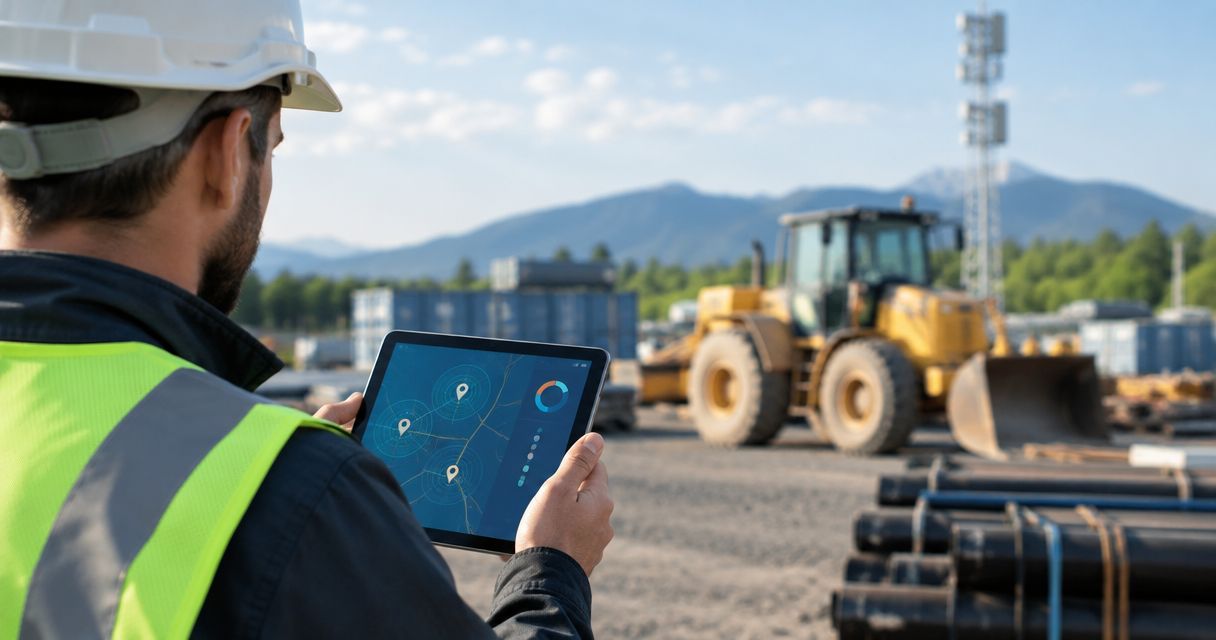
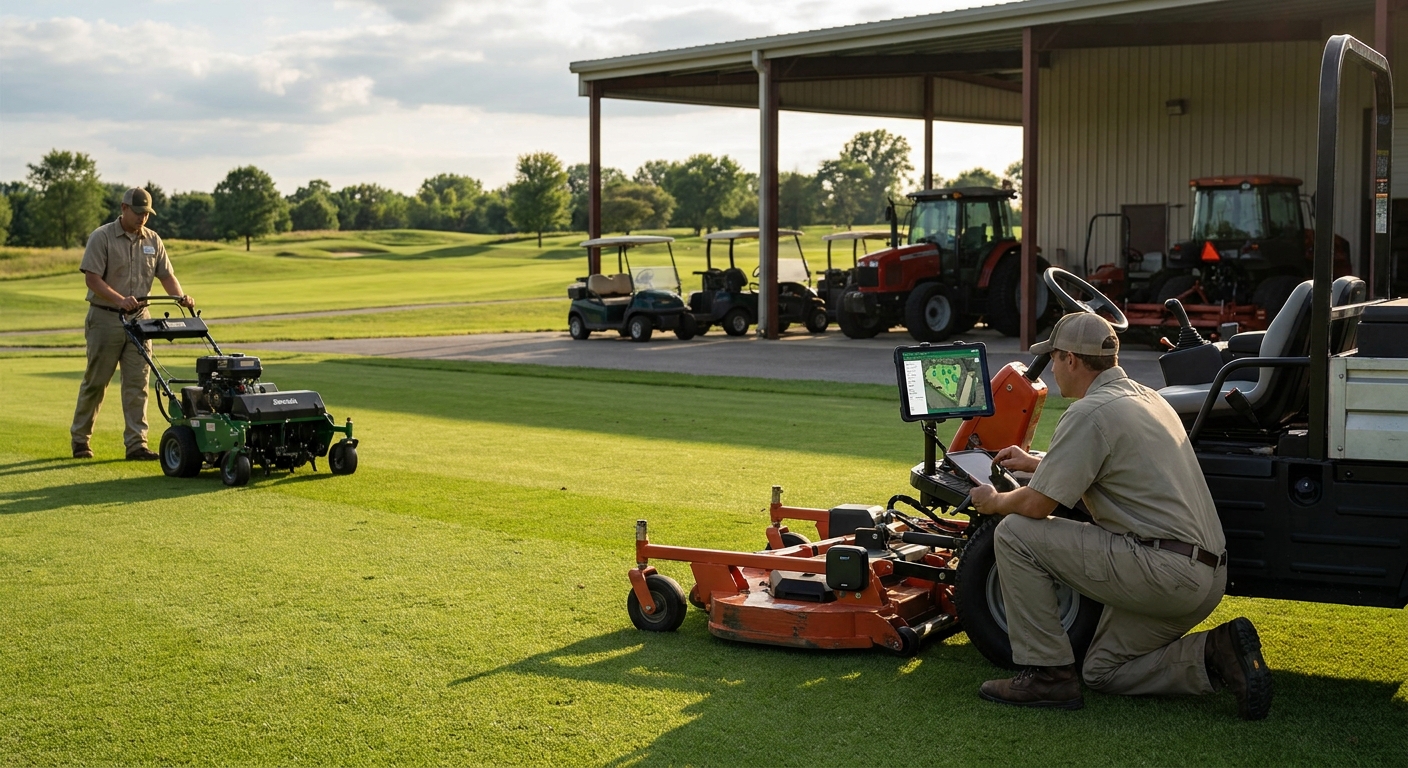
A golf course loses equipment the same way it loses balls in the water — carts roll off cart paths into the rough, mowers get parked at the far turn overnight, and a trimmer left on a green can walk off with whoever finds it first. Asset tracking IoT for golf course equipment puts a location, a battery reading and an alarm rule on every cart, mower and utility vehicle that leaves the maintenance shop in 2026.
- Asset tracking IoT for golf course equipment needs LoRaWAN range across tree lines, not cellular coverage maps.
- The Kilo IoT Platform's vehicle and tracker connector ships 2,000+ preconfigured templates for carts, mowers and utility rigs.
- Carts, mowers, utility vehicles and hand tools each need different battery life and theft-alert priority.
- Five alarm severity tiers with quiet hours catch a 2 a.m. cart-barn breach without paging staff for every ping.
- A course can pilot free on 5 devices before moving to Starter at 25 EUR per month for 25 devices.
Why golf course equipment needs IoT asset tracking
An 18-hole course is a job site with no fence. Carts get left at the wrong turn, mowers sit overnight past the maintenance building, and hand tools disappear between the shop and hole 14. None of that shows up until inventory day — and by then the unit has been gone for weeks.
Tree canopy, elevation changes and water hazards are exactly the terrain that breaks line-of-sight radio, so coverage maps built for parking lots don't tell you much. What a grounds crew needs is a network built for range under obstruction, one dashboard showing every unit at once, and rules that fire the second something crosses a line it shouldn't. The Kilo IoT Platform runs on a built-in LoRaWAN and mioty network server for that kind of coverage, so there's no separate network server to stand up before the first cart gets tagged.
What to look for in asset tracking IoT for golf course equipment
Range across tree cover and water hazards, not parking lots
A cart barn sits at one end of the property and the 14th tee sits half a mile away through trees. LoRaWAN and mioty are built for that kind of obstructed range — a network designed around parking-lot line-of-sight will drop units the moment they round a tree line.
Battery life that survives a full mowing season outdoors
A tracker that needs a battery swap every six weeks means a technician chasing tags instead of running rules. Outdoor-rated LoRaWAN sensors are built to run for months without service, which matters when the units they're strapped to live outside from March through November.
Engine hours and idle time, not just a dot on a map
A map pin tells you where a mower is parked. It doesn't tell you it's been idling for 40 minutes with the blades disengaged. An MQTT connector pulls engine-hour and status data from equipment telematics or a PLC straight into the same dashboard as the location feed.
After-hours alerts for the cart barn and maintenance yard
A cart that moves at 2 a.m. is either a prank or a theft — either way, someone should know before sunrise. Five alarm severity tiers with multi-step escalation chains route that alert by SMS, email or push, with quiet hours so a low-priority notice doesn't page the superintendent at midnight.
One dashboard for carts, mowers and irrigation equipment together
Switching between three apps to check three equipment categories wastes the ten minutes a crew lead has before the first tee time. Configurable dashboard widgets — map, chart, gauge, floor-plan pins — put carts, mowers and pump equipment on one screen instead of three logins.
Weatherproofing rated for cart-wash bays and sprinkler overspray
A tag rated for a warehouse shelf won't survive a cart wash. Outdoor industrial IoT deployments in extreme weather run through freeze-thaw cycles, direct sun and constant moisture — the same conditions a course sees every season.
What equipment to track first with golf course asset tracking IoT
Golf cart fleet — the highest theft and misuse risk. Carts are the most valuable mobile assets on the property and the easiest to drive off unnoticed. The Kilo IoT Platform's vehicle and tracker connector ships 2,000+ preconfigured templates, which cuts the setup work for tagging an entire fleet at once — the same logic used in IoT asset tracking for rental equipment companies, where every unit needs a location and a usage log from day one. Track first.
Reel and rough mowers — equipment that leaves before sunrise. Mowers roll out of the shop before staff are on-site to watch them, and a stalled unit in the rough can sit unnoticed for hours. Feeding engine-hour data over the MQTT connector into a rule that flags an idle mower past a set threshold catches that gap without anyone walking the course. Track first.
Utility vehicles and sprayers — shared across every crew. These units move between departments all day, so "who has the Gator" is a daily question without a location feed. A geofence around the maintenance yard plus a shared map widget answers it in one glance. Track next.
Hand tools and power equipment — trimmers, blowers, chainsaws. Individually cheap, collectively expensive to replace every season, and the easiest category to lose track of between the shop and the fairway. Track next.
“If every ping is urgent, the crew stops reading pings.”
What mistakes to avoid with golf course equipment IoT asset tracking
- Tracking location only. A dot on a map doesn't tell you a mower has been idling for 40 minutes — that needs engine-hour data and a rule, not just GPS.
- One alert priority for everything. A missing wedge and a missing mower are not the same emergency; escalation chains and five severity tiers exist so they don't page the same person the same way.
- Skipping quiet hours. An alarm inbox with no quiet-hours setting trains staff to ignore notifications, which defeats the alert before it's needed.
- A separate app per equipment type. Checking carts in one tool, mowers in another and pump status in a third means nobody checks all three every morning.
Golf course equipment IoT asset tracking priority table
| Equipment | Location range needed | Battery priority | Theft/misuse risk | Usage tracking | Alert priority |
|---|---|---|---|---|---|
| Golf cart fleet | High (course-wide) | High | High | Medium | High |
| Mowers | High | High | Medium | High | High |
| Utility vehicles | Medium | Medium | Medium | Medium | Medium |
| Hand tools / power equipment | Medium (barn + course) | Medium | High | Low | Medium |
See asset tracking set up on the Kilo IoT Platform
Start free with up to 5 devices, 1 dashboard and 1 rule — no card required.
FAQ
What is the best way to track golf carts with IoT?
Tag each cart with a LoRaWAN tracker and set a geofence around the cart barn and course boundary. Combine that with an escalation rule so an after-hours move triggers an SMS instead of sitting unread in a report.
How much does IoT asset tracking cost for a golf course in 2026?
The Kilo IoT Platform's free tier covers up to 5 devices, 1 dashboard and 1 rule at 0 EUR, no card required, and never expires. Starter runs 25 EUR per month for up to 25 devices, with gateways unlimited on every tier.
Does asset tracking IoT work across tree-covered or hilly parts of a golf course?
Yes — LoRaWAN and mioty are built for long range through obstruction like tree canopy and elevation changes, which is exactly the terrain a golf course presents. A built-in network server means there's no separate server to configure before coverage extends across the property.
Can IoT sensors track engine hours on mowers and utility vehicles?
Yes, through an MQTT connector that pulls engine-hour and status data from equipment telematics or a PLC into the same dashboard as location. That data can feed a rule that flags excessive idle time automatically.
How do you get alerts if a cart leaves the barn after hours?
Set an alarm on the cart-barn geofence with a severity tier high enough to escalate by SMS or push. Multi-step escalation chains and quiet hours settings mean the right person gets paged without every low-priority event doing the same.
What's the difference between GPS tracking and full asset tracking IoT?
GPS tracking gives you a location. Asset tracking IoT adds engine hours, alarms, a dashboard, and rules that act on that location automatically instead of requiring someone to check a map manually.
How many devices can a small course start with for free?
The Kilo IoT Platform's free tier covers up to 5 devices with 1 dashboard and 1 rule, which is enough to pilot a cart fleet or a set of mowers before scaling to a paid plan.
Can an AI assistant set up equipment alarms without engineering help?
Yes — a built-in AI assistant on the Kilo IoT Platform onboards devices, writes and deploys rules, and creates alarms through plain-language conversation, scoped to the signed-in user's permissions and confirming before consequential actions.
How fast can a golf course superintendent set up equipment tracking
Most of the setup work in 2026 isn't wiring sensors — it's writing the rules that decide what counts as an alarm. The built-in AI assistant on the Kilo IoT Platform handles that part directly: describe the rule in plain language ("alert me if a cart crosses the maintenance yard boundary after 9 p.m."), and it drafts and deploys the rule, scoped to whatever permissions the signed-in user already has. It confirms before anything consequential goes live, so a crew lead isn't debugging a rules engine between tee times.