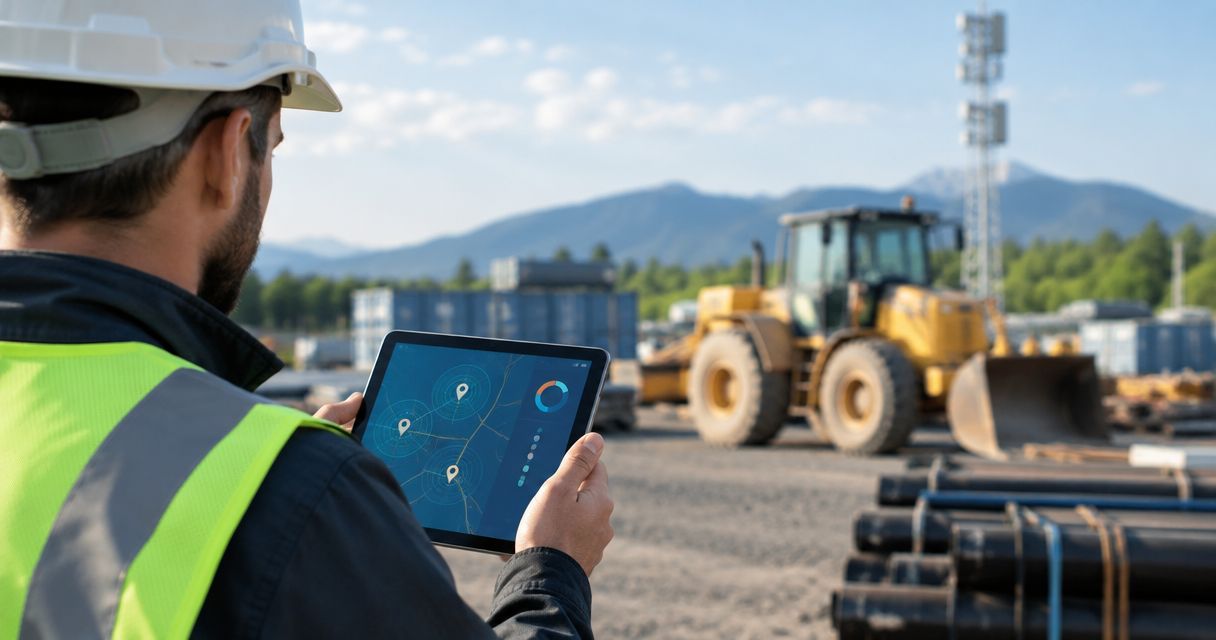
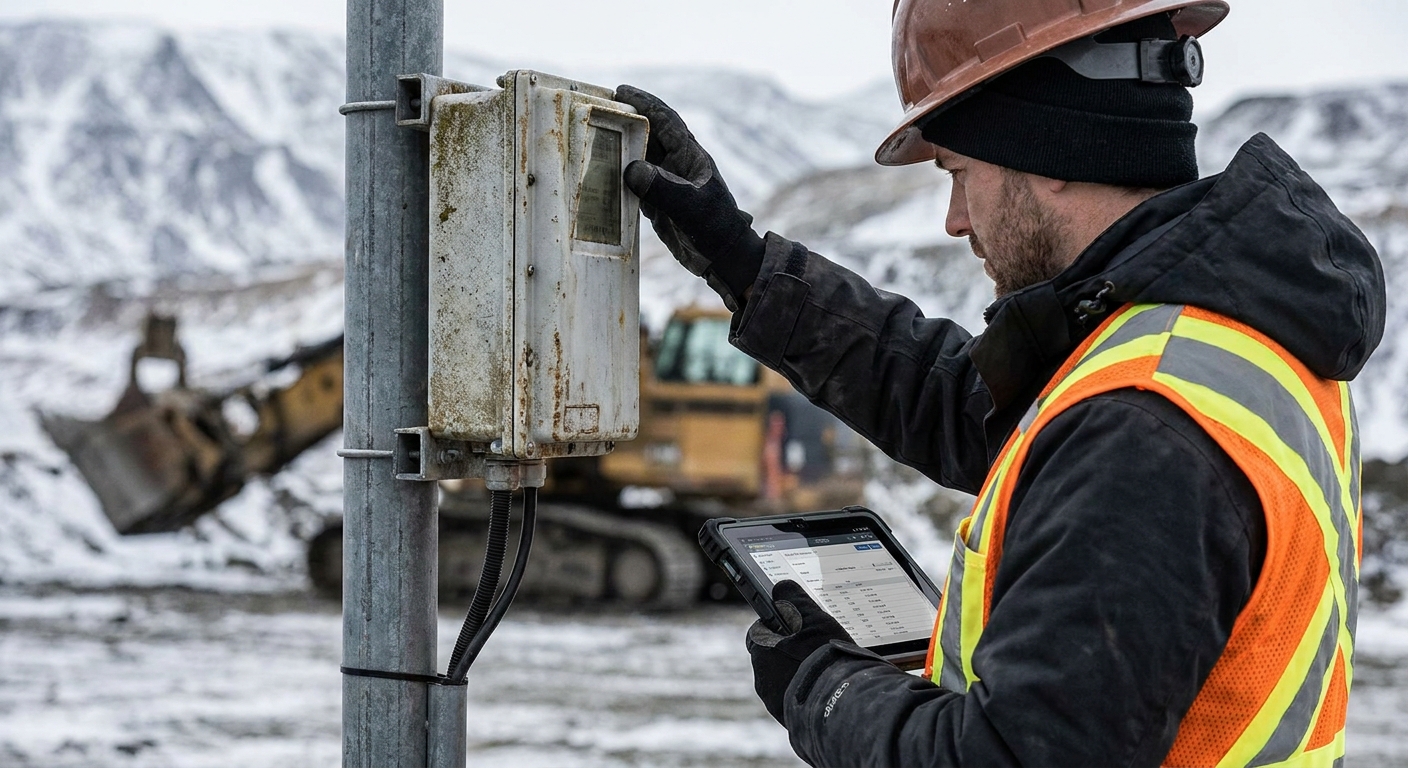
Outdoor sensors fail in extreme weather for predictable reasons: enclosures crack under UV, batteries drop capacity below -20°C, and gateways lose signal under wet snow load. This guide walks through picking sensors, radios, and mounting that survive heat, cold, and moisture across a full deployment cycle.
- Pick IP67 or higher enclosures for any sensor exposed to rain, dust, or wash-down.
- Lithium thionyl chloride batteries hold charge below -30°C; standard lithium-ion does not.
- LoRaWAN reaches 5-15 km line-of-sight outdoors; mioty holds signal better through dense interference and long distances.
- Verdict for 2026 outdoor industrial builds: LoRaWAN with IP67 hardware and lithium thionyl chloride cells for most sites, satellite backhaul for sites with zero cellular coverage.
Why this matters
A sensor rated for indoor use will read fine on the bench and fail within a season outside. Condensation gets into unsealed housings, freeze-thaw cycles crack plastic seams, and direct sun on a dark enclosure can push internal temperature 20°C above ambient, which cooks the battery faster than the datasheet suggests.
The cost of getting this wrong isn't a bad sensor reading. It's a dead node during the exact cold snap or heat wave you deployed it to catch, at a mine site, a wastewater plant, or a remote oil and gas pad where a truck roll to swap a battery costs more than the sensor itself.
What you'll need
- An enclosure rating spec (IP66, IP67, or IP68 depending on rain, dust, or submersion exposure)
- A defined operating temperature range for the site, not just the seasonal average
- A connectivity plan: LoRaWAN, mioty, cellular, or satellite depending on site infrastructure
- Mounting hardware rated for wind and vibration, not the sensor's stock bracket alone
- A battery chemistry matched to the coldest expected day, not the average day
- A gateway or backhaul plan that doesn't depend on the same power grid the sensor is monitoring
The steps
1. Define the actual temperature and moisture range for the site
Pull the last 5-10 years of local weather extremes, not the average forecast. A site that sees -25°C for three days a year still needs hardware rated for -25°C, because that's the day the sensor has to work.
Most industrial-grade sensors are rated -40°C to 85°C, which covers nearly all outdoor North American and European deployments. Common mistake: buying a sensor rated to -20°C because the annual average temperature looks mild, then losing readings during the one week that matters.
2. Match the enclosure rating to the exposure type, not the site type
IP ratings aren't interchangeable. IP66 handles powerful water jets and dust but not submersion. IP67 survives temporary submersion up to 1 meter. IP68 is rated for continuous submersion depth specified by the manufacturer.
A sensor mounted under an eave still needs IP67 if wind-driven rain reaches it, and a tank-mounted sensor in a flood zone needs IP68, not IP67. Common mistake: assuming a covered mounting location downgrades the rating requirement — wind changes direction.
3. Choose battery chemistry for the coldest day, not the deployment day
Standard lithium-ion loses usable capacity fast below -10°C and can drop to near zero below -20°C. Lithium thionyl chloride (Li-SOCl2) cells keep working reliably down to -40°C, which is why most industrial LoRaWAN sensors ship with them for cold climates.
Expected outcome: a properly matched cell delivers multi-year field life without a swap. Common mistake: installing standard lithium cells in a site that only gets cold in January, then discovering the battery reads full in summer and dead by the first freeze.
4. Pick the radio protocol based on distance and interference, not just price
LoRaWAN covers 5-15 km line-of-sight in open terrain and is the standard choice for most outdoor industrial sites: farms, tanks, remote pads, campuses. Mioty holds up better in RF-dense or obstructed environments and is built for high sensor density with strong interference resistance, which matters on industrial sites with heavy machinery and metal structures.
Cellular works where coverage exists but adds a recurring data cost and depends on a carrier network you don't control. Satellite is the fallback for sites with zero terrestrial coverage — remote oil and gas pads, mining sites, and rural agricultural land. Kilo IoT's satellite-based connectivity for remote industrial sites covers exactly this gap when a site has no cellular signal at all.
5. Mount for wind load and vibration, not just weatherproofing
A sensor can be perfectly sealed and still fail if the bracket flexes in 60 km/h gusts or vibrates loose on equipment. Use mounting hardware rated for the site's wind zone, and torque-check fasteners on a schedule — not once at install.
Expected outcome: a stable reading with no gaps from physical disconnection. Common mistake: using the stock plastic bracket shipped with the sensor on a site with sustained high wind or heavy equipment vibration.
6. Plan gateway placement and power independence
A gateway mounted on the same structure it monitors, powered from the same grid, goes dark exactly when you need data most — during a power outage or storm. Put gateways on independent power where the budget allows, and place them for clear line-of-sight to sensor nodes, elevated when the terrain allows it.
Sites without existing LoRaWAN infrastructure benefit from reviewing industrial-grade LoRaWAN gateways built for outdoor mounting and wide temperature tolerance before buying whatever's cheapest on a hardware marketplace.
7. Extend battery life deliberately, don't just hope
Colder temperatures increase internal resistance and shorten effective battery life even with the right chemistry. Lower the sensor's reporting interval where the use case allows — every 15 minutes instead of every minute — and confirm the firmware supports deep sleep between transmissions.
For cold-climate sites specifically, the practical steps for extending LoRaWAN sensor battery life in cold environments cover reporting interval tuning and insulation tricks that add real field months.
8. Validate before full rollout, not after
Run one sensor through a full temperature cycle — a hot afternoon and a cold night, at minimum — before ordering fifty. Check the reading against a calibrated reference thermometer or hygrometer on-site, not the factory spec sheet alone.
Expected outcome: confidence the hardware matches the site before a large capital outlay. Common mistake: skipping validation because the vendor's spec sheet says it should work — spec sheets describe lab conditions, not your site.
Plan your outdoor sensor deployment
Get a hardware and connectivity plan matched to your site's actual weather extremes.
Troubleshooting
- Sensor reports fine in summer, drops offline in winter — battery chemistry mismatch. Swap to lithium thionyl chloride cells rated to -40°C.
- Readings drift after heavy rain — enclosure rated below IP67 is letting moisture in. Confirm the actual IP rating stamped on the unit, not the marketing sheet.
- Gateway loses nodes during storms — gateway power tied to site grid. Move to independent power or a backup battery on the gateway itself.
- Sensor readings jump erratically in direct sun — internal heat buildup inside a dark enclosure. Use a light-colored or vented housing, or relocate the sensor out of direct afternoon sun.
- Signal drops in dense industrial terrain — LoRaWAN struggling with metal structure interference. Evaluate mioty for that specific zone or add a repeater gateway.
- Bracket loosens within months — vibration or wind fatigue on stock hardware. Replace with a wind-zone-rated mount and add a torque-check to the maintenance schedule.
Tools and resources
- Historical weather data for the site (5-10 year extremes, not averages)
- IP rating reference chart (IP66/67/68 definitions)
- Industrial IoT platform built for oil and gas remote sites for sites with no fixed infrastructure
- A calibrated reference thermometer or hygrometer for on-site validation
- Torque wrench and a mounting hardware spec sheet rated for local wind zone
What to do next
Once hardware and connectivity are locked, the next step is scaling the rollout without babysitting each node. Onboarding sensors one at a time across a multi-site deployment is where most teams lose weeks — the guide on onboarding LoRaWAN sensors at scale covers batch provisioning and site templating so the second site takes a fraction of the time the first one did.
FAQ
What is the best sensor for outdoor industrial IoT in extreme weather?
There's no single best sensor for every site in 2026 — match the enclosure rating (IP67 minimum) and battery chemistry (lithium thionyl chloride for cold climates) to your site's actual temperature extremes and moisture exposure, not the seasonal average.
Is LoRaWAN better than cellular for outdoor sensors?
LoRaWAN is usually cheaper long-term because it skips recurring carrier data fees and covers 5-15 km line-of-sight outdoors. Cellular makes sense where existing coverage is strong and the site doesn't need dedicated gateway infrastructure.
How cold can outdoor IoT sensors operate?
Most industrial-grade sensors are rated -40°C to 85°C, but the battery inside determines real-world performance. Lithium thionyl chloride cells keep working at -40°C; standard lithium-ion loses most capacity below -20°C.
What IP rating do outdoor industrial sensors need?
IP67 is the practical minimum for any sensor exposed to rain, dust, or wash-down, and it survives temporary submersion up to 1 meter. Go to IP68 for sensors mounted in flood-prone areas or continuous submersion.
How much does an outdoor IoT sensor deployment cost?
Cost varies by sensor count, connectivity type, and site accessibility, so get a site-specific quote rather than relying on a generic per-unit price. Remote sites needing satellite backhaul or new gateway infrastructure cost more upfront than sites with existing LoRaWAN coverage.
Does mioty work better than LoRaWAN in industrial environments?
Mioty holds up better in RF-dense or heavily obstructed industrial sites with a lot of metal machinery, while LoRaWAN is the more common and cheaper choice for open outdoor terrain. The right protocol depends on site density and interference, not a blanket rule.
How often should outdoor sensor batteries be checked?
Check battery voltage remotely through the platform dashboard on a monthly basis rather than waiting for a field visit. A sudden voltage drop ahead of the coldest months signals a chemistry mismatch before the sensor actually goes dark.
Can satellite connectivity replace cellular for remote industrial sites?
Yes, for sites with zero cellular or LoRaWAN gateway coverage, satellite backhaul is the practical fallback in 2026, though it typically carries a higher per-message cost than terrestrial options.
One last thing
Most outdoor sensor failures in extreme weather aren't sensor failures at all — they're battery chemistry mismatches. The sensor housing survives, the electronics survive, but a standard lithium-ion cell picked for cost instead of cold tolerance goes flat the first hard freeze. Spec the battery for the coldest day on record, not the day you happen to install it.