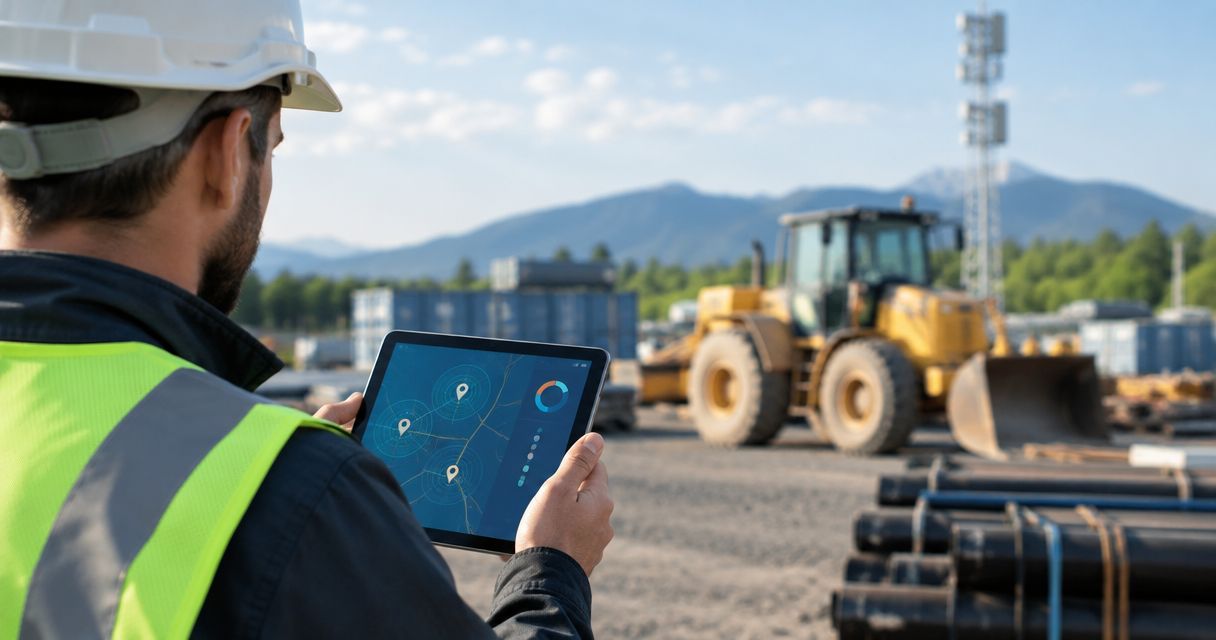
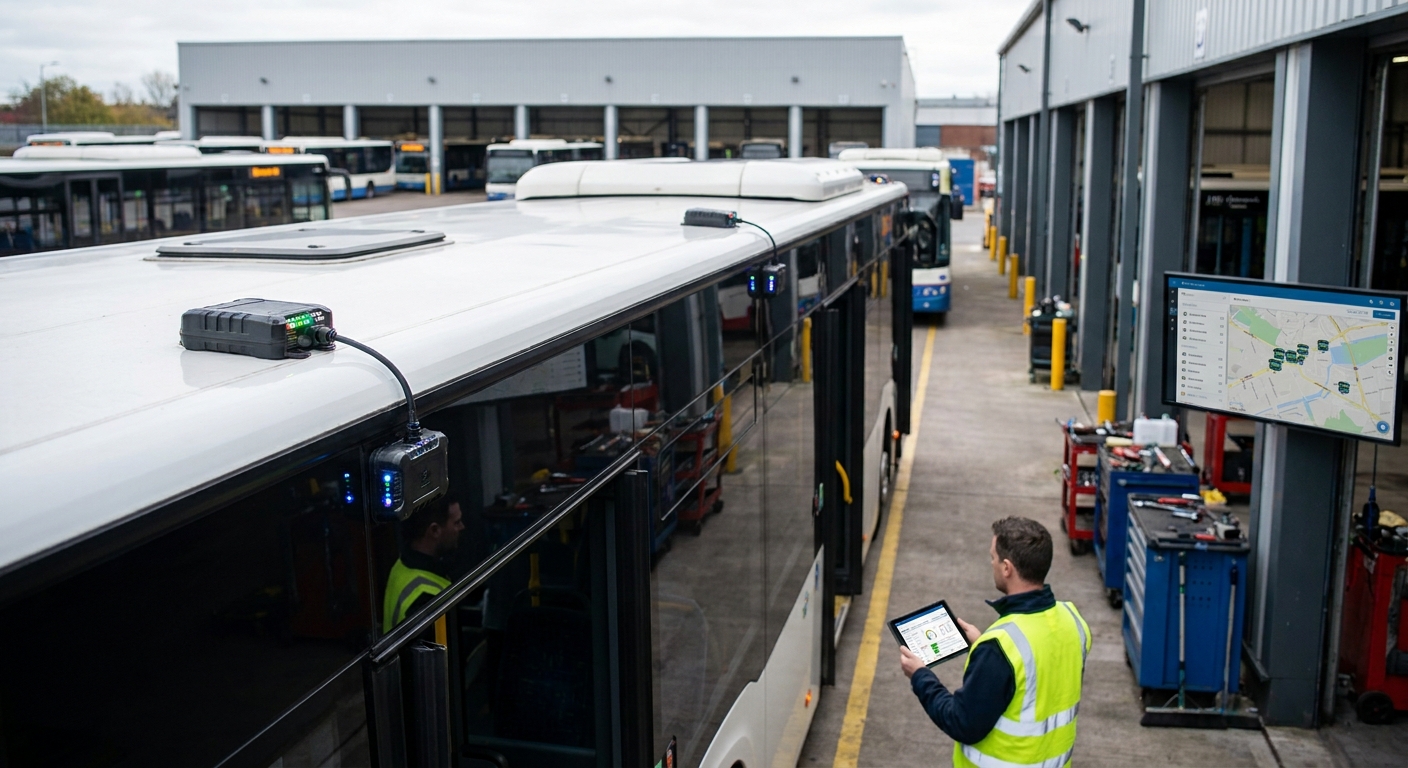
Bus depots lose tow tractors, ground power units, and fuel trucks the same way warehouses lose pallets — except the yard is outdoors, unlit at 2 a.m., and sometimes 40 acres of asphalt. Asset tracking IoT for transit and bus depots borrows the same LoRaWAN, cellular, and rules-engine stack Kilo IoT runs for cold storage and industrial sites, so a dispatcher sees a missing tug within minutes instead of during next week's physical count.
- Asset tracking IoT for transit and bus depots works best on cellular GPS for buses and LoRaWAN for yard equipment — buy the mixed stack, not one technology.
- Consumer Bluetooth trackers lose signal past roughly 30 meters inside a metal bus barn — skip them for depot yards.
- A 150-bus depot needs geofence accuracy closer to 10 meters, not a GPS ping every 15 minutes.
- Kilo Cloud's rules engine turns a tug leaving the yard at 2 a.m. into an alarm instead of a Monday surprise.
Why this matters
Transit agencies run capital-intensive fleets on thin maintenance budgets, and a missing ground support cart or a diesel exhaust fluid tote that walked off site costs more in downtime than in replacement. Most depots still track assets on a clipboard or a spreadsheet updated once a shift, which means a stolen or misplaced unit can sit unnoticed for days.
The fix isn't one sensor type. Buses need connectivity that survives 40 miles of route and re-enters cellular coverage reliably; yard equipment needs geofencing that knows the difference between the fuel island and the wash bay; tools in the maintenance shop need indoor location that doesn't depend on GPS at all. Getting this wrong in 2026 means paying for hardware that reports location data nobody trusts.
Who this is for
This guide is for transit agency operations managers, bus depot facility supervisors, and fleet maintenance leads who are responsible for knowing where a tug, a ground power unit, a fuel truck, or a set of diagnostic tools physically sits at any given hour — and who need that answer without walking the yard.
What to look for in asset tracking IoT for transit and bus depots
Outdoor-rated hardware that survives a metal bus barn
Metal roofing and steel bus bodies kill Wi-Fi and attenuate Bluetooth fast, so sensors rated for an operating range of -20°C to 60°C and IP67 housings matter more here than in an office building. A tracker built for retail shelving won't survive a pressure wash bay.
Battery life measured in years, not weeks
Depot equipment doesn't get plugged in nightly the way a phone does, so a tracker that needs a battery swap every 30 days becomes a second maintenance job. LoRaWAN-class trackers commonly run multiple years on a single battery because they transmit in short bursts instead of holding a constant connection.
Geofencing and yard-level location accuracy
A 150-bus depot needs to distinguish the fuel island from the wash bay from the overnight parking rows, which means geofence accuracy closer to 10 meters, not a single GPS ping across the whole property. Coarse location tells you the asset is "on site" — it doesn't tell you it's blocking a fire lane.
A rules engine that turns location into alerts
Raw coordinates on a map are useless at 2 a.m. when nobody's watching. A rules engine that fires an alarm the moment a tug crosses the yard boundary after hours turns tracking data into something a night supervisor actually acts on.
Integration with existing maintenance workflows
A tracking platform that can't hand a location or an alarm to your CMMS just adds another screen to check. Look for a platform that pushes events into the systems your team already opens every shift, not one that asks them to open a new one.
Map your depot's asset gaps
See how Kilo Cloud handles yard geofencing and alarms before you buy hardware.
Top picks for transit and bus depot asset tracking
1. Cellular IoT for buses on route — the road pick
Buses leave the depot for hours at a time, so anything relying on a fixed gateway is blind the moment the vehicle clears the lot. Cellular IoT connectivity for mobile asset tracking keeps reporting location and status across carrier networks for the whole route, not just the yard. Verdict: Buy for any depot running buses on fixed routes longer than a few miles.
2. LoRaWAN geofencing for yard equipment — the yard pick
Tow tractors, ground power units, and fuel trucks rarely leave the property, which makes them a fit for the same lot-tracking logic used on vehicle dealership lots. IoT asset tracking for vehicle dealership lots applies directly to a depot yard: geofence the wash bay, the fuel island, and overnight parking, and alarm on anything that crosses a boundary after hours. Verdict: Buy for yards over roughly 5 acres where line-of-sight to equipment isn't guaranteed.
3. Bluetooth mesh for indoor tool tracking — the indoor pick
GPS doesn't work inside a maintenance bay, and a $400 diagnostic scanner or a torque wrench set doesn't need a cellular plan. Bluetooth mesh sensors for indoor asset tracking locates tools room-to-room using low-power beacons instead of GPS. Verdict: Consider if tool loss inside the shop is a recurring line item on your maintenance budget.
4. A fleet-wide platform view — the consolidation pick
Running three separate dashboards for buses, yard equipment, and tools defeats the point of tracking anything. Best asset tracking IoT platform for logistics fleets covers the platform-level question — one map, one rules engine, one alarm feed across every asset class in the depot. Verdict: Buy once you've settled on hardware for at least two of the categories above.
5. High-value tool tracking across job sites — the tool crib pick
Mobile maintenance crews that pull tools for roadside repairs need the same accountability a warehouse tool crib has. How to track high-value tools and equipment across job sites walks through tagging and check-out logic that applies directly to a depot's mobile repair kits. Verdict: Consider for agencies running road-call crews away from the main yard.
“Coarse location tells you the asset is on site — it doesn't tell you it's blocking a fire lane.”
What to avoid
- Consumer Bluetooth trackers built for keychains and luggage — they're designed for a phone within 30 meters, not a steel maintenance bay, and they have no geofencing or rules engine behind them.
- Wi-Fi-only indoor tracking — depot buildings have dead zones around bus bays and metal partitions that Wi-Fi triangulation handles poorly compared to a purpose-built mesh.
- Passive RFID without full gateway coverage — RFID tags are cheap, but if your depot doesn't have readers covering every gate and bay, an asset can pass through unlogged and you won't know until the count comes up short.
GPS fleet tracking on the road is a different problem than yard geofencing, and treating them as the same system is a common depot mistake — the polling rates, power budgets, and alert logic that work for a water truck running highway routes don't map cleanly onto a tug that never leaves five acres of pavement.
Verdict comparison
| Approach | Typical range | Battery life | Best for | Verdict |
|---|---|---|---|---|
| Cellular IoT (buses) | Nationwide, carrier-dependent | Vehicle-powered | Buses on route | Buy |
| LoRaWAN yard geofencing | Up to several km per gateway | 2-5 years | Tugs, GPUs, fuel trucks | Buy |
| Bluetooth mesh | Room-to-room, ~30-50m per beacon | 1-2 years | Tools, indoor equipment | Consider |
| Fleet-wide platform | N/A — software layer | N/A | Consolidating dashboards | Buy |
| Consumer BLE tags | ~30m open air | Weeks-months | Personal items only | Skip |
FAQ
What is the best asset tracking IoT setup for a bus depot?
A mixed stack works best in 2026: cellular GPS for buses on route, LoRaWAN for yard equipment like tugs and fuel trucks, and Bluetooth mesh for tools inside the maintenance shop. A single technology rarely covers all three environments well.
Is LoRaWAN better than cellular for depot yard equipment?
For equipment that stays on the property, yes — LoRaWAN trackers run 2-5 years on a battery versus a cellular device that needs vehicle power or frequent charging. Cellular still wins for buses that leave the yard on routes.
How accurate does geofencing need to be for a bus depot?
Aim for roughly 10 meters of accuracy so the system can tell the fuel island from the wash bay, not just confirm the asset is somewhere on site. Coarser accuracy makes after-hours alarms nearly useless.
Do consumer trackers like AirTags work in a bus depot?
No — consumer Bluetooth trackers are built for open-air ranges around 30 meters and have no rules engine or geofencing behind them. Metal bus barns and steel equipment attenuate their signal further, making them unreliable for yard tracking.
Can asset tracking data feed into a depot's existing maintenance system?
Yes, when the platform supports pushing location and alarm events into a CMMS instead of requiring a separate screen. This keeps maintenance crews working from the system they already open every shift.
How much does IoT asset tracking cost for a mid-size depot?
Costs vary by asset count and technology mix — LoRaWAN tags, gateways, and platform fees scale differently than cellular trackers with recurring carrier plans. Check current pricing directly rather than assuming one flat rate covers buses, yard equipment, and tools.
What's the biggest mistake depots make with asset tracking?
Treating road GPS tracking and yard geofencing as the same problem. A tracker tuned for highway polling rates and vehicle power wastes battery and reports poorly when it's actually sitting still in a five-acre yard.
One last thing
The assets that go missing longest in a depot aren't the buses — everyone notices a missing bus within the hour. It's the tow tractor, the single diagnostic scanner, or the fuel truck parked in the wrong row that survives weeks of shift changes before anyone flags it, and that's exactly the gap a yard-level geofence closes in 2026 without adding headcount.