Bluetooth mesh sensors handle indoor asset tracking well inside a single building with dense shelving, wards, or bays — tool cribs, hospital floors, rental yards under a roof. The tradeoffs show up fast once you scale past a pilot: hop range, tag battery life, and how the data gets off the gateway and into something you can act on.
- Bluetooth mesh sensors indoor asset tracking works best under roughly 50,000 sq ft per building in 2026 — Buy for that footprint.
- Passive BLE tags running 1-2 years on a coin cell beat active beacons on maintenance cost — Buy for high tag counts.
- Angle-of-arrival (AoA) hardware hits sub-1-meter accuracy versus 3-5 meters for RSSI-only mesh — Consider only if shelf-level precision matters.
- Route mesh gateway data over MQTT into an IoT platform like Kilo Cloud instead of a standalone app — Consider this pattern for 2026 rollouts.
- Skip consumer-grade BLE trackers for fleet use — no bulk provisioning, no API, no alarm rules.
Why this matters
An asset that walks off a hospital floor or a job site doesn't show up as a line item until someone goes looking for it and can't find it. Bluetooth mesh sensors turn that search into a location ping, but only if the network actually holds together across the building and the data lands somewhere useful. A gateway that only feeds its own vendor app is a dead end the moment you run more than one site.
That's the gap an IoT platform such as Kilo Cloud is built to close — it already ingests LoRaWAN and mioty feeds over MQTT, so a Bluetooth mesh gateway that can publish MQTT becomes just another connected source feeding dashboards, alarms, and rules instead of a second silo. In 2026, that integration question decides whether a mesh pilot turns into a real deployment or gets shelved after month three.
Who this is for
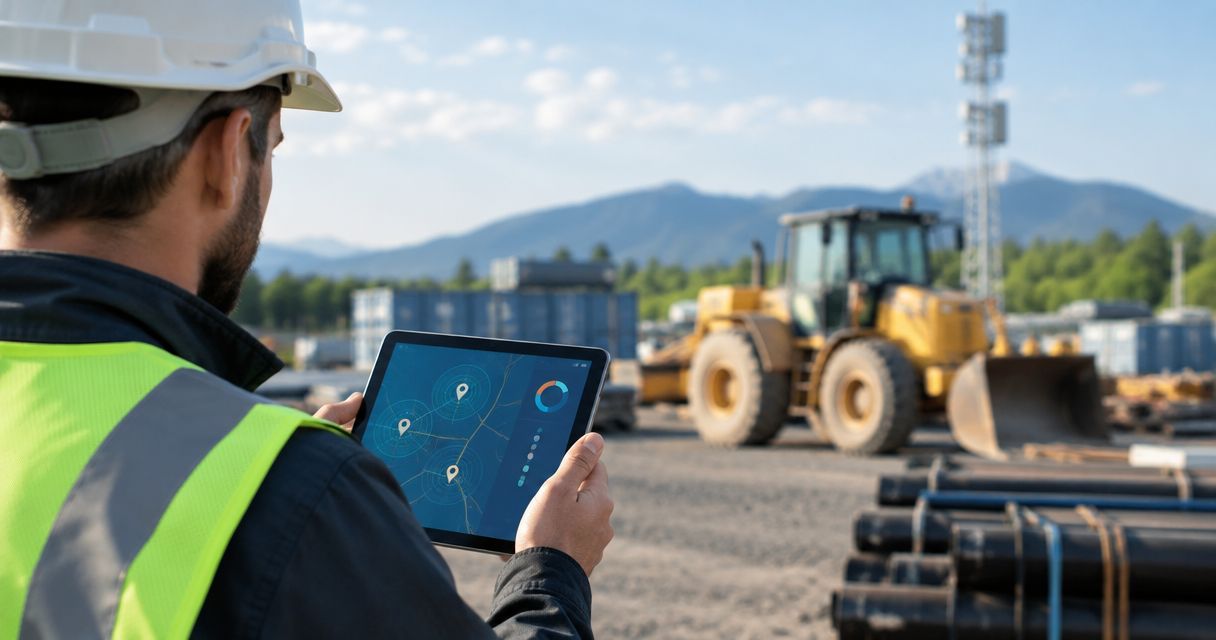
This guide is for facilities and operations teams tracking indoor, mobile assets inside one or more buildings — hospital equipment carts, tool cribs, rental gear staged in a warehouse, fixtures moving between rooms in a retail or manufacturing site. If your assets mostly stay outdoors across a yard or job site, LoRaWAN-based tracking covers longer range at lower tag density better than Bluetooth mesh does.
What to look for in Bluetooth mesh sensors for indoor asset tracking
Mesh hop range and node density
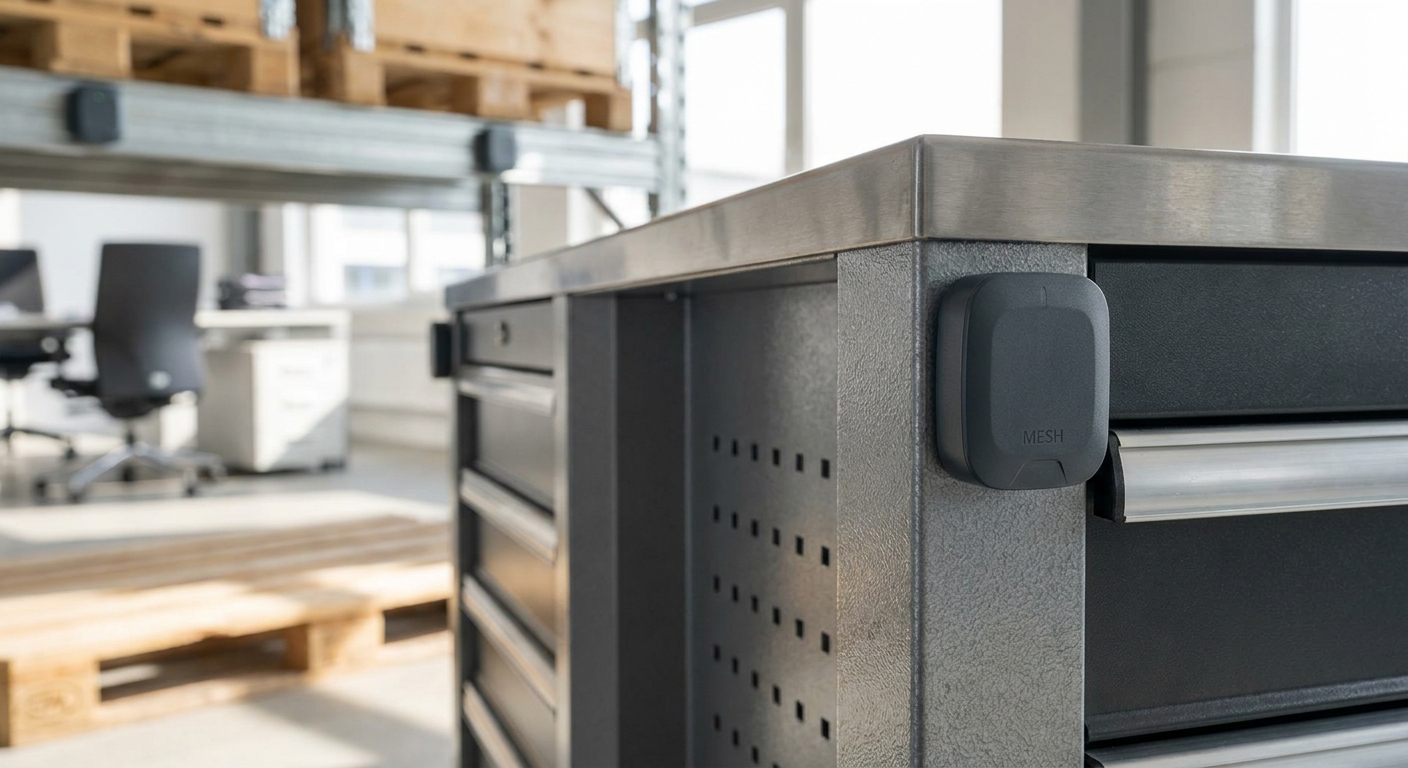
Bluetooth mesh signals travel roughly 10 to 30 meters per hop indoors before walls, steel racking, and shelving cut them off. A warehouse with tall metal racking needs a relay node close to every 20 meters to keep packets moving instead of stalling at the aisle. Skip any layout plan where relay nodes sit more than 40 meters apart — the network doesn't fail outright, it just goes quiet in exactly the zone you need it most.
Tag battery life and replacement labor
Passive BLE tags on a coin cell typically last 1 to 2 years; active beacons broadcasting every second instead of every five can fall to 6 to 12 months. Across a few hundred tags, that gap is the difference between one battery-swap cycle a year and two. Check the actual broadcast interval before buying in bulk — chemistry alone doesn't tell you the real service life.
Positioning method: RSSI vs angle of arrival
Signal-strength (RSSI) trilateration places an asset within 3 to 5 meters — fine for "which room," not "which shelf." Angle of arrival (AoA) hardware narrows that to under 1 meter, at meaningfully higher gateway density and cost per square foot covered. Pick RSSI for general zone tracking and reserve AoA for the cases that actually need shelf-level precision, like surgical trays or a high-value tool crib.
Gateway backhaul and platform integration
A mesh network is only as useful as what happens after the gateway captures a ping. If the gateway can publish over MQTT, that feed can flow into an IoT platform's dashboards and rules engine instead of staying locked inside one vendor's mobile app. Test the export path in the demo — a vendor that only shows you their own screen, not a raw feed, is a red flag for anyone planning to run more than one site.
Multi-site scalability and device management
One warehouse can run on a single gateway and a spreadsheet. Ten buildings can't — provisioning, firmware updates, and tag reassignment need a device management layer, not ten separate app logins. System integrators rolling out mesh gateways across client sites run into this exact problem, and it applies to Bluetooth mesh hardware just as much as it does to LoRaWAN sensors.
Alarm and rule integration for asset events
Knowing where an asset sits is half the job. Knowing it's been idle for 48 hours, left a geofence, or went missing after a shift change is the half that actually changes behavior on the floor. Build dwell-time and exit-zone rules before rolling tags out past a pilot batch — raw position pings without rules just add another dashboard nobody checks.
“If relay nodes sit more than 40 meters apart on the floor plan, the mesh doesn't fail — it just goes quiet in exactly the aisle you need it most.”
Four ways to deploy Bluetooth mesh sensors for indoor asset tracking
The low-maintenance pick: passive BLE tag + fixed gateway mesh
Coin-cell tags run 1 to 2 years without a swap, and a single gateway cluster comfortably covers a few hundred tagged assets across one floor. This is the setup most facilities teams should start with in 2026 — low per-tag cost, simple provisioning, no exotic hardware. Buy if your priority is presence and zone tracking across a warehouse or clinic floor.
The wildcard: angle-of-arrival locating system
AoA hardware trades a denser, pricier gateway layout for sub-1-meter positioning — genuinely useful when a tray, cart, or tool needs to be found on a specific shelf, not just in a specific room. It's overbuilt for general presence tracking and underused if nobody on the team needs that precision. Consider it only for high-value assets where shelf-level accuracy pays for the extra gateway density.
The scalable pick: mesh relay network bridged over MQTT into a central platform
This pattern chains multiple mesh clusters across buildings and pipes every gateway's feed through MQTT into one platform, so a facilities team sees one map instead of five separate apps. It's the same architecture pattern used for construction equipment fleet tracking, where assets move between sites and need one place to check status. Buy if you're running more than one building or expect to add sites in 2026.
The rugged pick: hospital or industrial-rated BLE mesh tags
Metal equipment carts, concrete corridors, and clinical environments knock down signal faster than open office space, so tags rated for that density matter more here than raw battery specs. This is the exact use case behind hospital equipment tracking deployments, where a missing infusion pump or portable monitor has a real cost the same shift. Consider it for any metal-heavy or clinical floor plan — standard-rated tags will underperform there.
Compare mesh gateway options with an integrator
See how device management scales across sites before you commit to tags.
What to avoid
- Consumer-grade Bluetooth trackers. Built for finding a wallet or keys, not for bulk provisioning, API export, or fleet-wide alarm rules — they look cheap per unit and expensive once you count the manual work.
- Wi-Fi RTLS systems marketed as "mesh." Different infrastructure requirement entirely — dense access points, not low-power radios — and a much higher cost per square foot covered.
- Standalone vendor apps with no data export. Convenient for a demo, a dead end for scale — it creates a second silo the platform can't touch, which means no dwell-time alerts and no cross-site view.
Verdict comparison across approaches
| Approach | Hop range | Tag battery life | Positioning accuracy | Best for | Verdict |
|---|---|---|---|---|---|
| Passive BLE tag + fixed gateway | 10-30 m | 1-2 years | 3-5 m (RSSI) | High tag counts, single floor | Buy |
| AoA locating system | 10-20 m | 6-12 months | <1 m | Precision zones, high-value assets | Consider |
| Mesh relay + MQTT bridge to platform | 10-30 m per hop | Varies by tag | 3-5 m | Multi-building campuses | Buy |
| Rugged industrial/hospital tags | 10-25 m | ~1 year average | 3-5 m | Metal-heavy or clinical floors | Consider |
| Consumer BLE tracker app | 10-15 m | 6-12 months | 5-10 m | Personal item finding only | Skip |
FAQ
What is Bluetooth mesh and how does it help indoor asset tracking?
Bluetooth mesh is a networking mode where BLE devices relay signals node-to-node instead of connecting directly to one hub, which lets a facility track tagged assets across a large indoor space without cellular or long-range radio. It fits warehouses, hospitals, and rental yards under roof where LoRaWAN's outdoor range isn't the constraint — building density is.
Is Bluetooth mesh better than Wi-Fi RTLS for indoor tracking in 2026?
Bluetooth mesh costs less per square foot covered because it doesn't need dense access point coverage the way Wi-Fi RTLS does. Wi-Fi RTLS can edge out mesh on accuracy in some setups, but the infrastructure and licensing cost is usually the deciding factor for facilities teams in 2026.
How accurate is Bluetooth mesh asset tracking?
RSSI-based Bluetooth mesh typically places an asset within 3 to 5 meters, good enough for zone or room-level tracking. Angle-of-arrival hardware narrows that to under 1 meter but costs more in gateway density.
How long do Bluetooth mesh asset tags last on battery?
Passive BLE tags on a coin cell typically run 1 to 2 years depending on broadcast interval. Active beacons pinging every second instead of every five seconds often drop to 6 to 12 months.
Can Bluetooth mesh sensors send data to a cloud dashboard?
Yes, if the gateway supports MQTT publishing, that feed can flow into an IoT platform's dashboards and rules engine instead of staying locked in a single vendor app. That's the integration point to confirm before buying gateways in bulk.
What's the difference between Bluetooth mesh and LoRaWAN for asset tracking?
Bluetooth mesh covers dense indoor spaces at 10 to 30 meters per hop with low-cost tags; LoRaWAN covers kilometers outdoors with far fewer gateways but coarser indoor accuracy. Facilities tracking equipment across job sites and yards usually need LoRaWAN, not mesh.
How many Bluetooth mesh nodes can one gateway handle?
It depends on relay hop count and node density more than a fixed cap — a well-planned mesh with relay nodes every 20 meters can cover several hundred tagged assets on one floor. Sparse node placement, not tag count, is usually what breaks a deployment first.
Do Bluetooth mesh tags work in hospitals or industrial buildings with lots of metal and concrete?
Standard-rated tags lose range faster in metal-heavy or concrete corridors, so ruggedized or higher-power tags perform better in those environments. Hospital equipment tracking deployments in particular need denser relay placement than an open warehouse floor.
One last thing
Most Bluetooth mesh pilots don't fail on range — they fail on battery replacement labor nobody budgeted for. A few hundred tags broadcasting every second instead of every five seconds can turn one technician-day a quarter into two, and that cost shows up months after the range and accuracy numbers already looked fine on paper. Tune the broadcast interval down before the fleet-wide rollout, not after.