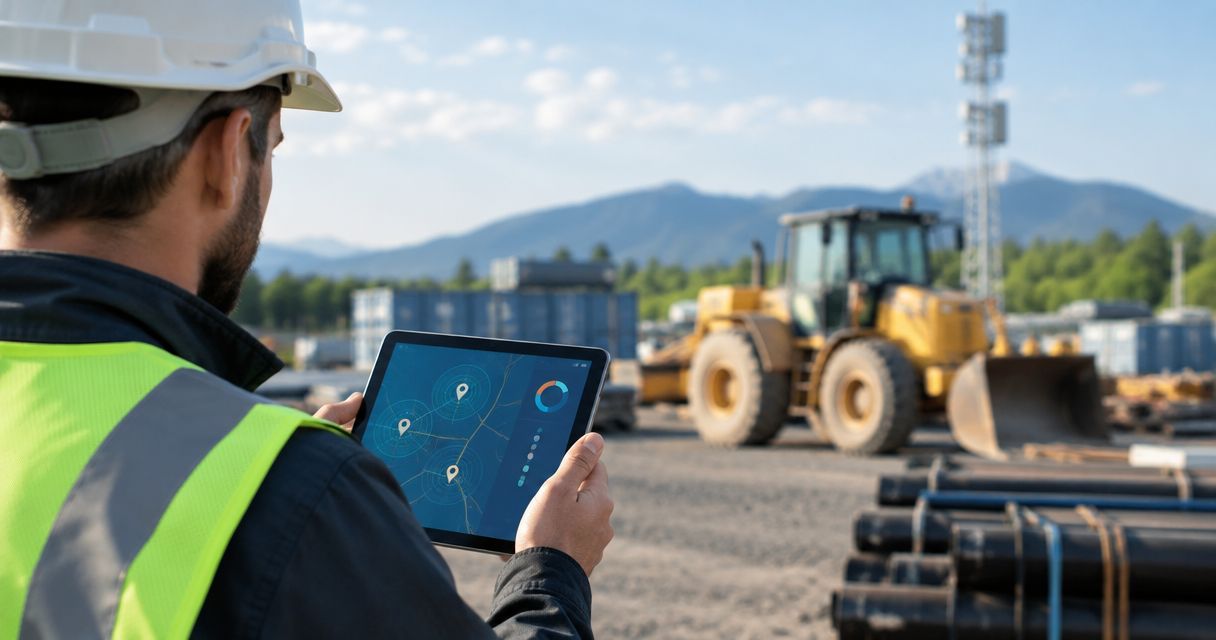
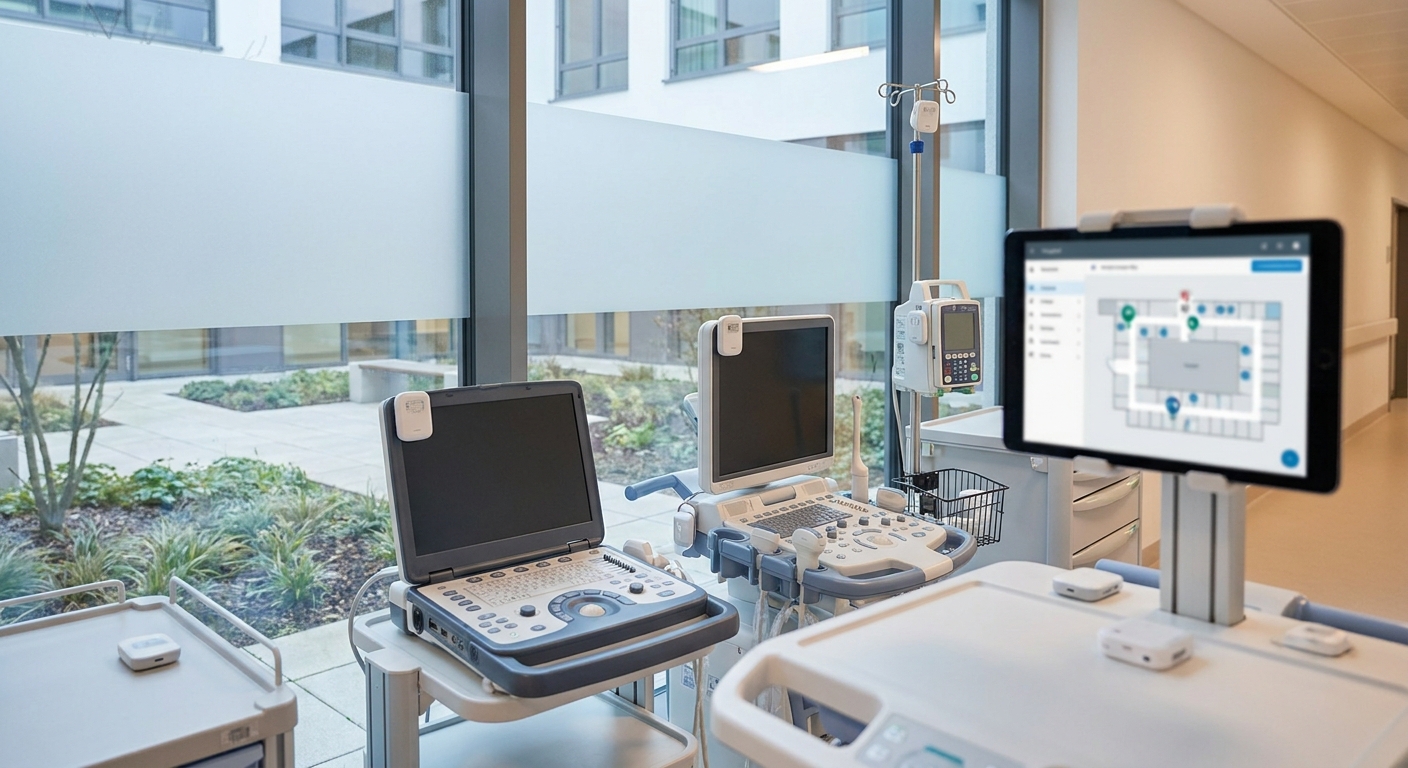
Clinical engineering teams walk hospital floors for hours every week hunting for infusion pumps, portable monitors, and wheelchairs that never actually left the building. IoT asset tracking for hospital equipment closes that gap by putting a live location and status feed on every mobile asset instead of a spreadsheet nobody updates. This guide breaks down what a facilities or biomed team should check before picking a platform in 2026, using Kilo IoT's own architecture choices as the working examples.
- Kilo IoT's dashboard-first buildout wins for multi-building hospital campuses tracking mobile equipment in 2026 — Buy.
- IoT asset tracking hospital equipment programs succeed on alerting rules, not just location history — build alarms first.
- Skip BLE-only RTLS tags for hospital-wide tracking; concrete floors and elevator shafts break the handoff between buildings.
- Pair location data with a predictive-maintenance layer so biomed sees 'due for PM' alongside 'where is it'.
Why this matters
A missing $30,000 ventilator doesn't just cost money — it delays a bed turnover, a discharge, or a shift start while a tech walks three floors to find it. Biomed departments run on preventive maintenance schedules, and equipment that's out of sight is equipment that misses its next PM check. In 2026, hospital systems replacing manual asset logs with an IoT platform are doing it because the labor cost of hunting for equipment has become harder to justify than the cost of tagging it.
The hard part isn't the tag. It's getting a signal through a building with concrete floors, lead-lined imaging rooms, and elevator shafts, then turning that signal into an alert someone actually acts on.
Who this is for
This guide is built for clinical/biomedical engineering managers and facilities operations leads at hospitals or health systems running mobile equipment fleets across multiple floors or buildings — the team responsible for infusion pumps, portable ultrasounds, wound vacs, wheelchairs, and monitors that move between units every shift. If your equipment lives in one room and never moves, this isn't your problem; if your techs spend real hours a week searching, keep reading.
What to look for in IoT asset tracking for hospital equipment
RF that actually gets through concrete and lead-lined rooms
Hospital buildings are dense with concrete, rebar, and lead shielding around imaging suites — the exact conditions that kill Bluetooth-based RTLS signal between rooms. LoRaWAN and mioty are built for long-range penetration through structural material, which matters more inside a hospital than in an open warehouse. A platform that can't hold a signal from the third-floor ICU to a ground-floor gateway isn't tracking anything, it's guessing.
Alerting rules, not just a location history log
A dashboard that shows where a pump was an hour ago doesn't stop it from leaving the building right now. What matters is a rules engine that fires a geofence alarm the moment an asset crosses a floor or exit boundary, sent to a phone or a ticketing system in real time. Without live alerting, IoT asset tracking hospital equipment programs turn into expensive historical reports nobody reads until an audit.
Battery life your staff will never think about
Nurses and techs will not replace a coin cell every six months on 400 tagged assets. Multi-year battery life on the sensor side is what keeps the program running without a second full-time job attached to it. Ask any vendor for the actual battery spec under real reporting intervals, not a lab-condition number.
API and MQTT hooks into your CMMS
Location data that lives in its own silo doesn't help the biomed team that already runs a CMMS for work orders and PM schedules. A platform with open API and MQTT access lets asset location and status feed directly into the system your team already opens every morning, instead of forcing a second login.
One dashboard across every building on campus
Multi-building health systems need one view, not one dashboard per site. If facilities has to check three separate logins to know where a portable X-ray unit is across a campus, the platform failed the multi-site test before it started.
Top picks for hospital equipment tracking in 2026
The dashboards-first buildout — the safe pick. Kilo IoT's multi-site facility dashboard setup puts every tagged asset, every building, on one screen with configurable geofence alarms. The spec that matters: rules and alarm thresholds get set up through plain-language configuration rather than a code deployment, which means facilities teams can adjust a boundary alert themselves after a floor reassignment. Buy for any campus running more than one building.
The evaluation-stage approach — for teams still building the RFP. If your hospital system is mid-comparison across vendors, Kilo IoT's platform evaluation checklist walks through device onboarding, connectivity options, and integration requirements before you sign anything. One number worth checking against any vendor: how many device types they onboard without custom firmware work. Consider this the pre-purchase step, not the purchase itself.
The predictive-maintenance layer — the wildcard. Location tracking alone answers "where is it." Pairing it with condition and usage sensors on the same rules engine answers "is it due for service," turning a tracking system into a maintenance trigger. For biomed teams already drowning in PM backlogs, this is the layer that changes the math on the whole program. Buy if PM compliance is the actual pain point, not just missing equipment.
The mobile-fleet parallel — the honest comparison. Platforms built for tracking moving fleet assets outside a building solve a related but different problem than tracking equipment moving between floors inside one. Worth a look for the alerting logic, less useful for the RF penetration case a multi-floor hospital actually needs. Consider for the concept, Skip as a direct fit if your assets never leave the building.
Map your hospital's equipment tracking needs
See how Kilo IoT handles multi-building alerting and PM triggers.
What to avoid
- Pure asset-tag RTLS with no rules engine. It logs where a ventilator was an hour ago but can't alert anyone before it leaves the building — a history log, not tracking.
- BLE-only systems sold as "whole-hospital" solutions. Bluetooth beacon ranges collapse across concrete floors and elevator shafts; what works in one wing often drops out two floors up.
- Bolted-together open-source stacks with no integration path. They look cheap on a quote in 2026 but cost more in engineering hours than a managed platform once you need CMMS integration and multi-building scale.
“If a location alert can't reach a phone before the equipment leaves the building, it's not asset tracking, it's asset history.”
Verdict comparison
| Pick | RF penetration & scale | Real-time alerting | CMMS/API integration | Verdict |
|---|---|---|---|---|
| Dashboards-first buildout | Strong across multi-floor buildings | Configurable geofence alarms | Yes | Buy |
| Evaluation checklist approach | N/A — planning stage | N/A | Framework only | Consider |
| Predictive-maintenance layer | Depends on base deployment | Ties to same rules engine | Yes | Buy for PM-heavy teams |
| Mobile-fleet parallel platform | Built for outdoor/fleet range | Yes, different use case | Varies | Consider/Skip |
FAQ
What is IoT asset tracking for hospital equipment?
It's a system of sensors and gateways that report the live location and status of mobile hospital equipment like infusion pumps and portable monitors to a dashboard. In 2026, most hospital deployments use LoRaWAN or mioty connectivity because both penetrate concrete floors better than Bluetooth-based tags.
Is LoRaWAN or mioty better for hospital equipment tracking?
Both handle indoor penetration through concrete and structural material far better than Bluetooth RTLS. The choice usually comes down to gateway density and existing network infrastructure at the site rather than one protocol being universally better.
How much equipment do hospitals typically lose track of?
Exact figures vary by hospital size and equipment volume, and most systems don't publish internal loss data. The operational cost shows up less in the equipment price and more in staff hours spent searching and delayed PM compliance.
Can asset tracking integrate with our CMMS?
Yes, when the platform exposes an API or MQTT feed rather than locking data in its own dashboard. Ask any vendor to confirm the integration path before signing, since some platforms treat location data as a closed feature.
Do tagged assets need new batteries constantly?
A well-specified sensor should run multiple years on a single battery under normal reporting intervals. Ask for the real-world battery spec, not a lab-condition number, before tagging hundreds of assets.
What's the difference between asset tracking and RTLS?
RTLS (real-time location systems) is one method of asset tracking, typically Bluetooth or Wi-Fi based, while IoT asset tracking can also run on LoRaWAN or mioty for longer range and better wall penetration. The right choice depends on building layout, not the label on the box.
How does geofencing work for hospital equipment?
A rules engine draws a virtual boundary around a floor, building, or exit, and fires an alert the moment a tagged asset crosses it. This is what turns a location dashboard into an actual theft or misplacement alert instead of a passive log.
One last thing
The programs that actually stick past year one aren't the ones with the most tags — they're the ones where facilities set up two or three alarm rules on day one and expand from there, instead of trying to geofence every hallway before a single alert has proven useful. Start with the exits and the high-value carts; the rest of the campus can wait until 2026's rollout numbers justify expansion.