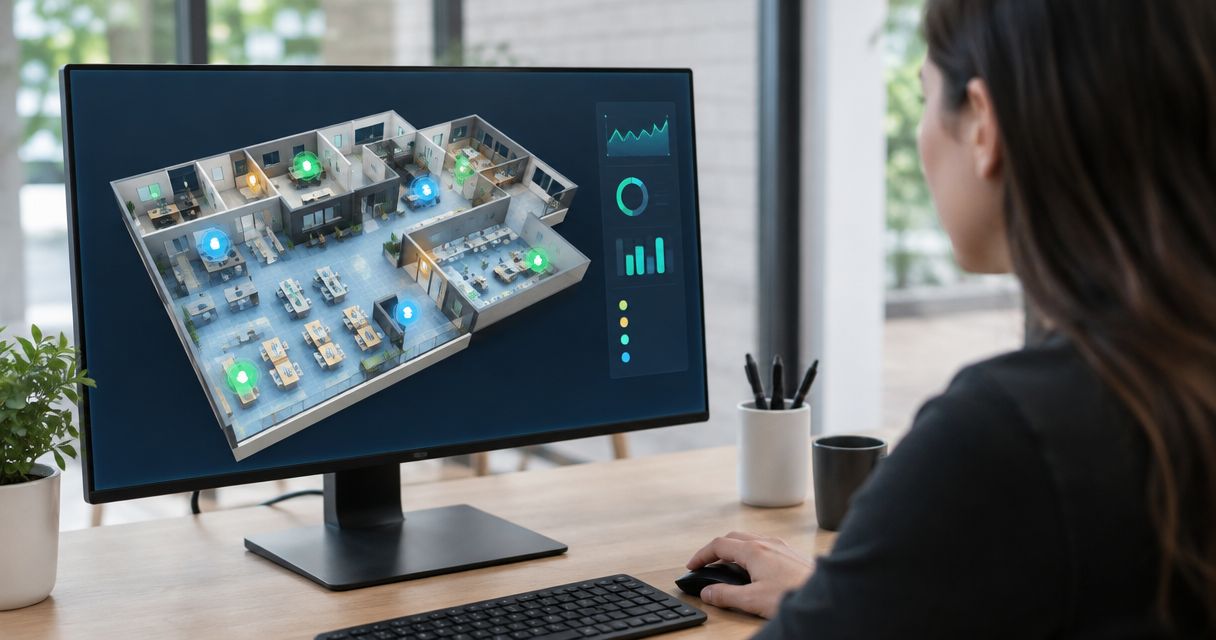
Best overall for retrofit monitoring in 2026: a sensor-connected IoT layer. Best for direct HVAC scheduling and equipment control: a building management system. Best for analyzing meter data across a portfolio: dedicated energy analytics software. A building energy management system only helps when the measurements, control boundaries, and response workflow match the building you operate.
- For a building energy management system retrofit, sensor-connected IoT is the best fit when existing measurements leave gaps.
- Choose a building management system when the job is direct HVAC scheduling and control.
- Choose dedicated energy analytics when interval meter data and portfolio comparisons are the main requirements.
- The Kilo IoT Platform connects building sensors and MQTT-publishing equipment to dashboards, rules, alarms, and a digital building twin.
Why does a building energy management system need more than a dashboard?
A graph can show that energy use rose overnight. It cannot, by itself, tell a facilities operator whether the cause was an occupied space, an overridden schedule, a chiller still running, or a bad meter reading. The Kilo IoT Platform is an IoT platform for connecting device data to operational rules and alarms; it is not a substitute for confirming what the building equipment actually did.
The distinction matters in 2026 because energy management covers different jobs. One team needs to change schedules in an existing control system. Another needs to collect readings from meters and sensors that the control system never covered. A portfolio manager needs consistent data across sites. Buying for the wrong job produces an attractive dashboard with no dependable way to investigate an exception.
Use recognized requirements as a starting point, not as a software badge. ISO 50001 sets requirements for an energy management system at the organizational level. ASHRAE Standard 90.1 addresses energy efficiency in buildings other than low-rise residential buildings. Neither standard makes a particular software product compliant simply because it displays energy data.
What makes the best building energy management system software in 2026?
Check these criteria before requesting a demonstration:
- Measurement coverage: List whole-building meters, submeters, HVAC points, temperature sensors, occupancy inputs, and any other readings needed to explain a deviation. A missing source is not fixed by a better chart.
- Existing-system fit: Identify what the building management system or meter gateway can publish. Confirm the actual interface and data fields rather than assuming a platform connects directly to every controller.
- Action boundary: Separate an alarm that asks a person to inspect equipment from a command that changes equipment operation. Define who can do each.
- Verification: Decide what device feedback or subsequent telemetry would show that a commanded change occurred. A delivered command is not proof of a physical result.
- Operational response: Specify who receives an exception, how it is escalated, and what record an operator can review afterward.
- Multi-site consistency: Use the same point names, units, and exception definitions across sites before comparing their performance.
In 2026, ask vendors to demonstrate these steps against a representative point list from your building. A generic dashboard demonstration cannot establish whether your meter, gateway, or controls publish the data the workflow requires.
Building energy management system options at a glance
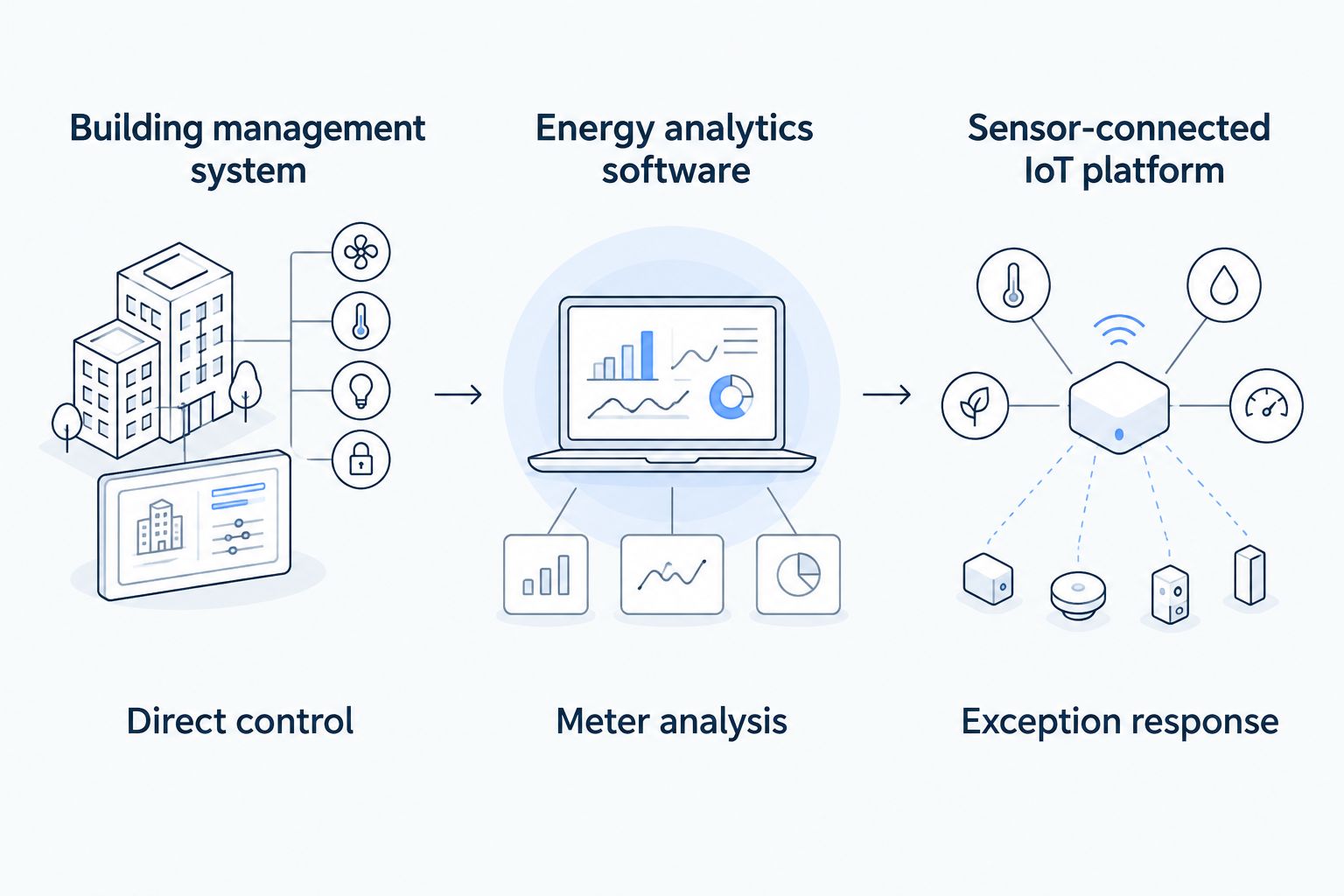
The options below are different system roles, not interchangeable software products. A building can use more than one. Start with the role that addresses the gap you have documented.
| Option | Best for | Standout capability | Key limitation |
|---|---|---|---|
| Existing building management system | HVAC scheduling and direct equipment control | Works within installed control sequences | Visibility depends on the points connected and exposed |
| Dedicated energy analytics software | Meter analysis across buildings | Organizes energy readings for comparison | Analysis alone does not establish an equipment-control path |
| Sensor-connected IoT platform | Retrofitting measurement and exception response | Brings distributed device data into dashboards, rules, and alarms | Requires sensors, connectivity, and clear integration boundaries |
The comparison is a decision tree. If your schedules are wrong, start with the installed controls. If the schedules look right but you cannot explain a load, start with measurement coverage. If readings exist but nobody receives or investigates exceptions, examine the response workflow.
Is a building management system best for energy control?
Best for: facilities teams that need to adjust installed HVAC schedules, setpoints, and control sequences. A building management system, or BMS, is the first place to examine when the required action belongs to the existing equipment controls. Confirm which points the system exposes and which changes your operating procedures permit.
An existing BMS also gives the controls contractor a defined place to investigate a schedule or sequence. That does not mean every tenant meter, wireless sensor, or remote equipment room is visible there. Coverage follows the installed integration.
Building management system pros:
- Keeps direct control work close to the installed equipment sequences.
- Gives operators a familiar route for reviewing exposed HVAC points.
- Lets the controls team investigate overrides and schedules in their existing environment.
Building management system cons:
- Additional measurement points can require integration work.
- Portfolio reporting depends on how consistently sites name and expose data.
- A BMS screen does not establish whether an unconnected meter or sensor is reporting correctly.
Building management system verdict: Choose this role first when the task is changing or troubleshooting the control sequence, not merely observing its effects. For a 2026 retrofit, document the available points before adding another application.
Is energy analytics software best for a building energy management system?
Best for: energy managers comparing meter readings, operating patterns, and building-level results. Dedicated analytics starts with collected energy data. Its value depends on reliable meter intervals, consistent units, and enough context to distinguish an unusual reading from a known operating event.
Before choosing a tool, ask what constitutes a usable record: meter identity, timestamp, unit, and building or tenant association. Then test how the team would investigate a gap or a meter replacement. A comparison across sites is only as clear as the underlying point definitions.
Energy analytics software pros:
- Centers the workflow on energy readings rather than equipment screens.
- Helps teams compare like-for-like points across a portfolio.
- Supports investigation of load patterns when source data is complete.
Energy analytics software cons:
- It needs a dependable feed from meters or other source systems.
- A report does not itself change an HVAC schedule.
- Inconsistent point names and missing readings weaken comparisons.
Energy analytics software verdict: Choose this role when the data already exists and the immediate job is analysis. If nobody can account for an overnight load because key equipment is unmeasured, address that gap before refining reports.
Is an IoT platform best for a building energy management system retrofit?
Best for: facilities teams adding visibility where existing building systems leave equipment or spaces unmeasured. A sensor-connected IoT platform brings readings from deployed devices into a shared operational view. Rules and alarms then turn defined exceptions into work an operator can investigate.
The Kilo IoT Platform is the worked example. Kilo has built-in LoRaWAN and mioty network servers, plus an MQTT connector for publishing devices, PLCs, energy meters, and building management systems. It provides a digital twin per device, dashboards, a live 3D digital building twin with sensors bound to objects, a visual rules engine, and alarms. That makes Kilo a fit for connecting distributed building readings to an exception workflow. It does not make an unconnected meter visible or turn a sensor reading into proof of energy savings.
A practical retrofit starts with a question: Which reading would tell an operator that equipment ran outside its intended schedule? Identify the source, confirm its unit and update behavior, and set a rule for the condition that requires investigation. Assign the alarm to the right team. Compare the reported value with the building's operating record before changing a control sequence.
Sensor-connected IoT platform pros:
- Can bring readings from multiple supported connectivity paths into one operational view.
- Makes rules and alarms available for defined exceptions.
- Helps place device readings in building context rather than leaving each sensor in a separate screen.
Sensor-connected IoT platform cons:
- Sensors, gateways, and publishing equipment still need installation and validation.
- A rule is only as useful as its source reading and threshold.
- Direct equipment control requires a supported, configured command path; monitoring alone does not provide one.
Sensor-connected IoT platform verdict: Choose this role when missing measurements or inconsistent exception handling are the problem. In 2026, use Kilo as the IoT execution layer for documented monitoring and response workflows, not as a claim that software alone optimizes a building.
How should a building energy management system handle alarms and commands?
Write the workflow down before connecting a control. For a meter exception, record the source point, expected unit, rule condition, recipient, and investigation step. For a proposed equipment command, add the authorized user, permitted parameter values, and the feedback you will check afterward.
Kilo's visual BPMN rules engine supports CEL expressions, version control, step-through debugging on a test payload, deployment, and rollback. Its alarms have five severity tiers, escalation chains, and a centralized inbox. Those mechanics let a team review the rule and route an exception. They do not determine whether a particular building threshold is appropriate; the facilities team must set that from the equipment and operating requirements.
A commanded action needs a separate check. Kilo supports named typed commands with parameter validation, execution history, and closed-loop verification. A command marked accepted or delivered does not prove that a damper moved or a relay changed state. Check device feedback or subsequent telemetry where the equipment provides it, then keep the execution record alongside the observed result.
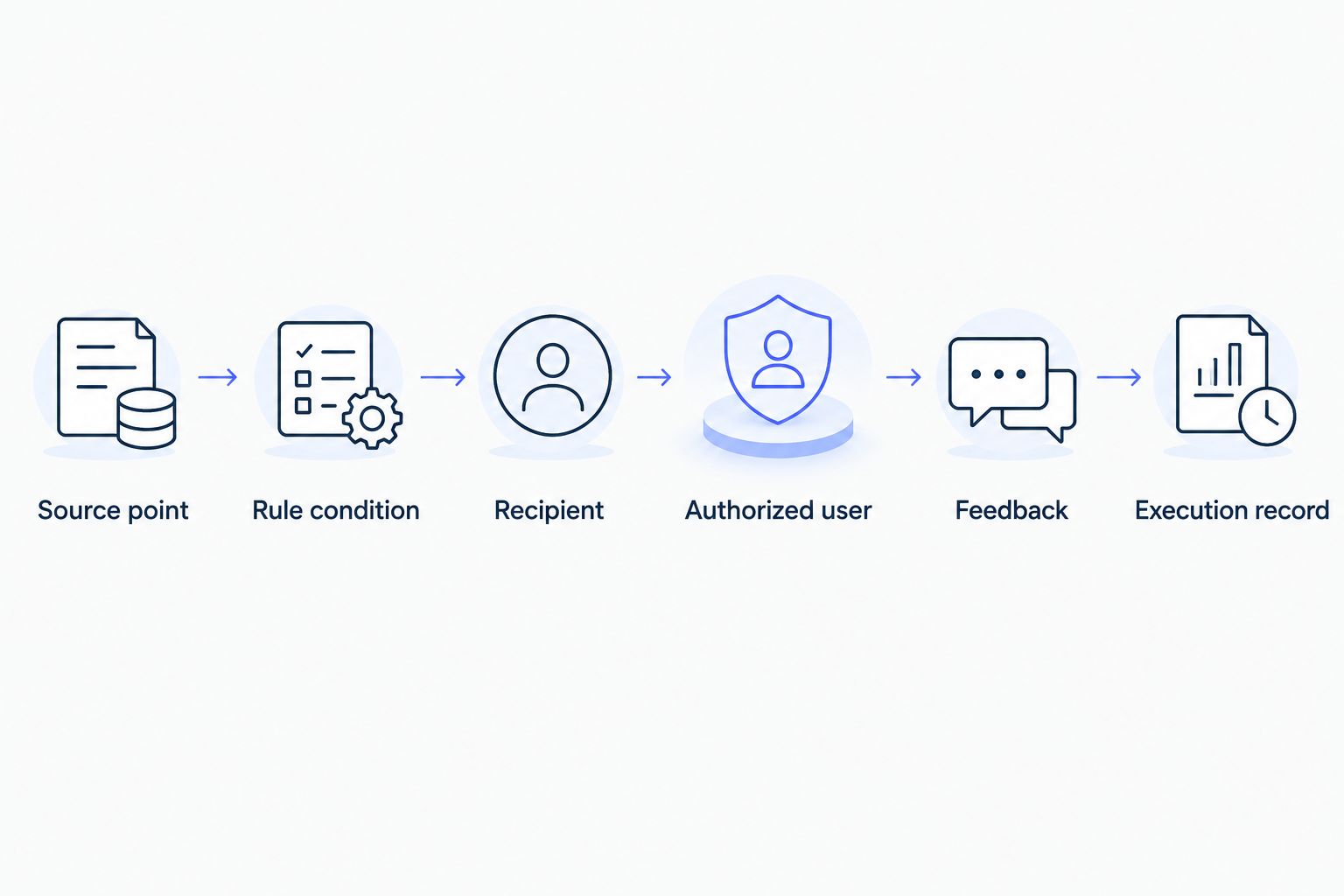
For an existing building, prove the monitoring path before expanding the control path. Ask an operator to trace one real reading from its source to the dashboard, through the rule, into the alarm inbox, and back to the equipment. If any step is unclear, adding more points increases the investigation burden.
Map your building data
Review device readings, rules, alarms, and control boundaries in the Kilo IoT Platform.
How were these building energy management system options compared?
The comparison uses the six criteria above: measurement coverage, existing-system fit, action boundary, verification, operational response, and multi-site consistency. It ranks the first job to solve, not vendors. No single role wins for a site without a defined gap.
For a controls problem, the existing BMS is the default. For an analysis problem with dependable meter feeds, dedicated energy analytics is the default. For a retrofit measurement gap, sensor-connected IoT is the default. A facilities lead can use that distinction to write a narrower request for proposals and require a demonstration using the site's actual point list.
Which building energy management system should you choose in 2026?
Choose a sensor-connected IoT platform if you cannot see enough of the building to explain or route an energy exception. Kilo is best for facilities teams that need to connect supported devices, inspect live readings, and build governed rules and alarms around those readings. Keep the installed BMS responsible for its existing control sequences unless you have defined and validated another command path.
Choose dedicated energy analytics when the meters already provide the readings you need and the work is comparison. Choose the installed BMS when the work is changing schedules or equipment behavior. In 2026, the decisive question is not which interface looks best; it is which missing step prevents your team from acting on a trustworthy reading.
FAQ
What is the best building energy management system for a retrofit?
A sensor-connected IoT platform is the best starting point when a retrofit needs measurements the installed controls do not expose. Check sensor coverage and the data path before selecting software.
Is a building management system the same as energy analytics software?
No. A building management system handles installed building controls, while dedicated energy analytics focuses on interpreting collected energy data. Confirm each product's actual interfaces before combining them.
Can Kilo replace an existing building management system?
Kilo connects supported building data to dashboards, rules, alarms, and configured device commands; it is not presented here as a blanket replacement for installed control sequences. Define the required control points and interfaces before changing the BMS role.
Can an IoT energy dashboard prove that a building saved energy?
No. A dashboard displays readings, while a savings claim needs an appropriate baseline and a method that accounts for relevant operating changes. Define that method before reporting a result.
Does a delivered device command mean the equipment changed state?
No. Delivery reports a command's progress, not the final physical outcome. Check device feedback or subsequent telemetry where available.
What building data should facilities teams connect first?
Connect the readings needed to investigate a specific operating exception first. Document each source, unit, timestamp, and equipment association before building rules around it.
What should a multi-site energy team standardize?
Standardize point names, units, site associations, and exception definitions. Consistent definitions make readings from different buildings easier to compare and investigate.
What is the first building energy management system test to run?
Pick one unexplained operating exception from a real building and follow it from measurement to response. In 2026, that test exposes more than a feature checklist: a missing source, ambiguous point name, unassigned alarm, or unverified command becomes visible before the workflow spreads to other sites.