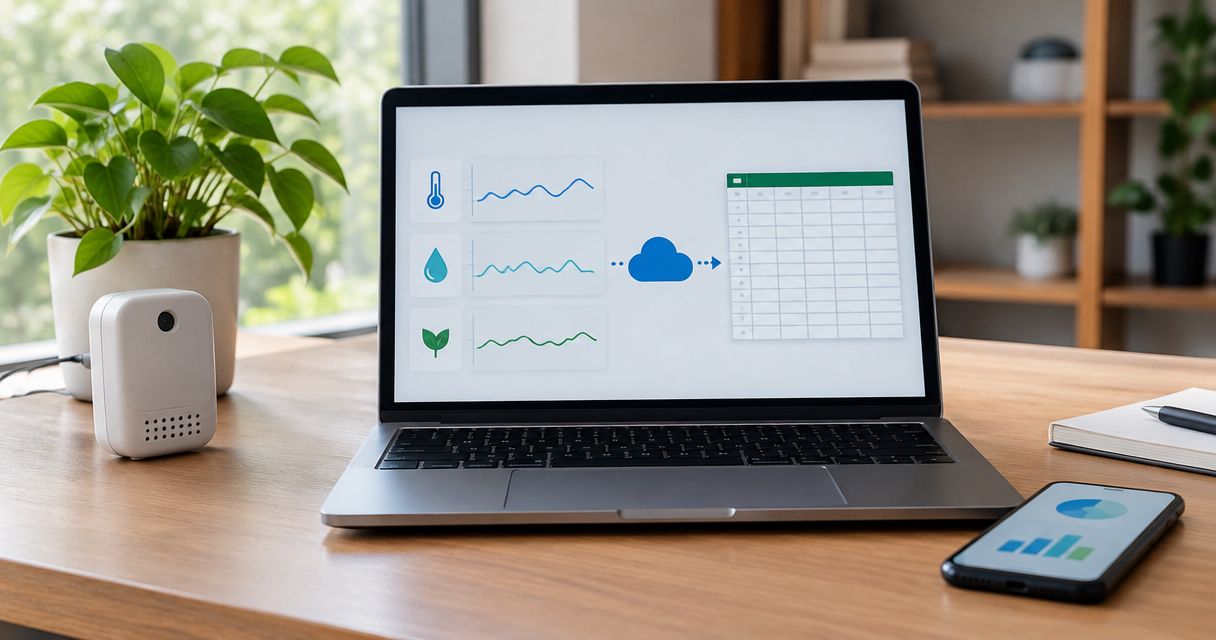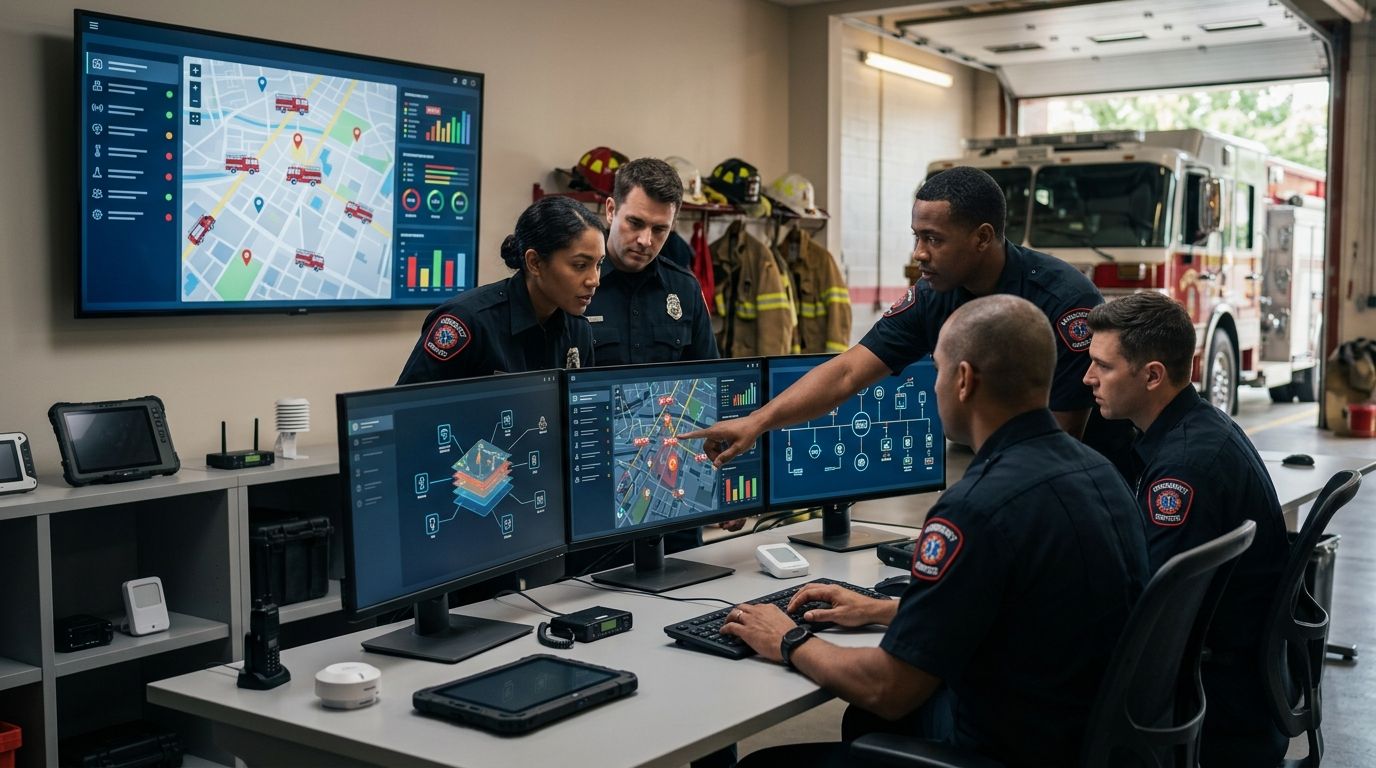
A fire station running IoT sensors needs to watch apparatus bay temperatures, SCBA compressor air quality, medication cold storage and backup generators at the same time, using a platform that alarms the right shift and logs what actually happened. The best IoT platform for fire stations in 2026 pairs LoRaWAN or mioty sensors with a rules engine that encodes those checks instead of relying on someone walking the bay with a clipboard.
- The Kilo IoT Platform covers apparatus bays, SCBA compressor rooms, medication cold storage and backup generators from one dashboard.
- NFPA 1989 governs breathing air quality for SCBA refill compressors; NFPA 110 calls for a monthly generator load test.
- CDC guidance sets a 2°C to 8°C (36°F to 46°F) refrigerator range many EMS medications and vaccines need to stay within.
- Kilo's free plan covers up to 5 devices and 1 rule at 0 EUR; Starter is 25 EUR a month for up to 25 devices.
- Choose an IoT platform for fire stations on alarm escalation and protocol flexibility, not just sensor count.
What does a fire station need from an IoT monitoring platform?
A fire station is really four or five small buildings stacked into one: an apparatus bay, a compressor room, a kitchen and dorm wing, a medication storage area, and a backup power system that has to work at 3 a.m. in a snowstorm. Each has different failure modes and different people who need to know when something drifts.
Municipal facilities teams already track HVAC, water leaks and access control across government and municipal buildings — a fire station just stacks emergency-specific risk on top: frozen supply lines in an unheated bay, EMS medication that has to stay within a narrow band, and a generator that can't fail during a callout. Departments running their own ambulances add a fourth layer, tracking vehicle location and refrigerated compartment temperature on the rig itself.
An IoT platform for fire stations needs to hold all of that in one system without forcing the facilities officer to log into four separate vendor dashboards.
What makes the best IoT platform for fire stations?
- Protocol flexibility. LoRaWAN and mioty both work through cinderblock and steel apparatus bay walls; an MQTT connector lets an existing generator controller or building automation system publish straight into the platform.
- Alarm escalation with quiet hours. A 3 a.m. cooler alarm needs a different escalation chain than a daytime HVAC filter warning.
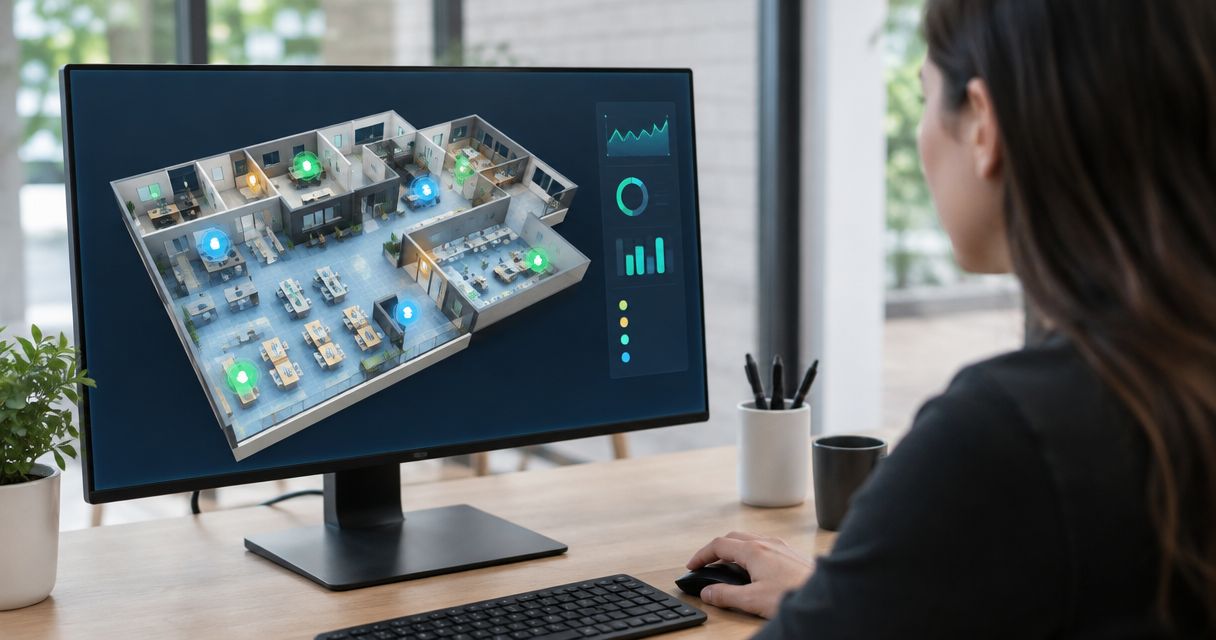
- A digital twin per device, plus a live 3D building twin, so a chief can see which bay or room triggered an alarm without reading a raw device ID.
- A rules engine that encodes thresholds — generator run-time, medication temperature range, compressor air quality — without custom code.
- Permissions that separate roles, so who sees EMS medication logs isn't the same login as who manages HVAC.
- On-premise deployment for departments under municipal data-residency requirements.
IoT platform comparison for fire station monitoring needs
| Monitoring area | Best for | Standout capability | Key limitation |
|---|---|---|---|
| Apparatus bay | Engine and ladder truck readiness | Door contact + temperature sensors on one LoRaWAN network | Doesn't replace an NFPA 1911 apparatus inspection |
| SCBA compressor room | Breathing air compliance | MQTT ingestion from existing compressor controllers | Lab air-quality testing per NFPA 1989 is still required |
| EMS medication storage | Narcotics box and drug compartment monitoring | Tiered alarm severity with SMS/email escalation | Needs a calibrated probe, not a general-purpose sensor |
| Backup generator | NFPA 110 load-test compliance | CEL-based rules on run-time and voltage thresholds | Sensor needs its own power source, separate from the backup system |
| HVAC / indoor air quality | Firehouse dorm and kitchen comfort | Multi-sensor CO2/humidity/temperature nodes | Doesn't control the HVAC unit unless it exposes commands |
| Legacy retrofit | Older stations without existing wiring | Battery-powered wireless sensors, no conduit runs | Gateway placement needs a site check in steel-frame buildings |
Apparatus bay monitoring: best IoT setup for engine and ladder truck readiness
An unheated apparatus bay in a cold climate can drop below freezing overnight, risking frozen intake lines and cracked fittings on parked engines. A temperature sensor reporting into Kilo can trigger an alarm before a crew arrives to a truck that won't start.
Kilo pros:
- Door contact and temperature sensors report on one LoRaWAN network without a separate gateway per sensor type
- Alarms escalate through email, SMS and push with configurable severity, so a bay-freeze warning reaches the on-duty officer, not just a facilities inbox
- A digital twin for each bay shows current readings without opening a spreadsheet
Kilo cons:
- Sensor placement still needs a walk-through; one sensor near the door won't catch cold pooling at the back wall
- Doesn't replace the NFPA 1911 apparatus inspection a mechanic performs
Best for: departments in freeze-prone climates that want an early alert before a truck won't start on a call.
SCBA compressor room monitoring: best IoT setup for breathing air compliance
NFPA 1989 sets breathing air quality requirements for SCBA refill compressors, and departments still need to track compressor run-time, room temperature and CO buildup between scheduled air-quality tests. An MQTT connector lets an existing compressor controller publish straight into Kilo instead of requiring a new sensor for every reading.
Kilo pros:
- MQTT connector accepts data from compressor controllers, PLCs or a standalone air-quality sensor
- CEL-based rules flag a compressor running longer than expected or a room temperature outside a safe band
- Alarm history gives an auditable record for a compliance review
Kilo cons:
- Kilo doesn't run the lab air-quality test itself — NFPA 1989 testing stays on its own schedule
- Needs an integrator or facilities staff to map the compressor's existing output into MQTT if it doesn't publish already
Best for: departments that already have a networked compressor controller and want its output alongside every other station sensor.
EMS medication cold storage: best IoT setup for narcotics box monitoring
CDC guidance for vaccines and many EMS medications sets a refrigerator range of 2°C to 8°C (36°F to 46°F), and a narcotics box or drug compartment that drifts outside that range for even a short stretch can mean discarding the contents. A calibrated probe on vaccine and medication cold storage reporting into Kilo's rules engine can alarm within minutes of an excursion instead of waiting for the next shift check.
Kilo pros:
- Alarm severity tiers separate a slow drift from a door left open, so escalation matches the risk
- Quiet hours can route a minor deviation to email overnight while a hard excursion still pages someone immediately
- Execution history gives a timestamped log for a medication audit
Kilo cons:
- Requires a calibrated probe rated for the medication's storage range, not a general-purpose room sensor
- A missed door-open event before a power failure still depends on sensor placement near the actual compartment
Best for: departments storing temperature-sensitive EMS medication that needs an auditable excursion record.
Backup generator monitoring: best IoT setup for NFPA 110 compliance
NFPA 110 calls for a monthly exercise of standby generators, typically a load run of around 30 minutes, and a missed test is a common finding in a readiness review. A current sensor or contact input wired to the generator controller can confirm the test actually ran, and how long it lasted, without someone standing in the generator room with a stopwatch.
Kilo pros:
- CEL-based rules check for a monthly run event and alarm if the window passes without one
- MQTT ingestion works with most generator controllers that already expose run-time or voltage data
- Version-controlled rules mean a threshold change rolls out with a one-click deploy and a rollback if it misfires
Kilo cons:
- The sensor confirms the generator ran; it doesn't confirm the transfer switch handled a real outage correctly
- Needs its own power source, since it's monitoring the very system that's supposed to provide backup power
Best for: departments that need a documented monthly test record for an NFPA 110 compliance file.
HVAC and indoor air quality: best IoT setup for firehouse living quarters
Firehouse dorms and kitchens run on the same HVAC system for 24-hour shifts, and a clogging filter quietly raises CO2 and humidity long before anyone files a comfort complaint. A multi-sensor node reporting temperature, humidity and CO2 into Kilo's dashboard gives facilities staff a trend line instead of a one-time complaint.
Kilo pros:
- One sensor type covers CO2, temperature and humidity instead of three separate devices
- Dashboard widgets — chart, gauge, floor-plan pin — show trends across dorm, kitchen and day room with little extra configuration
- Rules can flag a slow CO2 climb, which often signals a filter or damper issue before it becomes a full HVAC failure
Kilo cons:
- Sensors report air quality; they don't control the HVAC unit unless it exposes a command interface
- Retrofitting sensor placement in an older duct layout may take more than one pass to get right
Best for: departments treating the living quarters as an occupied space that needs comfort monitoring, not just the apparatus bay.
Legacy firehouse retrofit: best IoT sensors for stations without existing wiring
A firehouse built in the 1970s or earlier rarely has spare conduit for a new sensor network, and running new wiring through a working station is disruptive. Battery-powered LoRaWAN or mioty sensors avoid that entirely — they only need a gateway with power and a clear enough signal path. Hardware for a pilot, including probes, door contacts and gateways, is available through Kilo's sister company, Kilo Electronics, with worldwide shipping.
Kilo pros:
- Battery-powered sensors skip the wiring project altogether
- mioty's telegram-splitting handles interference from steel apparatus doors and thick masonry better than a single narrowband link
- A private LoRaWAN or mioty network server is built into Kilo, so there's no separate network server to stand up
Kilo cons:
- Gateway placement in a steel-frame building still needs a site check before rollout
- Battery life varies by report interval and needs planning for a station that doesn't want monthly battery swaps
Best for: older stations that want sensor coverage without an electrical contractor on-site.
Start monitoring your station for free
Kilo's free plan covers up to 5 devices and 1 rule, no card required.
Which IoT platform should a fire station choose in 2026?
A single-station department watching one apparatus bay, one compressor room and one medication box fits inside Kilo's free plan: 5 devices and 1 rule at 0 EUR, no card required. A department running a full station plus a generator and HVAC monitoring will likely cross into Starter, at 25 EUR a month for up to 25 devices, with gateways unlimited on either tier.
The deciding factor isn't sensor count — it's whether the platform can hold apparatus bay temperature, SCBA compressor air quality, medication cold storage and generator run-time in one rules engine with escalation matched to each risk. A platform that only draws temperature charts still leaves someone checking a logbook by hand. For a department already running EMS vehicles, pairing station monitoring with fleet-level vehicle tracking closes the loop between the station and the rig on the road.
FAQ
What is the best IoT platform for fire stations in 2026?
For most departments, a platform combining LoRaWAN or mioty sensors with a rules engine and tiered alarm escalation — such as Kilo — covers apparatus bay temperature, SCBA compressor air quality and EMS medication storage from one dashboard. Departments with a networked generator controller or existing BMS also need MQTT ingestion, not just wireless sensors.
Can an IoT platform monitor SCBA compressor air quality?
An IoT platform can track compressor run-time, room temperature and CO buildup between scheduled tests, but it doesn't replace the lab air-quality testing NFPA 1989 requires for SCBA refill compressors. Treat the sensor data as a record between formal test cycles, not a substitute for them.
How do fire stations monitor vaccine and medication cold storage?
A calibrated temperature probe in the narcotics box or drug refrigerator reports into a rules engine set to the medication's required range, commonly the 2°C to 8°C (36°F to 46°F) range CDC guidance sets for many vaccines and EMS drugs. An alarm fires on a drift or door-open event instead of waiting for a shift-change check.
What's the difference between LoRaWAN and mioty for a fire station deployment?
LoRaWAN is the more common protocol with broader sensor availability, while mioty's telegram-splitting handles interference from steel apparatus doors and dense masonry better in some stations. Both run on Kilo's built-in network server, so the choice comes down to the sensor catalog and the building's RF environment.
How much does an IoT monitoring platform cost for a single fire station?
Kilo's free plan covers up to 5 devices and 1 rule at 0 EUR with no card required, which fits a single apparatus bay and compressor room pilot. A full station covering medication storage, HVAC and a generator typically needs Starter, at 25 EUR a month for up to 25 devices, with gateways unlimited on either tier.
Can IoT sensors monitor backup generators for NFPA 110 compliance?
A current sensor or contact input wired to the generator controller can confirm a monthly test ran and how long it lasted, supporting the documentation NFPA 110 expects. It confirms the generator ran, not that the transfer switch handled a real outage correctly, so manual verification still belongs in the maintenance plan.
Do fire stations need MQTT or LoRaWAN sensors?
Most stations need both: MQTT for equipment that already has a network connection, like a generator controller or PLC, and LoRaWAN or mioty for battery-powered sensors in bays and rooms without existing wiring. A platform with both connectors avoids running two separate systems.
How does an IoT platform alert an on-duty crew to a sensor problem?
Alarms route through email, SMS and push notifications with configurable severity tiers, so a minor HVAC drift can go to a facilities inbox while a medication excursion pages the on-duty officer immediately. Quiet hours keep low-severity alerts from waking a crew overnight without suppressing anything urgent.
What's the most overlooked sensor in a fire station IoT deployment?
Most departments plan for apparatus bay temperature and medication cold storage first, then skip the compressor room entirely because it already has a gauge on the wall. A gauge only tells you the reading at the moment someone looks at it — it doesn't alarm at 2 a.m. when a compressor runs past its normal cycle or a room temperature climbs during a heat wave.
The stations that get the most value out of an IoT platform for fire stations in 2026 are the ones that wire in the compressor room and the generator alongside the more obvious apparatus bay and cold storage sensors, because those are the systems nobody checks between scheduled inspections.