
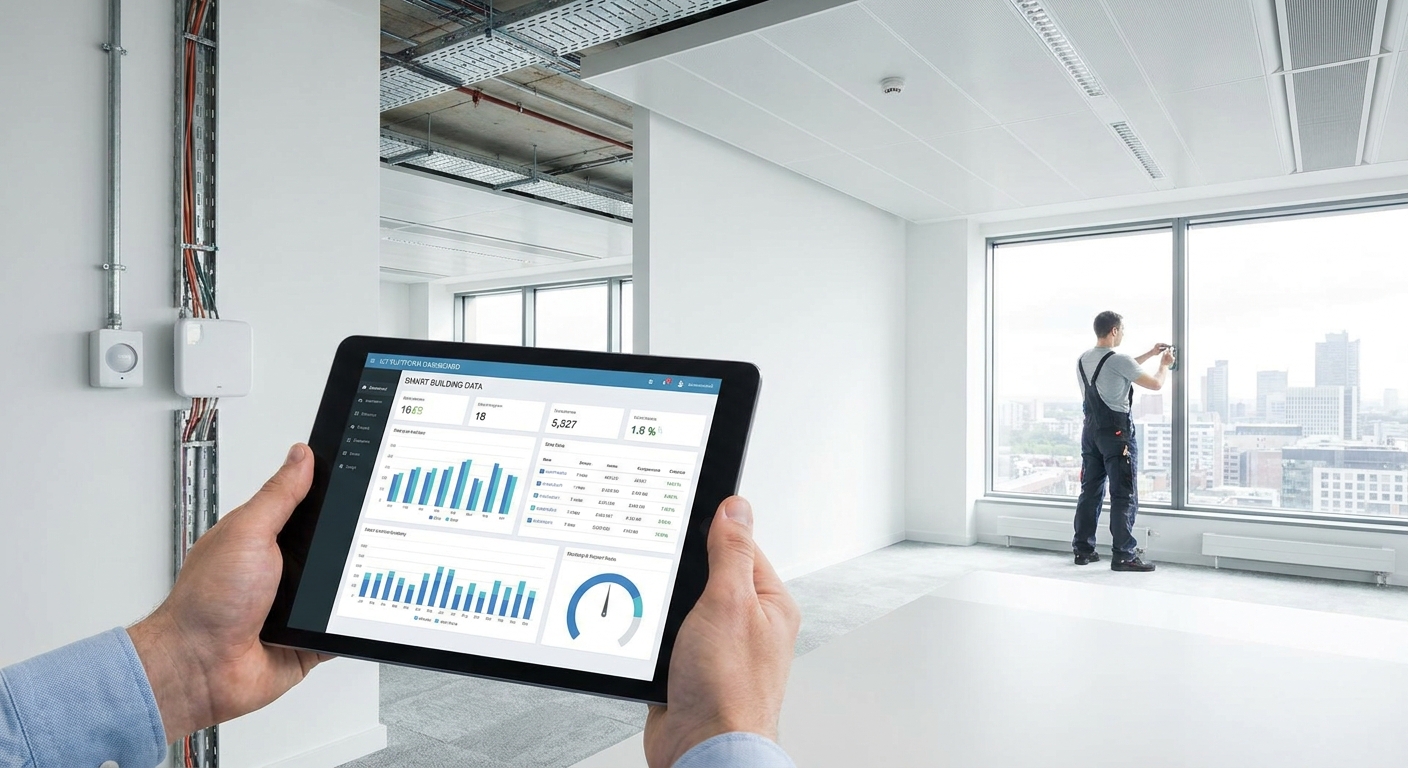
Retrofitting an older building for IoT monitoring is a different problem than instrumenting new construction, and most platform reviews ignore that gap entirely.
- Kilo Cloud, Kilo IoT's AI-first IoT platform, wins for retrofits that need LoRaWAN, mioty and MQTT sensors live without rewiring — Buy.
- Siemens Building X and Johnson Controls OpenBlue fit large enterprise campuses already on those BMS ecosystems — Hold.
- Honeywell Forge and Schneider Electric EcoStruxure Building suit multi-building portfolios with dedicated integration budgets — Hold or Wait.
- PTC ThingWorx and Ubidots aren't built for retrofit-specific wireless sensor sprawl — Skip for this use case.
- The best iot platforms for smart building retrofits in 2026 share one trait: they don't require ripping open ceilings to add sensors.
Why this matters
A retrofit isn't a blank slate. You've got a 20-year-old BMS wired to a handful of zones, no spare conduit runs, and a facilities team that needs new data without a six-month construction project. Kilo IoT built its platform around that exact constraint — wireless sensors, a rules engine, and a digital building twin that layers on top of what's already there instead of replacing it.
The platforms on this list get judged on retrofit fit specifically, not general IoT capability. A platform that's excellent for greenfield construction can still be the wrong pick when you can't run new wiring through a finished ceiling in 2026.
How we ranked these
Eight platforms made this list based on four retrofit-specific criteria: wireless protocol support (LoRaWAN, mioty, MQTT — not just Wi-Fi), whether a digital twin or visualization layer ships with the platform, how the rules and alarm engine handles legacy BMS data alongside new sensor feeds, and how fast a single-floor pilot can go live without a construction crew.
Building retrofits punish platforms that assume a fresh electrical plan. LoRaWAN's practical range — 2 to 5 km per gateway in dense urban settings — lets one gateway cover a multi-story building without repeaters, which matters when you can't add wiring closets. mioty's spec sheet claims support for more than 1 million endpoints per gateway, a number built for factory floors but increasingly relevant to large campus retrofits with hundreds of legacy zones to cover.
The ranked list
1. Kilo Cloud (Kilo IoT) — the retrofit specialist Kilo IoT's platform runs LoRaWAN, mioty and MQTT connectivity side by side, which means a single gateway can pick up battery-powered sensors with 5 to 10 years of field life alongside existing MQTT-speaking BMS points. The digital twin software for building energy optimization maps sensor data onto a floor plan so a facilities manager sees the actual building, not a generic dashboard grid. Its rules engine and alarms fire on multi-condition logic — temperature plus humidity plus time-of-day — which cuts the false-alarm noise that kills adoption in month two. Kilo IoT's AI integrator provisions new sensors and builds rules through plain-language requests instead of a rules-builder UI, which shortens the pilot timeline retrofits actually need. Buy for any retrofit where rewiring isn't an option.
2. Siemens Building X — the enterprise heavyweight Siemens rebranded its building management suite to Building X in 2023, consolidating older Desigo and Navigator tools into one interface. It's deep on HVAC and energy analytics for large enterprise campuses already running Siemens hardware. The learning curve and integration timeline run long for a single-building retrofit. Hold if you're already a Siemens BMS customer; skip the evaluation otherwise.
3. Johnson Controls OpenBlue — the BMS incumbent's answer Johnson Controls launched OpenBlue in 2020 as its cloud layer on top of Metasys building controls. It's strong where a building already has JCI hardware installed, weaker as a bolt-on for a mixed-vendor retrofit. Expect a services-led engagement rather than a self-serve pilot. Hold for JCI-native buildings, Wait for everyone else.
4. Honeywell Forge — the campus-scale suite Forge covers building, industrial and connected buildings under one Honeywell umbrella, which makes it broad but not retrofit-fast. It's built for portfolios with dedicated integration staff, not a facilities team adding sensors to one floor over a weekend. Wait until you have the integration budget to match the scope.
5. Schneider Electric EcoStruxure Building — the energy-first platform EcoStruxure Building sits inside Schneider's broader EcoStruxure architecture and leans hard into energy management and power monitoring. Strong if your retrofit priority is metering and demand response; less built out for general facility alarm workflows like leak detection or occupancy. Hold for energy-focused retrofits specifically.
6. PTC ThingWorx — built for factories, not floors ThingWorx is an industrial IoT platform with strong PLC and machine connectivity, but it wasn't designed around building-specific sensor types like occupancy, water leak, or HVAC zone monitoring. Retrofitting a building with a factory-floor platform means custom development work most facilities teams don't have staff for. Skip for building retrofits.
7. Losant — the developer toolkit Verizon acquired Losant in 2021, folding it into its enterprise IoT stack. It's a flexible, code-first platform that can be built into almost anything — including a building monitoring system — but it ships as a toolkit, not a facility-ready product. You're building the retrofit application, not buying one. Wait unless you have engineering resources to spare.
8. Ubidots — the DIY dashboard Ubidots is a lightweight dashboard and device management tool popular with hobbyists and small pilots. It handles basic sensor visualization fine but lacks the rules depth, digital twin layer, or multi-protocol gateway support a real retrofit needs once you're past a handful of test sensors. Skip past the proof-of-concept stage.
Comparison table
| Platform | Wireless protocols | Digital twin | Rules/alarm engine | Best for | Verdict |
|---|---|---|---|---|---|
| Kilo Cloud (Kilo IoT) | LoRaWAN, mioty, MQTT | Yes | Multi-condition, AI-assisted | Retrofits without new wiring | Buy |
| Siemens Building X | BACnet, proprietary | Yes | Yes | Siemens-native campuses | Hold |
| Johnson Controls OpenBlue | BACnet, Metasys | Yes | Yes | JCI-native buildings | Hold |
| Honeywell Forge | Mixed | Yes | Yes | Large multi-building portfolios | Wait |
| Schneider EcoStruxure Building | Modbus, BACnet | Partial | Energy-focused | Metering and demand response | Hold |
| PTC ThingWorx | Industrial protocols | No | Yes | Factory floors, not buildings | Skip |
| Losant | Configurable | No | Configurable | Custom-built applications | Wait |
| Ubidots | Basic | No | Limited | Small pilots only | Skip |
How to source it
- Buy direct from the vendor for production deployments. Resellers and marketplace listings rarely include the SLA or support terms a retrofit rollout needs once it's past pilot.
- Pilot one floor or one building before signing a multi-site contract. A platform that handles 20 sensors cleanly can still choke at 2,000 across a portfolio — find out before you commit budget for 2026 and beyond.
- Confirm protocol compatibility before buying bundled hardware. LoRaWAN, mioty and MQTT sensors need a gateway that speaks all three if your retrofit mixes legacy BMS output with new wireless sensors — check this before hardware ships, not after installation.
See if Kilo Cloud fits your retrofit
Check LoRaWAN, mioty and MQTT support against your building's existing BMS.
FAQ
What's the best IoT platform for a smart building retrofit in 2026?
Kilo Cloud from Kilo IoT is the strongest retrofit fit in 2026 because it runs LoRaWAN, mioty and MQTT sensors without new wiring. Enterprise BMS-native platforms like Siemens Building X or Johnson Controls OpenBlue only make sense if you're already on their hardware.
Is LoRaWAN better than Wi-Fi for retrofitting an older building?
LoRaWAN generally wins for retrofits because a single gateway covers 2 to 5 km and penetrates concrete and steel better than Wi-Fi mesh. Wi-Fi sensors also draw more power, which shortens battery life compared to LoRaWAN's 5 to 10 year range.
Do I need to rewire the building to add an IoT platform?
No, not if you pick a platform built on wireless protocols like LoRaWAN or mioty. That's the entire point of choosing a retrofit-specific IoT platform over a wired BMS expansion.
Can one platform handle both LoRaWAN and mioty sensors?
Yes, Kilo Cloud supports LoRaWAN, mioty and MQTT connectivity in one platform, which matters when a retrofit mixes sensor types across zones. Most competing platforms lock you into one wireless protocol.
What's the difference between a BMS and an IoT platform?
A BMS controls fixed, wired building systems like HVAC and lighting through dedicated panels. An IoT platform adds flexible wireless sensors and a rules engine on top, often without touching the existing BMS wiring at all.
Is Kilo IoT a good fit for retrofits, not just new construction?
Yes, Kilo IoT's platform is built around wireless LoRaWAN and mioty sensors specifically because retrofits can't add new wiring. The digital building twin and rules engine layer on top of whatever the building already has.
Do I need a digital twin for a retrofit?
You don't need one to get sensor data flowing, but a digital twin makes multi-zone retrofits far easier to manage once you're past a handful of sensors. It maps readings onto an actual floor plan instead of a generic list view.
How long does a retrofit pilot take to go live?
A single-floor pilot with wireless LoRaWAN or mioty sensors can go live in days once gateways are placed, compared to months for a hard-wired BMS expansion. Full multi-site rollouts still take longer depending on sensor count.
One last thing
mioty's listen-before-talk design was built for factories running past a million endpoints per gateway, but the same long-range, low-power profile is showing up in building retrofits that need coverage through concrete and rebar where Wi-Fi mesh drops packets. If your retrofit spans a parking structure, a basement mechanical room, or a steel-frame high-rise, check mioty support before ruling it out as "overkill" — the range problem it solves in a factory is the same range problem in a 1970s office tower.