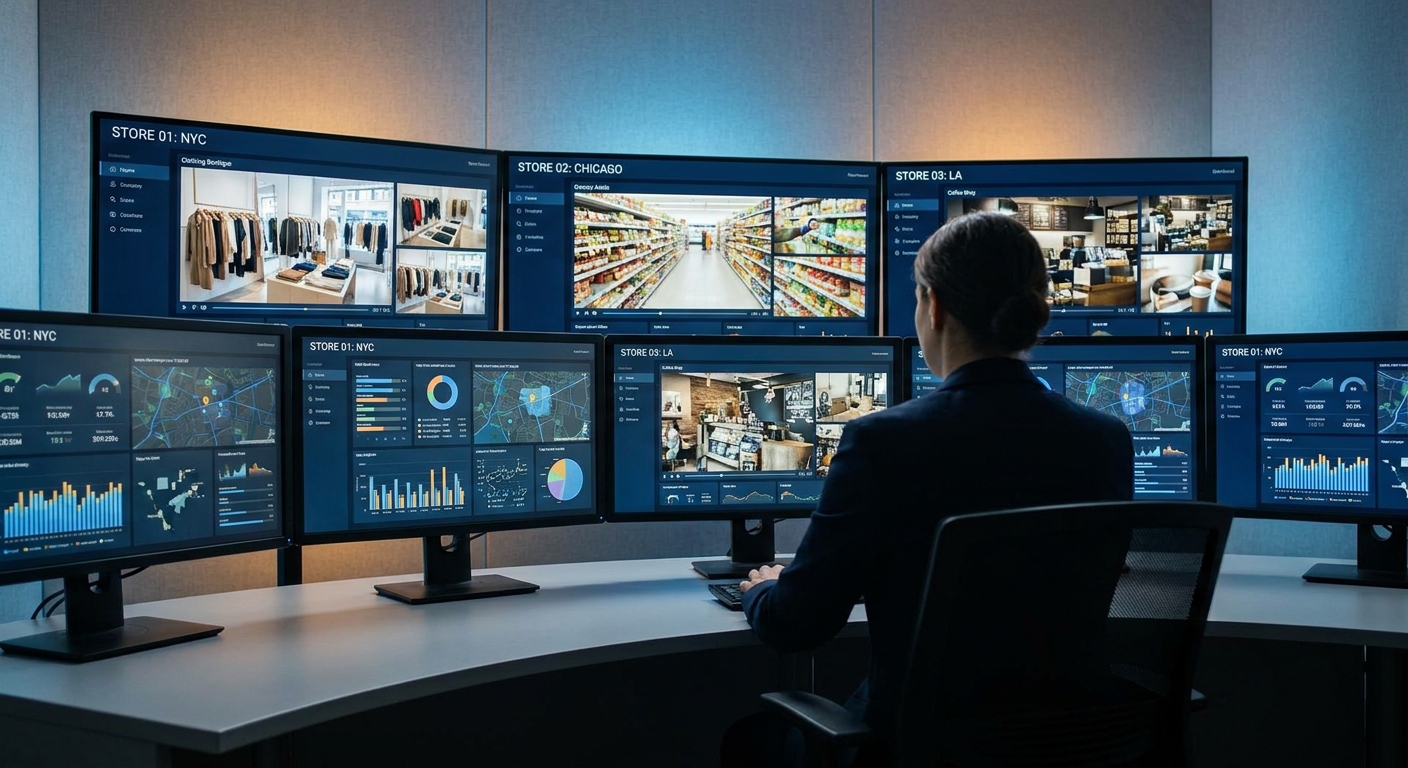
A facility monitoring system for retail chains ties refrigeration, HVAC, and back-of-house equipment across every store into one dashboard, so a district manager sees a walk-in cooler drifting at 8°C in one location before a shift lead even notices the compressor short-cycling.
- A facility monitoring system for retail chains should put every store's refrigeration and HVAC on one dashboard — Kilo IoT's platform does this and earns a Buy for chains running 15+ locations.
- Cold storage alerts need to fire in minutes, not hours; 8°C for 10 minutes on a dairy case is enough to flag a spoilage risk in 2026.
- Private LoRaWAN, not Wi-Fi, covers concrete stockrooms, walk-in coolers and loading docks where signal normally dies.
- Skip any system that needs a technician on-site to add or move a sensor — multi-site ops can't scale that way.
Why this matters
A single-store business can get away with a manager walking the floor and eyeballing the thermostat. A 40-store chain can't — nobody is walking 40 floors at once, and turnover in store management means the person watching the freezer this month is gone by next quarter.
The cost of not knowing shows up as spoiled inventory, comfort complaints that turn into lost foot traffic, and HVAC units that run all night because nobody flagged the stuck relay. In 2026, the fix isn't more site visits — it's a system that watches every location the same way, all the time, and tells the right person when something's actually wrong.
Who this is for
This guide is for facilities and operations directors overseeing 10 to 500+ retail locations who are responsible for refrigeration, HVAC, lighting circuits, and general building health, and who need to add new stores without adding a new regional technician for each one. If that's the job, a platform like Kilo IoT is built around exactly that problem: one AI-first cloud layer across every site, not a separate app per building.
If you run one store and just want a thermostat with an app, this isn't the buying guide you need — the criteria below are calibrated for chains, not single locations.
What to look for in a facility monitoring system for retail chains
Multi-site rollup without a new hire per region
The dashboard has to show all stores in one view, not a login per location. If adding store 51 means provisioning a whole new instance, the system doesn't scale the way a growing chain needs it to in 2026.
Alarm routing that reaches the on-call person, not the whole distribution list
An alarm that blasts every regional manager trains people to ignore it within a month. Look for rules that route a freezer alarm to the store's on-call tech first, and escalate to the district office only if nobody acknowledges it within a set window.
Connectivity that survives concrete stockrooms and steel walk-ins
Store Wi-Fi wasn't built for a sensor bolted inside a steel walk-in cooler or buried in a concrete stockroom. LoRaWAN and mioty were built for exactly that kind of signal environment, and a private LoRaWAN network gives a chain coverage that doesn't depend on the store's guest Wi-Fi staying up.
A building view that shows where the energy and the risk actually sit
A digital twin of the building — not a spreadsheet of sensor IDs — lets a facilities team see which zone is running hot, which rooftop unit is cycling too often, and where the next equipment failure is likely to happen before it happens.
Setup that doesn't require an integrator on-site for every store
If mounting a new sensor or building a new alarm rule requires a service call, the rollout timeline for a 100-store chain stretches into years. An AI integrator that can provision a device and set an alarm through a plain-language conversation cuts that timeline down to days.
Top picks for multi-site retail chains
Kilo Cloud dashboard for multi-site facility teams — the command center pick
One login shows refrigeration, HVAC, and general equipment status across every store, whether that's 20 locations or 500. The rules engine and alarm layer sit on top of the same view, so an ops team isn't toggling between five separate apps to check five separate systems. Verdict: Buy for chains that already run more than one region and need a single multi-site facility dashboard instead of a folder of spreadsheets.
Cold storage and refrigeration temperature dashboards — the loss-prevention pick
Dairy and frozen goods don't wait for a manager's next walk-through. A drift to 8°C for 10 minutes is enough to put a case at risk, and a monitoring system needs to catch that inside the window, not after the product is already compromised. Verdict: Buy if any store in the chain runs walk-in coolers, reach-in cases, or frozen storage — see the cold storage temperature monitoring dashboards built for that exact failure mode.
Private LoRaWAN network for enterprise retail — the connectivity backbone
A private LoRaWAN network gives a chain its own coverage layer instead of leaning on public cellular or store Wi-Fi that a store manager can reboot mid-alarm without knowing it. It matters most for chains with dense back-of-house layouts — big-box stores, grocery, and warehouse-format retail. Verdict: Consider it once a chain passes roughly 20-30 locations and connectivity gaps start showing up store to store.
Multi-site device management platform — the scaling pick
The question isn't whether one sensor works — it's whether adding sensor number 500 is as easy as sensor number one. A device management layer that handles provisioning, firmware, and fleet health across every site is what separates a pilot program from an actual chain-wide rollout. Verdict: Consider this early, before the rollout, not after store 40 is already live on a different setup than store 1.
“If a store manager finds out about a freezer failure from spoiled product instead of an alert, the monitoring system already failed.”
What to avoid
- Consumer-grade Wi-Fi sensors marketed for business use. They look identical to the retail versions but drop off guest networks and have no rules engine behind them — fine for a home garage, wrong for a 40-store chain.
- Single-site security platforms rebranded as "facility monitoring." Camera and access-control vendors sometimes bolt on a temperature widget; it doesn't roll up across sites and it wasn't built for refrigeration alarms.
- Any system that requires a truck roll to add a sensor. If mounting a new device means scheduling a technician visit, the rollout math falls apart past a handful of stores.
Verdict comparison
| Pick | Best for | Connectivity | Verdict |
|---|---|---|---|
| Kilo Cloud multi-site dashboard | Chains with 15+ locations needing one view | LoRaWAN, mioty, MQTT | Buy |
| Cold storage temperature dashboards | Any store running refrigeration | LoRaWAN | Buy |
| Private LoRaWAN network | Chains past ~20-30 stores with signal gaps | Private LoRaWAN | Consider |
| Multi-site device management | Chains planning a phased rollout | Platform-agnostic | Consider |
See the platform across your stores
Walk through how one dashboard covers refrigeration, HVAC, and alarms chain-wide.
FAQ
What is a facility monitoring system for retail chains?
It's a platform that centralizes refrigeration, HVAC, and equipment health data from every store location into one dashboard with automated alarms. In 2026, most chains run this on LoRaWAN or mioty sensors feeding a cloud rules engine rather than manual walk-throughs.
How much does a multi-site facility monitoring system cost?
Cost depends on sensor count per store and how many locations are onboarded, since pricing typically scales with devices and connectivity rather than a flat per-chain fee. Check current pricing directly with the vendor for an accurate per-store estimate.
Is LoRaWAN better than Wi-Fi for retail store monitoring?
LoRaWAN generally holds a signal through concrete stockrooms and steel walk-in coolers better than store Wi-Fi, which is built for guest traffic, not sensor reliability. mioty is another option for facilities with dense sensor counts needing higher network capacity.
How fast should a cold storage alarm fire?
A refrigeration alarm should fire within minutes of a temperature threshold breach, not hours later during a manual check. A drift to around 8°C for 10 minutes on dairy or frozen goods is generally enough to warrant an immediate alert.
Can one dashboard really cover hundreds of retail stores?
Yes, a properly built multi-site platform rolls up every store into a single view rather than requiring a separate login per location. That's the core difference between a facility monitoring system built for chains and a single-building tool stretched past its design.
Do I need an integrator to set up alarms at every store?
Not with an AI-first platform — an AI integrator can provision devices and build alarm rules through plain-language instructions instead of a technician configuring each site by hand. That cuts rollout time significantly for chains adding stores throughout 2026.
What's the difference between mioty and LoRaWAN for retail facilities?
mioty handles higher sensor density per gateway, which matters for large-format stores or warehouses with many monitoring points, while LoRaWAN is the more common default for standard retail footprints. Both outperform Wi-Fi for buried, in-cooler, or concrete-shielded sensor placement.
Should a retail chain use a digital twin of its buildings?
A digital twin is worth it once a chain wants to see energy use and equipment risk by zone rather than by isolated sensor readings. It's most useful for chains actively working on HVAC cost reduction across many buildings, not for a single small store.
One last thing
The detail that gets missed most in facility monitoring pitches: the AI layer isn't there to chat, it's there to act on your actual deployment — provisioning a new sensor, writing a rule, or setting an alarm threshold through a plain-language request instead of a configuration screen. For a chain onboarding a new store every month through 2026, that's the difference between a rollout that takes a week and one that takes a quarter.