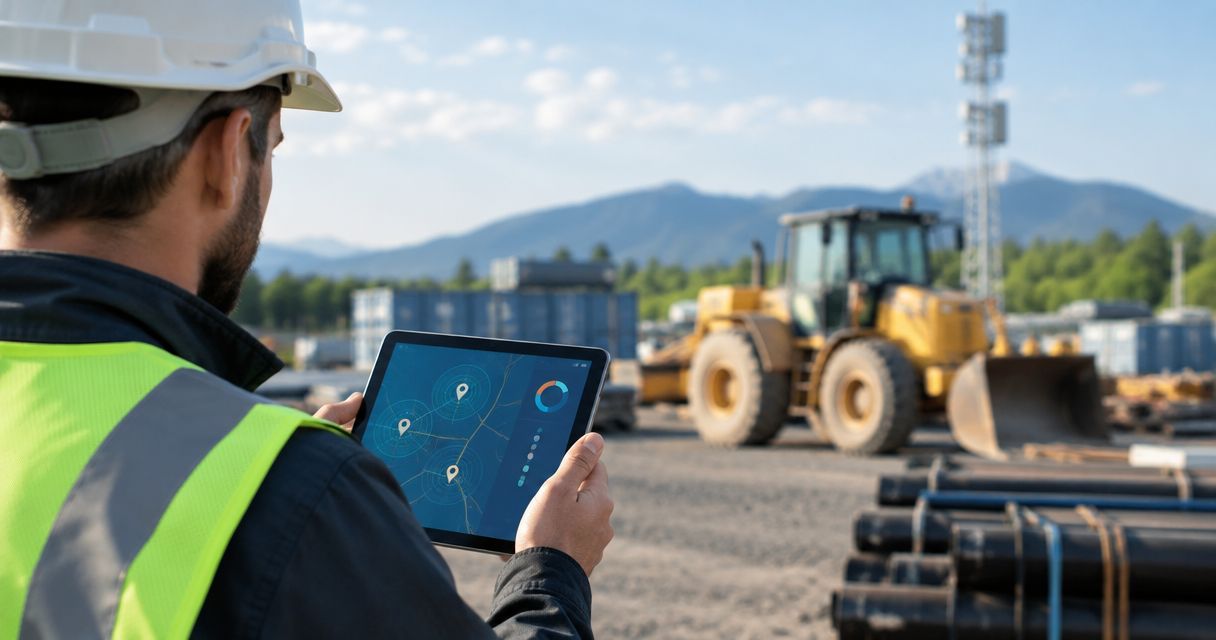
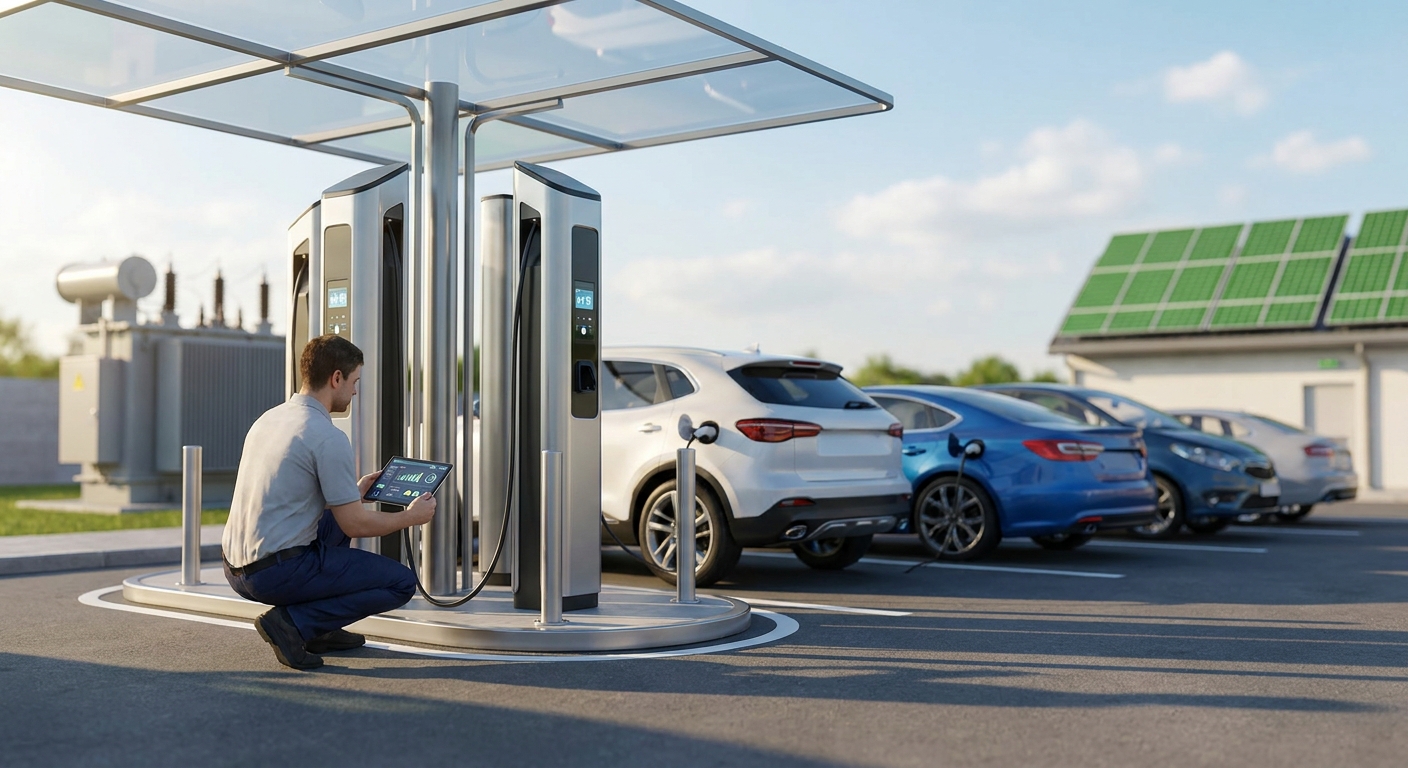
EV charging networks fail quietly. A connector overheats, a breaker trips, a cabinet in a parking structure sits at 48°C in July — and the driver finds the dead screen before the operator does. IoT monitoring for EV charging station networks closes that gap by putting sensors and alarms on the chargers and cabinets themselves, not just on the billing backend.
- IoT monitoring for EV charging station networks starts with cellular sensor kits for scattered hubs without fiber runs — Buy.
- Grid load monitoring tied to utility data prevents demand-charge surprises across multi-site networks in 2026 — Buy.
- Solar-plus-storage charging sites need dedicated power monitoring before scaling past a handful of bays — Consider.
- Bay occupancy sensors help utilization reporting but don't replace fault alarms — Consider, not the priority.
- Skip standalone cabinet HVAC add-ons unless connector temperatures already trip past 65°C.
Why this matters
A charging bay offline for 15 minutes during a Friday evening peak isn't a delayed session, it's a lost one — the driver moves to the next network and doesn't come back that week. Networks running dozens of sites across a metro area can't staff someone to walk every cabinet, so the monitoring has to do the noticing.
Power is the other half of the problem. DC fast chargers now push 50 to 350 kW per bay, and a site host who doesn't track load against the transformer or demand-charge tier finds out about the overage on the utility bill, not before it. A IoT monitoring platform built around rules and alarms — not just a dashboard someone has to remember to check — catches both failure modes in the same system.
Who this is for
This guide is for charge point operators (CPOs), fleet depot managers running Level 2 or DC fast charging for delivery vans, and facilities teams at retail sites or municipal lots who now own charging infrastructure alongside HVAC and lighting. If your network spans more than three or four sites, or if any of your chargers sit outdoors with no on-site staff, the monitoring approach below applies directly.
What to look for in IoT monitoring for EV charging station networks
Connectivity that reaches every bay, not just the ones near the router
Charging cabinets are steel boxes in parking structures, sometimes underground, often at the edge of a Wi-Fi network that was never designed to cover them. Cellular or LoRaWAN connectivity that doesn't depend on the site's existing network avoids the dead-zone problem entirely.
Power and load visibility down to the charger, not just the meter
A site-level utility meter tells you the bill; it doesn't tell you which bay tripped a breaker or which charger is drawing more than its rated load at 9pm. You need per-charger or per-panel visibility to catch a problem before it becomes an outage.
Fault alerts that fire before a driver finds a dead connector
Ground faults, connector overheating past 65°C, and communication drops between the charger and the CPMS all need a rules engine that pages someone in minutes, not a report someone reads on Monday.
Multi-site dashboards built for networks, not single stations
A dashboard designed for one charger doesn't scale to 40 sites. You need one view across the network with drill-down to a single bay, and alarm history that shows whether a fault is a one-off or a pattern on a specific hardware batch.
API access into your CPMS/OCPP backend, not a walled garden
Most networks already run OCPP-based charge point management. Monitoring that can't push sensor data or alarm status into that system via API creates a second screen nobody checks consistently.
Environmental protection for outdoor cabinets
Water ingress, condensation, and ambient heat inside an enclosure shorten the life of the electronics long before the charger itself fails. Temperature and humidity sensors inside the cabinet catch this months before a warranty claim.
Top picks for IoT monitoring for EV charging station networks
Cellular-connected sensor kits for distributed hubs — the safe pick when sites don't share a network backbone. Cellular gateways report on their own schedule regardless of on-site Wi-Fi, which matters when a charging hub sits at the edge of a retail parking lot with weak signal. Cellular IoT connectivity built for distributed assets covers this case without depending on the site's IT setup. Buy.
Grid load monitoring tied to utility data — the pick for any network past five sites. Demand charges from utilities can double a site's electricity cost if peak load isn't managed, and per-charger load data lets you stagger charging sessions before that happens. A platform built around utility-grade monitoring gives operations teams the load curve they need to negotiate or manage tariffs. Buy.
Solar-plus-storage charging sites — the pick for networks adding on-site generation to offset grid draw. Monitoring the battery state of charge and solar input alongside the charger load prevents a scenario where a "green" site quietly pulls from the grid at night without anyone noticing. Renewable energy site monitoring fits this setup directly. Consider if solar or storage is already in the site plan for 2026 or 2027 — not worth building out for a single pilot bay.
Bay-level occupancy sensors — useful for utilization reporting and driver-facing apps that show open stalls, but they answer a different question than fault monitoring does. A parking garage occupancy setup tells you a bay is empty; it doesn't tell you the charger in that bay is dead. Consider as a layer on top of fault monitoring, not a substitute for it.
Standalone cabinet HVAC add-ons — tempting when a cabinet runs hot, but most enclosure heat problems trace back to a connector or contactor issue that HVAC won't fix. Fix the root cause with temperature alarms first. Skip unless ambient cabinet readings are already confirmed above safe limits after the connector issue is ruled out.
Map your charging network's monitoring gaps
See where Kilo IoT fits your existing OCPP setup before you add sensors.
What to avoid
- Consumer-grade Wi-Fi sensors that look cheap upfront but fail the moment a steel cabinet or underground structure blocks signal — you find out during an outage, not before.
- Platforms that report uptime but skip power quality — a charger that's technically "online" but drawing outside spec is a fire risk report waiting to happen, not a healthy asset.
- Hardware-locked monitoring incompatible with your OCPP backend — it forces a second dashboard nobody checks and defeats the point of centralizing alerts.
Verdict comparison
| Setup | Connectivity | Power visibility | Fault alerting | 2026 verdict |
|---|---|---|---|---|
| Cellular sensor kits | Strong, no site dependency | Per-charger with add-on metering | Yes | Buy |
| Grid/utility load monitoring | Depends on chosen connectivity | Strong, panel-level | Partial | Buy |
| Solar-plus-storage monitoring | Strong | Strong for generation + load | Partial | Consider |
| Bay occupancy sensors | Strong | None | No | Consider |
| Cabinet HVAC add-ons | N/A | None | No | Skip |
FAQ
What is IoT monitoring for EV charging station networks?
It's the use of sensors and connected alarms on chargers and cabinets to detect faults, overheating, and load problems before they cause downtime. It runs alongside the OCPP/CPMS software that handles billing and session management.
How much does IoT monitoring cost for an EV charging network?
Cost depends on sensor count, connectivity type, and site count, and varies by vendor and hardware choice. Cellular or LoRaWAN sensor kits typically cost less per site than adding new wiring for a wired monitoring system.
Is cellular or LoRaWAN better for EV charging site monitoring?
Cellular works better for scattered single sites with no shared infrastructure; LoRaWAN works better across a campus or lot with several chargers sharing one gateway. Both avoid depending on a site's existing Wi-Fi.
What temperature should trigger a charger connector alarm?
Most operators set alarm thresholds around 65°C at the connector, since sustained heat above that level signals a contact or cable fault rather than normal charging heat. Exact thresholds should match the charger manufacturer's spec sheet.
Can IoT monitoring integrate with an existing OCPP backend?
Yes, when the monitoring platform supports API access rather than a closed dashboard. This lets alarm and sensor data feed into the same CPMS operators already use for session and billing data.
Do EV charging networks need power monitoring or just uptime monitoring?
Both, but power monitoring catches problems uptime monitoring misses — a charger can report online while drawing outside its rated load. Demand-charge surprises on the utility bill are usually a power visibility gap, not an uptime one.
How many sensors does a typical charging bay need?
A basic setup covers connector temperature, cabinet ambient temperature and humidity, and load or current draw — usually three to four sensor points per bay or shared panel. Networks adding occupancy tracking add one more sensor per stall.
One last thing
Most charging network outages that make it to a driver complaint started as a connector temperature reading nobody was watching two weeks earlier. The fix isn't more staff walking the lot — it's an alarm that fires at 65°C instead of waiting for the charger to fail outright in 2026's summer heat.