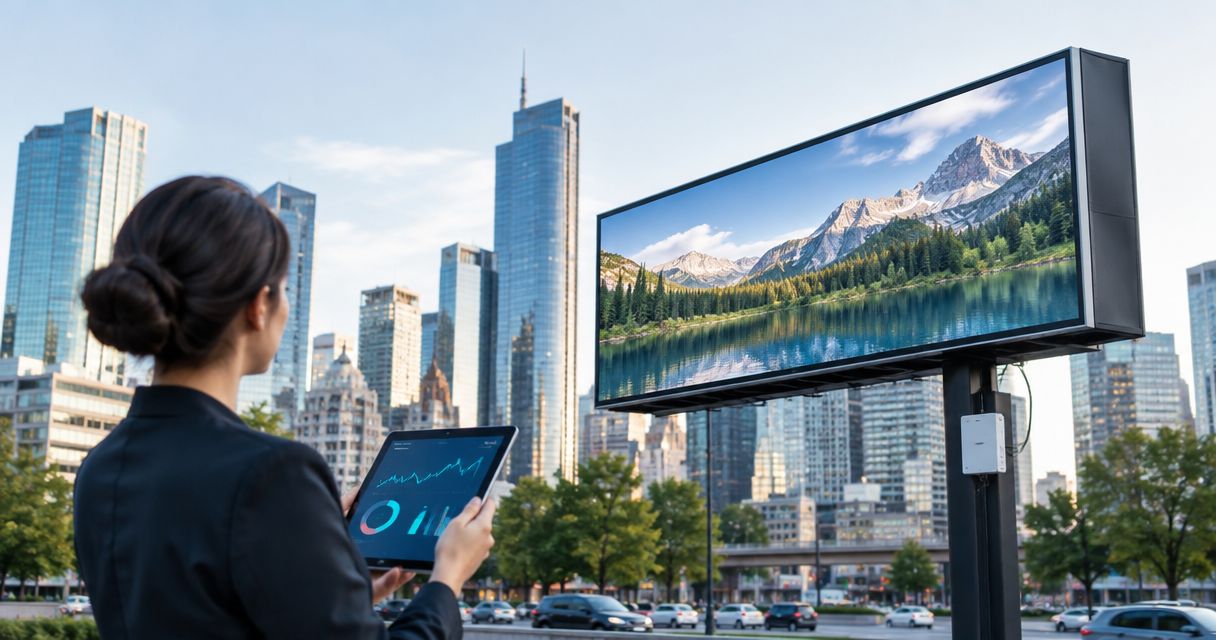
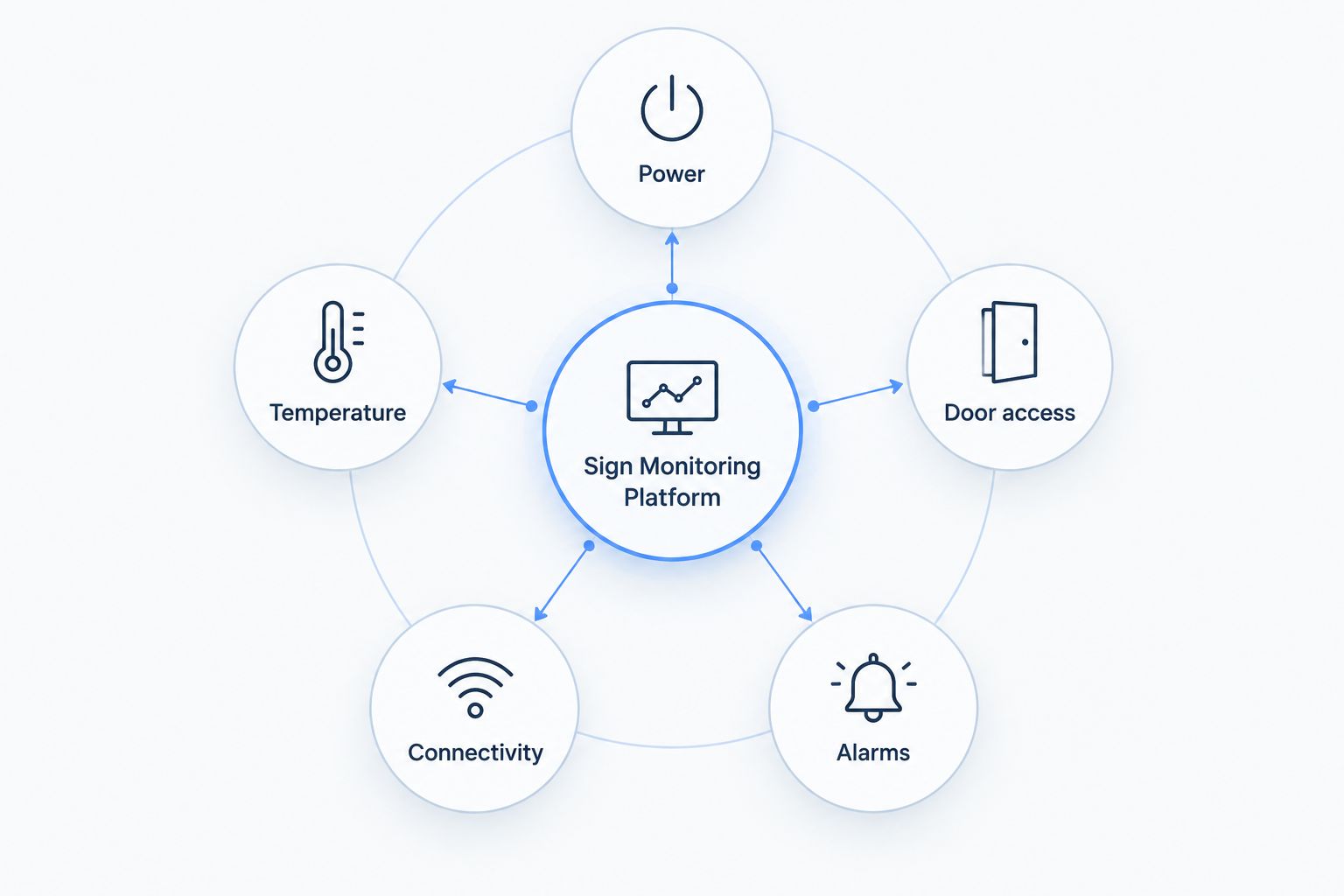
IoT monitoring for digital billboard signage tracks power draw, cabinet temperature, door access, and network connectivity across every unmanned outdoor sign in a portfolio, from one dashboard, so a fault gets flagged before a client or a passerby reports a dark face.
- IoT monitoring for digital billboard signage catches power loss, door tamper, and overheating before a sign goes dark and a client calls.
- Kilo's built-in LoRaWAN and mioty network server removes the need for a separate network server at every unmanned sign site.
- Outdoor sign cabinets need enclosures rated to IEC 60529 IP66 or better -- most indoor sensors fall short of that.
- A digital twin per sign lets one operator watch fifty or five hundred locations without a single truck roll.
- Camera-based Kilo Lens checks are labeled coming soon; sensor-based monitoring on power, temperature, and access works in 2026.
Why does outdoor digital signage need IoT monitoring?
A billboard or digital sign is unmanned by design. Nobody stands next to it, so a power sag, a stuck LED driver, or a pried-open access panel goes unnoticed until someone drives past and files a complaint, or an out-of-home (OOH) client audits the network and finds a dark face on their paid schedule. That gap between failure and discovery is the entire cost problem for a sign network operator.
Outdoor sign electronics sit inside sealed cabinets exposed to direct sun, rain, and temperature swings across an entire year. Kilo, a Physical AI platform built for exactly this kind of distributed, unmanned deployment, connects sensors and machines into one system rather than requiring a technician to inspect every cabinet on a schedule. The National Electrical Code's Article 600 governs electric signs and their wiring, and enclosure protection for outdoor electronics is generally specified against IEC 60529 IP ratings — most billboard sign cabinets warrant at least IP66 for the sensor and its housing. Field service technicians and OOH network operations managers are the two job titles that actually own this problem day to day, and both are usually working from a spreadsheet of last-inspection dates rather than live data.
How to set up IoT monitoring for a billboard or signage network
Monitor power and voltage at each sign location
Power loss is the single most common reason a sign goes dark, and it's the easiest fault to catch early if the data exists.
- Log voltage and amperage manually during scheduled truck rolls to catch sag before outright failure
- Compare monthly utility billing per site against expected sign wattage to spot drift
- Install a current sensor or power meter on the AC feed to the display driver
- Feed live readings into Kilo over MQTT, or over LoRaWAN for battery-powered sites, building one digital twin per cabinet
- Set a threshold rule so a power drop below expected draw fires an alarm within minutes instead of at the next scheduled visit
Track internal cabinet temperature and humidity
Sealed sign cabinets in direct sun run hot, and LED drivers and power supplies are usually the first parts to fail once internal temperature climbs past their rated ceiling.
- Check internal temperature with a handheld probe during site visits — this catches nothing between visits
- Add passive vents or outdoor-rated forced-air fans to the cabinet
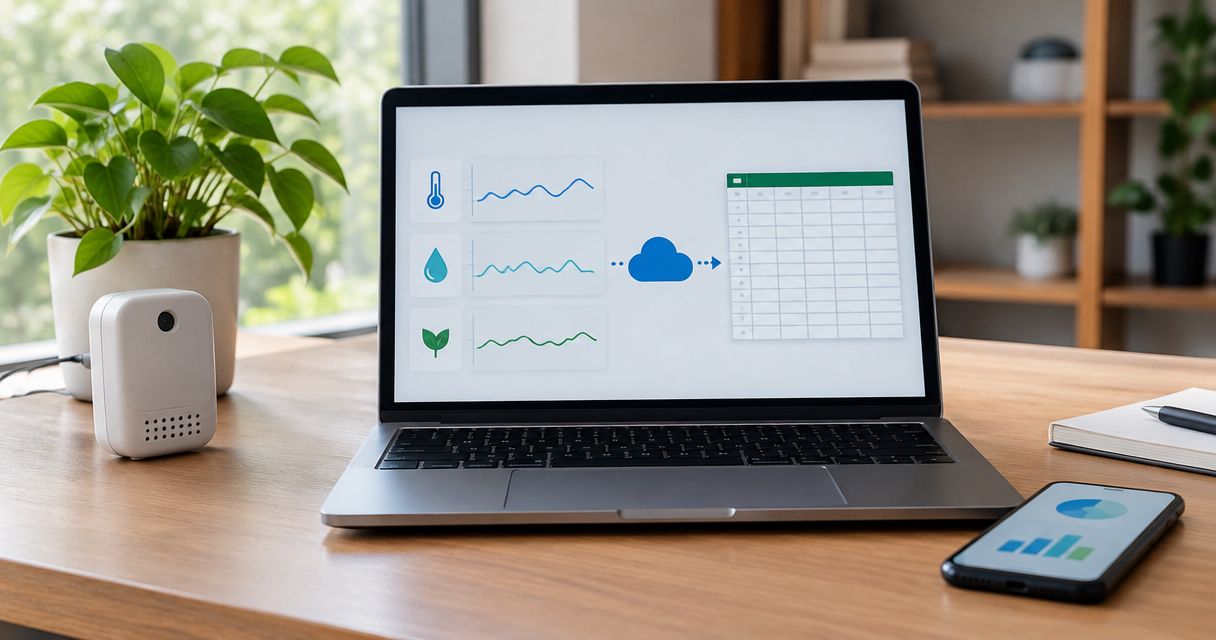
- Deploy a temperature and humidity sensor per cabinet reporting over LoRaWAN or mioty
- Build a CEL rule in Kilo's visual rules engine that escalates when cabinet temperature crosses the driver's rated limit
- Review temperature trend history per sign face to spot a cabinet running hot weeks before the driver actually fails
Detect cabinet door access and tamper events
Unmanned pole and pylon signs are common targets for copper theft and vandalism, and a padlock alone doesn't tell anyone when it's been defeated.
- Rely on physical inspection of padlocks and panel seals during scheduled rounds
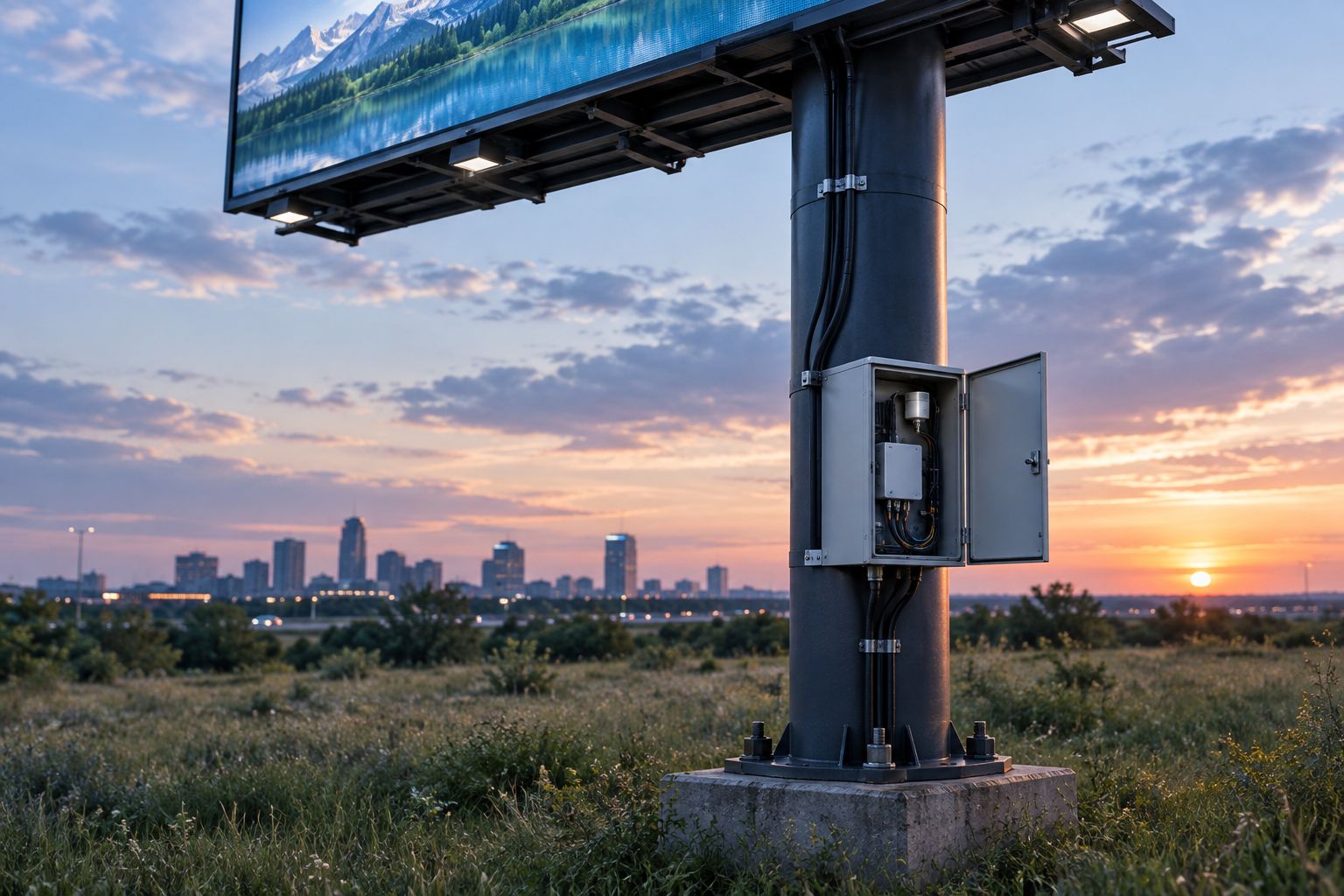
- Fit an outdoor enclosure rated for LoRaWAN sensor deployments with a door contact or vibration sensor
- Wire the door sensor into Kilo so an open event outside a scheduled maintenance window pages the on-call technician
- Keep an immutable execution and access record with a timestamp for insurance claims or law enforcement reports
Watch structural tilt and vibration on pole-mounted signs
Wind load is the structural risk nobody checks until a storm has already passed.
- Visually inspect pole plumb and guy-wire tension during annual structural reviews
- Track wind-load ratings for the sign face against local building code for its mounting height
- Mount a tilt or vibration sensor built for outdoor industrial deployments in extreme weather
- Set an alarm tier for a tilt reading past structural tolerance so a crew is dispatched before the next storm, not after it
Confirm connectivity uptime across a distributed sign network
A sensor that can't report is functionally the same as no sensor at all, and the protocol choice depends on how each site is already wired.
- Track missed check-ins per site manually in a spreadsheet
- Choose LoRaWAN for wide-area, battery-powered sensors; mioty where interference resistance over distance matters more; or MQTT where the sign is already networked to a media player
- Run monitoring on Kilo's built-in LoRaWAN and mioty network server so there's no separate network server to deploy per region
- Set escalation for any sign that misses a defined number of consecutive check-ins
Set escalation alarms for critical billboard faults
Not every alert deserves a 2 a.m. page, and treating them all the same is how field techs learn to ignore the system.
- Route power-loss and tamper events to a high severity tier so they never get buried under low-battery notices
- Build a multi-step escalation chain that pages a field technician first, then a regional manager if it goes unacknowledged
- Set quiet hours for non-critical alerts overnight, while keeping tamper and power-loss alarms always-on
- Centralize every alarm from every sign face in one inbox instead of per-region silos
Centralize dashboards for a multi-site sign portfolio
Once a network passes a handful of sign faces, checking each dashboard individually stops being realistic.
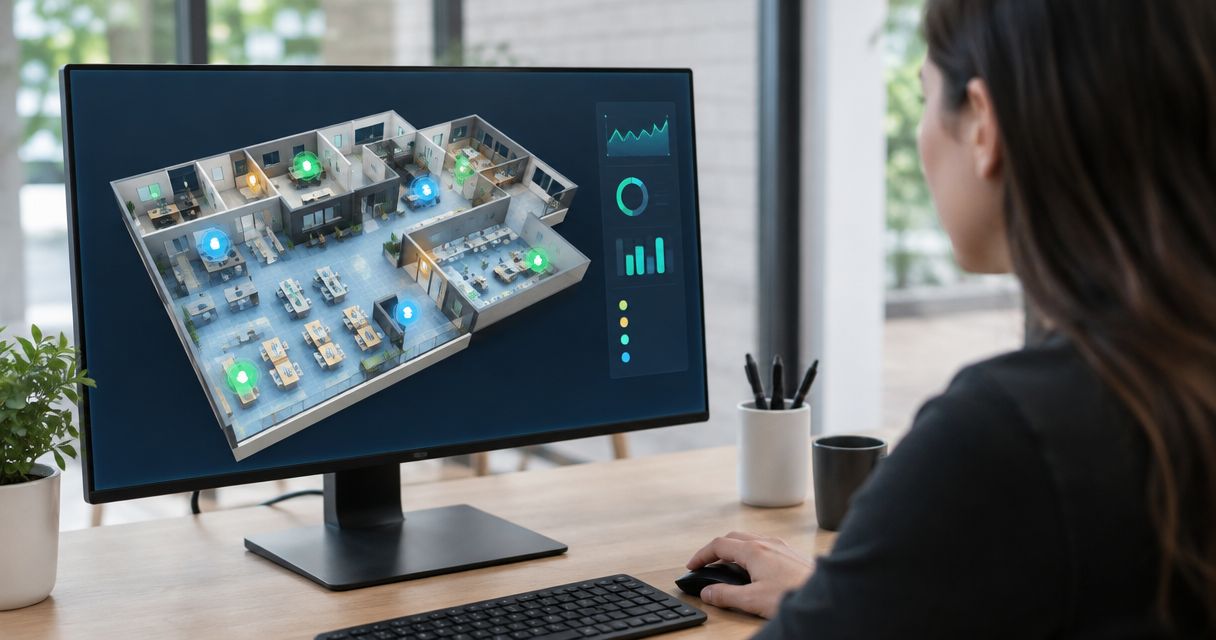
- Build one configurable dashboard with a map widget plotting every sign location and its live status
- Add gauge widgets for cabinet temperature and power draw per site
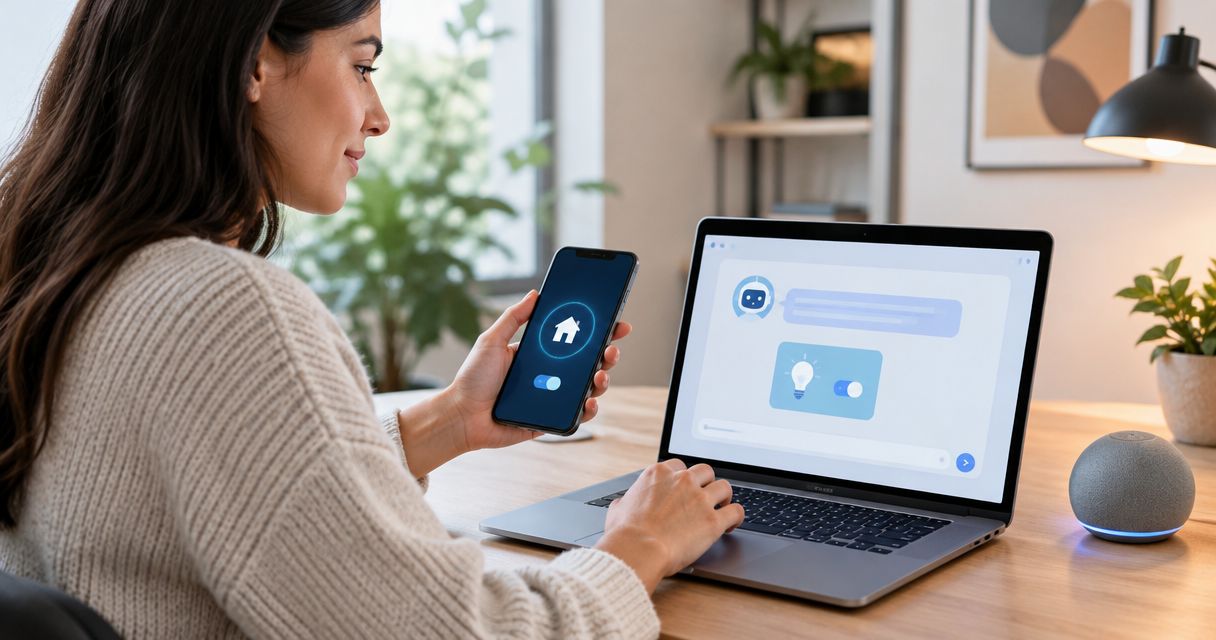
- Use Kilo's built-in AI assistant to provision new sign locations and draft alarm rules in plain language as the network grows, instead of hand-coding each rule
- Review a weekly rollup across the whole portfolio instead of checking sites one at a time
Sensors and gateways for a rollout like this — outdoor-rated temperature, current, and door sensors — ship worldwide through Kilo Electronics.
Which monitoring option fits a billboard network?
| Option | Best for | Key limitation |
|---|---|---|
| Manual site inspection and logbooks | A single billboard or a handful of faces | No alerting between scheduled visits; faults surface only at the next truck roll |
| Cellular-only power monitor | Basic power status on a small number of signs | No environmental, door, or structural sensing; no rules engine |
| Generic building management system (BMS) | Indoor equipment rooms | Not built for battery-powered, pole-mounted, LoRaWAN, or mioty remote assets |
| Kilo IoT Platform | Multi-site sign portfolios that need one dashboard and automated alarms | Camera-based Kilo Lens checks are coming soon; hardware install still requires site access |
What mistakes do billboard and signage operators make with IoT monitoring?
- Treating every sign the same severity. Power loss on a high-traffic freeway face and the same event on a quiet side-street face get identical urgency, which buries technicians in low-priority pages.
- Skipping the enclosure rating. An indoor-rated sensor inside a sealed outdoor cabinet fails from heat before the LED driver it was meant to protect does.
- Monitoring power but not door access. A network that only wires in a power meter misses the copper-theft or cabinet-tamper event that caused the outage in the first place.
- No baseline before rollout. Deploying sensors without a week or two of pre-install voltage and temperature data makes it nearly impossible to set a meaningful alarm threshold afterward.
- Ignoring quiet-hours setup. Every low-battery notice arriving at 3 a.m. teaches field technicians to mute the whole system, including the tamper alarm that actually mattered.
Start monitoring your sign network
Set up power, temperature, and tamper alarms across every site from one dashboard.
FAQ
What is IoT monitoring for digital billboard signage?
IoT monitoring for digital billboard signage uses sensors and connectivity to track power, cabinet temperature, door access, and network status across outdoor signs in real time, replacing scheduled site visits with live alerts.
How do you monitor power on remote outdoor billboards?
A current or power meter wired to the AC feed reports voltage and amperage over MQTT or a LoRaWAN sensor, and a threshold rule fires an alarm the moment draw drops below the expected range.
Can IoT sensors detect unauthorized cabinet access on a billboard?
Yes. A door contact or vibration sensor mounted inside the cabinet reports an open event immediately, and it can be set to alert only outside scheduled maintenance windows to avoid false alarms.
Is LoRaWAN or mioty better for scattered sign locations?
LoRaWAN suits wide-area, battery-powered sensors at lower cost, while mioty adds resistance to interference over longer distances; MQTT works when a sign is already networked to a media player. The right choice depends on existing site connectivity.
How do you get alerts when a billboard loses power?
A power sensor feeding a rules engine, such as Kilo's CEL-based rules, can trigger an alarm within minutes of a voltage drop and escalate it through email, SMS, or push if it isn't acknowledged.
Do digital signage operators need a digital twin for each sign?
A digital twin per sign gives one operator a live status view across every location without visiting each site, which matters once a portfolio passes a handful of faces.
What enclosure rating does outdoor sign electronics need?
Sign cabinet electronics exposed to weather generally need an enclosure rated at least IP66 under IEC 60529, since lower ratings don't hold up against driving rain and dust over a full year outdoors.
How much does IoT monitoring for a sign network cost?
Cost depends on device count and which features are needed per site; check current plans and device limits directly on the platform before committing to a rollout size.
What's the most overlooked signal in a billboard sign cabinet?
Cabinet temperature gets ignored longer than any other reading because the sign still looks fine from the road right up until the driver actually fails. UL 8750, the safety standard covering LED light engine equipment, sets a maximum rated case temperature for most outdoor drivers, and a cabinet sensor is the earliest warning a network gets before that ceiling is reached — well before the sign goes dark.
“If a sign cabinet crosses its driver's rated temperature, the driver is already on borrowed time.”