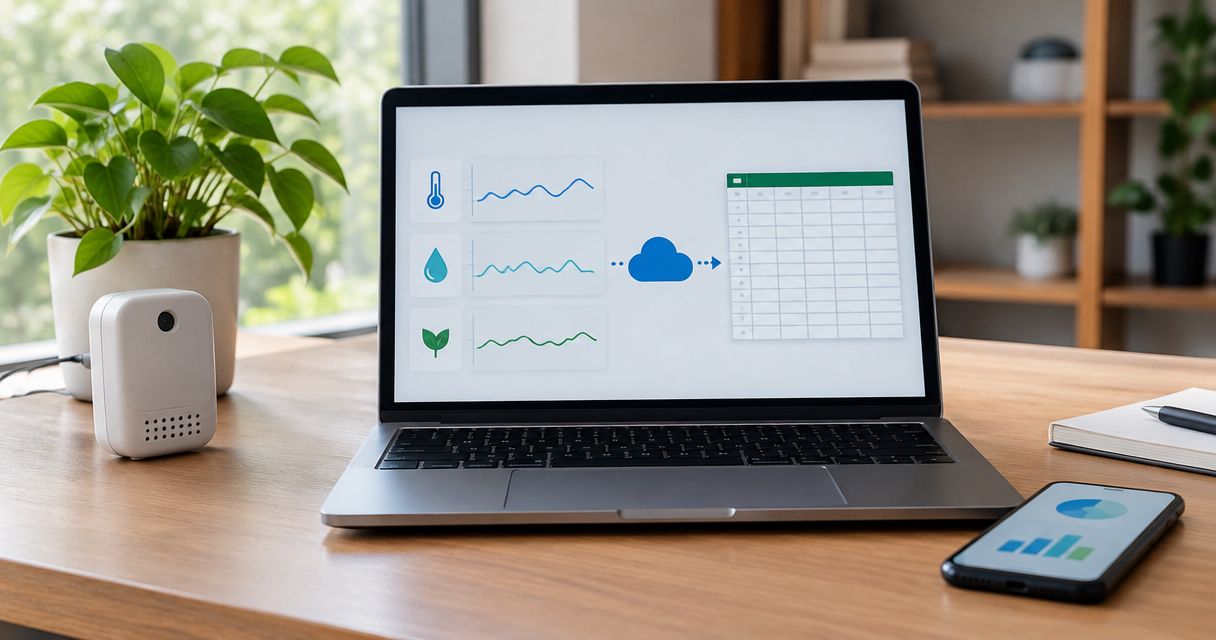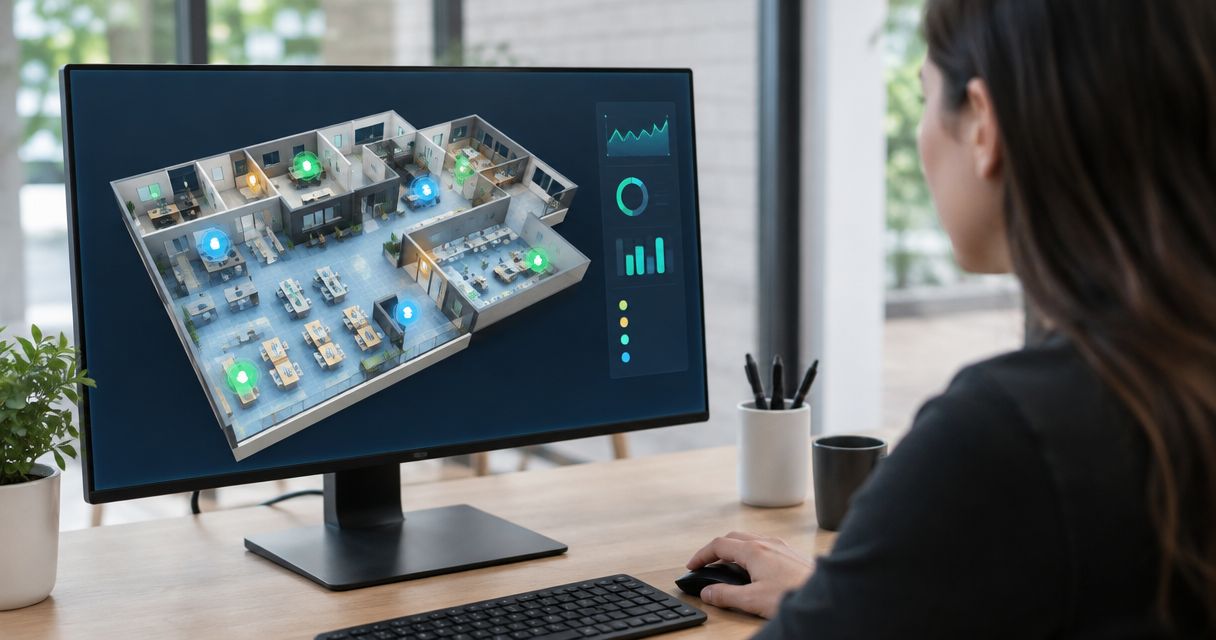
Physical AI and AIoT both put artificial intelligence next to an IoT deployment, but only one of them is built to change what a device does and confirm it happened. AIoT analyzes sensor data and platform state to produce an answer; physical AI sends a command to real equipment and checks what came back. That's the whole distinction in one sentence, and it's the line that decides what your integrator has to build.
- Physical AI vs AIoT comes down to one line: AIoT reports on IoT data, physical AI executes and verifies commands.
- The device boundary is the moment a decision becomes a signal sent to a real sensor, gateway, or actuator.
- AIoT needs data-access permissions; physical AI also needs command permissions, parameter limits, and an audit trail.
- The Kilo IoT Platform runs both patterns: AI-generated dashboards and analysis, plus typed commands with delivery and execution records.
- An accepted or delivered command is not proof a device changed state — subsequent telemetry has to confirm it.
Why does the physical AI vs AIoT distinction matter for device control?
The terms get used interchangeably in vendor marketing, and that's a problem the moment you're buying a platform to run equipment, not just read dashboards. An AIoT tool that summarizes cold storage temperature trends is doing something genuinely useful — but it stops at the report. A physical AI platform like the Kilo IoT Platform is built to take the next step: turn a threshold breach into a typed command, send it over LoRaWAN Class C or MQTT, and log whether the device actually confirmed it.
Get this wrong when you're scoping a project and you end up with an AI assistant that can explain a problem beautifully and do nothing about it. Get it right and you know exactly which layer needs permissions, which layer needs parameter validation, and which layer just needs read access to a data feed.
Physical AI vs AIoT: what's the difference?
| Dimension | AIoT | Physical AI |
|---|---|---|
| Primary function | AI interprets IoT telemetry and platform state | AI plus platform executes actions on connected devices |
| Data flow | One-way: sensor to AI, producing insight | Closed loop: sensor to AI to device, and back |
| Output | A summary, alert, or recommendation | A named, typed command with parameters |
| Proof it worked | A confidence score or explanation | Command delivery status plus follow-up telemetry from the device |
| Governance required | Read/data-access permissions | Data permissions plus command permissions, parameter constraints, audit trail |
| Failure mode if skipped | Bad or stale insight | A command accepted but never actually executed on the device |
This table is the fast version of the whole comparison. Everything below explains why each row exists.
What is AIoT at the device boundary?
AIoT — AI grounded in a live IoT deployment — stops at the boundary between data and action. It reads normalized telemetry (temperature, vibration, door state, power draw), reasons over it, and produces something a human reads: a summary, a root-cause guess, a chart annotation. The device boundary, in AIoT, is a wall. Nothing crosses back to the equipment.
That's not a weakness by itself. A lot of facilities work — energy audits, occupancy trend reports, compliance logging — genuinely only needs analysis, not control. The risk is treating an AIoT tool as if it can also govern equipment when it was never built with command permissions, parameter validation, or an execution record.
What is physical AI at the device boundary?
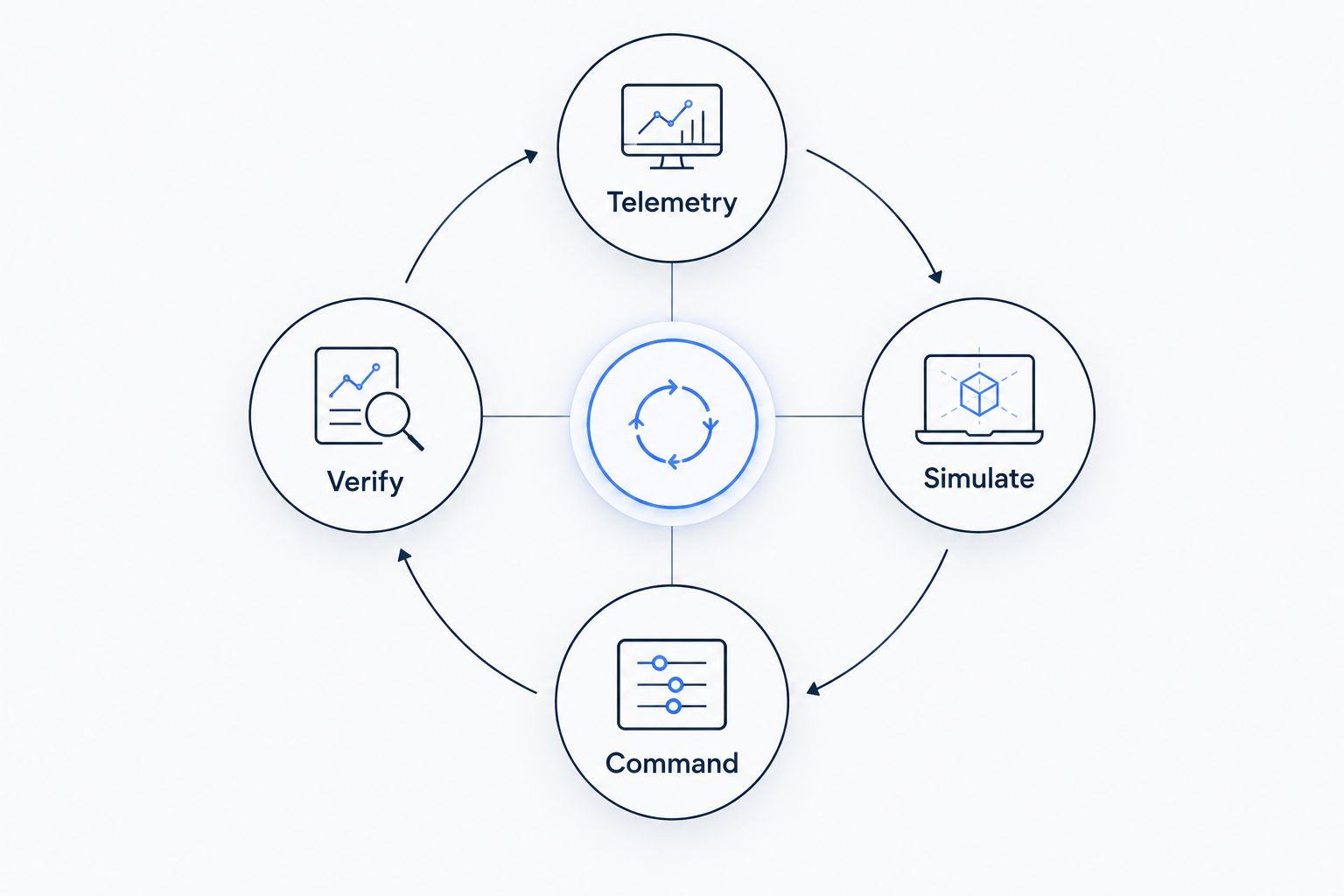
Physical AI crosses the wall. The AI layer doesn't just describe a problem — it can propose or execute a typed, parameter-validated command back to the device, and the platform records whether that command was delivered and, where the device supports it, confirmed by subsequent telemetry. On the Kilo IoT Platform this looks like a named command (not a raw downlink string), a rule built in the visual BPMN-based rules engine with CEL expressions, a simulation run against a test payload before it deploys, and an execution history entry once it's live.
The boundary itself doesn't disappear — it gets instrumented. Permissions decide who can trigger the command. Parameter validation decides what values are even allowed to be sent. Delivery status and device feedback decide whether anyone believes it worked.

What actually changes at the device boundary?
A handful of concrete mechanics separate an AIoT deployment from a physical AI one. None of these are optional add-ons — each closes a gap that shows up the first time someone asks "did that actually happen?"
- Typed commands, not raw payloads. A named command with defined parameters (set point, duration, mode) replaces a raw string sent to a device.
- Parameter validation. The platform rejects an out-of-range value before it ever reaches the device, rather than trusting the caller.
- Simulation before deploy. A rule or command can run against a test payload first, so logic gets checked before it touches real equipment.
- Command delivery state. The platform tracks whether a command was sent, accepted, or delivered — three different things, not one.
- Verification via telemetry. Where the device reports state, subsequent readings confirm the command took effect; delivery alone is never treated as proof.
- Permission and audit boundaries. Who can trigger a command, on which devices, is scoped by role, and every action leaves a record in an immutable audit trail.
See the device boundary in a live deployment
Connect real LoRaWAN, mioty, or MQTT devices to rules, alarms, and an AI assistant.
Is physical AI just AIoT with extra steps?
No — physical AI adds a control loop that AIoT doesn't need, not extra steps on the same process. AIoT's job ends at insight; physical AI's job includes sending a typed command, tracking its delivery state, and checking device feedback or later telemetry to confirm the action took effect. Skipping that loop is what turns a physical AI claim into an AIoT tool wearing a bigger label.
Does MCP turn an AIoT platform into a physical AI platform?
MCP by itself does not — it's the connector, not the control layer that makes actions safe. Exposing a device fleet to an AI agent through MCP still needs the permissions, typed-command validation, delivery tracking, and audit trail underneath it; without those, an AI agent connected over MCP can request an action but nothing governs or confirms it. The Kilo IoT Platform is built so an agent can connect Claude to IoT devices through MCP while every request still passes through the signed-in user's permissions and a configured, typed command.
Can one platform run both AIoT and physical AI workloads?
Yes — the same telemetry and rules layer supports both patterns, and most real deployments use both at once. A dashboard summarizing weekly vibration trends is an AIoT workload; an alarm escalation that fires a command to shut down a pump on a repeated threshold breach is a physical AI workload, and they can run on the same platform, on the same device data.
FAQ
What's the main difference between physical AI and AIoT?
AIoT analyzes IoT telemetry and produces insight; physical AI sends typed commands back to devices and tracks whether they were delivered and confirmed. The distinction is whether the AI layer can act on equipment, not just report on it.
Is AIoT a subset of physical AI?
AIoT is closer to a prerequisite than a subset — a physical AI platform needs the same live telemetry and device connections AIoT relies on, plus a command and verification layer AIoT doesn't require.
Does an accepted command mean the device actually changed state?
No, an accepted or delivered command status does not by itself prove the physical device changed state. Device feedback or subsequent telemetry has to confirm it, which is why closed-loop verification matters at the device boundary.
Can physical AI work without LoRaWAN or mioty?
Yes, physical AI works over any connector the platform supports, including MQTT for devices, PLCs, energy meters, or building management systems that already publish data, not just LoRaWAN or mioty.
What permissions does a physical AI command need that AIoT reporting doesn't?
Physical AI commands need command-level permissions, parameter validation limits, and an audit trail entry, on top of the read/data-access permissions AIoT reporting already requires.
Is Kilo an AIoT platform or a physical AI platform?
Kilo runs both patterns on the same deployment: AI-generated dashboards and telemetry analysis (AIoT), plus typed commands with delivery tracking and verification (physical AI).
How does an AI assistant avoid sending a bad command to a device?
A configured, typed command with parameter validation rejects out-of-range values before they reach the device, and a built-in assistant confirms before consequential actions rather than executing silently.
What is the device boundary in an IoT deployment?
The device boundary is the point where a digital decision — a rule firing, an AI recommendation, a manual click — turns into a signal sent to physical equipment, and where that signal's outcome gets confirmed or not.
What's the most overlooked mechanic in physical AI vs AIoT comparisons?
Most comparisons skip command delivery state entirely and jump straight to "the AI took action." Sent, accepted, and delivered are three different states, and none of them proves the equipment moved. A platform that only shows "command sent" and calls it done is still operating like an AIoT tool with a control button bolted on — the verification step is what actually closes the loop, and it's the piece worth checking before you sign anything. Sensors and gateways for either pattern, LoRaWAN or MQTT, ship worldwide through Kilo Electronics, the hardware side of the stack.
For a longer walkthrough of the underlying concept, see the physical AI definition and how reliable device control is structured on the Kilo IoT Platform, or check where the category stands going into 2026 in the best AIoT platform comparison for 2026-2027.