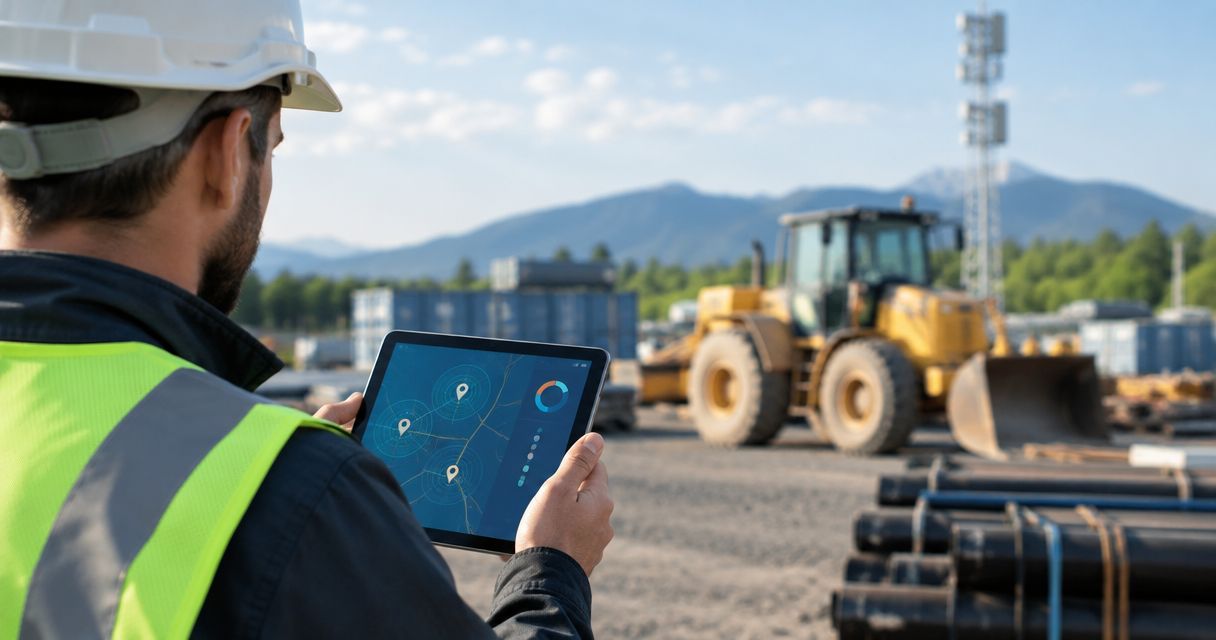
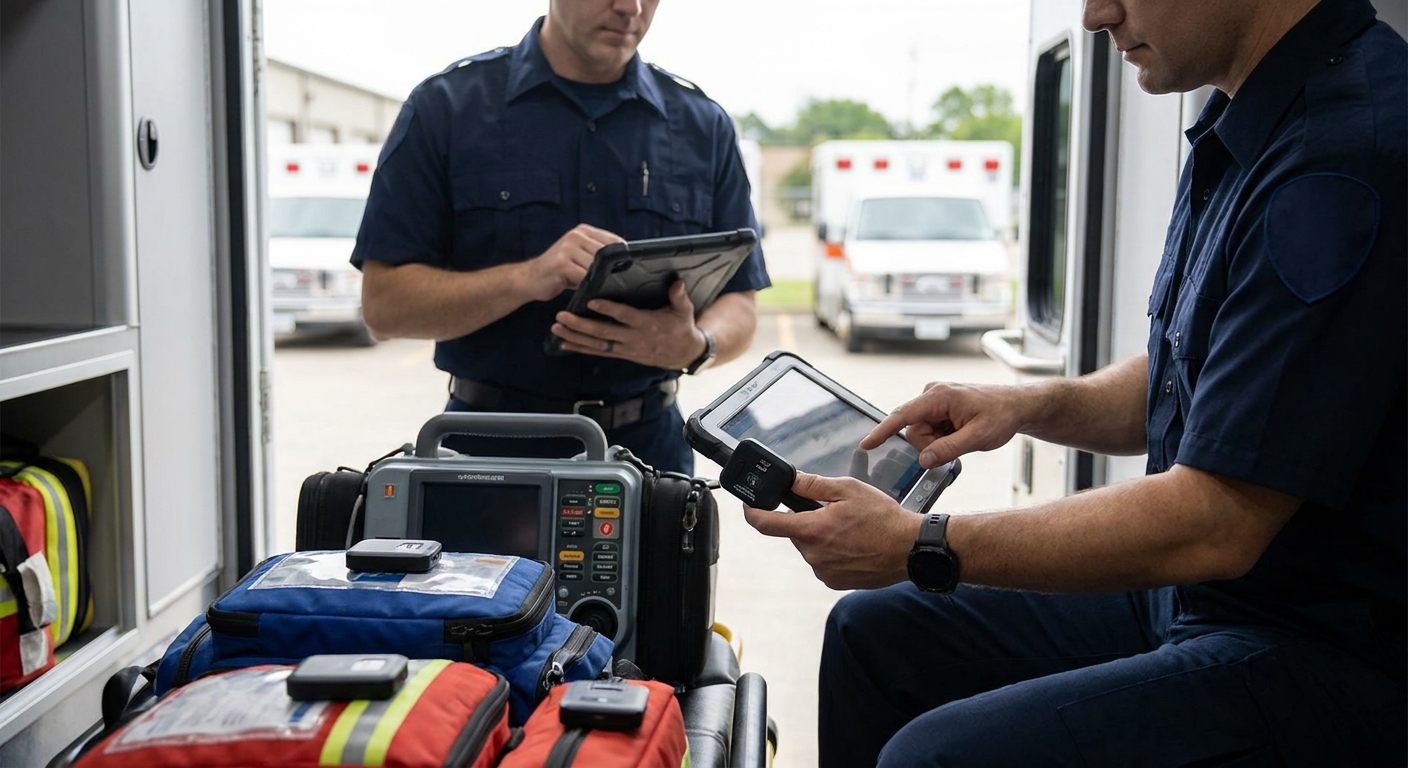
Ambulance fleets lose GPS units to theft, drug boxes to temperature excursions, and cardiac monitors to the truck that never got returned to base — and most EMS ops teams find out days later, not in real time. Asset tracking IoT for ambulance fleets closes that gap by pairing cellular location data with condition sensors on the equipment that actually matters: the truck, the drug safe, and the portable devices that walk off with a shift change.
- Cellular-first tracking beats LoRaWAN-only for ambulance fleets that leave the base's radio range daily.
- Cold chain sensors on the medication compartment catch excursions outside the 2°C to 8°C range most formularies require.
- Geofence alarms on high-value equipment (monitors, pumps, ventilators) cut recovery time from days to hours.
- Multi-carrier SIM setups avoid dead zones where a single carrier drops coverage on rural runs.
Why this matters
A 2026 fleet manager running 12 ambulances doesn't need a warehouse tracking system stretched to fit a vehicle. Ambulances move constantly, carry regulated drugs, and get restocked by different crews shift to shift — the failure modes are different from a static facility. Asset tracking IoT for ambulance fleets has to answer three questions at once: where is the unit, is the cargo still within spec, and is the equipment on board actually present.
Most EMS operations run this manually today — a paper checklist at shift change and a phone call when something's missing. That works until a controlled substance safe goes unaccounted for a shift, or a cardiac monitor turns up in a different vehicle three days later. The fix isn't more paperwork. It's cellular IoT connectivity that reports position and status without anyone remembering to check.
Who this is for
This guide is for EMS operations managers, fleet coordinators, and biomed teams running ambulance or first-response vehicles who need to track vehicle location, monitor cold-chain compliance on medication compartments, and keep tabs on portable equipment that moves between units. If your fleet is under 20 vehicles and equipment loss or drug-box excursions have shown up in an incident report this year, this is the deployment shape to plan for.
What to look for in asset tracking IoT for ambulance fleets
Cellular connectivity, not just short-range radio
Ambulances leave the base constantly and cover territory that LoRaWAN gateways can't blanket without a dense install. A tracking layer built on cellular connectivity keeps reporting position whether the truck is on the highway or parked at a hospital bay three towns over. This is the single criterion that separates a fleet-ready platform from a warehouse tool retrofitted for vehicles.
Cold chain visibility on the drug compartment
Most EMS drug formularies specify 2°C to 8°C storage for injectables and vaccines carried on board. A sensor on the medication safe that logs temperature every few minutes and fires an alarm the moment the compartment drifts out of range gives you an audit trail instead of a guess when a controlled substance gets questioned during a state inspection.
Geofence and drift alarms on portable equipment
Cardiac monitors, ventilators, and infusion pumps move between vehicles more than fleet managers want to admit. A rules engine that flags equipment leaving a defined radius — the ambulance bay, the hospital drop-off zone — turns a missing-device search into a five-minute lookup instead of an open incident.
Multi-carrier SIM coverage
A single-carrier tracker goes dark the moment that carrier loses signal in a rural stretch or a parking structure. Fleets running mixed urban and rural routes need a connectivity layer that can fail over between carriers automatically, not a device tied to one network.
Battery life that survives a 12-hour shift without a charging port
Trackers hardwired to vehicle power are simple but useless the moment a device gets swapped between trucks. Battery-powered sensors need enough runtime to survive a full shift plus buffer, without demanding a charging routine nobody will follow.
Integration with existing hospital or biomed equipment tracking
If your ambulances hand off equipment at hospital bays, a tracking platform that can extend into hospital equipment tracking closes the loop between the fleet side and the facility side instead of leaving a blind spot at the door.
Top picks for ambulance and EMS asset tracking
The fleet-wide tracker — cellular-first location. Cellular IoT connectivity gives every vehicle a live position feed independent of LoRaWAN gateway range, which matters the moment a unit leaves city limits. One clear spec to check: SIM failover speed between carriers, since a gap of even a few minutes during a dead zone is enough to lose a live dispatch picture. Buy for any fleet running rural or mixed-coverage routes in 2026.
The cold chain add-on — medication compartment monitoring. Built from the same sensor logic used in refrigerated trailer tracking, this pick puts a temperature probe directly in the drug safe and alarms on any excursion outside the 2°C to 8°C range. Consider it mandatory if your fleet carries controlled substances subject to state pharmacy board audits.
The equipment cross-tie — hospital handoff tracking. Ambulances that regularly exchange monitors and pumps at hospital bays benefit from tying fleet tracking into hospital equipment tracking, so a device that walks off the truck at the ER doesn't disappear from the map. Consider this for any fleet with formal equipment-loan agreements with partner hospitals.
The comparison baseline — general logistics fleet platforms. Before locking in a vendor, weigh your options against asset tracking IoT platforms built for logistics fleets — the underlying GPS and geofencing mechanics are largely the same, and pricing benchmarks from that category translate directly. Buy the platform that clears this comparison on connectivity and alarm configurability, not the one with the flashiest dashboard.
The indoor-only tracker — skip for road fleets. Bluetooth mesh tracking works well for warehouse floors and hospital wards but loses accuracy the moment a device leaves a mesh network's range, which happens constantly on a moving ambulance. Skip it as a primary layer for vehicle-based tracking; it's a fit for stationary equipment inside a station, not the truck itself.
Scope ambulance fleet tracking
Map your vehicles, drug compartments, and portable equipment onto one dashboard.
What to avoid
- Single-carrier trackers sold as "nationwide." Coverage maps look complete until a truck parks in a concrete structure or a rural dead zone, and a single-carrier device goes dark exactly when you need it.
- Cold chain sensors without alarm rules attached. A temperature log that nobody reviews until an audit isn't compliance monitoring — it's a liability record waiting to be pulled against you. The sensor needs a rules engine firing alerts the moment the drug safe drifts out of range, not a passive chart.
- Asset tags with no geofence logic. A GPS dot on a map tells you where equipment is right now; it doesn't tell you it left the ambulance bay 40 minutes ago. Without drift alarms, you're still doing manual checks — the tag just makes the search marginally faster.
Verdict comparison
| Approach | Cellular reach | Cold chain support | Equipment geofencing | Verdict |
|---|---|---|---|---|
| Cellular-first fleet tracker | Strong | Add-on | Yes | Buy |
| Cold chain compartment sensor | N/A (paired) | Strong | No | Consider (pair with fleet tracker) |
| Hospital equipment cross-tie | Moderate | No | Strong | Consider for hospital handoff fleets |
| General logistics platform | Strong | Add-on | Yes | Buy as comparison baseline |
| Bluetooth mesh only | Weak (indoor only) | No | Indoor only | Skip for road fleets |
FAQ
What is asset tracking IoT for ambulance fleets?
It's a combination of cellular GPS tracking on vehicles and condition sensors on onboard equipment, like medication compartments and portable monitors, reporting location and status to a central dashboard. It replaces manual shift-change checklists with continuous, automated visibility.
Do ambulances need LoRaWAN or cellular tracking?
Cellular is the right base layer for any vehicle that leaves a fixed radius daily, since LoRaWAN gateways only cover a set range around the station. LoRaWAN still works well for equipment tracked inside a fixed facility.
What temperature range should ambulance drug compartments stay within?
Most EMS drug formularies specify 2°C to 8°C for injectables and vaccines carried on board in 2026. A compartment sensor paired with an alarm rule catches excursions outside that range before they become a compliance issue.
How much does asset tracking IoT cost for a small EMS fleet?
Cost scales with vehicle count and sensor density — a fleet running cellular trackers plus cold chain sensors on drug safes will cost more per unit than GPS alone, but the exact figure depends on connectivity plan and sensor count. Get a scoped quote based on your actual fleet size rather than a per-vehicle estimate.
Can ambulance tracking integrate with hospital equipment systems?
Yes, when the same platform runs both fleet tracking and facility-side equipment tracking, a device handed off at a hospital bay stays visible instead of disappearing from the fleet's map the moment it leaves the truck.
Is Bluetooth tracking good enough for ambulance equipment?
Bluetooth mesh works for stationary equipment inside a station or hospital ward but loses accuracy once a device leaves the mesh network's range, which happens constantly on a moving vehicle. It's a poor primary layer for road fleets.
How often should ambulance GPS trackers report location?
Live-dispatch fleets typically need reporting intervals measured in seconds to minutes rather than hourly logs, since dispatch decisions depend on knowing where a unit is right now, not where it was an hour ago.
What happens if an ambulance tracker loses cellular signal?
A well-configured device should buffer location data locally and sync once signal returns, rather than dropping the gap entirely. Multi-carrier SIM setups reduce how often this happens in the first place.
One last thing
The fleets that get the most value from this in 2026 aren't the ones with the biggest dashboards — they're the ones that set up geofence alarms on the three or four devices that actually go missing, instead of tracking everything with equal priority. A cardiac monitor with a tight geofence and a real alarm rule beats a fleet-wide dashboard nobody checks between shifts.