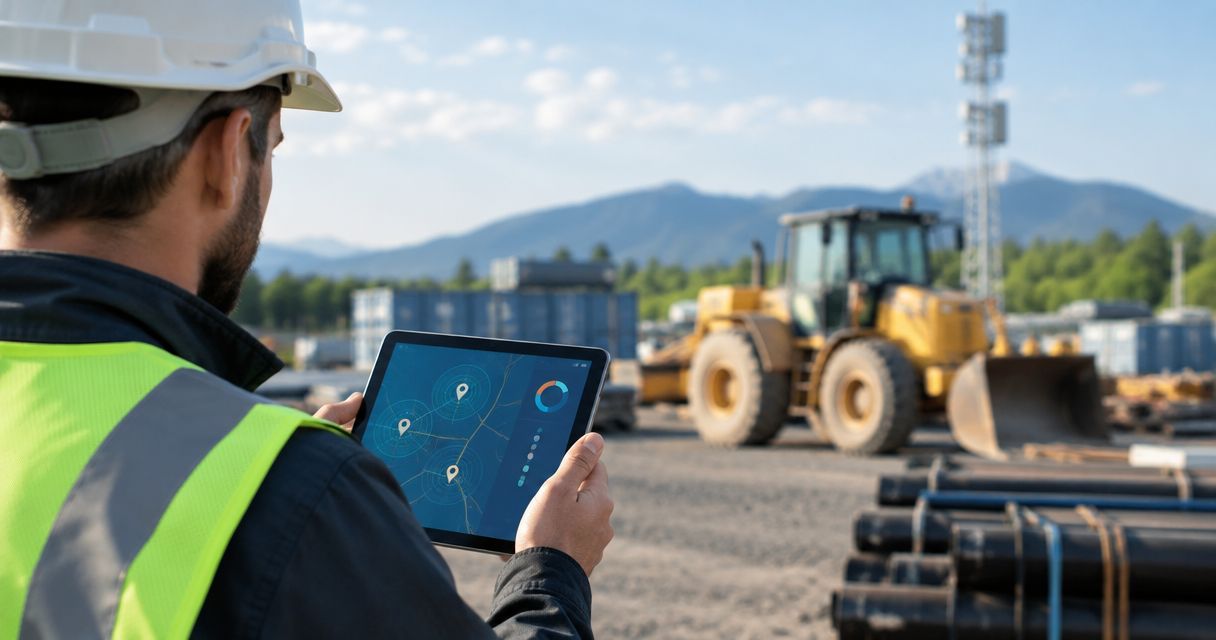
A transit or bus depot runs diesel fueling islands, EV chargers, enclosed maintenance bays and a yard full of vehicles that all need tracking, ventilation and alarms done right — pick the wrong IoT platform and you get blind spots in exactly the areas OSHA and NFPA expect monitored.
- The best IoT platform for transit and bus depots combines LoRaWAN sensors, MQTT integration and one shared alarm engine, not three disconnected tools.
- OSHA caps carbon monoxide exposure at 50 ppm over an 8-hour shift under 29 CFR 1910.1000 — garage bays need continuous CO monitoring, not spot checks.
- Kilo's vehicle connector ships with 2,000+ preconfigured tracker templates, so bus AVL data can feed a depot dashboard without custom integration work.
- IARC classified diesel exhaust a Group 1 carcinogen in 2012 — ventilation alarms in maintenance bays are a compliance requirement, not a nice-to-have.
- Multi-depot operators need one login across sites, so look for role-based access control and an audit trail, not a separate dashboard per location.
What does a transit or bus depot need from an IoT platform?
A depot is three environments stacked on one site: an outdoor yard where vehicles park and move, enclosed bays where mechanics run engines indoors, and a fuel or charging area with its own hazard profile. Most facility software handles one of those well. Very few handle all three without stitching together separate vendors for tracking, public transit and bus depot asset tracking, gas detection, and fuel level monitoring.
The fix in 2026 isn't a bigger point solution — it's one platform that ingests wireless sensor data, existing vehicle telemetry, and PLC or BMS feeds into a shared rules engine. That's the actual buying criterion, and it's what the rest of this guide is built around.
What to look for in an IoT platform for bus and transit depots
Can it track buses and support vehicles across the yard?
Most transit agencies already have GPS or AVL (automatic vehicle location) hardware on the fleet. The platform question isn't whether it can add trackers — it's whether it can ingest that existing telemetry over MQTT and put it on one dashboard next to your facility sensors. A platform that only speaks its own proprietary tracker format forces you to run two systems side by side, which is how depots end up with a dispatch screen and a facilities screen that never talk to each other.
Does it monitor garages, fuel islands and charging bays?
Enclosed bays need CO monitoring under OSHA's 50 ppm 8-hour TWA limit (29 CFR 1910.1000), and NFPA 88A covers ventilation expectations for enclosed vehicle parking structures. Diesel fuel islands need level monitoring so a tank doesn't run dry mid-shift, and NFPA 30A governs motor fuel dispensing facility design. EV charging bays add a third failure mode: a charger that faults silently and takes a bus out of rotation without anyone noticing until the next dispatch call.
Which wireless protocol fits a depot: LoRaWAN, mioty or MQTT?
A depot yard is large, metal-heavy, and full of RF interference from vehicle electronics — that's a hard environment for short-range wireless. LoRaWAN sensors running on sub-GHz ISM bands (868 MHz or 915 MHz depending on region) cover long distances on battery power, which fits fuel tanks and yard-perimeter sensors that can't be rewired. mioty's telegram-splitting approach adds robustness in dense deployments where a lot of devices report on the same channel, which matters if you're instrumenting every bay door and compressor in a large garage. MQTT isn't a sensor protocol at all — it's how existing PLCs, energy meters, BMS controllers and AVL feeds get piped into the same dashboard as your wireless sensors, so you're not maintaining two separate data pipelines.
How fast can alarms reach the right person?
A CO reading that climbs past a safe threshold at 2 a.m. is worthless if it sits in an inbox until the morning shift. Look for severity tiers so a fuel-level warning doesn't page the same person as a CO alarm, escalation chains so an unacknowledged alert moves up the chain automatically, and quiet hours so routine notifications don't page an on-call supervisor at 3 a.m. for a non-urgent event. A rules engine that lets you build these conditions visually — rather than requesting a change from a vendor's support queue — is the difference between an alarm system you actually tune and one you learn to ignore. Rules engine software for industrial IoT alarms is worth comparing directly against whatever your current SCADA or BMS offers here.
Can one platform manage sensors across multiple depots?
Many transit authorities run three, five, or a dozen depots across a metro area. A platform priced and structured around a single site becomes an operational headache once you're managing device fleets across locations with different teams and different access needs. Role-based (ABAC) access control, scoped API keys, and an audit trail matter here — a facilities director at depot A shouldn't be able to silently reconfigure alarms at depot B, and when something does change, you need a record of it.
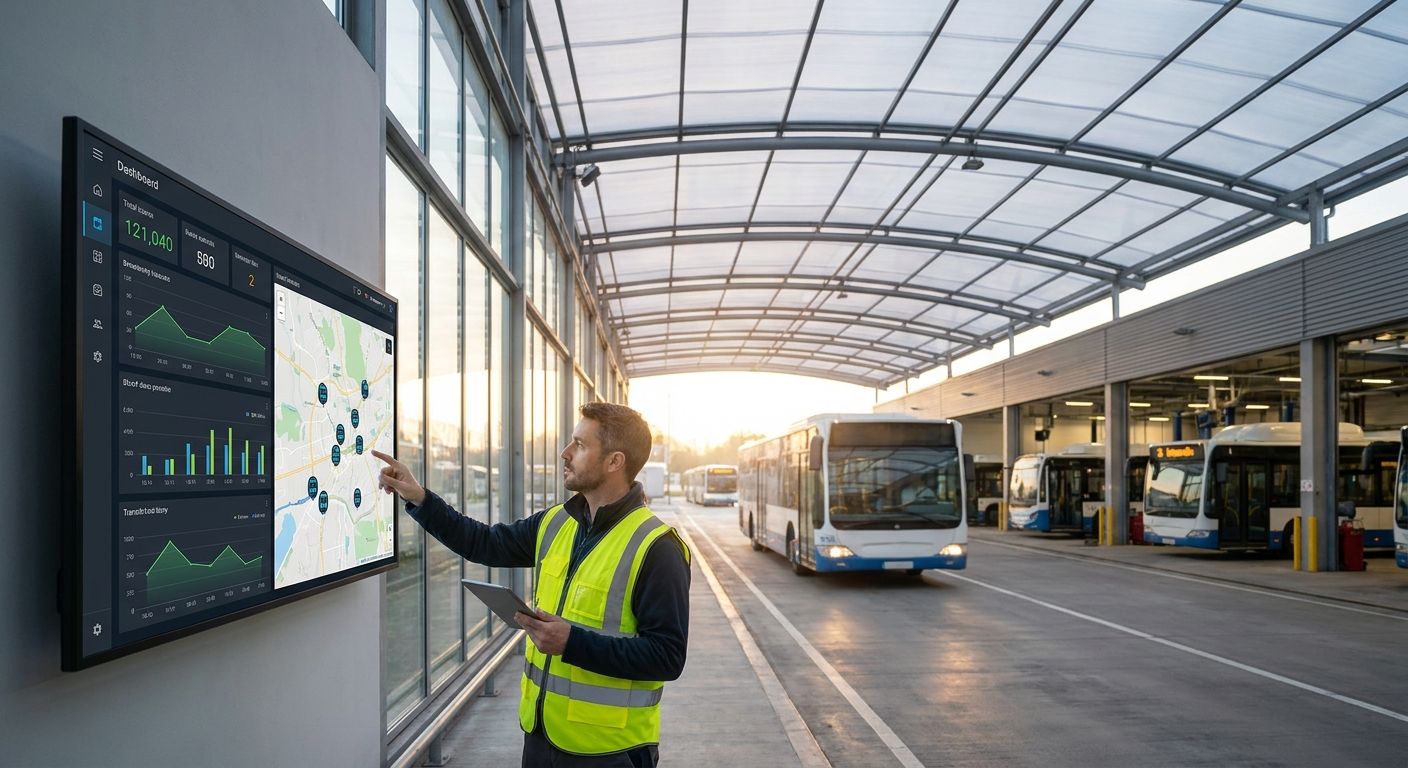
See the depot dashboard in action
Check device limits and connectivity options on the Kilo IoT Platform.
How Kilo fits into a transit depot deployment
Kilo is one worked example of a platform built to cover all three depot environments at once, not a separate product per problem. Its vehicle and tracker connector ships with more than 2,000 preconfigured templates, so AVL data already running on the fleet can be piped in over MQTT rather than replaced. The same account handles LoRaWAN and mioty sensors for fuel tanks, CO detectors and bay-door status, with a built-in network server so there's no separate LoRaWAN or mioty infrastructure to stand up.
Alarms run on five severity tiers with multi-step escalation chains, quiet hours, and a centralized inbox, so a fuel-island overfill risk and a routine humidity reading don't compete for the same supervisor's attention. The visual rules engine uses BPMN with CEL expressions, version control, and one-click rollback, so a change to the CO alarm threshold can be tested against a sample payload before it goes live across every bay. For sites big enough to want a live floor plan, the platform's dashboard supports a digital twin per device plus a 3D building twin, useful for a facilities manager mapping sensor locations against an actual garage layout.
The built-in AI assistant onboards new devices, drafts rules, and sets alarms from a plain-language request, then confirms before anything consequential deploys — it's scoped to the signed-in user's own permissions, so it can't quietly touch a depot outside that person's access. None of this needs to be manufactured or shipped by Kilo itself: sensors and gateways for a given deployment come through the partner catalog at Kilo Electronics, and the platform handles the data once hardware is on site.
LoRaWAN vs mioty vs MQTT for depot connectivity
| Protocol | Best for at a depot | Power draw | Integration path |
|---|---|---|---|
| LoRaWAN | Fuel tanks, yard perimeter, bay-door sensors | Battery, multi-year | Built-in network server, no separate gateway software |
| mioty | Dense sensor counts in one garage (many devices, one channel) | Battery, multi-year | Built-in network server, same dashboard as LoRaWAN |
| MQTT | Existing PLCs, energy meters, BMS, AVL/GPS feeds | Depends on source device | Direct connector, no new hardware needed |
None of these replace each other — a working depot deployment in 2026 usually runs all three at once: wireless sensors for anything unwired, MQTT for anything that already publishes data.
Where do transit agencies source depot sensors and gateways?
- Buy gas, temperature and level sensors matched to the protocol your platform actually supports — a LoRaWAN CO sensor is useless on a mioty-only network server.
- Onboard sensors in batches by depot, not one at a time — onboarding LoRaWAN sensors at scale across multiple sites covers the provisioning workflow for exactly this.
- Source hardware from a catalog that ships worldwide rather than a single-region reseller — Kilo Electronics ships internationally and is a separate company from the Kilo Cloud platform itself, so hardware and software purchasing decisions don't have to happen in the same conversation.
FAQ
What is the best IoT platform for transit and bus depots?
The best fit combines wireless sensor connectivity (LoRaWAN or mioty) with an MQTT connector for existing vehicle telemetry and BMS feeds, plus a shared alarm engine covering CO, fuel level and charger faults. Depots that run separate tools for tracking and facility monitoring end up with alerts nobody checks consistently.
How much CO exposure is safe in an enclosed bus garage?
OSHA sets the permissible exposure limit at 50 ppm as an 8-hour time-weighted average under 29 CFR 1910.1000. Continuous monitoring with an automated alarm is the practical way to enforce that limit rather than periodic spot checks.
Is LoRaWAN or mioty better for a bus depot?
LoRaWAN fits most depots well for battery-powered sensors spread across a large yard. mioty adds an edge in garages with a high density of sensors reporting on the same channel, thanks to its telegram-splitting design.
Can an IoT platform track buses using existing GPS or AVL hardware?
Yes, if the platform has an MQTT connector, existing AVL or GPS telemetry can be piped in directly rather than replaced with new trackers. Kilo's vehicle connector also ships more than 2,000 preconfigured tracker templates for common hardware.
Do transit depots need a separate system for fuel and EV charger monitoring?
No — a platform with a rules engine and MQTT connector can monitor diesel tank levels, EV charger status and garage air quality on the same dashboard. Splitting these across separate vendor tools is what creates alarm blind spots.
What ventilation standard applies to enclosed bus maintenance bays?
NFPA 88A addresses ventilation requirements for enclosed vehicle parking and maintenance structures. It's a reasonable reference point when specifying CO alarm thresholds and fan interlocks.
Can one login manage sensors across multiple bus depots?
Platforms with role-based access control and scoped API keys support this, letting a regional operations team see all depots while local facilities staff only touch their own site. An audit trail matters here so changes across sites are traceable.
Why was diesel exhaust reclassified as a carcinogen?
The International Agency for Research on Cancer (IARC) classified diesel engine exhaust as a Group 1 carcinogen in 2012, based on evidence linking it to lung cancer. That classification is part of why continuous air quality monitoring in enclosed bays has become a compliance question rather than a convenience.
What's the one alarm most depots forget to set?
Most depots wire up CO detection and fuel level sensors on day one. The alarm that gets skipped is the EV charger fault that doesn't trip a breaker — it just stops charging silently, and nobody finds out until a bus doesn't have range for its morning route. A CEL rule watching charger current draw against an expected baseline catches that gap before dispatch does, and it costs nothing extra once the charger is already reporting over MQTT.