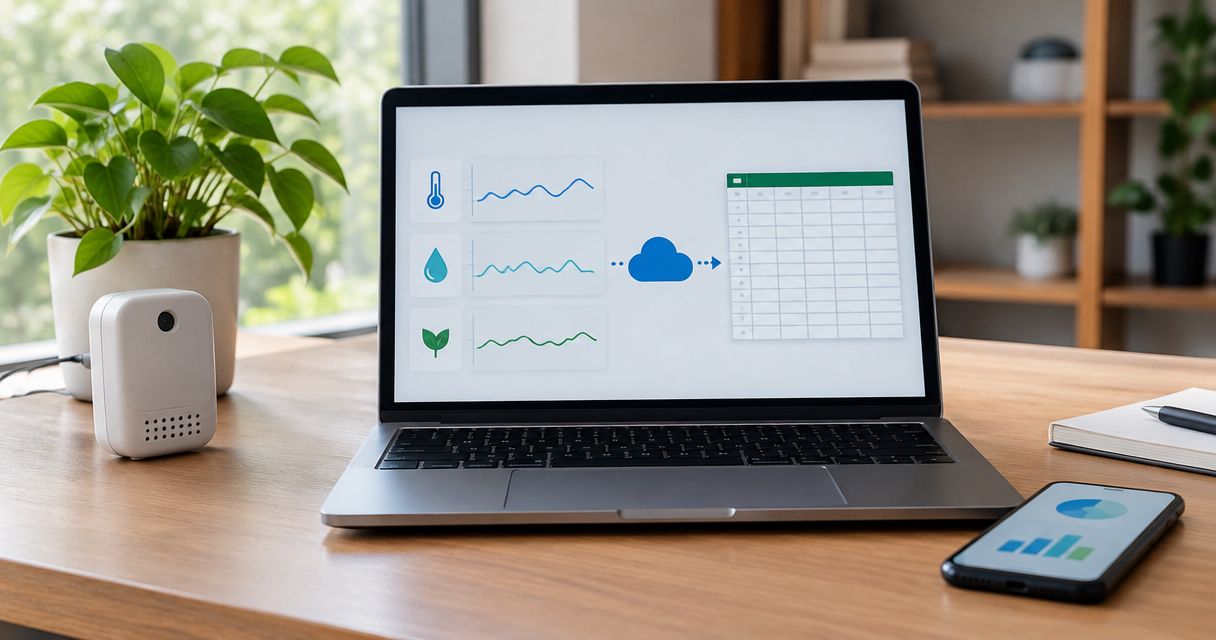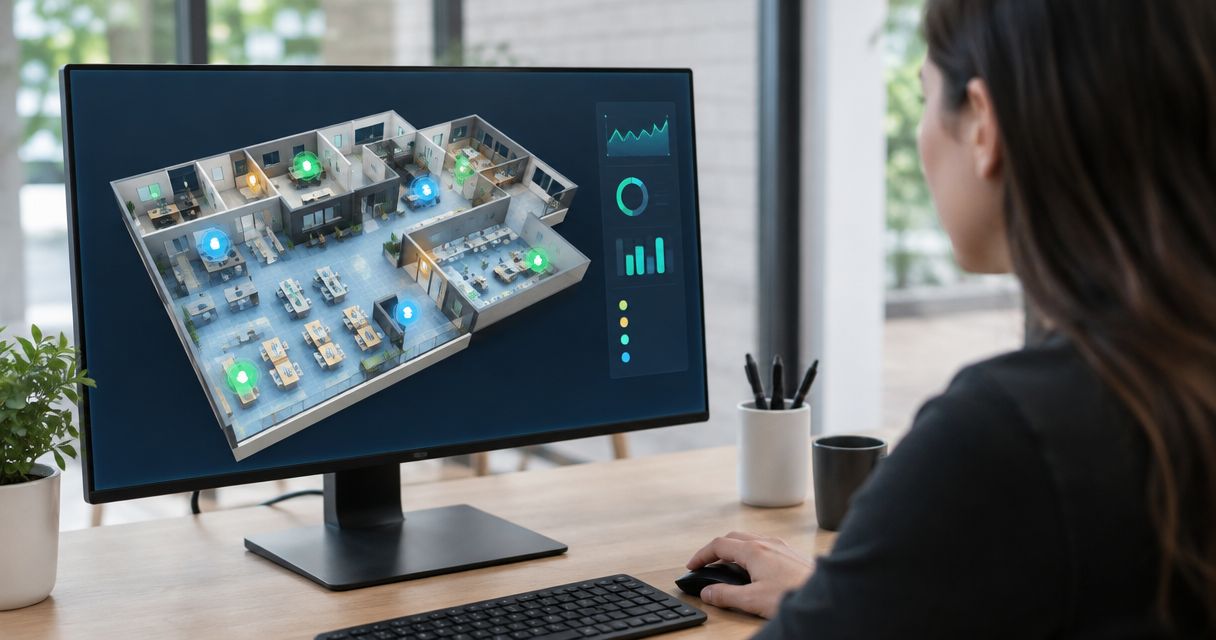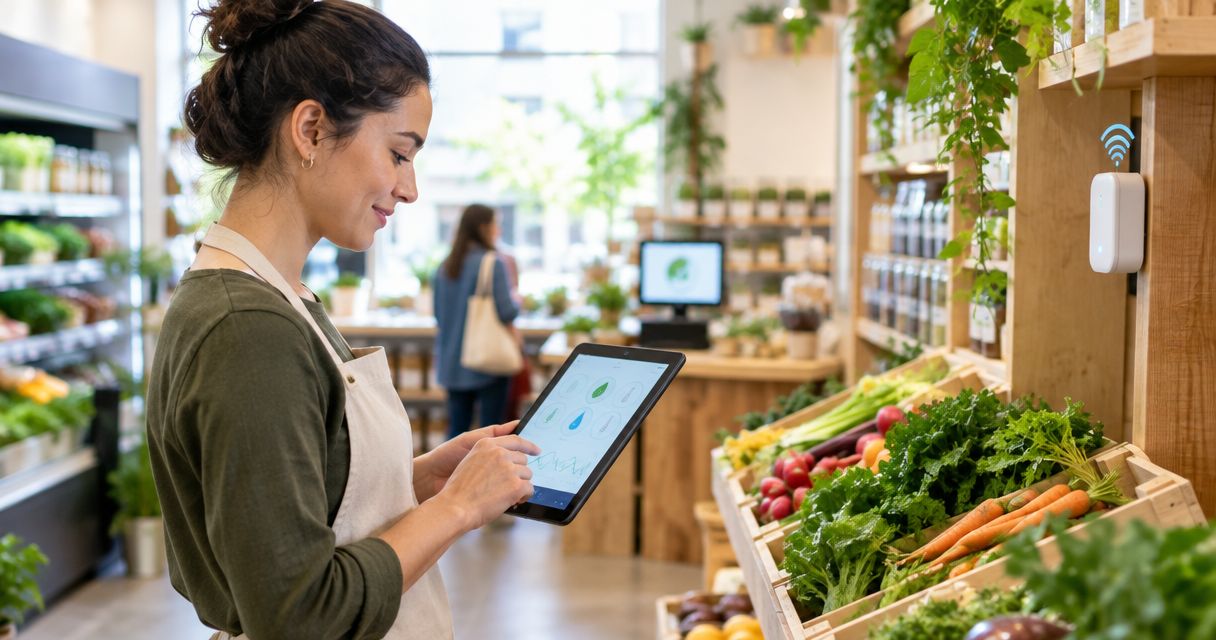
A co-op grocery or natural food store picking an iot platform for co-op grocery stores in 2026 is really choosing between five real options: paper logs, standalone freezer alarms, a bolt-on building management system, a DIY LoRaWAN network, or an AI-first cloud platform like the Kilo IoT Platform that puts every cooler, dock door and dairy case on one dashboard with alarms that reach the right person before spoilage happens.
- An iot platform for co-op grocery stores should cover every cold storage zone, not just one walk-in freezer.
- FDA Food Code sets 41°F (5°C) as the cold holding limit for potentially hazardous food.
- USDA's Danger Zone rule flags food held between 40°F and 140°F for over 2 hours as unsafe.
- Standalone freezer alarms work for one unit; multi-department co-ops need centralized alarm escalation.
- Kilo's free plan covers up to 5 devices and 1 rule; the paid Starter tier raises that to 25 devices.
What does an iot platform for co-op grocery stores need to do?
A co-op grocery store isn't one refrigeration zone — it's a walk-in freezer, a dairy case, a produce cooler, bulk bin humidity, and often a receiving dock, all running on different schedules. In 2026, an iot platform for co-op grocery stores has to cover all of it without turning into five separate logins.
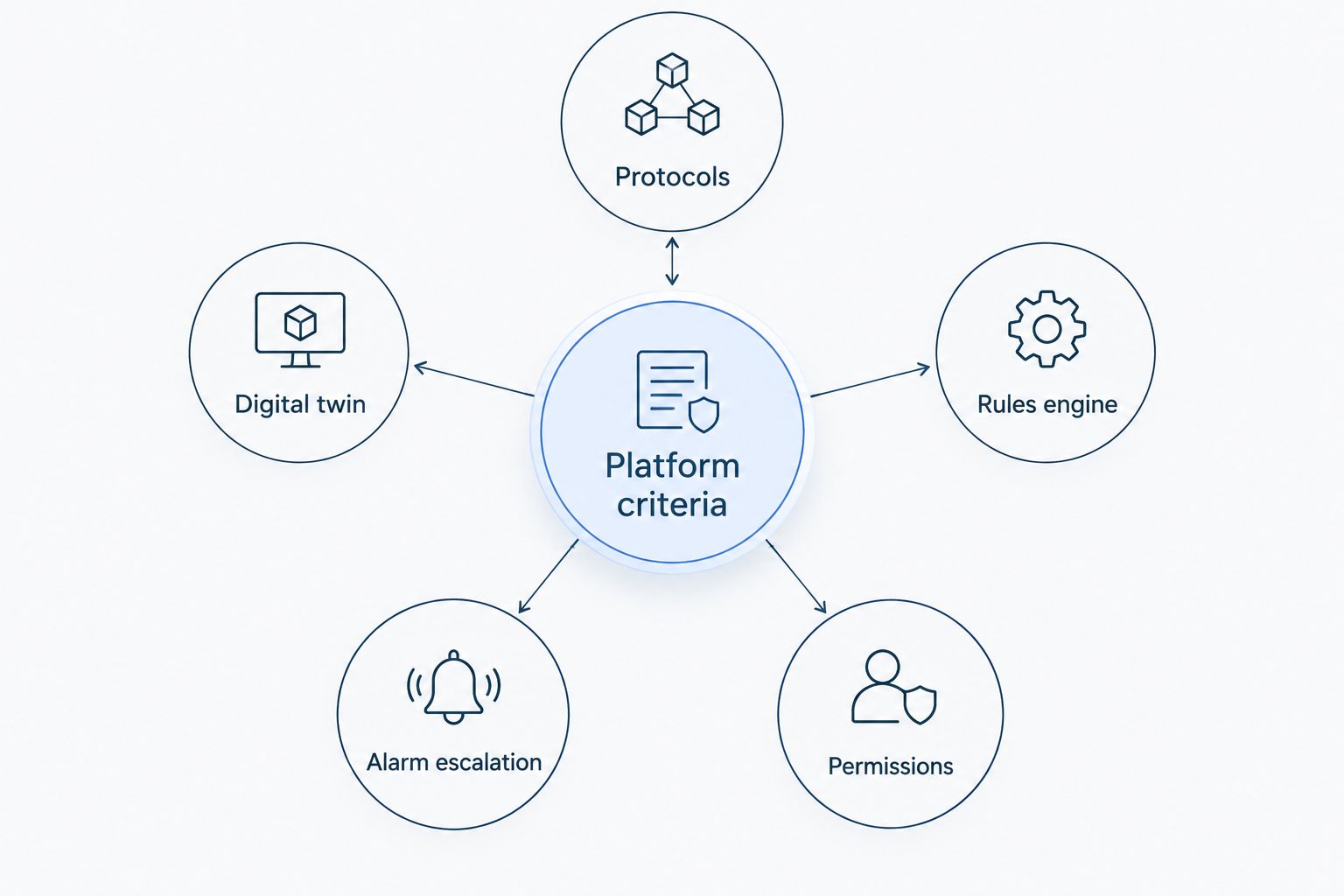
- Network protocols that match your sensors — LoRaWAN and mioty for battery-powered wireless sensors, MQTT for anything that already publishes data, like a PLC or an energy meter.
- A digital twin per device so a manager sees a cooler's live temperature, history and alarm state in one place instead of a spreadsheet.
- A visual rules engine that can express "freezer above 0°F (-18°C) for 15 minutes" as a testable rule, with version control so a bad rule change can be rolled back.
- Alarm escalation with real severity tiers — a produce cooler drifting 2 degrees isn't the same emergency as a freezer compressor failing at 2 a.m.
- Role-based permissions so a night-shift stocker can acknowledge an alarm without changing store-wide rules.
- An audit trail that stands up when a health inspector or an insurance adjuster asks what happened and when.
iot platform for co-op grocery stores: options compared at a glance
The options below reflect what's realistically available in 2026, ranked by how much of a co-op's cold storage footprint each one can actually cover.
| Approach | Best for | Standout feature | Key limitation |
|---|---|---|---|
| Manual temperature logs | Single-location co-ops just starting compliance tracking | No software to learn | Gaps between checks; a night failure goes unnoticed until morning |
| Standalone freezer alarms | One high-risk unit at a single store | Fast install, audible alert | No history, no multi-zone dashboard, no escalation chain |
| Legacy BMS retrofit | Stores that already run a BMS for HVAC | Reuses existing wiring and screens | Adding refrigeration points is often billed per point |
| DIY LoRaWAN sensor network | Co-ops with in-house IT staff | Full control over hardware choice | Someone has to run and patch the network server |
| AI-first cloud platform (Kilo) | Multi-zone or multi-location co-ops needing one dashboard | Built-in LoRaWAN/mioty/MQTT server plus AI-assisted rule building | Free plan's device cap suits a pilot, not a full rollout |
1. Manual temperature logs for co-op grocery stores
Staff walk the coolers a few times a day and write down the reading on a clipboard or a spreadsheet. It's how most small co-ops started, and it still satisfies a basic health inspection.
Manual temperature logs pros:
- No software cost or setup
- Easy for any staff member to learn in five minutes
- Produces a paper trail inspectors already recognize
Manual temperature logs cons:
- A compressor failure between checks goes unnoticed for hours
- Handwritten entries get skipped, guessed, or backfilled
- No data to hand an insurance adjuster after a loss
Best for: a single-location co-op that hasn't yet formalized temperature tracking.
2. Standalone freezer alarms for natural food stores
A plug-in unit with a probe beeps or dials a phone number when a threshold is crossed. It's a fast fix for one high-risk unit.
Standalone alarm pros:
- Install takes under an hour
- No dashboard to learn
- Cheap way to backstop a single walk-in freezer
Standalone alarm cons:
- No temperature history for compliance reporting
- No multi-zone view once you add a second cooler
- Alarm often only reaches whoever happens to be in the building
“A compressor failure at 2 a.m. doesn't wait for the morning temperature log.”
Best for: one walk-in freezer at one location that needs a backstop, not a monitoring plan.
3. Legacy BMS retrofits for co-op grocery refrigeration
A store that already runs a building management system for HVAC adds refrigeration sensors onto the same platform.
BMS retrofit pros:
- Reuses wiring and a control screen staff already know
- Ties refrigeration into existing HVAC schedules
BMS retrofit cons:
- Grocery-specific alarm tiers and door-open logic are rarely built in
- Adding sensor points is often billed per point, which adds up fast across departments
Best for: a co-op that already runs a BMS and only needs two or three added refrigeration points.
4. DIY LoRaWAN sensor networks for grocery cold storage
A technical co-op buys off-the-shelf LoRaWAN temperature and door sensors and runs its own network server rather than paying for a managed platform.
DIY LoRaWAN pros:
- Full control over which sensor brands go on which fixture
- No vendor lock-in on hardware
DIY LoRaWAN cons:
- Someone on staff has to run and patch the network server
- Building a dashboard and writing alarm logic from scratch takes real engineering time
Best for: a co-op with an IT-capable ops person willing to own the whole stack.
5. AI-first cloud IoT platform for co-op grocery stores (Kilo)
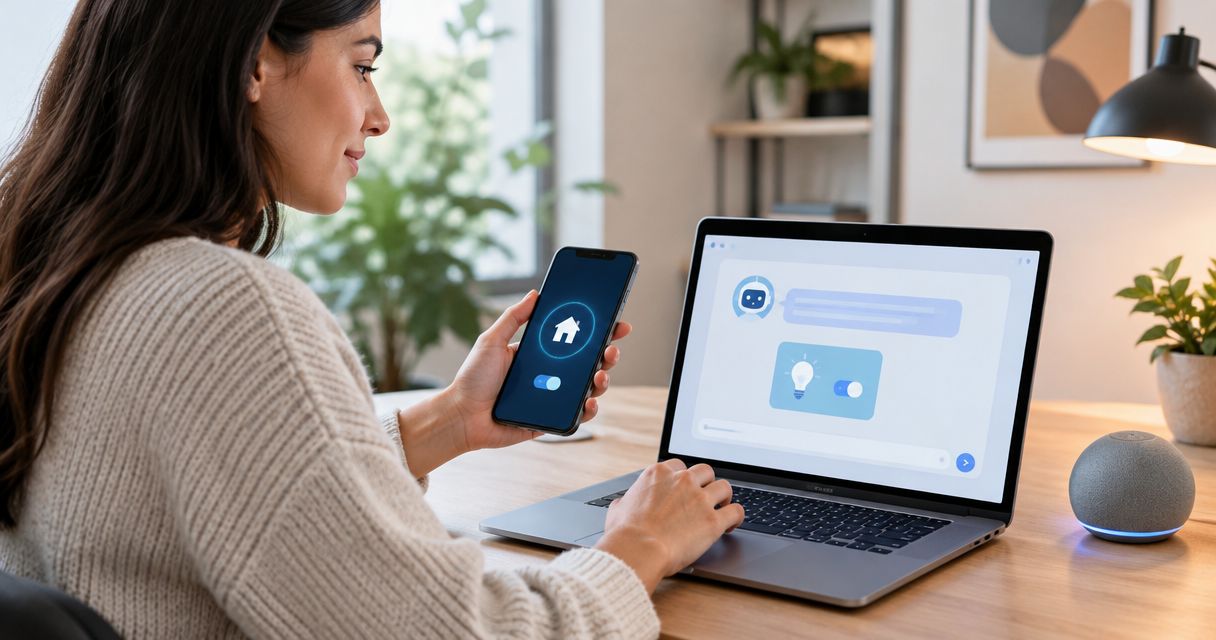
As of 2026, Kilo runs a built-in LoRaWAN and mioty network server plus an MQTT connector, so cooler, freezer, dairy case and dock-door sensors report into one dashboard with a digital twin per device. Door-open events matter as much as compressor drift, which is why freezer door monitoring for grocery and convenience stores is tracked alongside temperature, not as a separate system. Kilo's built-in AI assistant can provision a new sensor, write a CEL rule and set up an escalation alarm through a plain-language request, scoped to the signed-in user's permissions.
Kilo pros:
- One dashboard across every department and every store location, with a digital twin per cooler, freezer, dairy case and dock door
- Five-tier alarm escalation with quiet hours, so a freezer alarm reaches an on-call manager instead of an empty building
- Version control and one-click rollback on the rules engine
- Built-in AI assistant that confirms before making consequential changes
Kilo cons:
- The free plan's cap of 5 devices and 1 rule fits a single pilot cooler, not a full store; a multi-zone rollout needs the paid Starter tier, which raises the cap to 25 devices
- The AI assistant's confirmation step is deliberate, but it's an extra click compared to a plug-and-forget alarm
- Kilo doesn't manufacture hardware — sensors and gateways come through its sister company, Kilo Electronics, which ships worldwide, so sourcing hardware is a separate step from setting up the software
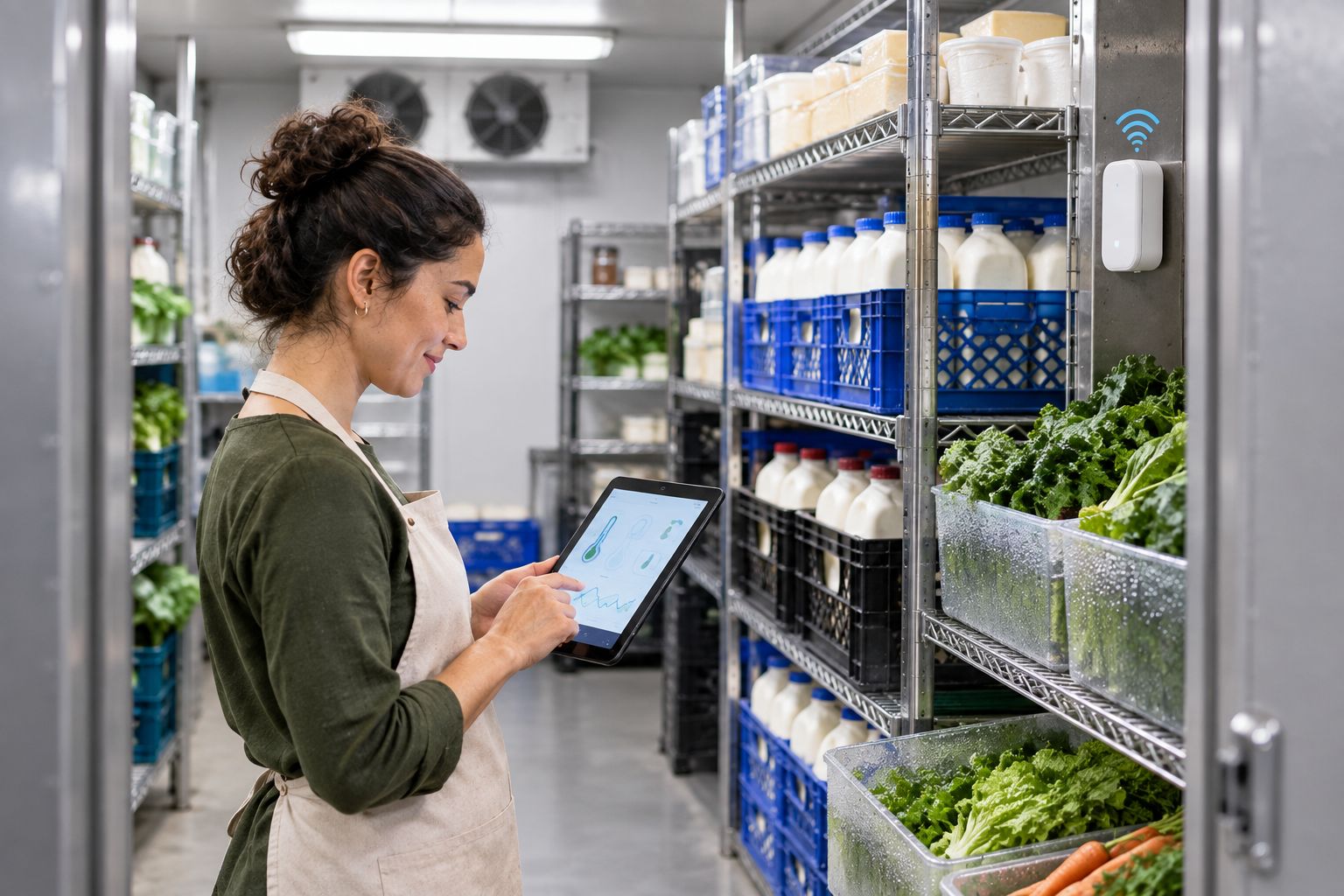
Best for: co-ops running more than one or two refrigeration zones, or a network of co-op stores that want a single dashboard instead of five disconnected tools.
How to choose an iot platform for a co-op grocery store
Start by counting zones, not stores: a single location with a walk-in freezer, a dairy case and a produce cooler already has three refrigeration profiles that need separate rules. Match that count against the criteria above — protocols, digital twin, rules engine, alarm escalation and permissions — before looking at any vendor's marketing page.
Ask what happens at 2 a.m. specifically. A platform that only sounds a local alarm hasn't solved the co-op's actual risk, which is nobody being there to hear it. Escalation chains, quiet hours and role-based permissions are the difference between a system that logs a failure and one that gets someone to the store before the loss compounds.
See Kilo on your cold storage
Provision a walk-in cooler sensor and build your first alarm rule.
Which iot platform fits your co-op grocery store best?
Heading into 2026, the honest answer scales with how many refrigeration zones you're running. One walk-in freezer at one location still gets through a health inspection on paper logs plus a standalone alarm as a backstop. Once a co-op is managing dairy, produce, freezer and dock temperatures across one or more locations, a centralized iot platform for co-op grocery stores closes the blind spots a plug-in alarm and a clipboard can't cover.
FAQ
What's the best iot platform for co-op grocery stores in 2026?
For a co-op running more than one refrigeration zone, an AI-first cloud platform like Kilo that centralizes cooler, freezer and dock alarms on one dashboard is the strongest fit. A single walk-in unit at one location can still get by on a standalone freezer alarm.
How much does an iot platform for a grocery store cost?
Cost depends on how many sensors, zones and locations you're monitoring, since most platforms price by device count and sell hardware separately. Check current plan details directly on the platform's site before budgeting a rollout.
What temperature does the FDA require for refrigerated food?
The FDA Food Code requires potentially hazardous food to be held at 41°F (5°C) or below. Frozen product is generally kept at 0°F (-18°C) per USDA guidance.
Is a standalone freezer alarm enough for a co-op grocery store?
A standalone alarm covers one unit but gives no history, no multi-zone dashboard and no escalation chain if nobody's in the building. It works as a backstop on a single walk-in freezer, not as a store-wide monitoring plan.
Can one iot platform monitor multiple co-op grocery locations?
Yes. A cloud platform with a digital twin per device and role-based permissions can put every store's coolers, freezers and dock doors on one dashboard instead of running a separate system per location.
Does Kilo work with existing LoRaWAN or mioty sensors?
Kilo runs a built-in LoRaWAN and mioty network server, so existing sensors on either protocol connect without deploying a separate network server. MQTT-publishing equipment, like a PLC or an energy meter, connects through Kilo's MQTT connector.
How do IoT alarms reach staff when a cooler fails overnight?
A configured alarm with severity tiers and an escalation chain sends the alert to an on-call manager by email, SMS or push instead of just sounding in an empty building. Quiet-hours settings can route the same alarm differently outside business hours.
What sensors do co-op grocery stores need for cold storage monitoring?
The core set covers walk-in cooler and freezer temperature, dairy case temperature, door-open sensors on refrigeration units and dock doors, and often a humidity sensor for bulk bins. Battery-powered LoRaWAN sensors are the common choice since they don't need mains wiring at every point.
What co-op grocery stores get wrong about temperature monitoring
Most co-ops set up alarms for compressor failure and stop there. USDA's Danger Zone rule doesn't care whether a compressor failed or a door was propped open for a delivery — 2 hours above 40°F (4°C) is 2 hours either way, and a propped dock door or a dairy case left ajar during restocking often adds up faster than a slow compressor leak. An iot platform for co-op grocery stores that only watches for hard failures misses the slower, more common cause of shrink.