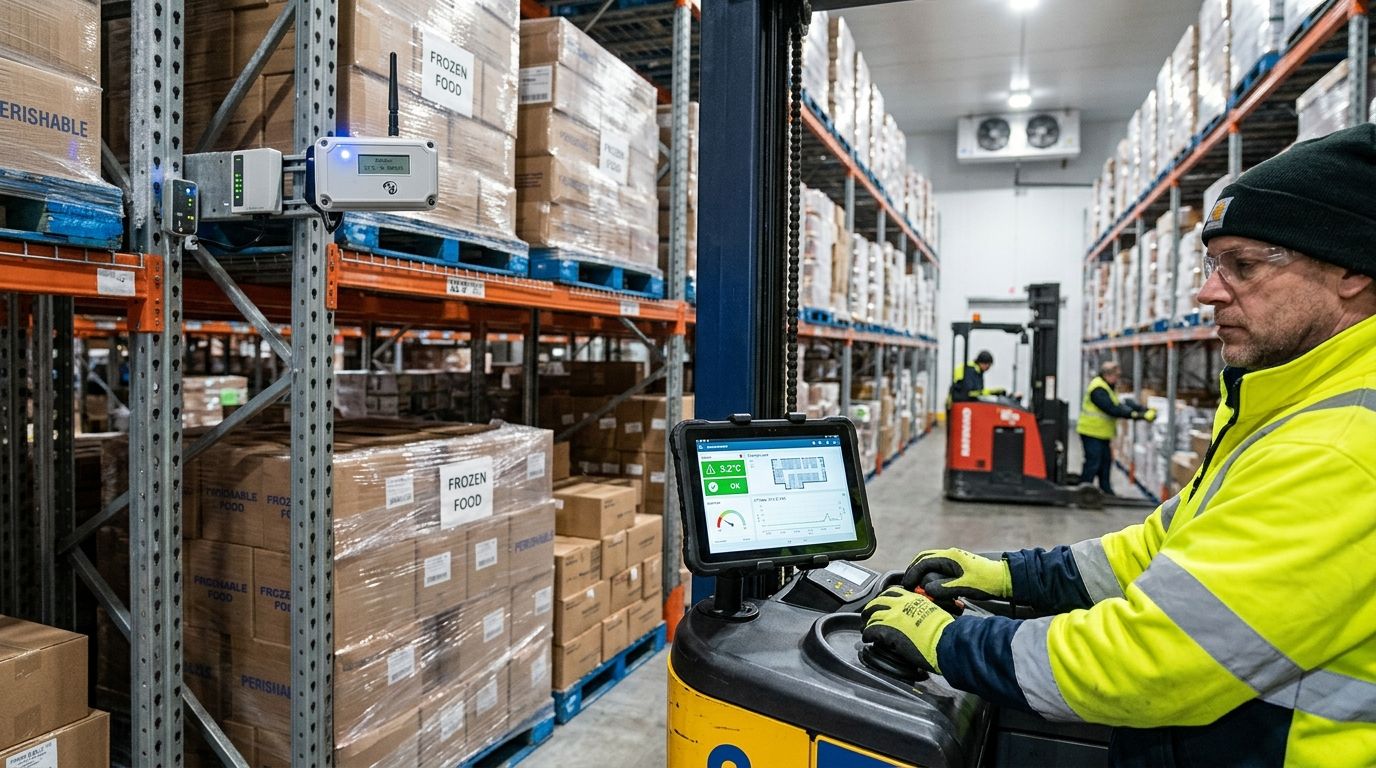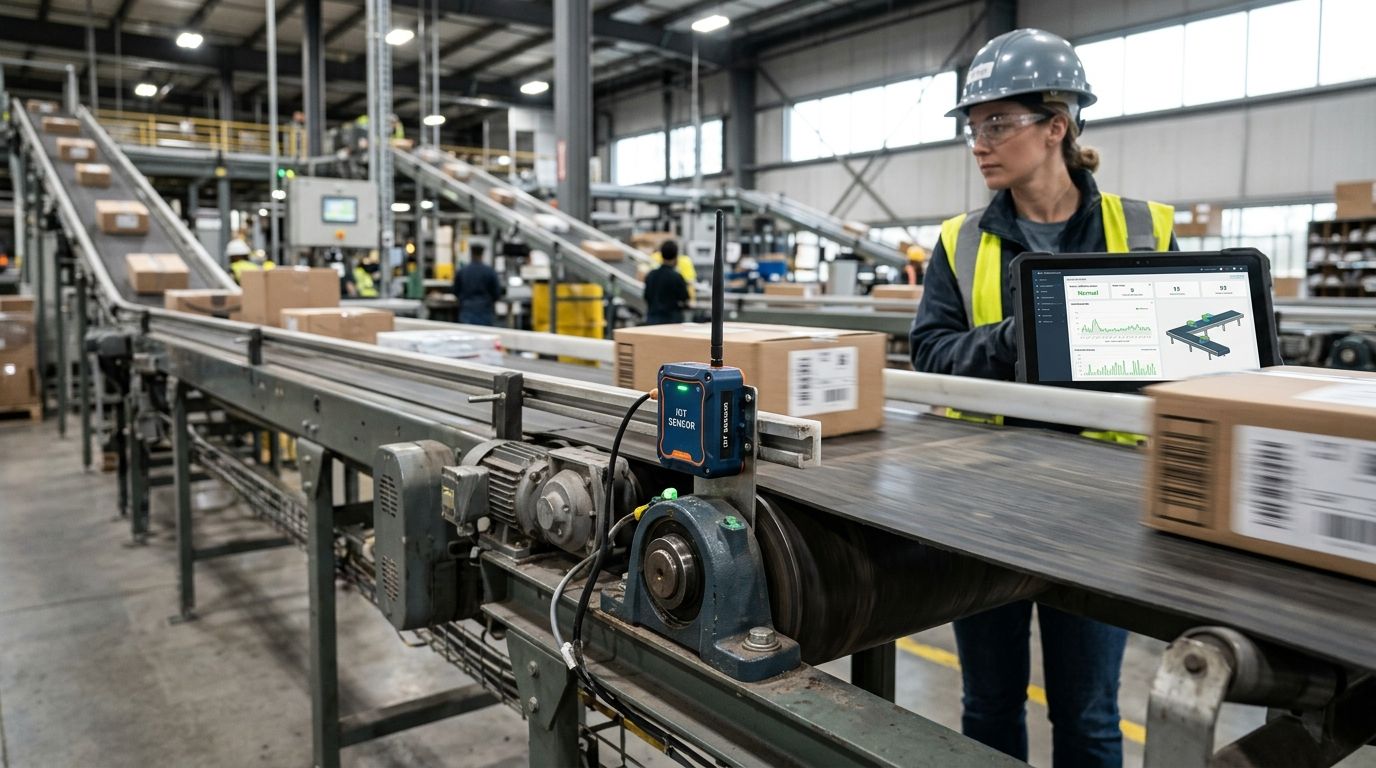
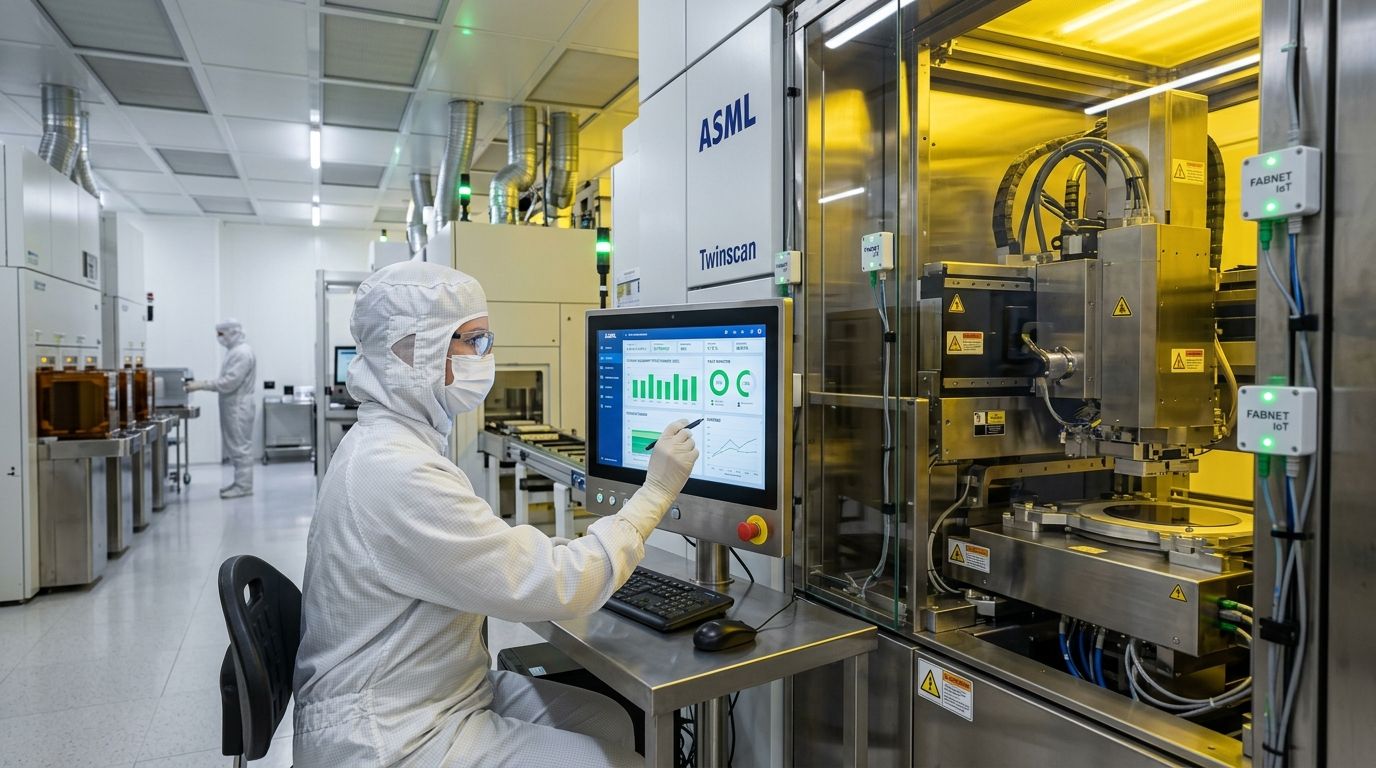
Semiconductor fabs run cleanrooms that can't tolerate a missed pressure excursion or a particle spike nobody caught until the next shift. Picking the right IoT platform for semiconductor cleanrooms means matching the platform to what's already running the fab, not chasing a single "best" product.
- Choosing an IoT platform for semiconductor cleanrooms starts with what's already installed: BMS, SCADA, or nothing yet.
- Kilo IoT Platform fits fabs that want particle and pressure alarms built via an AI assistant, no integrator required.
- ISO 14644-1 caps ISO Class 5 cleanrooms at 3,520 particles per cubic meter at 0.5 microns.
- Legacy BMS extensions suit fabs standardized on BACnet; custom SCADA suits high-volume fabs with automation engineers.
- Open-source stacks fit export-controlled fabs needing full data residency; single-purpose loggers fit small cleanrooms.
What does a semiconductor fab actually need from a cleanroom IoT platform?
A cleanroom doesn't fail slowly. A pressure reversal between a gowning room and a bay, or a particle count that crosses an ISO threshold, shows up in seconds, not in a shift report filed six hours later. That's the gap a dedicated cleanroom facility monitoring system is built to close.
Fab facilities engineers, EHS managers and cleanroom operations managers each need a different slice of the same data: particle counts by zone, differential pressure between adjacent classifications, temperature and humidity drift that can throw off a photolithography stepper, and gas detection for process chemicals like arsine or phosphine. NFPA 318, the standard for protecting semiconductor fabrication facilities, and OSHA's process safety management rule (29 CFR 1910.119) both assume continuous monitoring of hazardous conditions, not periodic spot checks.
ISO 14644-1 sets the classification math behind all of this. An ISO Class 5 cleanroom is capped at 3,520 particles per cubic meter at 0.5 microns and larger; step down to an ISO Class 7 bay and the limit rises to 352,000 particles per cubic meter at the same size threshold. A platform that can't hold continuous readings against those thresholds, zone by zone, isn't doing the job.
What makes the best IoT platform for semiconductor cleanrooms
- Connectivity that survives steel and HEPA filtration — cleanroom structures attenuate radio signals more than open floor plans
- Native support for particle counters and differential pressure sensors, not just temperature and humidity
- A rules engine that a facilities engineer can edit, not one that requires a vendor service ticket for every change
- Multi-tier alarm escalation so a particle excursion reaches the right person, not just an inbox nobody checks overnight
- Zone-level visualization that maps sensor data to the actual gowning rooms, airlocks and bays in the fab
- Access control and an audit trail that hold up under SEMI and ISO documentation requirements
IoT platform approaches for semiconductor cleanrooms at a glance
| Approach | Best for | Standout feature | Key limitation |
|---|---|---|---|
| AI-first cloud IoT platform (e.g. Kilo) | Multi-zone pressure and particle alarms with fast rule changes | Built-in LoRaWAN and mioty network server plus an AI assistant that drafts alarms | Camera-based contamination context is still coming soon |
| Legacy building management system | Fabs already standardized on BACnet or Modbus | Deep integration with existing HVAC control loops | Limited support for wireless sensors, slow to change alarm logic |
| Custom SCADA/MES integration | High-volume fabs with dedicated automation engineers | Tight coupling to process tools and yield data | Every configuration change needs specialist engineering time |
| Open-source or self-hosted stack | Fabs requiring full data residency control | No vendor lock-in, source code is auditable | Patching, uptime and scaling fall on internal IT |
| Single-purpose data logger | Small cleanrooms doing routine compliance logging | Simple setup, low cost per sensor | No cross-zone rules engine or escalation chains |
1. AI-first cloud IoT platforms: best for pressure and particle alarms across multiple fab zones
An AI-first cloud platform centralizes every cleanroom zone's sensor data into one dashboard and lets facilities staff, not just integrators, build alarm logic. The Kilo IoT Platform is a working example of this category. It ships a built-in LoRaWAN and mioty network server, so there's no separate network server to stand up before sensors start reporting, plus an MQTT connector for any BMS, PLC or energy meter already on site.
mioty's telegram-splitting design, standardized as ETSI TS 103 357, breaks each message into sub-packets sent across different frequencies and times. That tends to hold up better than standard LoRaWAN inside a steel-framed, HEPA-filtered cleanroom where reflective surfaces and dense equipment cause interference.
Kilo's live 3D digital twin binds particle counters and differential pressure sensors to specific gowning rooms, airlocks and bay zones on the actual building model, which is a different job than just monitoring cleanroom pressure differentials with IoT sensors on a flat list. Its visual rules engine, built on BPMN with CEL expressions, lets a facilities engineer define an escalation for a pressure drop or particle spike, version it, deploy it with one click, and roll it back if it misfires. That's the same rules engine software for industrial IoT alarms logic that applies to any multi-zone facility, adapted to cleanroom thresholds.
Alarms run through five severity tiers with multi-step escalation chains across email, SMS and push, quiet hours, and a centralized inbox. A built-in AI assistant can onboard a new sensor, draft a rule, or create an alarm from a plain-language request, scoped to the signed-in user's permissions and confirming before it takes a consequential action.
Kilo pros:
- Built-in LoRaWAN and mioty server removes a separate network-server deployment step
- AI assistant can draft a pressure-differential alarm without hand-writing CEL expressions
- Digital twin binds sensors to actual cleanroom zones, not a generic device list
- ABAC permissions and an immutable audit trail support fab-grade access control
Kilo cons:
- Kilo Lens, the camera-based contamination context layer, is listed as coming soon, not available yet
- Sensors and gateways ship through the Kilo Electronics hardware catalog, which ships worldwide, rather than bundled into the software subscription
- Suits teams comfortable configuring their own rules and dashboards, not a fully hands-off managed service
Best for: fabs running multiple cleanroom zones that want one dashboard for pressure, particle and temperature alarms without hiring an integrator for every rule change.
Set up cleanroom pressure alarms
See how sensors bind to a cleanroom digital twin, zone by zone.
2. Legacy building management systems: best for fabs standardized on BACnet or Modbus
Older fabs often already run a building management system controlling HVAC and air handlers site-wide over BACnet or Modbus. Extending that system with dedicated cleanroom sensor points can cause less disruption than introducing a parallel platform.
Legacy BMS pros:
- Deep integration with existing HVAC control loops
- Established vendor service contracts already in place
- One pane for general building alarms and cleanroom points
Legacy BMS cons:
- Adding wireless, battery-powered particle counters is often outside its native protocol scope
- Alarm logic changes typically require a vendor service call or license upgrade
- Not built for AI-assisted rule authoring or fast iteration
Best for: fabs whose HVAC and mechanical systems already run through a mature BACnet-based BMS and want incremental extension rather than a platform swap.
3. Custom SCADA and MES integrations: best for high-volume fabs with dedicated automation staff
High-volume fabs running SCADA under MES for wafer tracking sometimes fold cleanroom environmental points into the same historian, tying gas detection or DI water quality directly to process-tool interlocks.
SCADA/MES pros:
- Tight coupling between environmental data and yield or process data
- Can trigger tool-level interlocks directly, not just a notification
- Fits existing change-control and validation processes
SCADA/MES cons:
- Every new sensor type or alarm rule needs specialist engineering time
- Not built for facilities teams to self-serve changes
- Slower to onboard new sensors than a wireless plug-and-play platform
Best for: fabs with a dedicated automation engineering team that already ties process tools into SCADA and wants environmental data in the same historian.
4. Open-source or self-hosted IoT stacks: best for fabs that require full data residency control
Some fabs, particularly those under export-control or classified contract requirements, run open-source IoT software entirely on internal infrastructure so sensor data never leaves the building.
Open-source stack pros:
- Full control over where data physically lives
- No recurring platform subscription
- Source code can be audited internally
Open-source stack cons:
- Internal IT owns patching, uptime and scaling
- Building a rules engine, escalation chains and a digital twin from scratch is a multi-month project
- Ongoing maintenance competes with other IT priorities
Best for: fabs with export-control or classified-contract requirements that mandate on-premise data residency and have IT staff to maintain the stack.
5. Single-purpose data loggers: best for small cleanrooms doing routine compliance logging
A single-purpose logger records temperature, humidity or particle counts to local memory or a basic cloud export, mainly to support periodic compliance reports rather than live alarming.
Data logger pros:
- Low complexity to set up
- Adequate for point-in-time audit records
- No platform to administer
Data logger cons:
- No cross-zone rules engine
- Escalation is typically limited to a single email address
- Scaling past a handful of units means manually reconciling exports from each device
Best for: a single small cleanroom or gowning room that needs periodic ISO compliance records rather than real-time cross-zone monitoring.
How to evaluate an IoT platform for a semiconductor cleanroom
Work backward from what's already installed before comparing feature lists. If the fab runs a mature BACnet BMS across the whole site, extending it usually costs less than running two systems in parallel. If a SCADA layer already ties process tools to a historian, routing environmental data through the same layer keeps everything in one change-control process.
Where neither exists yet, or where wireless sensors need to reach zones a wired BMS never covered, an AI-first cloud platform closes that gap faster because sensors, rules and alarms configure without a separate network-server deployment. Digital twin platforms for facilities teams matter here specifically because a cleanroom's value is in the relationship between zones, not any single sensor reading.
“A cleanroom doesn't fail slowly - a pressure reversal or a particle spike shows up in seconds, not in a shift report.”
Which IoT platform should a semiconductor fab choose in 2026?
If cleanroom zones need pressure and particle alarms built without an integrator, an AI-first platform like Kilo fits because the rules engine and AI assistant remove the wait for a service ticket. If the fab already runs a full BACnet BMS site-wide, extending it is usually the faster path than swapping platforms outright. If a dedicated automation team already routes process tools through SCADA, folding cleanroom data into that same historian keeps one system of record. Export-controlled or classified fabs default to a self-hosted stack regardless of the other factors, because the data residency requirement overrides convenience.
None of these are permanent choices — a BMS extension and an AI-first platform can run side by side while HVAC stays on the legacy system and wireless particle counters report through the newer one.
FAQ
What's the best IoT platform for semiconductor cleanroom monitoring in 2026?
The best fit depends on existing infrastructure: an AI-first cloud platform like Kilo suits fabs that want particle and pressure alarms without an integrator, while fabs standardized on BACnet often get more value extending their existing building management system. High-volume fabs with dedicated automation staff typically route cleanroom data through the same SCADA layer that runs their process tools.
How many particles does an ISO Class 5 cleanroom allow?
ISO 14644-1 caps ISO Class 5 at 3,520 particles per cubic meter at 0.5 microns and larger. ISO Class 7, a less stringent bay-level classification under the same standard, allows up to 352,000 particles per cubic meter at that size.
Is a building management system enough for semiconductor cleanroom compliance?
A BMS can cover HVAC-driven pressure and temperature control but most were not built to ingest battery-powered wireless particle counters or run flexible cross-zone alarm rules. Fabs that need wireless sensors or fast alarm-logic changes often layer a dedicated IoT platform alongside the BMS rather than replacing it.
Does LoRaWAN work inside a shielded semiconductor cleanroom?
Standard LoRaWAN can struggle in steel-framed, HEPA-filtered cleanroom structures because signals attenuate through metal cladding and reinforced walls. mioty, standardized as ETSI TS 103 357, splits each message into sub-packets sent across different frequencies and times, which tends to hold up better in that kind of interference-heavy environment.
How much does an IoT platform for semiconductor cleanrooms cost?
Cost depends on sensor count, protocol mix and whether hardware is purchased separately, so check current plan details directly with the vendor rather than relying on a fixed figure. Sensors and gateways for a cleanroom deployment are typically sourced from a separate hardware catalog rather than bundled into the software subscription.
What sensors does a semiconductor fab need for cleanroom monitoring?
A cleanroom monitoring deployment typically includes particle counters, differential pressure sensors, temperature and humidity sensors, airflow velocity sensors, and gas detection for process chemicals like arsine or phosphine. Fabs with wet benches or DI water systems add water quality sensors to the same rules engine and alarm chain.
Can an IoT platform integrate with existing SCADA in a fab?
Most modern IoT platforms connect to SCADA and PLC systems through MQTT or Modbus connectors, letting environmental data sit alongside process data in the same historian. Direct SCADA integration usually requires more specialist engineering time than a wireless plug-and-play sensor rollout.
How does mioty compare to LoRaWAN for cleanroom deployments?
Both are low-power wide-area protocols, but mioty's telegram-splitting design generally gives it better resilience in dense, reflective industrial environments like a fab's steel structure. LoRaWAN remains the more widely deployed option with a larger installed base of off-the-shelf sensors.
What fabs get wrong when picking a cleanroom IoT platform
Most comparisons focus on radio range and gateway specs, but the thing that actually determines how fast a fab reacts to a pressure reversal is the rules engine and the escalation chain behind it, not the antenna. A platform that can rebuild an alarm rule in minutes and route it through five severity tiers beats one with better range but a service-ticket workflow for every change. ISO 14644-1 also requires continuous verification, not periodic spot checks, which rules out any approach that leans on manual logbooks for particle or pressure data in 2026.