
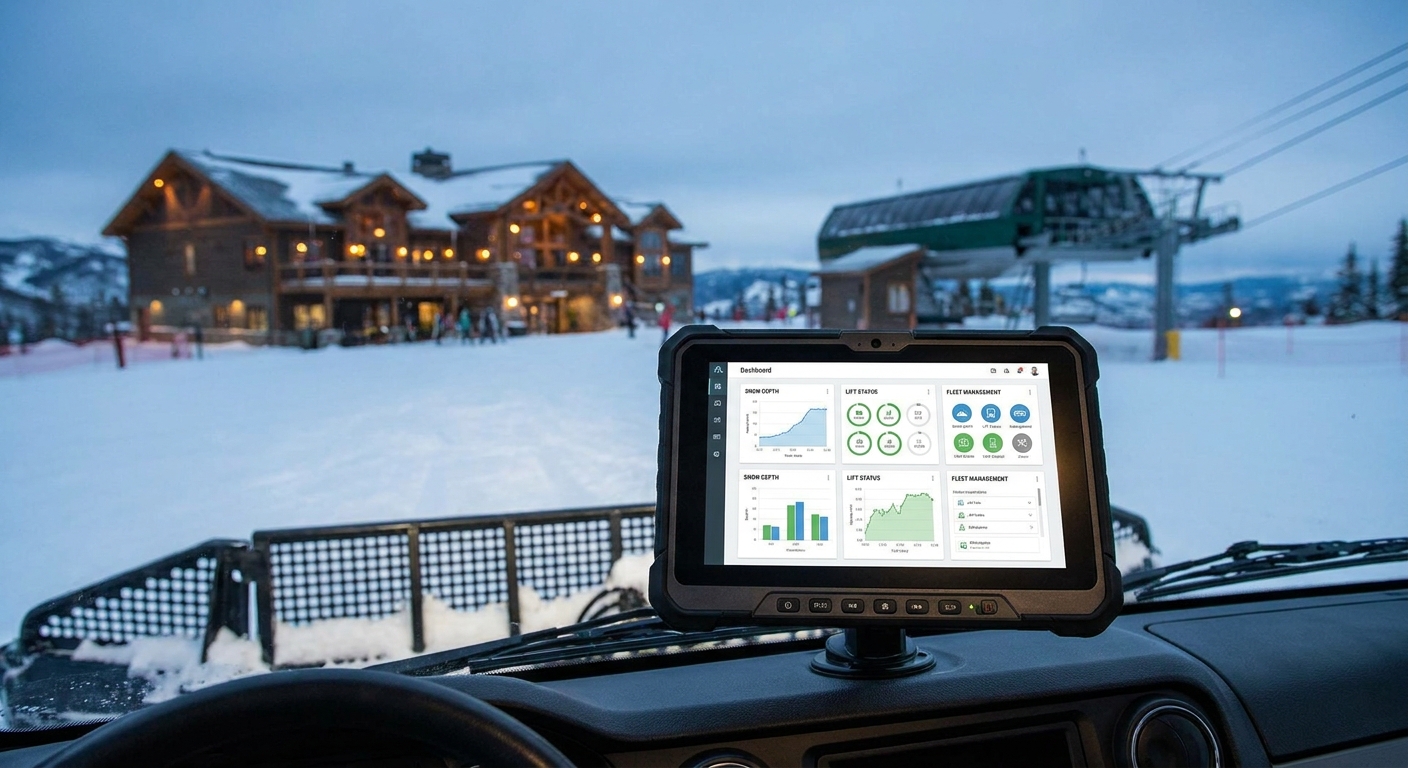
A lift gearbox vibrates loose at -25°C, a snowmaking reservoir drops below the level a pump needs to avoid cavitation, and a walk-in freezer door gets left open in the base lodge kitchen during a shift change — three failures, three different systems, and normally three different people who find out too late. The best IoT platform for ski resorts puts all of it on one dashboard with one alarm chain, running on wireless sensors built for terrain and cold rather than office buildings.
- The Kilo IoT Platform runs LoRaWAN and mioty sensors — including cold-rated units specified to -40°C — across snowmaking lines, lifts, and lodges.
- mioty (ETSI TS 103 357) uses telegram splitting to hold up better than standard LoRaWAN in RF-noisy lift infrastructure.
- Kilo's free tier covers 5 devices and 1 dashboard at 0 EUR; Starter runs 25 EUR per month for up to 25 devices.
- The vehicle and tracker connector ships with 2,000+ preconfigured templates for tracking snowcats and groomers.
- Five alarm severity tiers with multi-step escalation route a frozen-pipe or open-freezer-door alert to an on-call tech before it becomes a lodge closure.
How does IoT monitoring work at a ski resort?
A resort runs three environments at once: exposed terrain infrastructure that sits in wind and subzero air all winter, mechanical systems like lift gearboxes and snowmaking pumps that fail from vibration and pressure, and occupied buildings where guests expect heat and hot food. The Kilo IoT Platform connects sensors across all three through LoRaWAN, mioty, or MQTT, and turns raw readings into alarms through a visual rules engine rather than leaving a facilities director to check five separate screens.
Going into the 2026 season, the operational job hasn't changed: a mountain operations manager needs to know about a frozen pipe or a stalled reservoir pump before ski patrol or guest services find out the hard way. What's changed is how cheap it's gotten to put a sensor on every point of failure instead of just the ones with a history of breaking.
What sensors does a ski resort need for snowmaking, lifts, and lodges?
Coverage for a mountain operation typically breaks into four categories:
- Temperature and humidity — lodge HVAC zones, maintenance shops storing parts and lubricants, and cold storage for food and beverage inventory.
- Tank and reservoir level — snowmaking water reservoirs and fuel tanks for diesel generators and groomers, tracked through the facility monitoring system for ski resorts and mountain operations.
- Vibration — lift gearboxes, snowmaking pump bearings, and chiller compressors, where a rising vibration signature is a mechanical wear signal, not a prediction of when it will fail.
- Contact and door sensors — walk-in freezer and cooler doors in base lodge kitchens, which lose an entire inventory in hours if a door is propped open overnight.
MQTT handles the systems that already exist: a PLC running the snowmaking pump station, a BMS controlling lodge HVAC, or an energy meter on the lift motor. Kilo's MQTT connector pulls that data in without replacing the control system already in place.
How cold can LoRaWAN and mioty sensors run on a mountain?
This is where a lot of platforms fall apart on paper before they fall apart in the field. LoRaWAN links can reach up to 15 km line-of-sight in open terrain per LoRa Alliance technical specifications, which matters on a mountain where line-of-sight, not urban density, is the limiting factor. mioty, standardized under ETSI TS 103 357, splits each transmission into short sub-packets sent across different frequencies and times — a technique built specifically to hold up in RF-noisy, high-density environments like a base area packed with lift motors and snowmaking pumps.
Battery performance is the other half of the cold-weather question. Industrial-grade sensors built around lithium thionyl chloride (Li-SOCl2) cells are commonly rated to operate down to -40°C per manufacturer datasheets, which is the spec you check before you bolt a sensor to a lift tower and forget about it until spring. OSHA's cold stress guidance notes that frostbite risk rises sharply once wind chill drops below -18°C (0°F) — the same conditions your sensors have to survive unattended while your technicians can't stay out in it for long.
Kilo runs a built-in LoRaWAN and mioty network server, so there's no separate network server to stand up before sensors start reporting. Gateways are unlimited on every plan tier, which matters when a resort's terrain means you need multiple gateways just to cover ridgelines and drainages between lift towers.
For the specifics on picking hardware rated for this kind of exposure, see how to choose sensors for outdoor industrial IoT deployments in extreme weather and how to extend LoRaWAN sensor battery life in cold environments.
How do you track snowcats, groomers, and lift maintenance vehicles?
Grooming fleets and lift maintenance vehicles move across terrain that doesn't have consistent cell coverage, and a lost or stalled snowcat mid-shift is an expensive problem. Kilo's vehicle and tracker connector ships with over 2,000 preconfigured tracker templates, so onboarding a groomer or a utility truck doesn't mean building an integration from scratch. Each tracked asset gets its own digital twin — a persistent record of location history and status that a maintenance supervisor can pull up without digging through raw GPS logs.
What alarms and escalation rules matter for mountain operations?
A temperature reading by itself isn't useful — an alarm that reaches the right person before a lodge closes for the day is. Kilo's alarm system runs five severity tiers with multi-step escalation chains: an Info-level alert might just log to a centralized inbox, while a Critical alert pages a snowmaking technician by SMS and escalates to a shift supervisor if it isn't resolved in a set window. Quiet hours keep low-severity noise from waking an on-call tech at 3 a.m. for something that can wait until the lift line opens.
Rules are built visually using BPMN with CEL expressions — for example, a rule that fires if a snowmaking reservoir level drops below a set threshold while outdoor temperature stays under -5°C for more than 30 minutes, which is the combination that actually risks pump cavitation rather than a normal daily dip. Rules support version control, one-click deploy and rollback, and step-through debugging against a test payload before they go live on real equipment. The built-in AI assistant can draft and deploy a rule like that from a plain-language request, scoped to the signed-in user's permissions and confirming before it takes any consequential action.
What does a digital twin of a ski resort base area look like?
A live 3D digital twin binds sensors to the objects they monitor — a temperature sensor tied to the walk-in freezer it sits in, a vibration sensor tied to the specific lift tower it's bolted to — instead of a flat list of device IDs. Dashboard widgets include a map for terrain-wide asset location, charts for trend data like reservoir levels over a season, floor-plan pins for lodge zones, gauges for live readings, and control widgets for sending commands back to equipment.
LoRaWAN vs. mioty vs. MQTT: which fits a ski resort deployment?
| Connectivity | Best for | Cold performance | Typical use on a mountain |
|---|---|---|---|
| LoRaWAN | Spread-out outdoor sensors, long battery life | Rated to -40°C on Li-SOCl2 cells (manufacturer datasheets) | Lift towers, remote reservoirs, exterior lodge zones |
| mioty | Dense, RF-noisy base areas | Telegram splitting improves reliability near motors and pumps | Snowmaking pump houses, base lodge mechanical rooms |
| MQTT | Existing PLC, BMS, or energy meters | Depends on the connected device, not the protocol | Snowmaking control systems, lodge HVAC, lift motor metering |
See the platform on your terrain
Start free with up to 5 devices and 1 dashboard, no card required.
How do you start an IoT deployment at a ski resort without ripping out existing systems?
- Pilot one lift or one lodge first. Wire in vibration sensors on a single lift gearbox and temperature sensors in one kitchen's cold storage before committing to mountain-wide coverage — you'll find gateway placement problems on 5 devices, not 200.
- Connect what's already running through MQTT. Snowmaking PLCs and lodge BMS systems don't need to be replaced; Kilo's MQTT connector pulls their data into the same dashboard as new wireless sensors.
- Scale gateways with terrain, not budget. Since gateways are unlimited on every Kilo tier, adding a second or third gateway to cover a ridge or drainage doesn't change your device cost as the resort expands sensor coverage into the 2026-27 season.
FAQ
What is the best IoT platform for ski resorts in 2026?
The right platform for a ski resort combines LoRaWAN or mioty connectivity for outdoor sensors rated to extreme cold, an MQTT connector for existing snowmaking and BMS systems, and multi-tier alarm escalation. The Kilo IoT Platform covers all three without requiring a separate network server.
Is mioty or LoRaWAN better for ski resort sensor networks?
LoRaWAN generally wins for spread-out outdoor sensors on lift towers and reservoirs thanks to line-of-sight range up to 15 km per LoRa Alliance specs. mioty, standardized under ETSI TS 103 357, performs better in dense, RF-noisy areas like snowmaking pump houses because of its telegram-splitting design.
How cold can IoT sensors run on a chairlift or snowmaking line?
Industrial LoRaWAN and mioty sensors built on lithium thionyl chloride cells are commonly rated to operate down to -40°C per manufacturer datasheets. That's well below the wind chill thresholds where OSHA's cold stress guidance flags rising frostbite risk for outdoor workers.
Can an IoT platform track snowcats and grooming equipment across a mountain?
Yes, with a vehicle and tracker connector rather than a standalone fleet app. Kilo ships 2,000+ preconfigured tracker templates so a snowcat or utility truck can be onboarded without a custom integration.
How much does an IoT monitoring platform cost for a ski resort?
Kilo's free tier covers up to 5 devices and 1 dashboard at 0 EUR with no card required and never expires. The Starter tier runs 25 EUR per month for up to 25 devices, and gateways are unlimited on every tier.
What alarms should a mountain operations team set up first?
Start with reservoir level combined with outdoor temperature for snowmaking, vibration thresholds on lift gearboxes, and door-open alerts on walk-in freezers. Route each through a multi-step escalation chain so a low-severity alert doesn't page the same person as a lodge-closing one.
Does a ski resort need a new network server for LoRaWAN or mioty?
No, not with a platform that includes one built in. Kilo runs its own LoRaWAN and mioty network server, so sensors connect directly without deploying and maintaining a separate server component.
What's the most overlooked sensor on a ski mountain?
It's the door contact sensor on the base lodge walk-in freezer, not the lift gearbox. A vibrating gearbox gives days of warning; a freezer door left ajar during a busy shift change wipes out a season's worth of food inventory in a single overnight, and it's the alarm resorts skip until after the first loss.