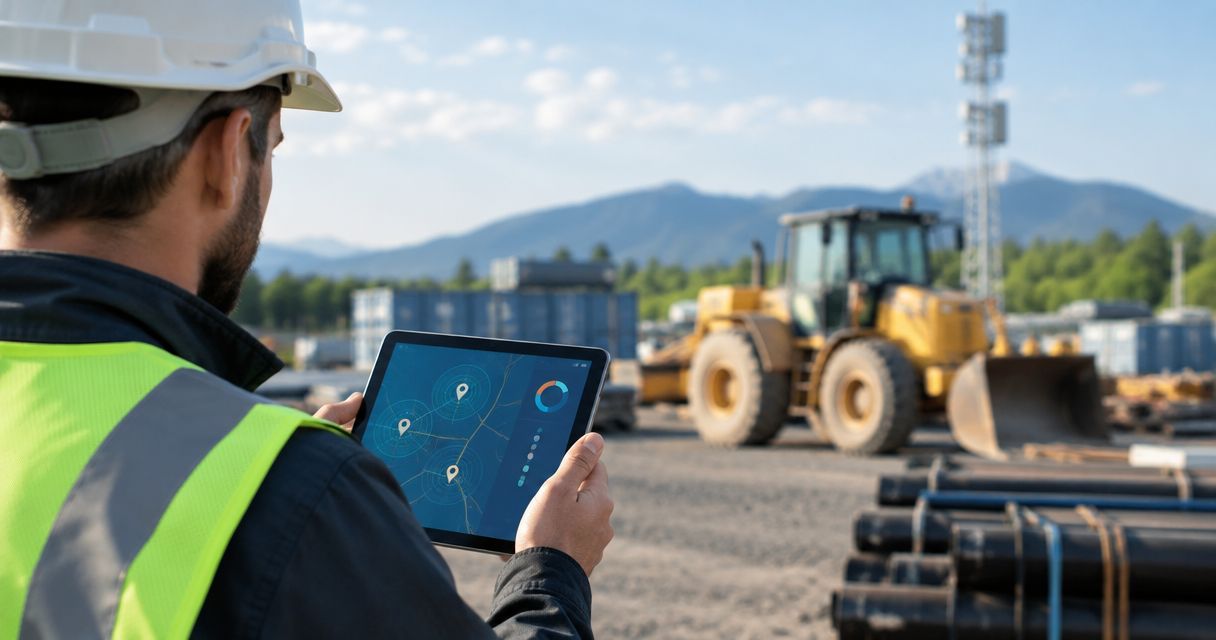
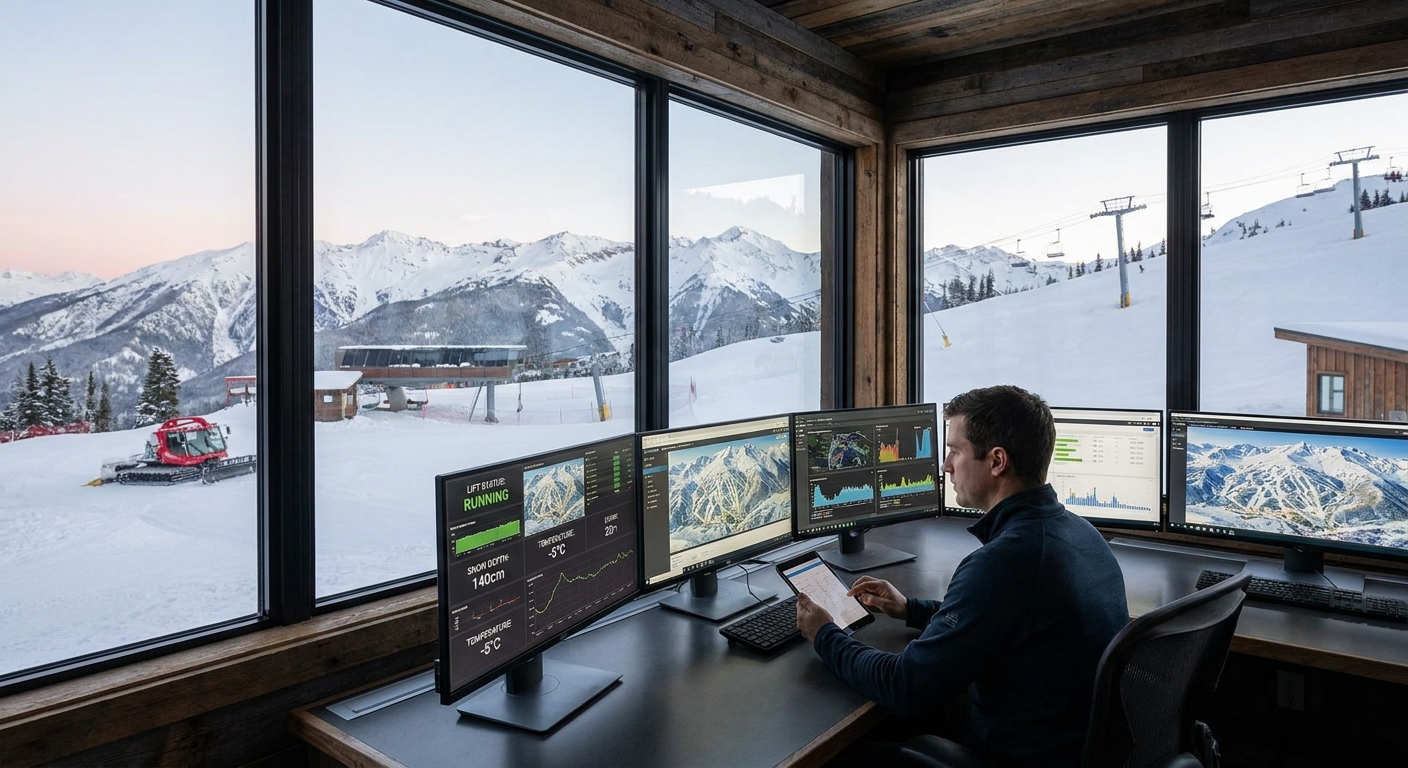
A ski resort runs more infrastructure per acre than almost any other facility type: lift motor rooms at 9,000 feet, snowmaking pump houses running all night, walk-in coolers under the lodge, and outbuildings scattered across three elevations with spotty cell service. A facility monitoring system for ski resorts has to cover all of it from one dashboard, not just the base lodge where the WiFi works.
- Kilo IoT is the Buy for mountain operators needing one dashboard across peak, mid-mountain, and base facilities in 2026.
- Sensors rated to real outdoor cold matter more than app polish once a gearbox room sits above treeline.
- Satellite or LoRaWAN backhaul is the fix for lift shacks with zero cellular signal — cellular-only platforms fail there.
- Consumer WiFi sensors are a Skip: they drop the moment guest bandwidth spikes on a powder day.
Why this matters
A resort's mechanical footprint is spread across a mountain, not a floor plan. Lift terminals, snowmaking pump houses, mid-mountain warming huts, and the base lodge boiler room each fail differently and none of them get checked by hand at 3 a.m.
A facility monitoring system for ski resorts closes that gap by putting sensors on the equipment that actually breaks — motor bearings, pump vibration, walk-in cooler temperature, water lines — and routing alarms through a rules engine instead of a maintenance tech's memory. In 2026, the resorts that skip this still find out about a frozen pipe from a guest complaint, not a sensor.
Who this is for
This is for facilities and ops directors running lift mechanical rooms, snowmaking systems, and base lodge infrastructure across multiple elevations with a lean overnight crew. If your site list includes a summit terminal with no cell signal, a pump house that runs unattended all night, and a lodge kitchen with three walk-ins, you're the buyer this guide is written for.
What to look for in a facility monitoring system for ski resorts
Connectivity that survives terrain and dead zones
A lift shack 2,000 vertical feet above the base lodge often has zero cellular signal. LoRaWAN gateways extend coverage across ridgelines where cell towers don't reach, and satellite IoT connectivity for remote industrial sites covers the structures that sit outside both cellular and LoRaWAN range entirely. A platform that only does cellular backhaul leaves your highest-risk buildings unmonitored.
Sensors rated for actual mountain cold, not office cold
A sensor spec'd for indoor use starts misreading or dropping connection well before it hits -20°C, which a mountain lift shack sees routinely from December through March. Guidance on how to choose sensors for outdoor industrial IoT deployments in extreme weather matters more here than almost any other spec sheet line item.
Cold-hardened battery life through a full winter season
Standard alkaline and even some lithium cells lose usable capacity fast below -20°C, and a dead sensor in a lift shack in January doesn't get replaced until the lift crew hikes up there. Battery chemistry rated for cold, not just rated for "outdoor," is the difference between one site visit per season and one per month.
Vibration and temperature monitoring on mechanical equipment
Lift gearboxes and snowmaking pumps fail the same way industrial motors fail everywhere else: bearing wear shows up as vibration and heat before it shows up as a shutdown. A rules engine that flags a vibration threshold crossing before the motor room hits failure temperature buys you a maintenance window instead of an emergency lift closure mid-season.
Lodge-side monitoring for guest-facing buildings
The base lodge has its own risk profile: walk-in coolers, freezers, water lines under a slab that freezes and cracks, HVAC in a building full of wet gear and body heat. A resort running the same platform across mechanical rooms and the lodge kitchen gets one alarm feed instead of two disconnected systems.
One dashboard and rules engine across every elevation
A resort with a base lodge, two mid-mountain warming huts, and a summit terminal is running at least four separate microclimates. A single dashboard that maps alarms to the actual building — not just a device ID — is what lets a two-person night crew triage a 2 a.m. alert without driving to the wrong structure first.
Top picks for mountain facility monitoring setups
The lift-shack problem — the terminal at the top of a triple chair often sits 3,000 vertical feet from the nearest cell tower with a direct line of sight to nothing. Pair LoRaWAN with a satellite fallback and the alarm still fires when the gearbox overheats at midnight. Buy.
The snowmaking pump house — pumps run continuously for weeks at a stretch during a cold snap, and a bearing failure typically shows up as a vibration spike 15-20 minutes before the motor overheats. Vibration plus temperature sensing on the pump skid catches it in that window. Buy.
The lodge basement walk-in — food safety compliance and equipment protection both hinge on catching a compressor failure before product sits above 8°C for an extended stretch. Standard cold-chain temperature sensors cover this without a dedicated BMS retrofit. Consider.
The multi-building dashboard — a mid-size resort commonly runs five to eight separate mechanical buildings across a mountain. Consolidating them into one alarm feed instead of five separate local panels is what actually gets checked at 3 a.m. Buy.
Generic off-the-shelf battery sensors — sensors built for warehouse or office deployments and shipped with standard cell batteries commonly lose a meaningful chunk of runtime once outdoor temperatures drop below -20°C for a sustained stretch. Fine for the lodge lobby, wrong for a lift shack. Skip for anything outdoors above the treeline.
What to avoid
- Consumer WiFi sensors that look cheap and simple on a spec sheet but drop connection the moment guest bandwidth on the lodge network spikes during a busy weekend.
- Cellular-only platforms with no LoRaWAN or satellite fallback — they leave your highest-elevation, highest-risk buildings with no coverage at all.
- Retrofitting a legacy BMS into a lift shack or pump house that was never wired for it, instead of deploying wireless sensors that don't require running new conduit through solid rock.
See the platform across every site
One dashboard for lift rooms, pump houses, and the base lodge.
Verdict comparison across criteria
| Criterion | What good looks like | Verdict |
|---|---|---|
| Connectivity in dead zones | LoRaWAN + satellite fallback | Buy |
| Cold-rated sensors | Rated below -20°C, not just "outdoor" | Buy |
| Battery chemistry | Cold-hardened cells, multi-season life | Consider |
| Mechanical equipment | Vibration + temperature on pumps/lifts | Buy |
| Lodge-side monitoring | Cold storage + water leak sensors | Consider |
| Unified dashboard | One alarm feed across all buildings | Buy |
FAQ
What is a facility monitoring system for ski resorts?
It's a platform that puts sensors on lift motor rooms, snowmaking pumps, and lodge infrastructure, then routes temperature, vibration, and connectivity alarms to one dashboard. In 2026 most resorts run this across multiple elevations instead of checking each building by hand.
How do you monitor lift motor rooms without cell signal?
LoRaWAN gateways extend coverage across ridgelines where cellular towers don't reach, and satellite backhaul covers structures fully outside network range. Both route data back to the same dashboard as cellular-connected buildings.
What temperature range should mountain-rated IoT sensors handle?
Sensors deployed in lift shacks and pump houses need a rating well below -20°C, since standard indoor-rated hardware misreads or drops connection at those temperatures. Battery chemistry matters as much as the housing rating.
Can one platform monitor both snowmaking equipment and lodge HVAC?
Yes — a rules engine and dashboard built for multi-site facilities handles mechanical equipment vibration alerts and lodge-side HVAC or cold storage alarms in the same feed. That's the point of running one platform instead of separate local panels per building.
How long do LoRaWAN sensor batteries last in cold weather?
Cold-hardened battery chemistry is built to hold usable capacity through a full winter season, while standard cells lose a meaningful chunk of runtime below -20°C. Check the sensor's cold-rated spec before deploying above treeline.
Is satellite IoT connectivity necessary for ski resorts?
Only for structures with zero cellular and no line of sight for LoRaWAN, which is common at summit terminals and remote lift shacks. Base lodges and mid-mountain buildings usually have adequate LoRaWAN or cellular coverage already.
What's the difference between LoRaWAN and cellular for mountain monitoring?
LoRaWAN covers long ranges over difficult terrain on low power, which suits scattered mechanical buildings across a mountain. Cellular is simpler to deploy where towers already reach but fails at the elevations and dead zones resorts commonly have.
How much does facility monitoring cost for a ski resort?
Cost scales with the number of buildings, sensor types, and connectivity mix (LoRaWAN versus satellite), so check current pricing based on your actual site count. A five-building base area costs less to instrument than a resort running summit terminals and multiple warming huts.
One last thing
Most monitoring failures on a mountain don't happen at the summit — they happen in the lodge boiler room, where an analog gauge gives one reading once a shift and nobody notices the drift until the pipes freeze. The highest-elevation building usually gets the attention; the basement gets the outage.