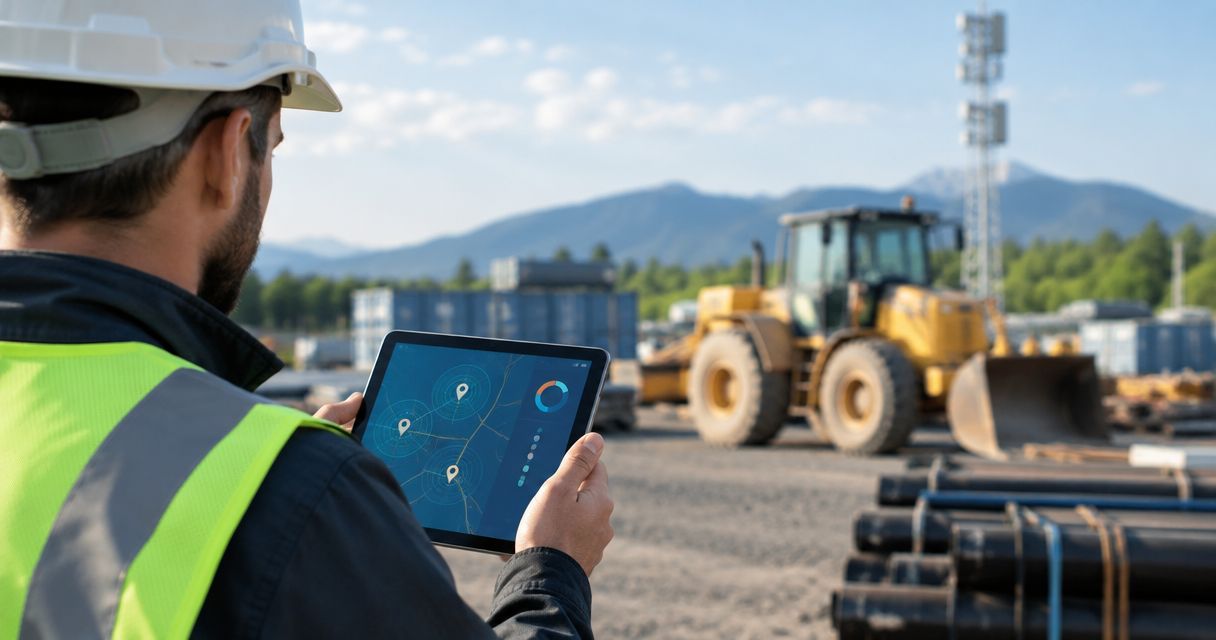
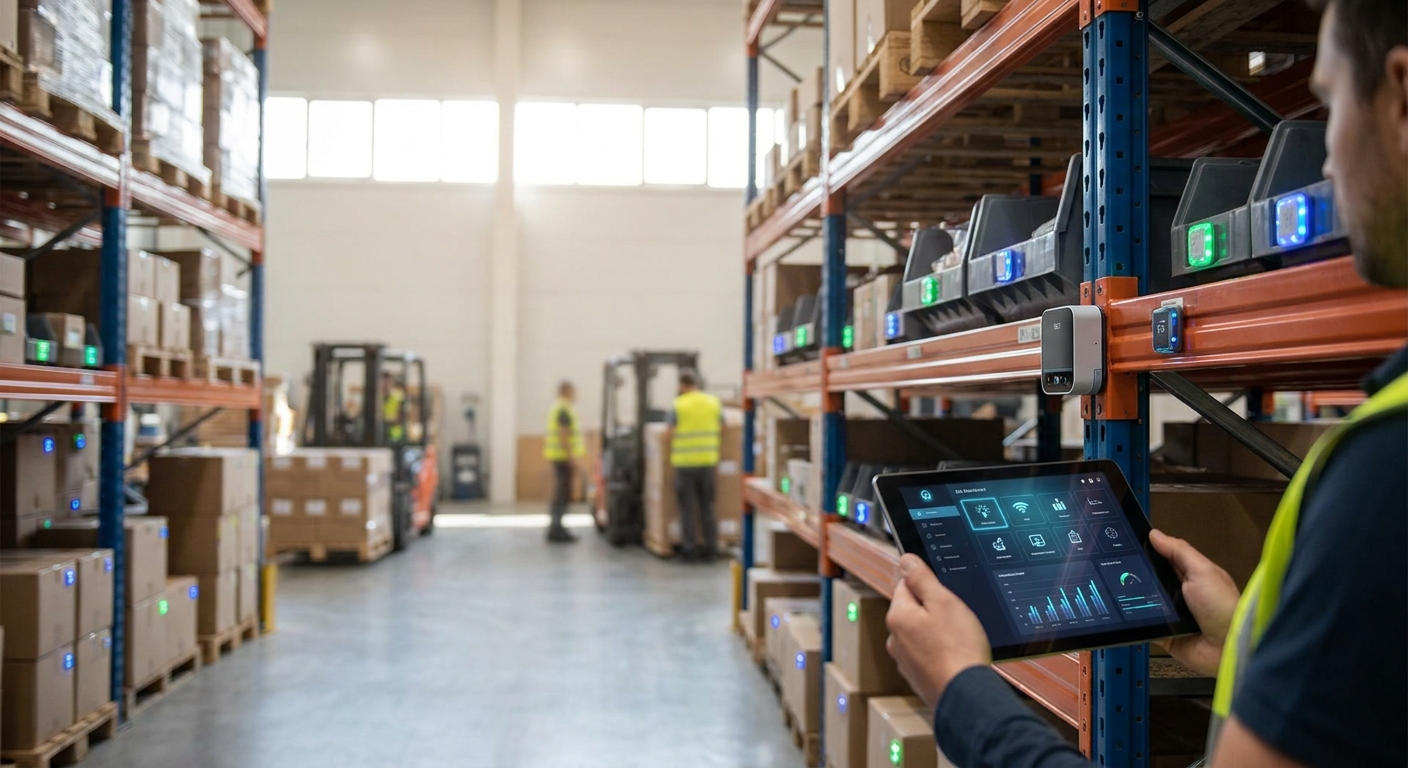
Shelf-level asset tracking in a warehouse means knowing which pallet, tote, or tool sits on which rack bay — not just which building it's in. That distinction is where most "asset tracking" pitches fall apart, because GPS and even most cellular trackers can't resolve position past the loading dock door.
- Bluetooth mesh with a fixed anchor grid is the best iot platform for warehouse racking and shelf-level asset tracking in 2026 — buy it for bay-level resolution.
- LoRaWAN wins for combined environmental plus zone-level tracking across multi-building sites, not single-aisle precision.
- Passive RFID beats both on raw SKU count per second but reports zero condition data — pair it, don't rely on it alone.
- Cellular and Wi-Fi RTLS overlays are the wrong tool for indoor shelf tracking; both cost more per tag and deliver worse resolution than BLE mesh.
Why this matters
A pallet that's twelve feet from where the WMS says it is costs a picker an average of several extra minutes per miss, and in a 100,000-square-foot facility those minutes compound into a full labor headcount by year-end. Racking environments also punish generic asset tracking: steel shelving reflects RF signals, forklifts create moving metal obstructions, and dock doors open and close all day, changing signal paths hour to hour.
An IoT platform built for this has to do three things at once — ingest location pings from tags on a fast interval, run rules that flag a tote that hasn't moved in the expected cycle time, and hand operations teams a dashboard that shows the rack, not the building. Kilo Cloud does this by combining a rules engine and alarm layer on top of whichever radio protocol actually resolves position at shelf scale, which for most racking layouts in 2026 is Bluetooth mesh, not cellular or Wi-Fi.
How this list is ranked
Each approach below is scored against three questions that matter for racking specifically: does it resolve position to the bay or aisle level, what's the real battery and maintenance burden on hundreds of tags, and does it feed a rules engine that can alarm on a stalled asset. Pricing and installed hardware claims from any single vendor are excluded — the ranking compares protocol and architecture behavior, which holds regardless of which platform runs on top of it.
The ranked list
1. Bluetooth mesh with fixed anchors — the shelf-level winner
BLE mesh tags ping a grid of fixed anchor points mounted on racking uprights, and triangulation from three or more anchors resolves position to roughly one bay. Tags run 2-3 years on a single CR2477 coin cell at a 30-60 second beacon interval, which is frequent enough to catch a tote leaving its zone in near real time.
The platform side matters more than the radio here: bluetooth mesh sensors for indoor asset tracking only pay off if the dashboard shows a floor-plan overlay instead of a flat list of tag IDs. Kilo Cloud's building twin plots each tag against the actual rack layout, so a facilities lead sees a gap on row 4 without cross-referencing a spreadsheet. Buy for any racking layout over 20,000 square feet where bay-level accuracy is the requirement.
2. LoRaWAN zone sensors — the multi-site combo pick
A single LoRaWAN gateway covers roughly 150,000 square feet of indoor warehouse space from one mounting point, which makes it the right call when racking sits inside a larger facility that also needs temperature, humidity, or door-open monitoring on the same network. LoRaWAN resolves to zone, not bay — good enough for "which aisle" but not "which shelf."
Most cold storage and dry-goods sites in 2026 already run LoRaWAN for environmental sensors, so layering asset presence tags onto the existing gateway is close to free incrementally. Buy if you're already running LoRaWAN for climate monitoring and racking tracking is a secondary need; Skip if bay-level resolution is the primary requirement.
3. Passive UHF RFID — fast counts, zero condition data
Fixed RFID readers at dock doors and rack ends read tags reliably within 20-30 feet, and a single reader can process hundreds of tags per second during a forklift pass. That throughput beats BLE mesh and LoRaWAN by a wide margin for pure inventory counting.
The gap: passive RFID tags carry no battery, no sensor, and report nothing between reads. There's no way to alarm on a tote sitting still too long or a temperature excursion, because the tag only exists in the system the instant it passes a reader. Consider RFID as a counting layer paired with BLE mesh for continuous position, but don't run it alone if the goal includes shelf-level asset tracking with any condition awareness.
4. Rack-mounted equipment sensors — for the racks themselves, not the goods on them
Server racks, network cabinets, and high-value equipment racks need a different sensor mix than pallet racking — think tamper, door-open, and power state rather than location pings. Best asset tracking sensors for IT and network equipment racks covers that case specifically, and it's worth separating from general warehouse shelf tracking because the failure modes are different: an unauthorized rack door open matters more than a six-inch position drift.
Consider this a parallel track, not a substitute — a warehouse with both pallet racking and a server room needs both sensor classes on the same platform, which is where a single rules engine across protocols pays off.
5. Wi-Fi RTLS overlays — expensive precision you probably don't need
Wi-Fi-based real-time location systems can hit sub-meter accuracy, but they require a dense access point grid — often one AP every 40-50 feet — built and maintained specifically for location, not just connectivity. That's a heavier infrastructure lift than most racking environments justify.
Cost per tracked point runs meaningfully higher than BLE mesh for equivalent coverage, and the added precision beyond bay-level rarely changes an operational decision on a pallet rack. Hold unless a specific use case (surgical instrument tracking, high-security asset rooms) demands sub-meter accuracy indoors.
6. Manual barcode scans and spreadsheet cycle counts — the baseline to retire
Barcode-and-clipboard cycle counts still run a large share of warehouse racking programs in 2026, and they fail the same way every time: the data is only as current as the last physical walk, which for most sites is once a week at best. A tote can sit misplaced for six days before anyone notices.
There's no alarm, no rules engine, no automatic flag when something's been stationary too long. Skip — any of the sensor-based approaches above closes the visibility gap that manual counts leave open, usually within the first month of deployment.
Map your racking layout to a live dashboard
See bay-level tracking and rules-based alarms on your actual floor plan.
Comparison table
| Approach | Resolution | Battery/maintenance | Environmental data | Verdict |
|---|---|---|---|---|
| BLE mesh + fixed anchors | Bay-level | 2-3 yrs per tag | Yes, with sensor tags | Buy |
| LoRaWAN zone sensors | Zone-level | 2-5 yrs per node | Yes (temp, humidity, door) | Buy for multi-use sites |
| Passive UHF RFID | Read-point only | No battery, no reporting | None | Consider, pair only |
| Rack equipment sensors | Rack/cabinet | 1-3 yrs per node | Tamper, power, door state | Consider, parallel track |
| Wi-Fi RTLS | Sub-meter | AP infrastructure, ongoing | No | Hold |
| Manual barcode counts | Snapshot only | N/A | None | Skip |
How to source it
- Pick a platform with a rules engine that can alarm across protocols — a site that mixes BLE tags on racking and LoRaWAN sensors on dock doors shouldn't need two separate dashboards.
- Confirm the tag density math before ordering hardware: a 40,000-square-foot racking floor needs enough BLE anchors to guarantee three-point triangulation on every bay, not just blanket radio coverage.
- Ask what happens when a tag goes dark for 48 hours — a platform without a stale-asset alarm just shows a last-known position forever, which looks fine on a dashboard and is wrong on the floor.
FAQ
What is the best IoT platform for warehouse racking and shelf-level asset tracking in 2026?
Bluetooth mesh with fixed anchor points on a platform running a floor-plan dashboard and rules engine is the strongest fit in 2026, because it resolves position to the bay level and runs 2-3 years per tag on a coin cell. LoRaWAN is the better call when environmental monitoring and racking tracking need to share one network.
Is LoRaWAN or Bluetooth mesh better for shelf-level tracking?
Bluetooth mesh resolves to the individual bay; LoRaWAN resolves to the zone or aisle. Choose LoRaWAN only when the facility already needs it for temperature or humidity monitoring alongside racking visibility.
How much does shelf-level asset tracking cost to deploy?
Cost varies by tag count, anchor density, and existing network infrastructure, so get a site-specific quote rather than relying on a per-square-foot rule of thumb.
Can passive RFID track pallets at the shelf level?
Passive RFID counts pallets fast at fixed read points but doesn't report continuous position or condition between reads, so it works best paired with a real-time sensor layer, not alone.
How long do asset tracking tags last on warehouse racking?
BLE mesh tags typically run 2-3 years on a single coin cell at a 30-60 second beacon interval. LoRaWAN sensor nodes run 2-5 years depending on report frequency and environment.
Does Wi-Fi RTLS work for warehouse shelf tracking?
Wi-Fi RTLS delivers sub-meter accuracy but requires a dense access point grid, often one AP every 40-50 feet, making it a costlier option than BLE mesh for equivalent racking coverage.
What causes shelf-level tracking accuracy to drop in a warehouse?
Steel racking reflects RF signals and moving forklifts create shifting obstructions, both of which distort triangulation. A dense enough anchor grid and a platform that recalibrates against a floor-plan model corrects for most of this.
Do I need a rules engine for warehouse racking tracking?
Yes — without alarm rules, a tracking dashboard only shows last-known position with no flag when an asset has been stationary longer than expected, which defeats the purpose of real-time tracking.
One last thing
Most racking tracking failures in 2026 don't come from bad tags — they come from anchor placement that ignores forklift traffic patterns. An anchor mounted at the same height as a forklift mast gets blocked dozens of times an hour during peak shifts, producing gaps that look like tag failures but are actually line-of-sight problems solved by moving the anchor eighteen inches higher.