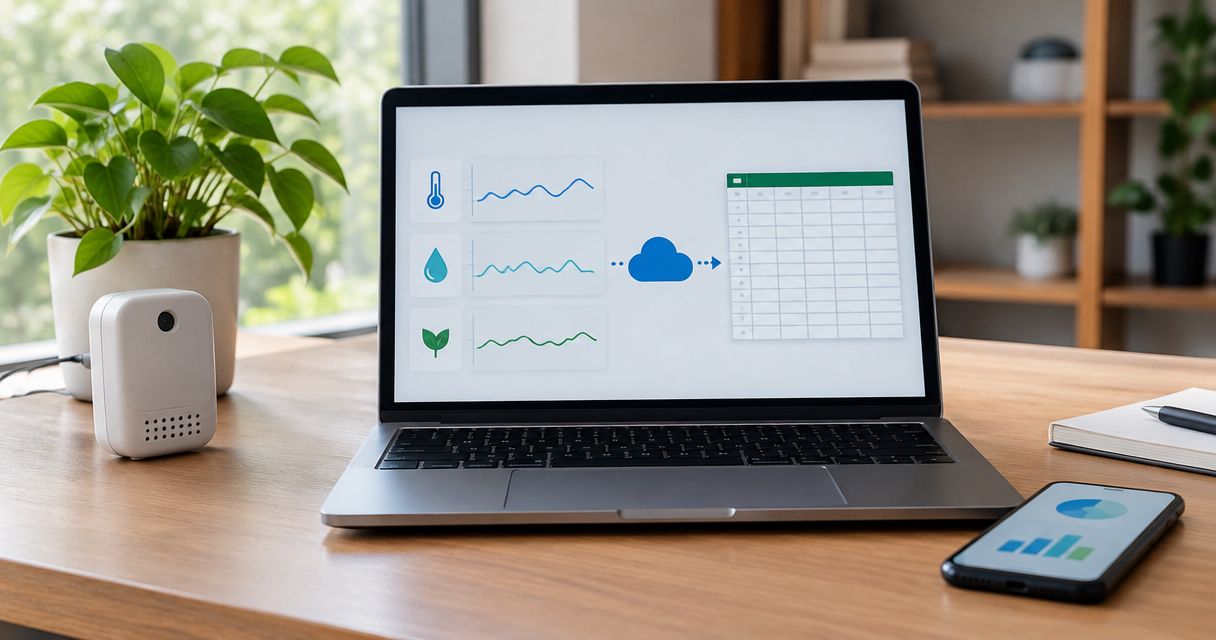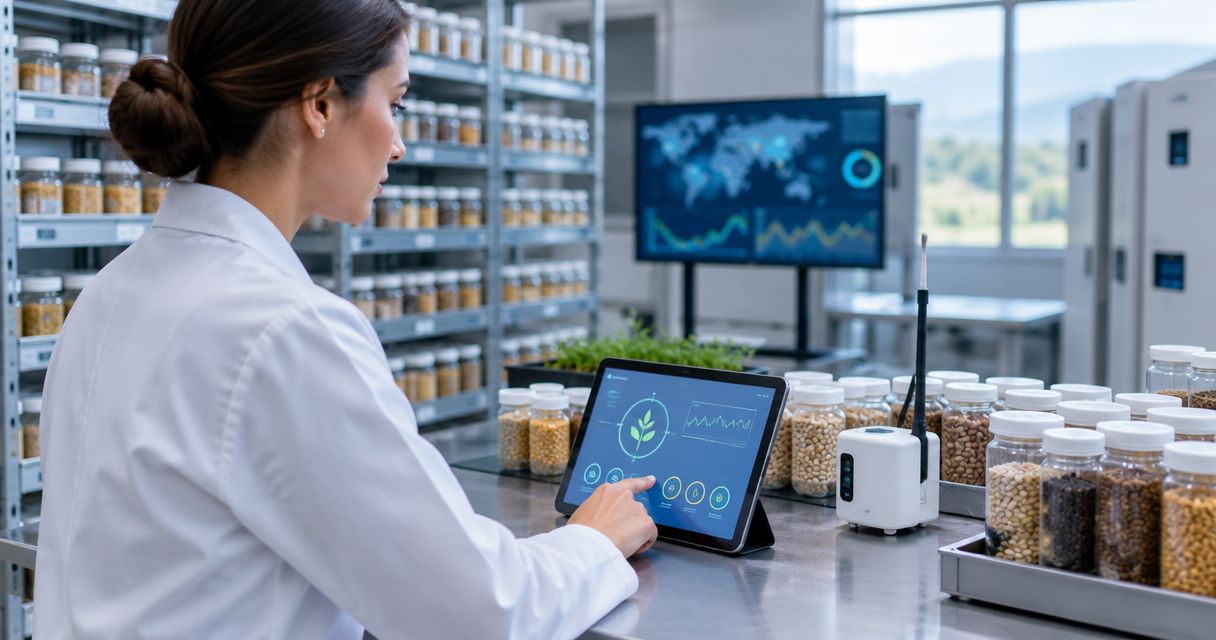
Seed storage and gene bank IoT monitoring means continuous tracking of temperature, humidity, seed moisture and power status for every accession — from the -18°C base collection freezer to the drying room where new seed lots get conditioned before they're packed away. Get the setup right and a compressor fault gets caught in minutes; get it wrong and you find out at the next germination test, years too late to fix anything.
This guide covers what a gene bank actually needs to instrument, in what order, and what a platform like the Kilo IoT Platform adds once paper logs and standalone data loggers stop being enough.
- Base collections need -18°C ±3°C per FAO/Bioversity Genebank Standards; active collections run 0-5°C.
- Seed moisture content of roughly 3-7% matters as much as temperature for long-term viability.
- Kilo pairs LoRaWAN or mioty sensors with alarm escalation so a freezer drift reaches a person, not just a logbook.
- Off-grid or rural gene bank sites need battery-powered wireless sensors, not a wired BMS retrofit.
- Kilo's Free tier covers up to 5 devices at 0 EUR, enough to pilot one freezer bank before scaling in 2026.
Why does iot monitoring matter for seed storage and gene banks?
A gene bank isn't a warehouse. An accession lost to a slow freezer drift can't be reordered from a supplier — it's gone, along with whatever genetic trait it carried. That's the entire reason the FAO and Bioversity International's Genebank Standards for Plant Genetic Resources (2014) specify storage conditions this tightly: base collections at -18°C ±3°C, active or working collections at 0-5°C, and orthodox seed moisture content held around 3-7% depending on species before long-term storage.
The Svalbard Global Seed Vault, which holds duplicate "black box" deposits from gene banks worldwide, runs its permafrost-backed vaults at -18°C for exactly this reason — the standard isn't theoretical, it's what the world's backup facility actually targets.
A logbook checked twice a day catches a slow drift eventually. It does not catch a three-hour excursion during a weekend power blip, and it does not tell you the seed moisture content crept up in the drying room before packaging. That gap between periodic checks and continuous readings is what IoT monitoring for seed storage and gene banks closes.
How to set up iot monitoring for seed storage and gene banks
The sequence below starts with what any gene bank can do with a thermometer and a spreadsheet, then layers in wireless sensors and automated alarms as the collection grows past what manual checks can reliably cover.
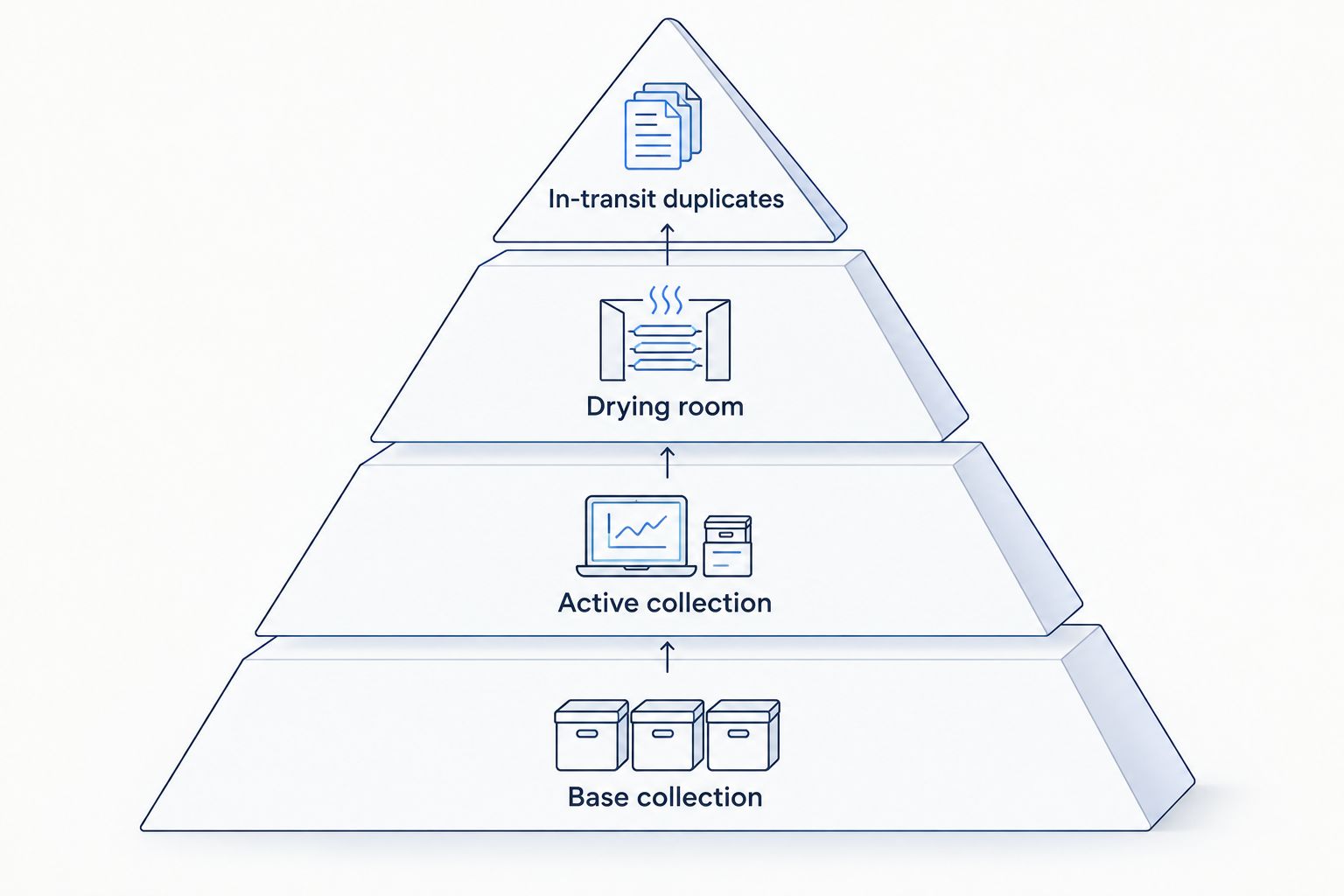
Map your seed collection tiers before you place a sensor
Different accessions need different targets, and treating them all the same is the fastest way to either waste freezer capacity or under-protect a base collection.
- Base collection: -18°C ±3°C, long-term conservation, rarely opened
- Active/working collection: 0-5°C, used for regeneration and distribution
- Drying room: seed moisture content around 3-7%, relative humidity roughly 10-15% before packaging
- Duplicate/black-box holdings shipped offsite: base collection standard applies
- In-transit or short-term holding areas during accession intake
Instrument every freezer, cold room and drying room, not just the ambient air
A single room-level sensor tells you the air near the door is fine. It doesn't tell you the rack in the back corner, or the shelf where the compressor's airflow doesn't reach, is drifting.
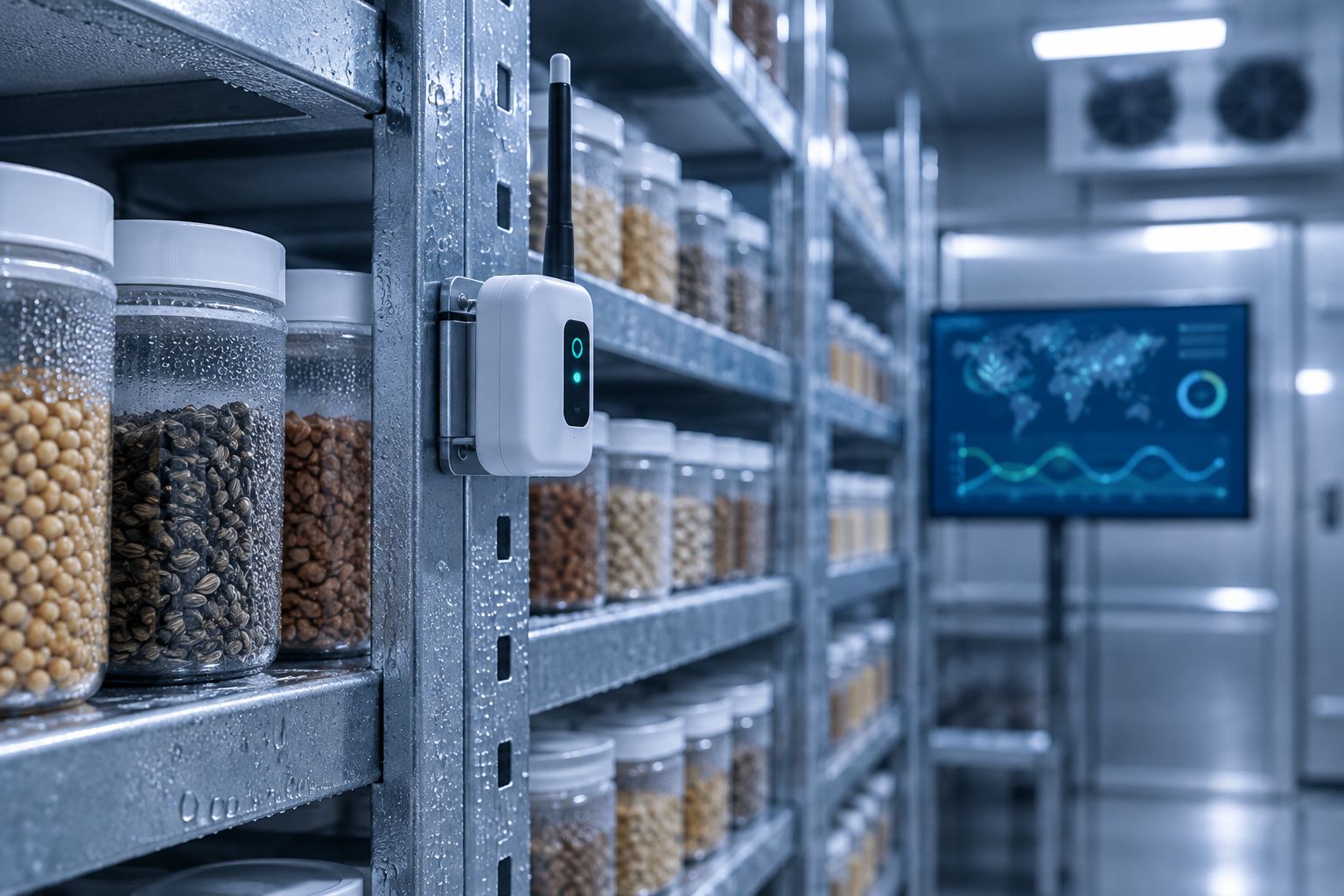
- Ambient temperature and humidity sensor per freezer or cold room
- Rack-level or shelf-level sensors for high-value or irreplaceable accessions
- A dedicated relative humidity sensor in the drying room
- Door contact sensors on every freezer and vault door
- Wireless probes for containers that get moved between rooms
Set alarm severity and escalation so no excursion sits unseen overnight
Once sensors are in place, the failure mode shifts from "we didn't measure it" to "we measured it and nobody saw the alert in time." This is where a platform like Kilo replaces a standalone data logger that only shows readings when someone plugs it in.
- Set a threshold or CEL rule per storage tier — a -18°C freezer needs a tighter band than a 0-5°C active room
- Use Kilo's five severity tiers so a 1°C drift and a compressor failure don't trigger the same response
- Build multi-step escalation chains so an unacknowledged alarm reaches a second person
- Configure quiet hours that still escalate critical alarms overnight
- Route alerts to email, SMS and push, and keep a centralized alarm inbox for audits
Log door-open events and power loss that cause silent excursions
A freezer can hold -18°C perfectly and still lose viability from repeated short excursions during routine access — each door opening lets warm, humid air in before the compressor recovers.
- Door contact sensors that log every open/close event, not just duration
- Generator or UPS status sensors so a power failover shows up immediately
- Compressor run-time tracking to catch a unit working harder than normal
- A backup power switchover log tied to the same alarm system as temperature
Bind sensors to a digital twin of the vault layout
An alert that says "Sensor 14" is useless at 2 a.m. An alert that shows which shelf, in which room, is a five-second fix instead of a ten-minute search.
- A digital twin per device, so each sensor carries its own history and configuration
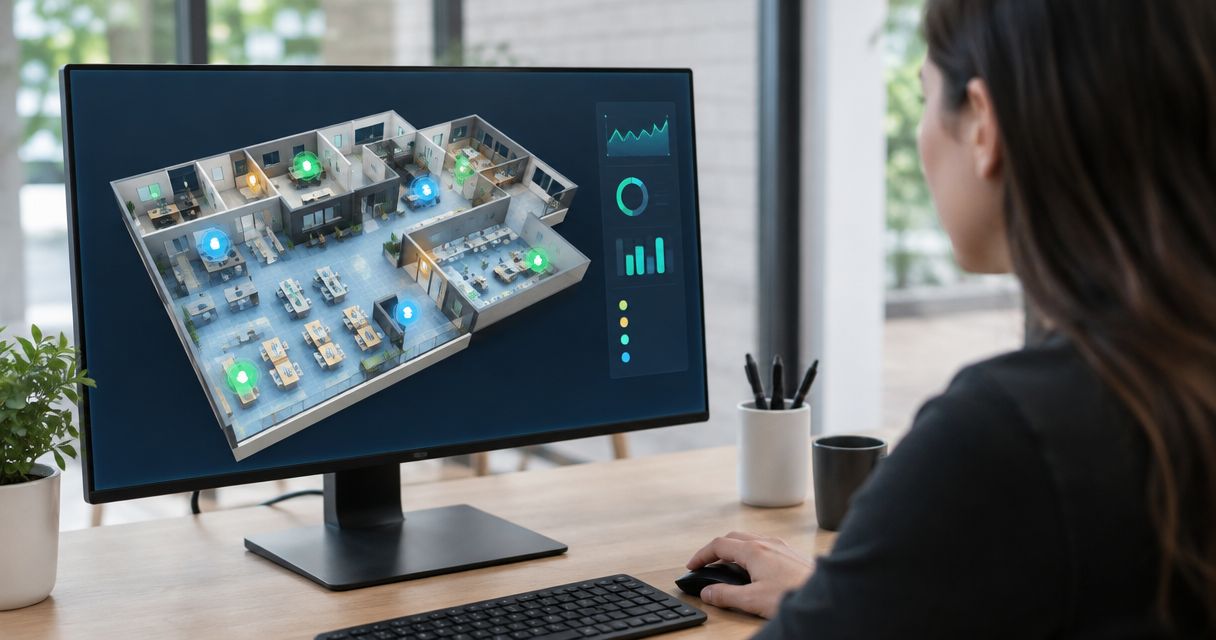
- A live building or vault twin with sensors bound to their physical position
- Dashboard widgets — map, chart, gauge — built around the actual room layout
- Image floor-plan pins so a new staff member can find the flagged shelf on sight
Automate the excursion and compliance report auditors ask for
Gene banks answering to national or international genetic resource networks need documented proof of storage conditions, not a verbal assurance that "the freezer's fine."
- Export a continuous temperature and humidity log per storage tier
- Pull an immutable audit trail of every alarm, acknowledgment and rule change
- Build a temperature excursion report tied to the exact accession and time window affected
- Keep version history on every rule so an auditor can see what changed and when
Plan connectivity for remote, off-grid or shielded vault sites
Many gene banks sit in rural research stations, underground bunkers, or steel-reinforced vaults — none of which are friendly to a standard Wi-Fi sensor.
- Battery-powered LoRaWAN sensors for sites without reliable mains wiring, covered in Kilo's guide to off-grid sensor deployments
- mioty for underground or steel-walled vaults where standard LoRaWAN struggles to penetrate
- Outdoor weather stations at field genebank or orchard duplicate sites, per Kilo's agricultural weather station guide
- A built-in network server so there's no separate LoRaWAN or mioty infrastructure to stand up
“A base collection loss can't be regenerated the way an active collection distribution loss can, which is exactly why the freezer with the least traffic gets the tightest alarm band, not the loosest.”
Which iot monitoring option is best for a seed bank?
A gene bank team weighing options in 2026 is usually choosing between four real paths, not deciding whether to monitor at all.
| Option | Best for | Starting price | Key limitation |
|---|---|---|---|
| Paper logbooks | Very small collections with daily staff presence | Not applicable | No alerts between checks; a weekend power loss goes unnoticed until Monday |
| Standalone USB data loggers | Short validation studies or single-shipment checks | Varies by vendor | Data only visible after manual download; no live alarm |
| Legacy BMS retrofit | Sites with existing whole-building HVAC controls | Varies by integrator | Built for HVAC zones, not seed-lot tracking, and rarely supports wireless mioty or LoRaWAN sensors |
| Kilo IoT Platform | Gene banks needing lot-level alerts and audit-ready reports | Free at 0 EUR for up to 5 devices; Starter at 25 EUR/month for up to 25 devices | Wireless range and battery life still depend on vault construction |
Pilot one freezer bank first
Start with the Kilo IoT Platform free tier before wiring every vault.
What mistakes do gene banks make with iot monitoring?
- Monitoring room air only. A single ambient sensor misses the shelf that sits outside the compressor's airflow path — that's where excursions actually start.
- Treating active and base collections the same. A 0-5°C rule applied to a -18°C freezer, or vice versa, either wastes capacity or under-protects irreplaceable material.
- No escalation outside working hours. Vault failures don't wait for business hours; an alert that only reaches a shared inbox on Monday morning is the same as no alert.
- Ignoring drying room humidity. Seed moisture content drives long-term viability as much as freezer temperature does, and it's the easiest parameter to leave unmonitored.
- Skipping door-open logging. Short, repeated excursions during routine retrieval add up over a year in ways a single daily temperature check will never catch.
FAQ
What's the best temperature for long-term seed storage in a gene bank?
Base collections meant for decades-long conservation target -18°C ±3°C, the benchmark cited in FAO/Bioversity International's Genebank Standards for Plant Genetic Resources. What matters more than the target is whether a continuous log actually confirms the freezer holds it.
Is -18°C required for all seed collections?
No. Active or working collections used for regeneration and distribution are typically kept at 0-5°C, while base collections and duplicate holdings sent offsite follow the -18°C standard.
How much humidity should a seed drying room hold?
The FAO/Bioversity standard points to roughly 10-15% relative humidity in the drying room before packaging, alongside seed moisture content around 3-7% for orthodox species. Getting this wrong before storage undermines even a perfect freezer afterward.
How is IoT monitoring different from a standard building management system for gene banks?
A standard BMS is built around whole-building HVAC zones, not individual seed lots. A platform like Kilo adds LoRaWAN or mioty sensors down to the rack or container level, plus alarm escalation and a digital twin that ties a reading back to a specific shelf.
Can IoT sensors work in an underground or steel-walled seed vault?
Yes. mioty is designed for long-range, high-penetration links and holds up better than standard LoRaWAN in steel-reinforced or underground vaults. Kilo runs both protocols on the same platform, so a site isn't locked into one radio technology.
How much does IoT monitoring cost for a small seed bank?
Kilo's Free tier covers up to 5 devices, 1 dashboard and 1 rule at 0 EUR with no card required, enough to pilot one freezer bank. The Starter tier moves to 25 EUR per month for up to 25 devices as coverage expands; sensor hardware is bought separately, including through Kilo Electronics.
What happens if a gene bank freezer loses power overnight?
A power loss should trigger an immediate alarm rather than wait for the next physical check. Kilo's alarms support multi-step escalation chains and quiet-hours overrides so a critical freezer alert reaches an on-call person instead of sitting in an inbox until morning.
What should a gene bank monitor first with a limited budget?
Start with the base collection freezer's door contact sensor and power status alarm before covering active collections or the drying room. A base collection loss is permanent in a way an active collection distribution delay isn't, so the tightest alarm band belongs on the freezer with the least daily traffic — the one nobody's watching precisely because it's rarely opened. Sensor hardware for this kind of deployment, including LoRaWAN temperature and door sensors, ships worldwide through Kilo Electronics, Kilo's sister hardware company.