
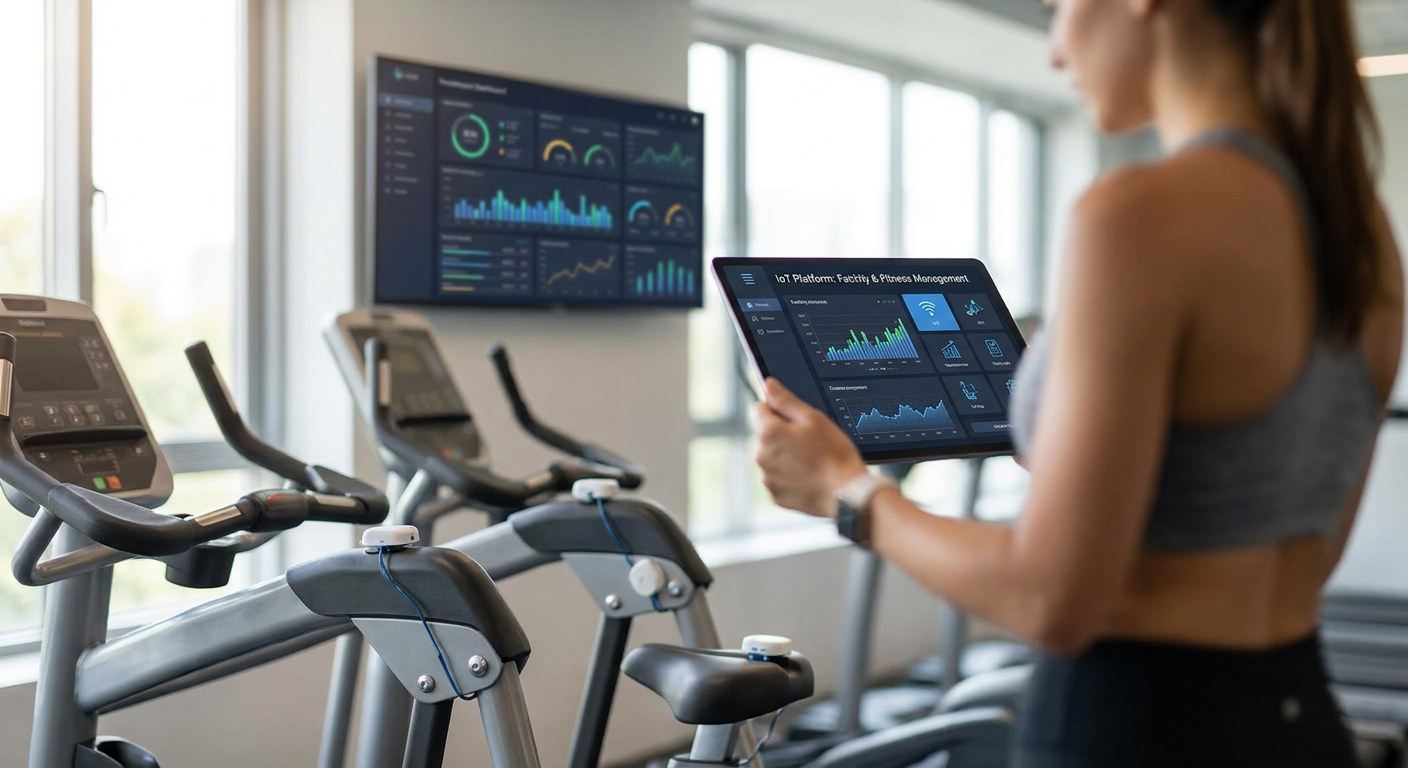
Gym chains lose members and margin to the same three failures: a flooded locker room nobody caught until the tile buckled, an HVAC unit that dies at 5am right when the doors open, and a regional manager driving between sites to check on equipment that could report its own status by itself. An iot platform for fitness and gym facility management fixes all three from one dashboard, whether you run three studios or thirty locations in 2026.
- Kilo Cloud is the strongest iot platform for fitness and gym facility management pick for chains with 3+ locations in 2026 — Buy.
- Water leak sensors on pool decks and locker room floors catch flooding before it reaches the subfloor — install first.
- HVAC monitoring cuts energy waste on gyms open 16 to 18 hours a day without touching member comfort — Buy.
- Single-site boutique studios can Skip the multi-site dashboard tier and start with basic leak and temperature alarms.
- Full digital building twins are Wait/Consider only — worth it for a flagship club with heavy HVAC load, overkill for a small chain.
Why this matters
Fitness facilities run wet, hot, and unattended for hours at a stretch. Pool decks, saunas, and locker room showers create constant moisture; HVAC systems run 16 to 18 hours a day to keep group classes comfortable; and most of that happens with no staff physically present once the front desk closes for the night.
A gym chain and a multi-site retail chain share the same operational problem: dozens of locations, one small ops team, and no reliable way to know what's happening at site #14 until a member complains or a pipe bursts. The fix isn't more staff walking more sites. It's sensors that report status on their own and a rules engine that only pings the right person when a threshold actually breaks — the same pattern hotels and resorts use for pool mechanicals and back-of-house systems.
Who this is for
This is written for operations directors and facilities managers running fitness chains with three or more locations, or a single large club with a pool, sauna, and enough square footage that a daily walk-through of every zone isn't realistic. If you're running one 2,000-square-foot studio with no pool, a basic thermostat and a hardware-store leak puck probably covers you — skip to the "what to avoid" section below.
What to look for in an IoT platform for fitness and gym facility management
One dashboard across every location
A regional manager checking ten different apps for ten different clubs will miss the pool heater failure until a member posts about it online. The platform needs to aggregate every site's sensors, alarms, and status into one screen, not one screen per building.
Wet-zone leak and moisture detection
Locker rooms, pool decks, saunas, and the mechanical room behind the hot tub are the highest-damage, highest-frequency failure points in any club. A leak sensor under a water heater or behind a shower wall catches the problem while it's still a puddle, not after it's warped a subfloor.
HVAC and energy monitoring built for long operating hours
Gyms open 16 to 18 hours a day, and HVAC systems that run that hard drift out of spec quietly — a unit stuck in heating mode overnight in July is a wasted utility bill, not a broken machine. Monitoring that tracks runtime and temperature drift catches this before the next bill, not after it.
Alarms that route to the right person, not everyone
A hot tub alarm that texts the entire staff group chat trains people to ignore it. Rules need to route by threshold and by role — maintenance gets the hot tub over 104°F, the ops director gets the multi-site rollup.
Connectivity that doesn't depend on gym Wi-Fi
Pool decks and mechanical rooms are exactly where member Wi-Fi doesn't reach and concrete kills signal. LoRaWAN and mioty connectivity solve this because sensors don't compete with 200 members streaming workout playlists on the same access point.
Top picks for gym and fitness facility operators
The multi-site backbone. Kilo Cloud's multi-site facility dashboard software rolls every location's sensors, alarms, and status into one login instead of thirty separate ones. The relevant number: one dashboard replacing a separate check-in per site is the entire point for a chain past three locations. Buy.
The energy-cost fix. HVAC monitoring built for facilities running long, member-heavy schedules tracks runtime and temperature drift across gyms open 16 to 18 hours a day. It catches a unit stuck a few degrees off spec before it turns into an overnight energy bill or a comfort complaint at 6am opening. Buy.
The insurance policy. Water leak monitoring on pool decks, locker room floors, and behind water heaters flags moisture the moment it starts, not on the next morning's walk-through. For a club with a pool, this is the single highest-ROI sensor category. Buy.
The quiet feature nobody asks for until they need it. Rules-based alarm routing inside Kilo Cloud lets a hot tub alert over 104°F go straight to the maintenance lead's phone instead of the entire staff group chat. It's not a separate purchase — it's built into the platform's rules engine. Consider.
The overkill pick for most gyms. A full digital building twin modeling energy flows across an entire facility is genuinely useful for a flagship club with heavy HVAC and pool-heating load. For a three-location chain of standard studios, it's more mapping than the operation needs right now. Wait.
See the platform behind the picks
Check how Kilo Cloud handles multi-site alarms and dashboards.
What to avoid
- Consumer smart-home leak pucks with no escalation logic. Fine for one kitchen. Useless across 20 locations, because nobody is watching 20 separate consumer apps at once.
- Open-source IoT stacks that need a dedicated engineer. Most gym ops teams don't have one on staff, and a DIY dashboard tends to break during exactly the outage you needed it for.
- A single-building BMS retrofit sold as a "platform." It manages one HVAC system well and has zero concept of "location #2" — it wasn't built for a chain.
Verdict comparison
| Pick | Best for | Setup effort | Verdict |
|---|---|---|---|
| Multi-site dashboard | Chains with 3+ locations | Low — sensors report in without a site visit | Buy |
| HVAC energy monitoring | Gyms open 16+ hrs/day | Low | Buy |
| Water leak detection | Pool decks, locker rooms | Low | Buy |
| Rules-based alarm routing | Any multi-site operator | Included with dashboard | Consider |
| Digital building twin | Flagship clubs, heavy HVAC load | Higher — needs facility mapping | Wait |
FAQ
What's the best iot platform for fitness and gym facility management in 2026?
For chains with three or more locations, a platform with one multi-site dashboard, wet-zone leak detection, and HVAC monitoring covers the highest-risk failure points. Single studios without a pool can start with basic leak and temperature alarms instead.
Do gyms need LoRaWAN or does Wi-Fi work for sensor monitoring?
Wi-Fi struggles in pool decks and mechanical rooms because concrete blocks signal and member traffic congests the network. LoRaWAN and mioty sensors run on a separate network so they keep reporting even when the gym Wi-Fi is saturated.
Can IoT sensors actually catch a locker room leak before it causes damage?
Yes — a moisture sensor placed under a water heater or behind a shower wall triggers an alarm within minutes of contact with water, well before a daily walk-through would notice a puddle. That's the gap between a mop and a subfloor replacement.
How much does IoT monitoring cost for a gym chain?
Cost depends on site count, sensor mix, and how much of the facility you're covering, so there's no single number that fits every chain. Check current pricing directly against your specific location count and sensor list.
Is a digital building twin worth it for a fitness chain?
It's worth it for a flagship club with heavy HVAC and pool-heating load where energy modeling pays for itself in efficiency gains. For a standard multi-studio chain, basic HVAC and leak monitoring covers the bigger risks first.
How long does it take to roll out sensors across multiple gym locations?
Sensor onboarding at scale is designed to avoid a technician visiting every site individually — most deployments provision new locations remotely once the first site's rules and alarms are set. Timeline still depends on how many zones each location needs covered.
Do I need a systems integrator to set up gym facility monitoring?
Not for a standard rollout — dashboards, rules, and alarms are built to be configured by an ops team without a dedicated IT hire. A systems integrator becomes worth it only for complex multi-protocol deployments across many building systems at once.
What sensor should a gym chain install first?
Water leak detection in locker rooms and pool decks usually delivers the fastest payback, because flooding damage is expensive and frequent in wet-zone facilities. HVAC runtime monitoring is the second priority for any club open 16 or more hours a day.
One last thing
The sensor most gyms skip first is the one on the water heater, not the one on the pool. Pool leaks get noticed fast because members complain about wet floors; a slow leak behind a water heater in a mechanical closet can run for weeks before anyone opens that door in 2026 — by then it's a floor replacement, not a mop-up.