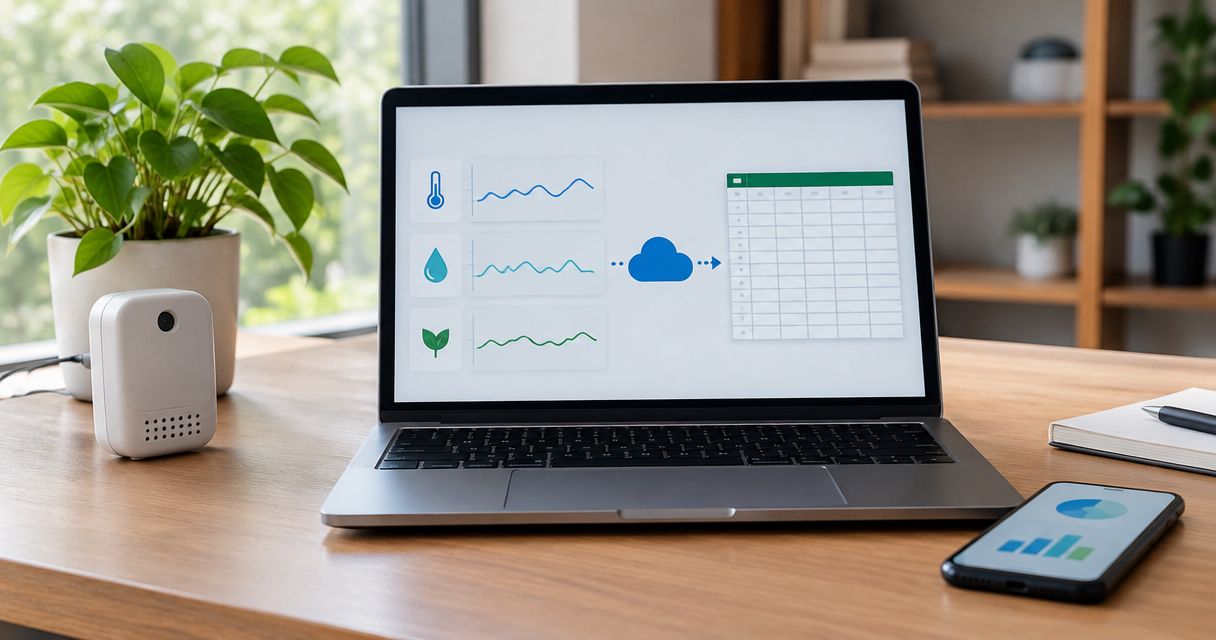
A cheese aging cellar runs on narrow temperature and humidity bands, and a logbook checked twice a day catches a drifting rind or a stuck fermentation chamber hours after the damage starts. This guide breaks down what an IoT platform for cheese aging cellars actually needs to do — sensor placement, protocol reach, alarm logic that survives a routine door check — and uses Kilo as a worked example of a platform built against those requirements.
- The best IoT platform for cheese aging cellars combines multi-point RH/temp sensors, protocol reach for stone rooms, and delay-based alarm logic.
- Bloomy rind rooms need tighter humidity control than aged cheddar caves — monitor them as separate zones, not one average reading.
- mioty's telegram splitting handles underground or thick-walled cellars where LoRaWAN signal can drop out.
- Kilo's free plan covers 5 devices at 0 EUR with no card required; Starter runs 25 EUR/month for up to 25 devices, gateways unlimited on both.
- A compliance-ready temperature log for HACCP audits needs continuous data, not point-in-time spot checks.
Why cheese aging cellars need continuous temperature and humidity monitoring
A bloomy rind cheese held above 55°F (13°C) for a few hours can push past its intended ripening curve into ammonia off-flavors, and a room that drops below 80% RH dries and cracks rinds before the paste finishes maturing. Neither failure shows up in a twice-a-day walk-through — by the time a caretaker notices, the wheel is already compromised.
This is the same problem industrial food producers solve with continuous sensor coverage instead of spot checks; cheese cellars just have narrower tolerance bands and slower, easier-to-miss failure signs. The monitoring logic behind an industrial IoT platform for food and beverage manufacturers applies just as well to a single cave room or a multi-room aging facility: continuous readings, a rule that fires before the wheel is lost, and an alarm that reaches the right person on the right day, at 2 a.m. or 2 p.m.
What makes the best IoT platform for cheese aging cellars
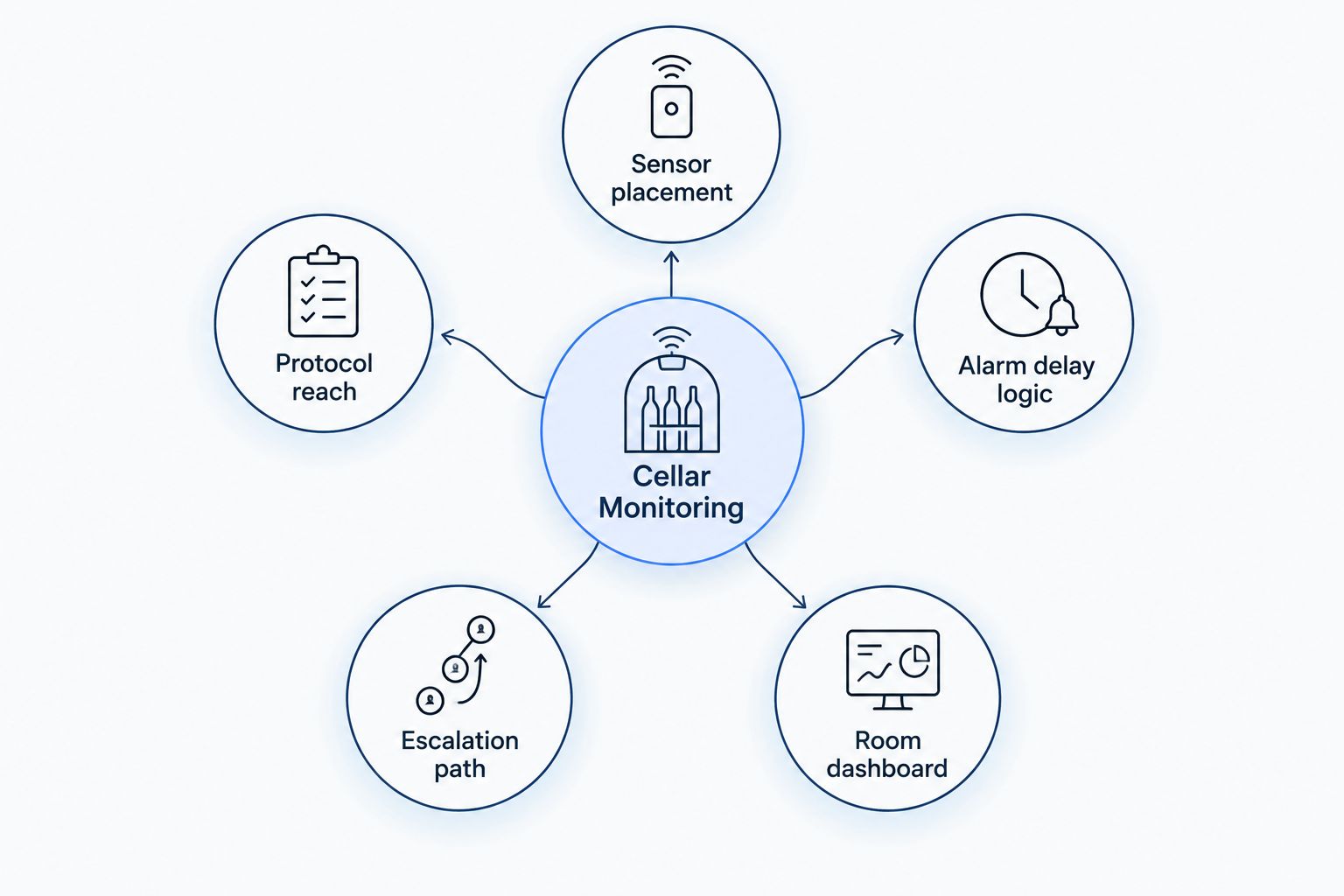
A cellar-ready platform needs a specific set of capabilities, not a generic dashboard:
- Multi-point temperature and humidity sensors placed at floor, mid-shelf and ceiling height — aging rooms stratify by several degrees between the door and the back wall.
- Protocol reach into stone, brick or underground rooms without dead zones, since most cellars sit below grade or behind thick walls.
- A rules engine that requires a threshold to hold for a set number of minutes before it fires, so a door opened for a routine wheel turn doesn't trip every alarm.
- Escalation paths that reach the cheesemaker on call, not an inbox nobody checks overnight.
- A dashboard showing every room at once, not a separate screen per sensor.
- Device commands for humidifiers, dehumidifiers or vent fans, so a rule can act on a threshold, not just alert on it.
IoT platform comparison for cheese cave monitoring: what to check at a glance
| Cellar zone | Target range | Primary risk | Sensor priority |
|---|---|---|---|
| Bloomy rind / soft cheese room | 50-54°F (10-12°C), 90-95% RH | Rind drying out or over-blooming | Tight-tolerance RH sensor, door sensor |
| Aged cheddar / hard cheese cave | 52-56°F (11-13°C), 80-85% RH | Slow temperature drift over weeks | Temp sensor with slow-drift alarm logic |
| Washed rind room | 50-54°F, 90-95% RH | Ammonia buildup from rind washing | VOC/ammonia sensor where available, ventilation control |
| Brine dip room | 50-55°F, high ambient humidity | Temperature swings during dip cycles | Temp sensor near the brine tank |
| Fermentation / culture room | Often 68-77°F depending on culture | Runaway fermentation temperature | Tight-window temp sensor, fast alarm |
A single stone cellar with an underground brine room and a surface-level fermentation room is a common layout for a mid-size creamery in 2026, and it means the platform has to cover very different tolerance bands under one roof.
Before assigning sensors, walk the physical space: note where the door sits relative to the racks, where condensation collects, and where a gateway or repeater will actually get signal through stone or concrete.
Bloomy rind and soft cheese aging rooms: what to monitor
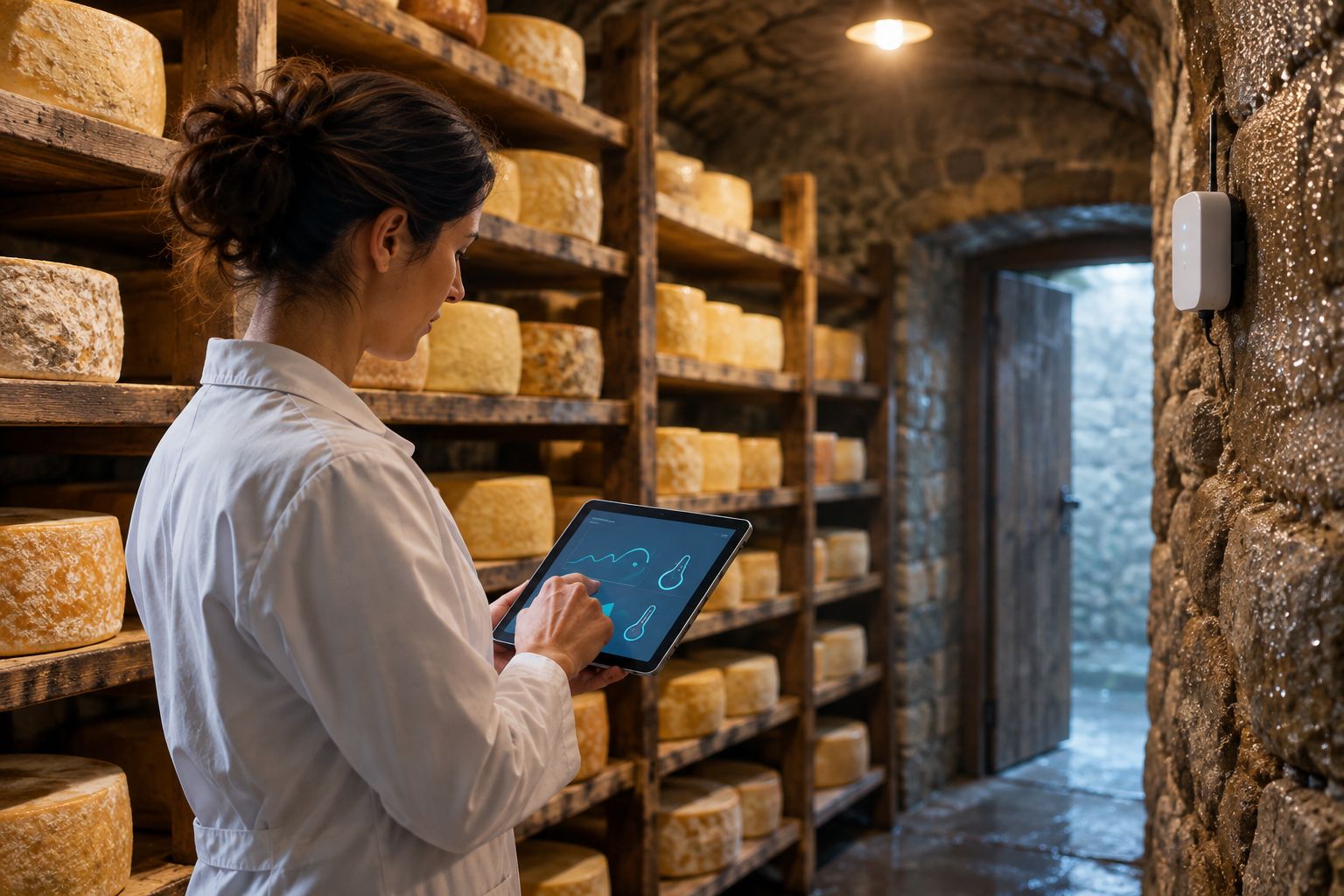
These rooms run the tightest humidity band of any cellar zone — 90-95% RH is standard, and a sustained drop below that dries the rind faster than the paste inside can ripen. Set the alarm delay long enough to ignore a five-minute door opening but short enough to catch a failed humidifier within the hour.
Aged cheddar and hard cheese caves: what to monitor
Hard cheese caves tolerate a wider band (80-85% RH) but the failure mode is slower and easier to miss: a compressor drifting half a degree warmer each week over a months-long age. A weekly trend view catches this pattern; a single-reading alarm usually doesn't.
Washed rind rooms and ammonia buildup: what to monitor
Washed rind cheeses off-gas ammonia during ripening, and OSHA's permissible exposure limit for ammonia is 25 ppm as an 8-hour time-weighted average — relevant if staff spend extended time in these rooms. A ventilation rule tied to a VOC or ammonia sensor, where the hardware supports it, keeps exposure and rind development both in check.
Fermentation and culture rooms: what to monitor
Active fermentation runs hotter and moves faster than aging — a culture room can swing out of its 68-77°F window in under an hour if a heating pad sticks on. This is where a typed device command matters: a rule can switch a heat mat off at the upper threshold, and Kilo records whether that command was delivered, with confirmation coming from the next temperature reading rather than the command status alone.
LoRaWAN vs mioty for underground and stone-walled cheese cellars
LoRaWAN covers most single-room cellars fine, especially with a repeater near the door. Underground vaults and thick stone or concrete walls are where signal drops out, and that's the exact case mioty's telegram splitting was built for — it spreads a message across a wide sub-GHz band, which holds up better through shielding than a single LoRaWAN transmission. Kilo runs a built-in LoRaWAN and mioty network server, so a facility with a surface warehouse and an underground cave doesn't need two separate network servers to cover both. The mioty sensors built for underground and shielded environments page breaks down which deployments actually need the switch.
How to build alarms that catch spoilage without false alerts from cave door checks
Kilo's alarms run five severity tiers with multi-step escalation chains, so a minor humidity dip pages the on-site caretaker while a compressor failure escalates to the owner by SMS if nobody acknowledges it. Quiet hours and a centralized alarm inbox stop the 3 a.m. false-positive problem that makes staff start ignoring every alert.
The rules engine behind those alarms is visual (BPMN-based) with CEL expressions, version control, one-click deploy and rollback, and step-through debugging against a test payload — useful for tuning the delay window on a door-triggered humidity dip before it goes live on a real cellar. Device commands are typed and validated, delivered over MQTT or LoRaWAN Class C downlink, with execution history logged; accepted or delivered does not mean the humidifier physically turned on, so check the next telemetry reading to confirm the room actually responded.
Start monitoring your cellar free
Up to 5 devices, 1 dashboard, 1 rule — 0 EUR, no card required.
How much does IoT cellar monitoring cost for a small creamery?
Kilo's free tier is 0 EUR for up to 5 devices, 1 dashboard and 1 rule, with no card required and no expiration — enough for a single aging room with a temp/RH sensor and a door sensor. Starter runs 25 EUR per month for up to 25 devices, which covers a multi-room creamery with bloomy rind, cheddar and fermentation zones running separate rule sets. Gateways are unlimited on every tier and never count against the device cap, so adding a second building doesn't force an upgrade on its own. Sensors and gateways for a cellar deployment ship worldwide through Kilo Electronics, Kilo's hardware partner.
How to keep a compliance-ready temperature log for cheese aging audits
HACCP-based food safety plans call for documented, continuous temperature monitoring rather than periodic spot checks, and most state dairy inspectors want to see a consistent range logged across the full aging period, not a handful of manual readings. The same export structure used to build a temperature excursion report for cold chain audits works for a cheese aging log: continuous readings, flagged excursions, and a timestamped record an inspector can review without a spreadsheet reconstruction.
“If the humidity alarm fires every time someone opens the door to turn a wheel, nobody reads alarms anymore.”
FAQ
What temperature should a cheese aging cellar be kept at?
Most aged cheeses hold between 50°F and 55°F (10-13°C), though hard cheddar caves run slightly warmer at 52-56°F. The exact target depends on the cheese style and the culture used.
What humidity level is best for cheese aging?
Bloomy rind and washed rind rooms typically run 90-95% relative humidity, while aged cheddar caves tolerate 80-85%. Dropping below the target range dries and cracks the rind before the paste finishes ripening.
Can one IoT platform monitor both a cheese cave and a walk-in cooler?
Yes, a platform with a single dashboard across sensor types handles both — the difference is the alarm thresholds and delay logic set per room, not separate software. Kilo's dashboard shows every monitored room in one view regardless of protocol.
Does mioty work better than LoRaWAN in an underground cheese cave?
In stone, concrete or underground rooms, mioty's telegram splitting generally holds a link more reliably than a single LoRaWAN transmission. Above-ground single-room cellars usually work fine on LoRaWAN alone.
How much does an IoT monitoring platform cost for a small creamery?
Kilo's free plan covers up to 5 devices at 0 EUR with no card required, enough for one aging room. A multi-room creamery needing up to 25 devices runs 25 EUR per month on the Starter plan, with unlimited gateways on both tiers.
How do I stop false alarms every time someone opens the cellar door?
Set the alarm rule to require the threshold breach to hold for a set number of minutes, not fire on the first reading. A five-to-ten-minute delay window filters out a routine door check while still catching a real failure.
What sensors do I need for a fermentation room?
A fermentation room needs a tight-window temperature sensor with a fast alarm response, since active cultures can swing out of range in under an hour. A door sensor and, where the culture off-gasses ammonia, a VOC sensor round out the setup.
Is manual logbook monitoring enough for cheese aging compliance?
No — HACCP-based food safety plans expect continuous, documented monitoring rather than periodic spot checks. A logbook filled in twice a day can't show an inspector what happened between entries.
The sensor most cheese cellars forget to calibrate
RH sensors drift faster in a cheese cave than almost anywhere else in a facility — sustained exposure above 80% humidity builds condensation and mold film on the sensor housing itself, and that film skews readings low or high long before anyone notices a spoiled wheel. A cellar running at 90-95% RH around the clock wears down a sensor housing faster than a dry warehouse ever will, so calibration checks matter more here than in most other IoT deployments. Calibrating IoT sensors for accurate long-term readings covers the schedule and method worth building into a 2026 cellar monitoring plan from day one.