LoRaWAN soil moisture sensors let an irrigation manager read volumetric water content across a field without running cable or walking rows with a hand probe, and the sensor's measurement principle matters more than its brand. This guide ranks the sensor types you'll actually be choosing between for agriculture and irrigation in 2026.
- Capacitive (FDR) probes are the safest LoRaWAN soil moisture sensors for agriculture and irrigation in 2026 for row crops and orchards.
- Granular matrix sensors cost less per node but drift in saline or heavy clay soil and need yearly recalibration.
- LoRaWAN's US915 band (902-928 MHz) and EU868 band (863-870 MHz) both support multi-year battery life on buried soil probes.
- Tensiometers read plant-available water directly but need servicing before every hard freeze.
- Wire the sensor into a threshold alarm, not just a dashboard, or a dry reading at 2 a.m. goes unanswered.
Why LoRaWAN works for soil moisture monitoring on farms
LoRaWAN runs on unlicensed sub-gigahertz bands, and the LoRaWAN Alliance's regional parameters set those bands at 902-928 MHz for US915 and 863-870 MHz for EU868. That low frequency travels well through crop canopy and open terrain, so one gateway can cover a large block without repeaters. A buried capacitive probe reporting a small payload every 15-30 minutes runs for multiple seasons on a single battery pack because LoRaWAN's duty-cycle model keeps the radio asleep most of the time.
The Kilo IoT Platform runs a built-in LoRaWAN and mioty network server, so there's no separate network server to stand up before soil probes start reporting. If a field already has a wired weather station or a PLC-driven pivot controller, Kilo's MQTT connector pulls that data onto the same dashboard as the LoRaWAN nodes, which matters for tying soil moisture to real evapotranspiration math rather than a single number in isolation.
Most irrigation scheduling pairs a soil moisture reading with a reference evapotranspiration estimate. The FAO-56 Penman-Monteith method, published in the UN Food and Agriculture Organization's Irrigation and Drainage Paper 56, is still the standard reference calculation agronomists use for that pairing. A soil moisture sensor alone tells you how wet the ground is right now; ET data tells you how fast it's about to dry out. Getting both onto one agricultural irrigation systems monitoring dashboard is what makes the sensor data actionable instead of decorative.
How to evaluate LoRaWAN soil moisture sensors before you buy
Rankings below rest on published agronomy and protocol standards, not a vendor lab test. Four factors decide whether a sensor type fits a given field:
- Measurement principle — dielectric permittivity (capacitive/TDR), soil water tension (tensiometer), or electrical resistance (granular matrix). Each answers a slightly different agronomic question.
- Depth and root zone coverage — many extension programs monitor at 6-inch, 12-inch and 24-inch depths to track the full root zone rather than just the surface crust.
- Soil chemistry tolerance — resistive designs drift in saline or heavy clay soil; dielectric designs are far less sensitive to salinity.
- Power budget and enclosure rating — a probe left in the ground through winter needs a housing rated for freeze-thaw cycling and burial, which is the same durability question covered in choosing sensors for outdoor industrial IoT deployments in extreme weather.
The ranked list of LoRaWAN soil moisture sensor types
Capacitive (FDR) probes — the field standard
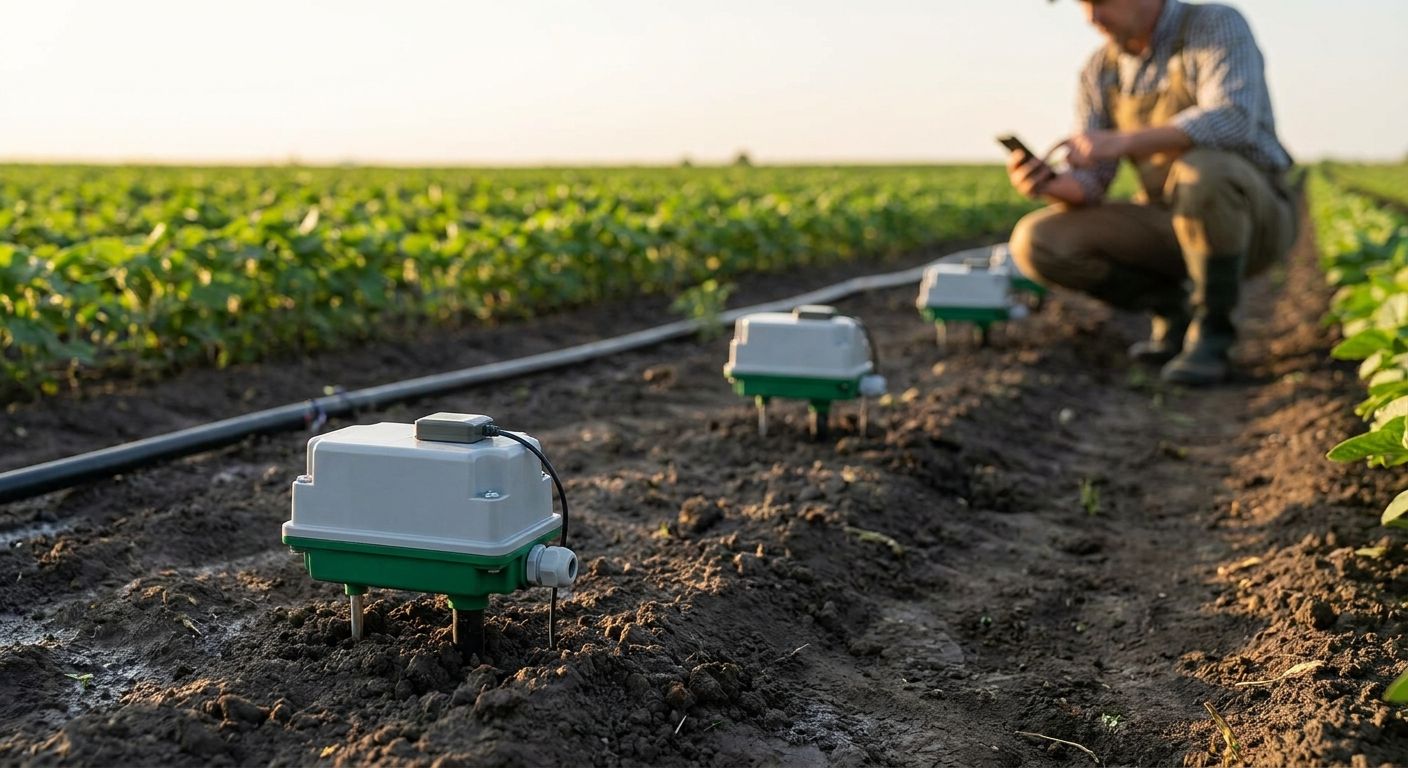
Capacitive, or frequency-domain reflectometry (FDR), probes measure the dielectric permittivity of the soil around the sensor and convert it into volumetric water content. They resist salinity drift far better than resistive designs, and most models pair a single buried shaft with sensing rings at more than one depth, so one LoRaWAN end node covers the full root zone instead of just the topsoil. That's why they're the default pick for row crops, orchards and vineyards scheduling irrigation off a wilting-point threshold. Buy for most agriculture and irrigation LoRaWAN deployments in 2026.
TDR/TDT sensors — the lab-grade option
Time-domain reflectometry and time-domain transmissometry sensors use the same dielectric principle as capacitive probes but measure it with higher precision electronics, which is why they show up in university research plots and as calibration references more often than in full-farm networks. The accuracy is real; so is the cost and the added complexity of running them on a battery-powered LoRaWAN node. Hold for research plots and sensor calibration checks, not a full-field rollout.
Granular matrix (resistance block) sensors — the budget workhorse
Watermark-style granular matrix sensors measure electrical resistance across a gypsum-embedded matrix that equilibrates with soil water tension over a few hours. Per-node cost runs well below a capacitive probe, which matters when a farm needs a sensor in every zone rather than one per field. The tradeoff: they drift in saline or heavy clay soils and typically need replacement or recalibration within a season or two, and repeated freeze-thaw cycling can crack the matrix. Buy for warm-climate budget pilots; Skip for ground that freezes hard every winter.
Tensiometers — the direct-tension read
A tensiometer is a water-filled tube with a porous ceramic tip and a vacuum gauge, and it measures soil water tension directly rather than inferring it from an electrical property. That makes it the closest instrument to what a root actually experiences, but most extension service guidance puts the reliable working range at roughly 0-80 centibars of tension, and the water column can crack the tube if it freezes solid. Hold as a calibration reference next to a wireless network, not as the primary sensor across dozens of nodes.
Multi-depth capacitance profile probes — the one-probe-per-zone play
A single profile probe with capacitive sensing rings at several fixed depths reports the moisture gradient down the root zone in one uplink, instead of requiring separate probes at 6, 12 and 24 inches. For orchards, vineyards or deep-rooted row crops, that gradient is often more useful than a single-depth number, because it shows whether water is actually reaching the deeper roots or pooling near the surface. Buy for tree and vine crops where root depth varies significantly across the block.
Neutron probes — the regulated legacy method
Neutron probes use a radioactive source, typically americium-241 paired with beryllium, to measure soil moisture by counting slowed neutrons, and that source means they fall under U.S. Nuclear Regulatory Commission licensing requirements and need a trained, certified operator. They're accurate and depth-flexible, but a licensed radioactive source has no place on an unattended, battery-powered LoRaWAN network. Skip for any wireless farm deployment in 2026.
“If the alarm doesn't reach the irrigation manager before the pivot cycle ends, the soil moisture reading was just decoration.”
See soil moisture alarms on a live dashboard
Set volumetric water content thresholds and escalation without custom code.
Soil moisture sensor comparison for irrigation scheduling
| Sensor type | What it measures | Best for | Maintenance | LoRaWAN fit | Verdict |
|---|---|---|---|---|---|
| Capacitive (FDR) | Volumetric water content | Row crops, orchards, vineyards | Low | Excellent | Buy |
| TDR/TDT | Volumetric water content | Research plots, calibration | Moderate | Fair | Hold |
| Granular matrix | Soil water tension | Budget field trials, warm climates | Annual recalibration | Good | Buy/Skip by climate |
| Tensiometer | Soil water tension | Calibration reference | High, freeze risk | Fair | Hold |
| Multi-depth capacitance profile | Root zone moisture gradient | Tree and vine crops | Low | Excellent | Buy |
| Neutron probe | Volumetric water content | Regulated research use | Licensed operator required | Poor | Skip |
Where to buy LoRaWAN soil moisture sensors
- Match the sensor's frequency plan to your region first. Confirm whether your farm sits in a US915 (902-928 MHz) or EU868 (863-870 MHz) LoRaWAN Alliance region before ordering a batch of probes, since a sensor built for the wrong band won't join the network.
- Confirm payload decoder support. Kilo's device management provisions LoRaWAN payload templates so a probe's uplink decodes straight into volumetric water content on the dashboard instead of arriving as raw hex you have to translate by hand.
- Buy from a supplier that stocks field-serviceable parts. kiloelectronics.com, Kilo's sister hardware company, ships pre-configured sensors worldwide if sourcing and calibrating probes in-house isn't worth the time.
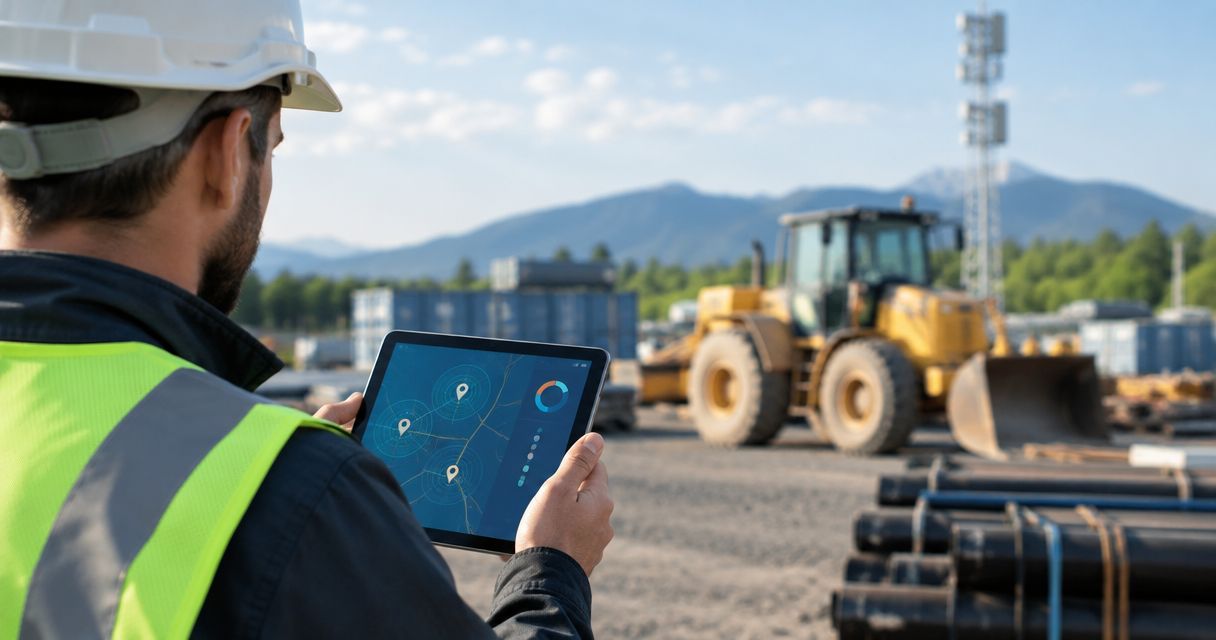
Once probes are reporting, the map widget on Kilo's dashboard can plot each node's location over a field boundary image, so an irrigation manager sees the driest zone in a large block without opening a spreadsheet. Kilo's built-in AI assistant can also set up the alarm itself from a plain-language request, something like alerting the irrigation manager if volumetric water content in a given block drops below a set threshold for two hours, and it confirms the rule before deploying it, scoped to the signed-in user's permissions.
Kilo's alarm engine runs five severity tiers with multi-step escalation chains, email, SMS and push delivery, and quiet hours, so a genuine threshold breach during planting season doesn't get buried under routine notifications. A farm piloting four or five probes in one field can run Kilo's free plan at 0 EUR for up to five devices, one dashboard and one rule; scaling to more zones moves to the Starter plan at 25 EUR per month for up to 25 devices.
FAQ
What's the best LoRaWAN soil moisture sensor for agriculture?
Capacitive (FDR) probes are the best default LoRaWAN soil moisture sensor for agriculture and irrigation in 2026 because they resist salinity drift and often read multiple depths from one buried shaft. Granular matrix sensors are a reasonable budget alternative in warm climates without hard freezes.
How deep should soil moisture sensors be placed for irrigation scheduling?
Many extension programs monitor at 6-inch, 12-inch and 24-inch depths to cover the full root zone rather than just the surface. A multi-depth capacitance profile probe reports that same gradient from a single buried unit.
Is LoRaWAN or Wi-Fi better for soil moisture sensors on a farm?
LoRaWAN wins on range and battery life for outdoor field deployments because one gateway can cover a large block on unlicensed sub-gigahertz bands like US915 (902-928 MHz) or EU868 (863-870 MHz). Wi-Fi's short range and higher power draw make it impractical for sensors buried across open acreage.
How much does LoRaWAN soil moisture monitoring cost to start?
A small pilot with a handful of probes can run on Kilo's free plan at 0 EUR for up to 5 devices, one dashboard and one rule. Scaling past that moves to Kilo's Starter plan at 25 EUR per month for up to 25 devices.
Can one LoRaWAN gateway cover a whole farm?
A single gateway often covers a large field or orchard block in open terrain because LoRaWAN's low frequency bands travel well through crop canopy. Larger or hilly properties may need more than one gateway to avoid dead zones near terrain or dense tree cover.
Do soil moisture sensors need calibration for different soil types?
Yes. Resistive and granular matrix sensors drift in saline or heavy clay soil and need periodic recalibration, while capacitive (FDR) sensors are far less sensitive to soil chemistry and need less frequent adjustment.
How long do LoRaWAN soil moisture sensor batteries last?
Battery life runs multiple growing seasons on most capacitive probes reporting every 15-30 minutes, because LoRaWAN's duty-cycle design keeps the radio idle between uplinks. Reporting more frequently or in colder temperatures shortens that runtime.
Can soil moisture data trigger automatic irrigation alarms?
Yes. A threshold or CEL-based rule can fire an alarm when volumetric water content drops below a set point and escalate it through email, SMS or push to the irrigation manager. That's a rule-driven alert, not automated shut-off of equipment.
What most irrigation teams get wrong about sensor depth
A single sensor at 6 inches only tells you what's happening in the topsoil, and topsoil dries out faster than the zone where a tree or vine actually pulls most of its water. Teams that install one shallow probe per field often see readings swing with every irrigation cycle and miss the slower drawdown happening 18-24 inches down, which is exactly the number that should drive the next irrigation decision. Pairing a multi-depth profile probe with a rate-of-change rule, not just a static threshold, catches a fast drop that signals a broken drip line rather than normal crop uptake, and Kilo's CEL-based rules engine can express that rate-of-change logic directly.